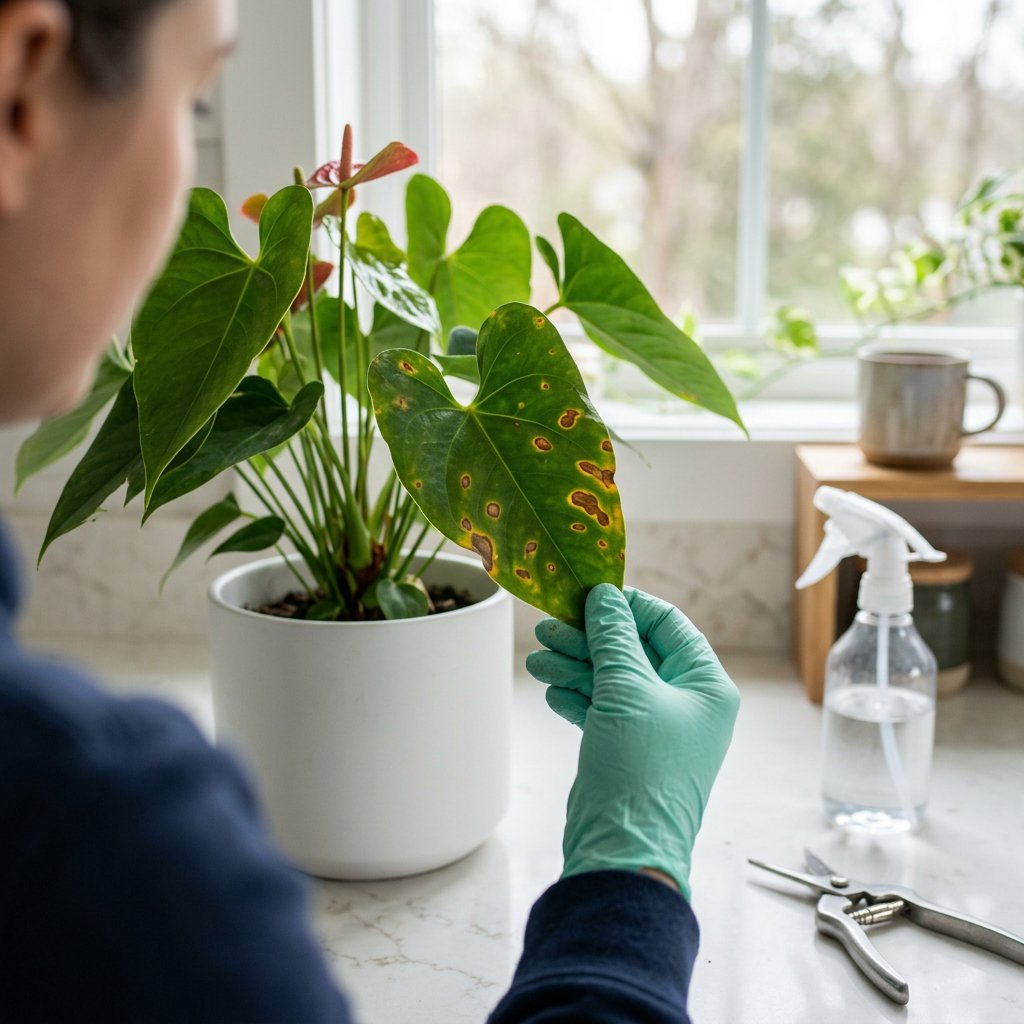
Nothing is quite as striking as the glossy, heart-shaped leaves and vibrant blooms of an Anthurium. But if you have suddenly noticed unsightly spots ruining that flawless foliage, take a deep breath. First of all, please do not feel guilty! Plant parenthood is a continuous learning journey, and leaf spots are a common hurdle that happens to even the most attentive indoor gardeners.
The trick to getting your tropical beauty back on track is figuring out exactly what is causing the blemishes. When it comes to Anthurium leaf spots, the culprits almost always fall into one of two camps: a fungal infection or a bacterial one. Let's break down how to tell them apart and, more importantly, how to fix them.
The Problem: Is it Fungal or Bacterial?
It can be a little tricky to play detective with plant blemishes, but fungi and bacteria leave slightly different visual clues on your plant's leaves.
Fungal Leaf Spots
Fungal infections are the most common offenders for houseplants. If a fungus has attacked your plant, look out for:
- Brown or black spots that may start small but slowly expand over time.
- Concentric rings within the spot, looking a bit like a tiny, dry target.
- A distinct, papery, or crispy texture in the center of the blemishes.
Bacterial Leaf Spots (Bacterial Blight)
Bacterial infections tend to be a bit more aggressive and fast-moving. The signs include:
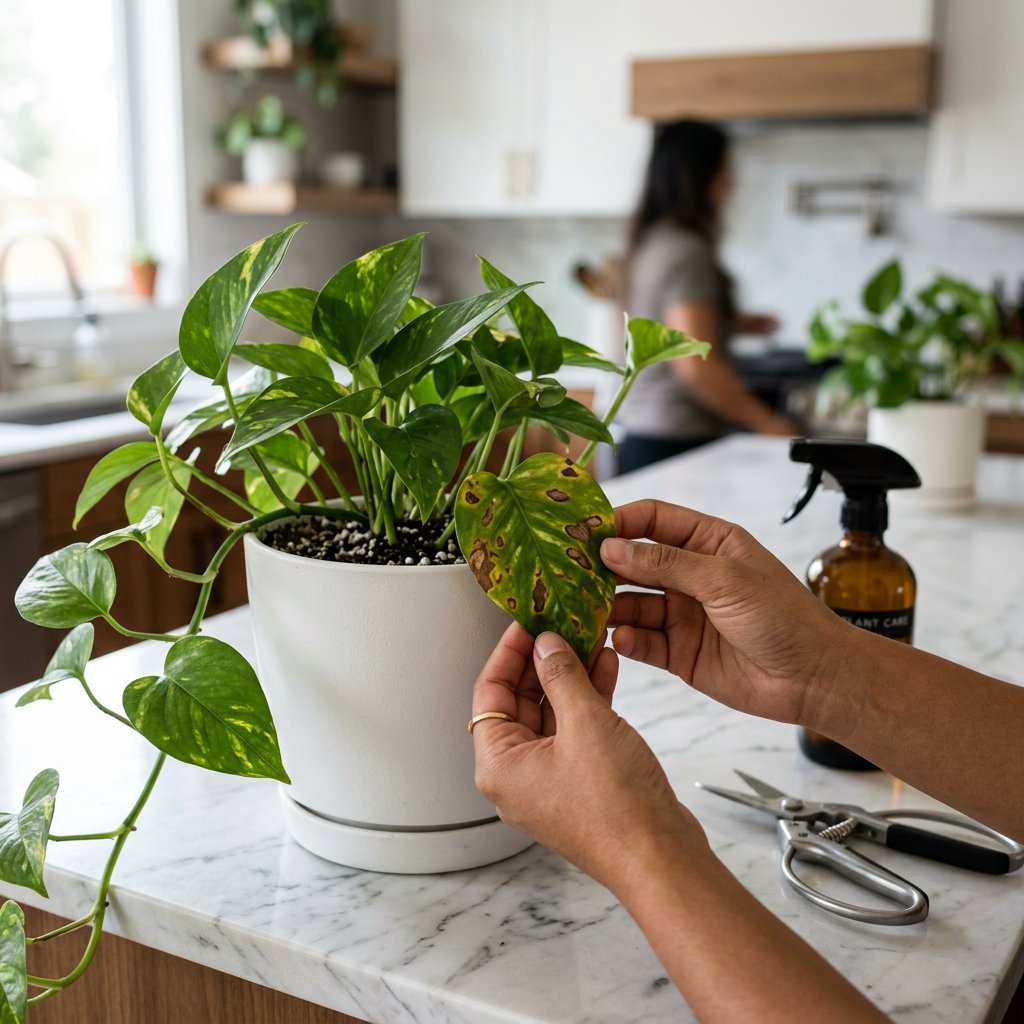
- Water-soaked lesions that look like dark, wet, or greasy blisters on the leaf.
- A bright yellow halo surrounding the dark spot. This is a sign of chlorosis, which simply means the leaf tissue is losing its green pigment (chlorophyll) and fading to yellow.
- Spots that spread rapidly, sometimes causing the leaf to become mushy or emit an unpleasant smell.
If you are staring at your Anthurium and still feeling unsure what is wrong with your plant, you can use the AI-powered plant disease scanner in the Plantiary app to get a highly accurate diagnosis in seconds!
The Causes: Why Did My Anthurium Get Sick?
Both fungi and bacteria love the exact same type of environment: wet, warm, and stagnant. Here is what usually triggers these microscopic invaders to multiply:
- Overwatering: Leaving your Anthurium sitting in soggy, poorly draining soil suffocates the roots and creates a perfect breeding ground for pathogens.
- Wet Foliage: Watering from above and letting water droplets sit on the leaves overnight is an open invitation for fungal spores and bacteria to germinate.
- Poor Air Circulation: High humidity is wonderful for tropical plants, but without gentle airflow to dry off excess moisture, infections can easily take hold.
The Solutions: Step-by-Step Treatment
Ready to nurse your Anthurium back to health? Follow these actionable steps to stop the spread and protect your plant's future growth.
Step 1: Isolate your plant As soon as you notice spots, move your Anthurium away from your other houseplants. Both fungal spores and bacteria can easily hitch a ride on a breeze or a splash of water and infect your surrounding indoor jungle.
Step 2: Prune the affected leaves Using a pair of sharp, sterilized pruning shears, carefully cut off the heavily spotted leaves at the base of the stem. Make sure to wipe your shears with rubbing alcohol between each cut so you don't accidentally spread the infection to healthy tissue. Discard the sick leaves in the trash, not the compost bin.
Step 3: Treat the infection
- For Fungi: Treat the remaining healthy foliage with a scientifically proven, plant-safe copper fungicide or neem oil spray. Follow the manufacturer's instructions for mixing and applying safely.
- For Bacteria: Traditional fungicides will not work on bacteria. The best defense is keeping the leaves completely dry and utilizing a copper-based bactericide if the spread continues.
Step 4: Adjust your watering routine Allow the top two inches of your Anthurium's potting mix to dry out before watering again. To prevent future spotting, try switching to bottom-watering (letting the plant soak up water from a tray for 20 minutes) so the delicate leaves stay completely dry.
Step 5: Boost air circulation Ensure your plant is in a well-ventilated space. Having a small fan in the room can do wonders for keeping the ambient humidity high while preventing standing water from resting on the foliage.
Keep Growing!
Seeing your beautiful Anthurium struggle can be stressful, but with a little bit of patience, it will bounce back. By acting quickly, pruning away the damage, and tweaking your watering habits, your plant will reward you with fresh, spot-free growth in no time. For daily care reminders, custom watering schedules, and expert botanical tips, don't forget to log your recovering Anthurium's progress in the Plantiary app. You've got this!