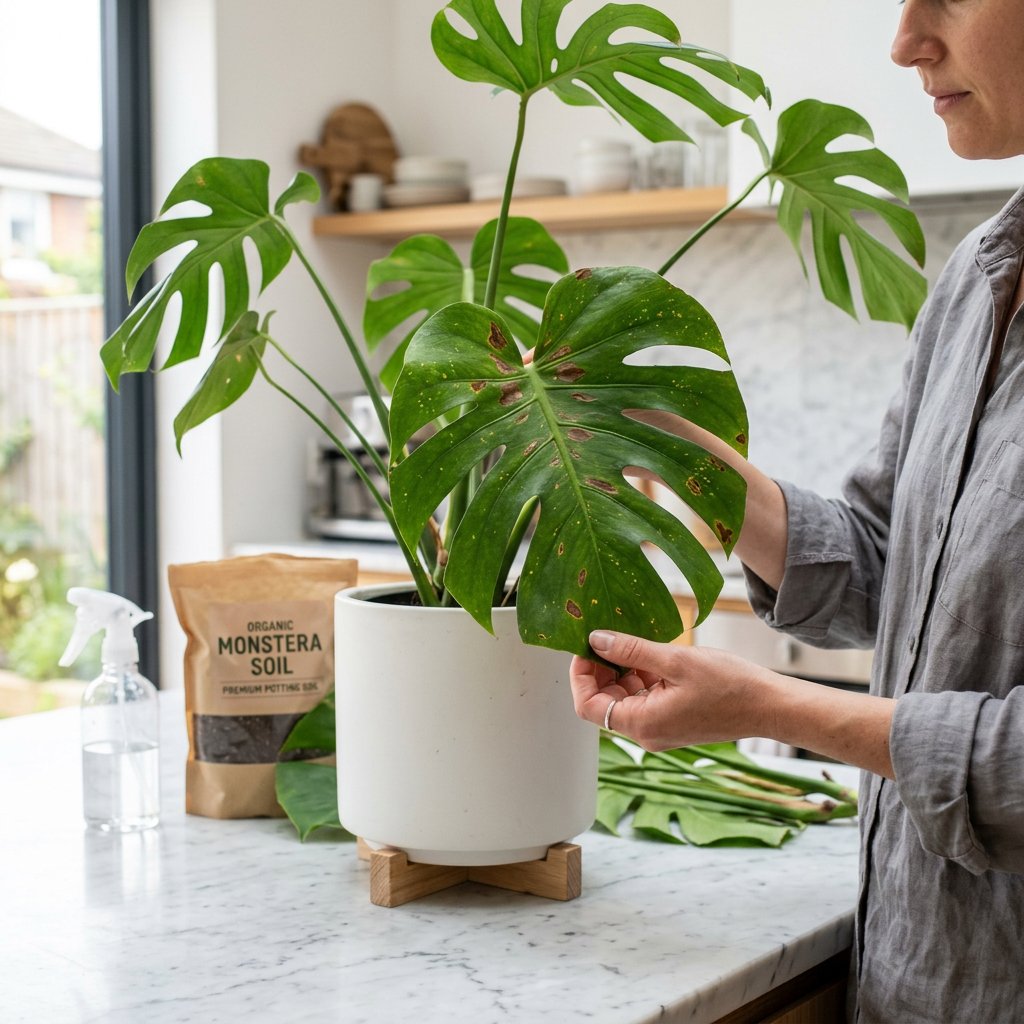
There is nothing quite like the sudden heartbreak of finding a mysterious brown spot on your beloved Monstera deliciosa. One day, your plant is pushing out beautiful, fenestrated leaves, and the next, it is sporting an alarming brown blemish. If you are feeling guilty or worried, take a deep breath! Plant issues happen to absolutely every plant parent, no matter how experienced they are.
When a Monstera develops brown spots, it is usually trying to tell you about one of two common intruders: a fungal infection or a pest infestation. Let’s break down exactly how to tell the difference and, more importantly, how to help your green friend bounce back.
The Problem: Decoding Your Monstera’s Brown Spots
Before you can treat your plant, you need to play a little bit of botanical detective. Fungi and pests leave entirely different clues behind.
Signs of a Fungal Infection
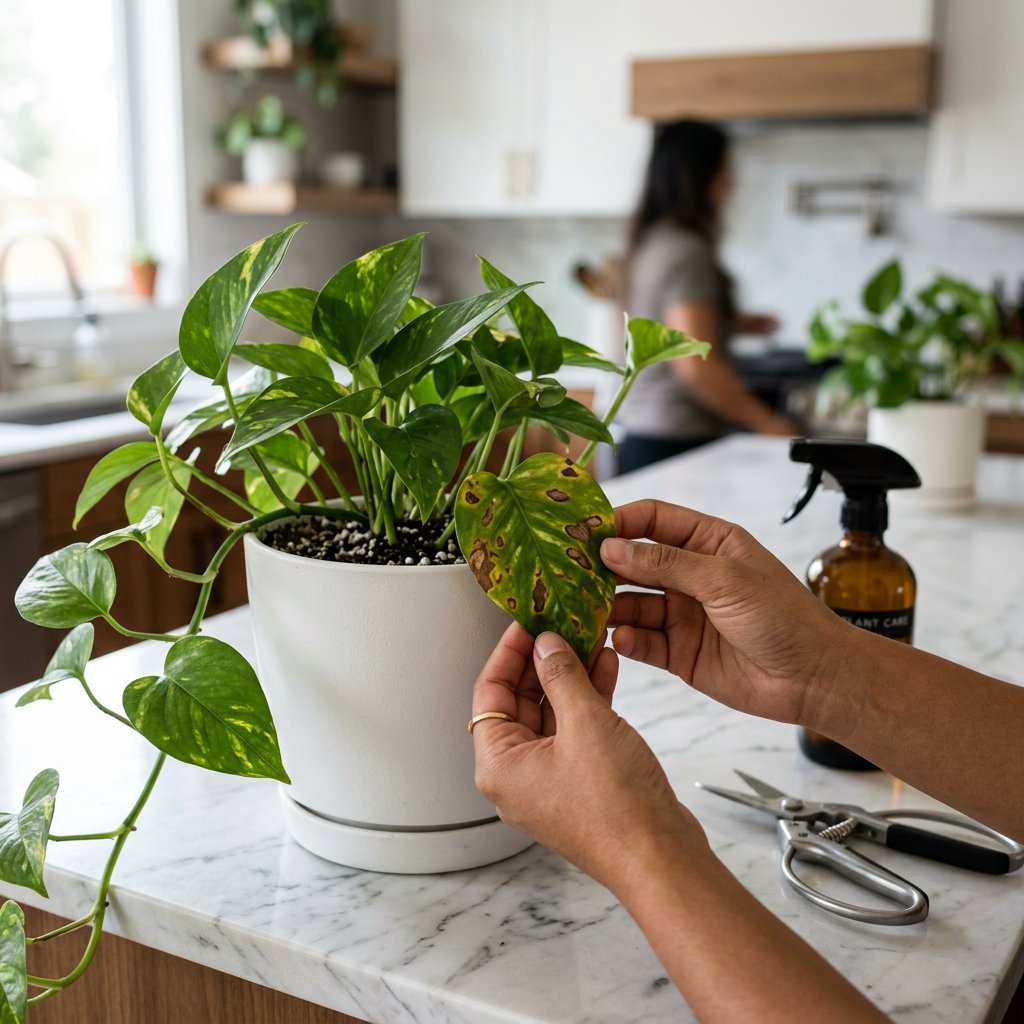
Fungal spots usually look like liquid-filled blisters or spreading bruises. Look for these symptoms:
- Dark, expanding patches: The spots are usually dark brown or black and grow larger over time.
- Yellow halos: Fungal spots are often surrounded by a distinct yellow ring. This is known as chlorosis, which simply means the plant is losing its green pigment due to localized stress and tissue damage.
- Mushy texture: If you gently touch the spot, it might feel soft, wet, or papery in the center.
Signs of Pest Damage
Pest damage is usually more scattered and physical. You are looking for the bugs themselves or the messy evidence they leave behind:
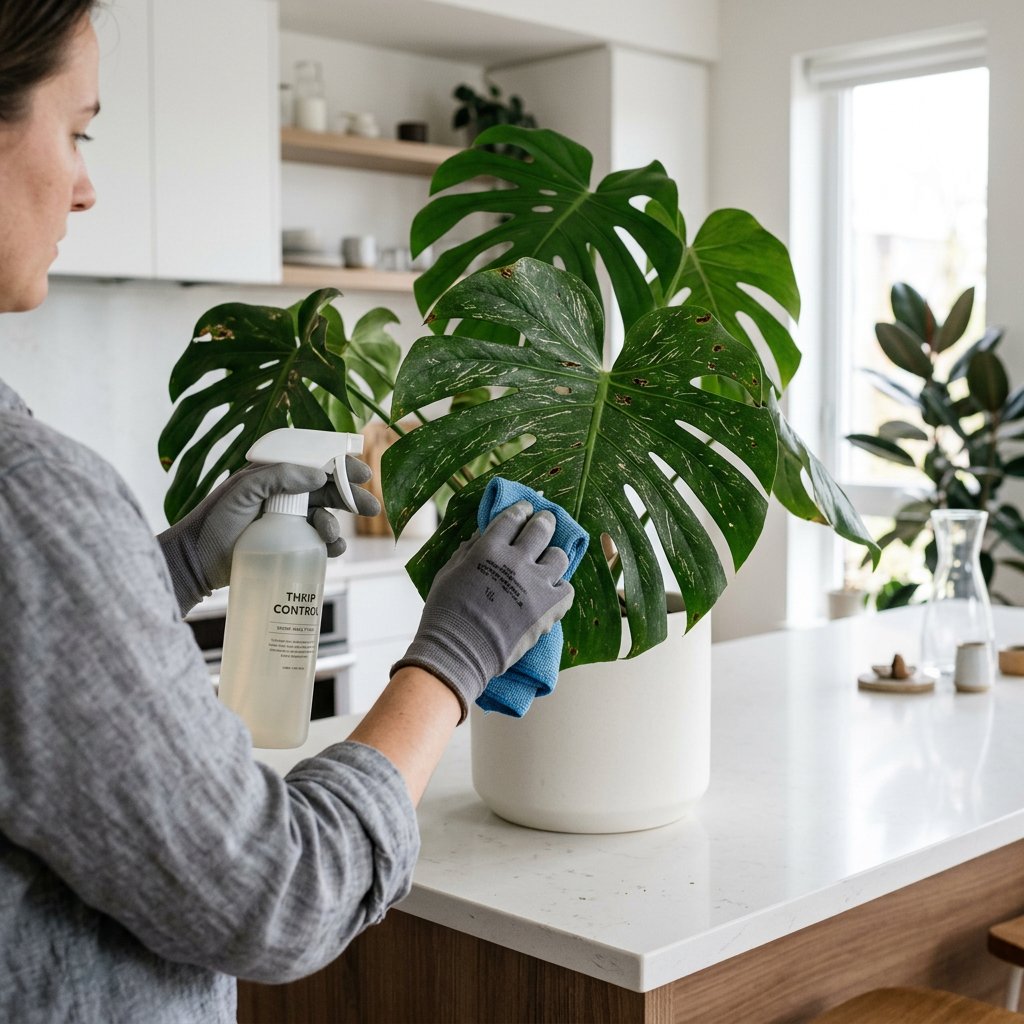
- Speckled, tiny dots: Instead of large patches, you might see clusters of tiny, pinpoint brown or rust-colored spots.
- Silvery streaks: Thrips, a very common houseplant pest, scrape the top layer of the leaf, leaving behind a silvery, scarred sheen before the tissue dies and turns brown.
- Sticky residue: Many pests excrete a sugary waste called honeydew. If the leaf feels unusually sticky, pests are likely the culprit.
- Fine webbing: If you spot tiny webs near where the stem meets the leaf, you are likely dealing with spider mites.
The Causes: Why Is This Happening?
Understanding why your plant got sick is the best way to prevent it from happening again.
What invites fungi? Fungal spores thrive in damp, stagnant environments. If your Monstera is in soil that stays wet for too long, lacks proper drainage, or sits in a room with high humidity but zero airflow, fungi will take advantage. Often, fungal leaf spots are a secondary symptom of root rot beneath the soil.
What brings the pests? Pests like thrips, spider mites, and scale are brilliant hitchhikers. They often arrive on a new plant you recently brought home, drift in through open windows during the warmer months, or multiply rapidly when your indoor air gets too dry from winter heating.
The Solutions: How to Nurse Your Monstera Back to Health
Do not panic—both pests and fungi are entirely treatable. Follow these step-by-step instructions to get your Monstera back on the path to vibrant health.
Step 1: Isolate your plant immediately. Whether it is a bug or a spore, it can spread to your other houseplants. Move your affected Monstera to a separate room while you treat it.
Step 2: Get a definitive diagnosis. If you are still unsure what is wrong with your plant after examining the leaves, do not guess! You can use the AI-powered plant disease scanner in the Plantiary app to snap a quick photo and get a highly accurate diagnosis and treatment plan in seconds.
Step 3: Treat the issue based on the diagnosis.
If it is a Fungal Infection:
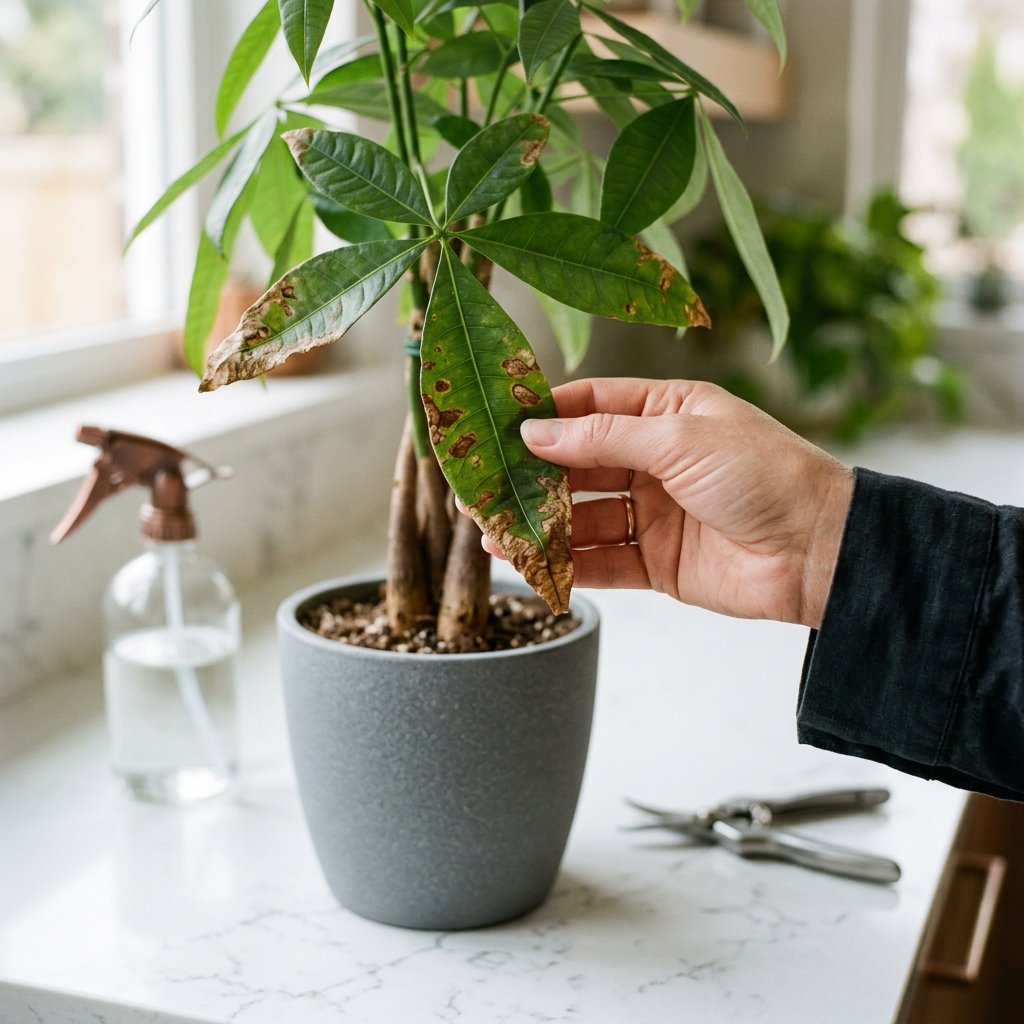
- Prune the damage: Using a pair of scissors wiped with rubbing alcohol, cut off the severely spotted leaves. This stops the spores from spreading.
- Let it breathe: Allow the top two to three inches of soil to dry out completely before watering again.
- Apply a fungicide: Spray the remaining leaves with a liquid copper fungicide, which is widely recognized as a safe and effective way to stop fungal growth.
If it is a Pest Infestation:
- Give it a shower: Take your Monstera to the bathroom and gently rinse the leaves with lukewarm water to physically knock off as many bugs as possible.
- Apply a treatment: Spray the plant thoroughly with insecticidal soap or neem oil (a natural, plant-based oil that disrupts the life cycle of pests).
- Keep it out of the sun: Always apply neem oil or insecticidal sprays in the evening. If you put oil on leaves in direct sunlight, it can cause severe sunburn.
You’ve Got This!
Seeing brown spots on your Monstera can be intimidating, but remember that plants are incredibly resilient. Every brown spot is just a learning opportunity that will make you a more confident plant parent. By catching the symptoms early, making a few simple environmental tweaks, and treating the issue properly, your Monstera will be pushing out happy, healthy new leaves before you know it.