Have you noticed your usually tough-as-nails Crown of Thorns (Euphorbia milii) looking a little under the weather lately? With its striking, colorful bracts and formidable stems, this gorgeous succulent-like plant is known for being incredibly resilient. However, even the hardiest plants have an Achilles' heel, and for the Crown of Thorns, it's soggy soil.
If your plant is dropping leaves or looking wilted, you might be dealing with root rot. First things first: take a deep breath and do not feel guilty! Overwatering is the most common mistake made by indoor gardeners, and root rot is simply a rite of passage for plant parents. You caught it, and that’s what matters. Let’s dive into how to rescue your beloved plant.
The Problem: Spotting the Symptoms of Root Rot
Root rot is exactly what it sounds like—a condition where a plant's roots begin to decay, usually due to a lack of oxygen in waterlogged soil. When roots rot, they can no longer absorb water or nutrients, which ironically makes the plant look like it's dying of thirst.
Here are the telltale signs to look out for:
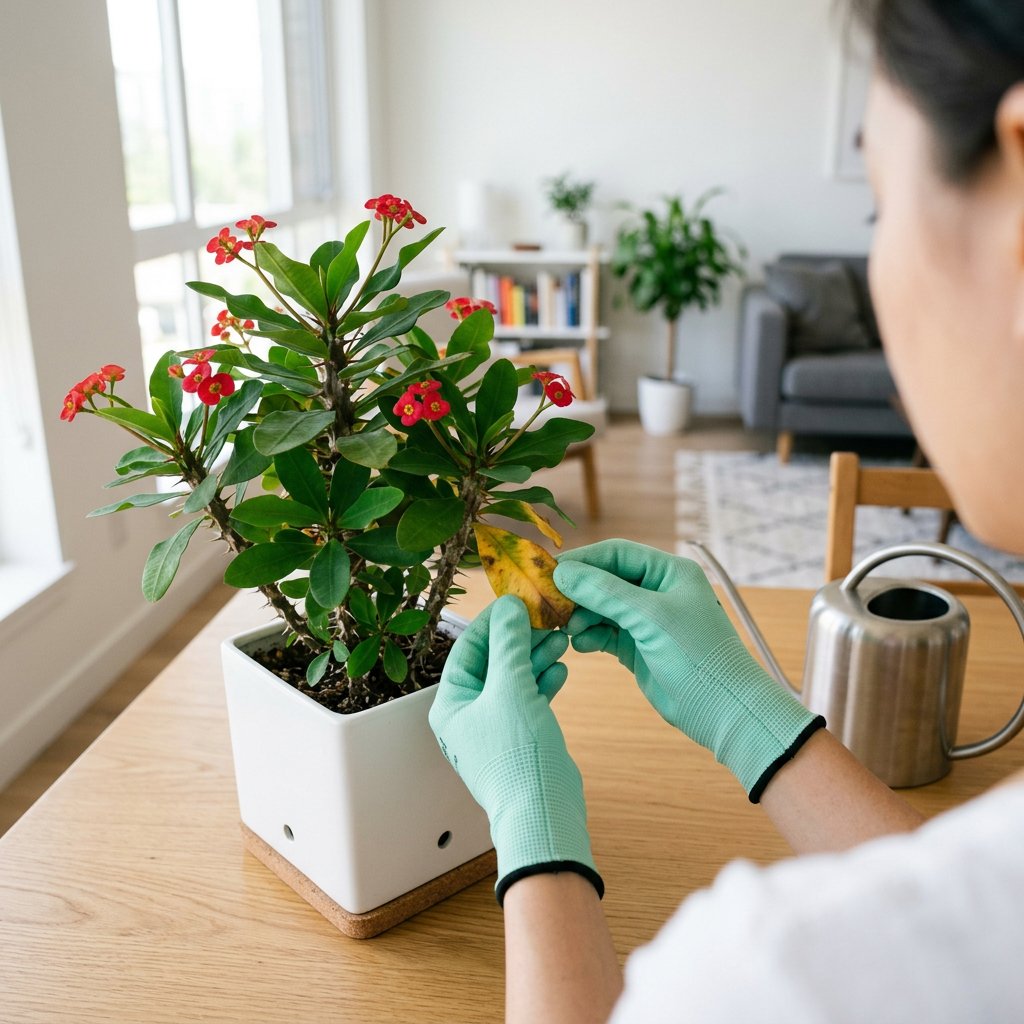
- Yellowing leaves: Also known in the botany world as chlorosis (a loss of the green pigment chlorophyll), this is often the first sign of distress.
- Excessive leaf drop: While a few dropped leaves are normal, a sudden shedding of green or yellow leaves is a red flag.
- Mushy stems: If the base of the thorny stem feels soft, squishy, or looks blackened, the rot has spread upward from the roots.
- A foul odor: If you sniff the soil and it smells like a swamp or rotten eggs, fungal or bacterial decay is happening beneath the surface.
If you are unsure what is wrong with your plant, you can use the AI-powered plant disease scanner in the Plantiary app to get a diagnosis in seconds!
The Causes: Why Did This Happen?
Understanding the root cause (pun intended) helps prevent it from happening again. Crown of Thorns root rot is almost always triggered by one of the following:
- Overwatering: These plants store water in their thick stems. Watering them on a strict weekly schedule, rather than waiting for the soil to dry out, suffocates the roots.
- Poor drainage: Using heavy, moisture-retaining potting soil or placing your plant in a decorative pot without drainage holes creates a bathtub effect at the bottom of the pot.
- Inadequate lighting: Crown of Thorns loves bright, direct sunlight. In lower light conditions, the plant uses water much slower, meaning the soil stays wet for far too long.
The Solutions: Your Step-by-Step Rescue Plan
Ready to play plant surgeon? Grab a pair of thick gardening gloves—Crown of Thorns has sharp spikes and milky sap that can irritate the skin—and follow these proven rescue steps:
Step 1: Unpot and Inspect
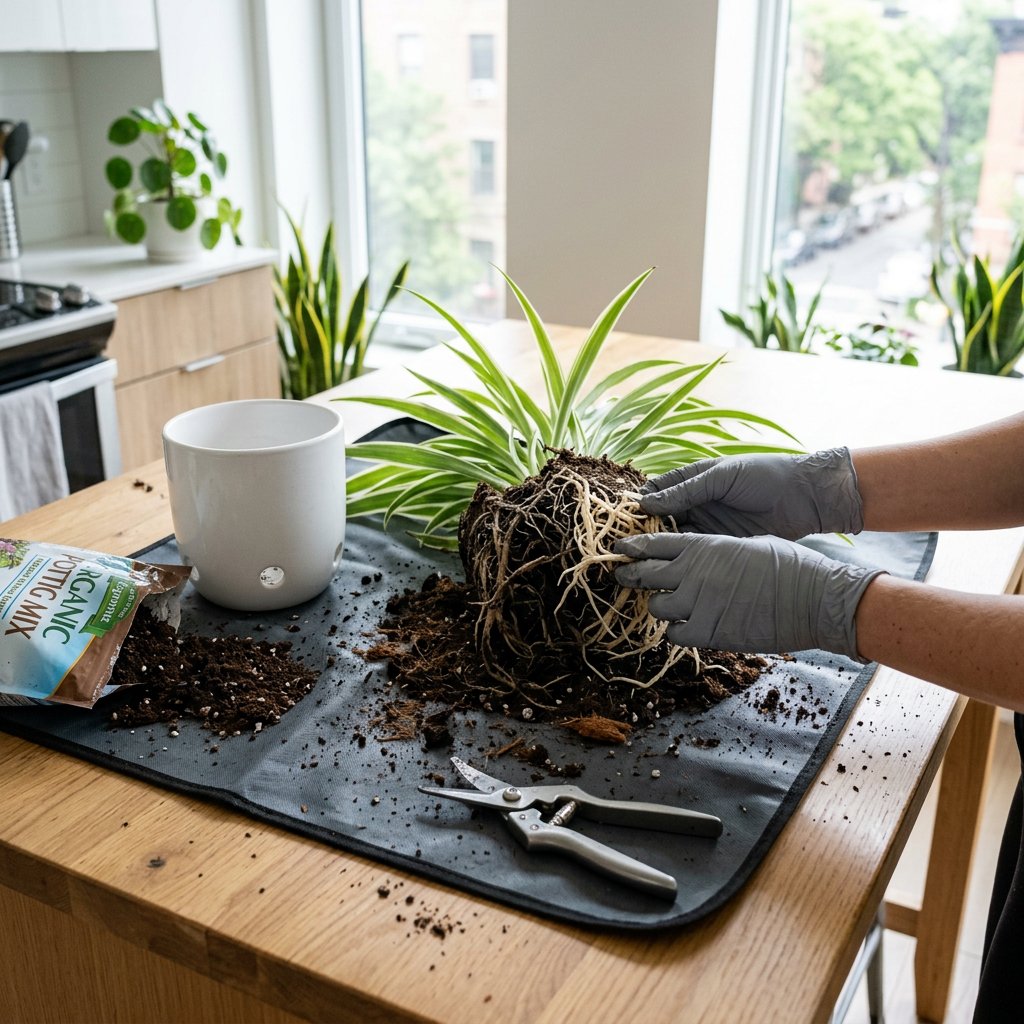
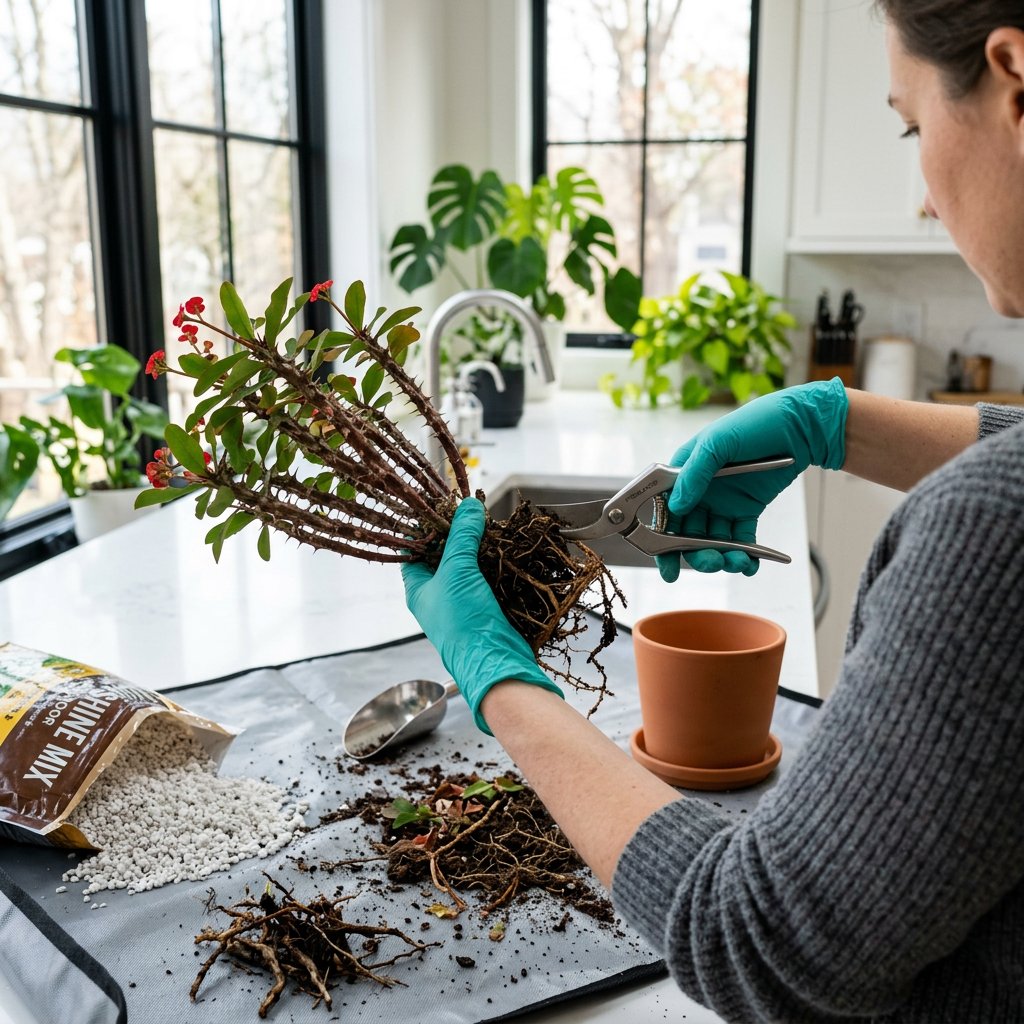
Gently pull your plant out of its pot and massage the old, wet dirt away from the root ball. Healthy roots should be firm and light-colored. Rotted roots will look dark brown or black, feel slimy, and pull apart easily.
Step 2: Prune the Decay
Using a pair of sterilized scissors or pruning shears, boldly snip away all the mushy, dark, and smelly roots. Be thorough; leaving any rotting tissue behind can allow the decay to spread. Wipe your blades with rubbing alcohol after every few cuts.
Step 3: Treat the Remaining Roots
To kill off any lingering fungal spores, you can lightly spray the healthy roots with a safe, organic fungicide. Alternatively, a quick dip in a diluted hydrogen peroxide solution (one part 3% hydrogen peroxide to two parts water) works wonders by adding an oxygen boost and neutralizing bacteria.
Step 4: Repot in the Right Mix
Throw away the old, infected soil—do not reuse it! Repot your Crown of Thorns in a fresh, well-draining succulent or cactus mix. You can mix in extra perlite or pumice to ensure excellent airflow. Most importantly, ensure your new pot has large drainage holes at the bottom.
Step 5: Adjust Your Watering Strategy
Hold off on watering for about a week to let the trimmed roots heal and callous over. Going forward, practice the "soak and dry" method. Wait until the top 2 to 3 inches of the soil are completely bone-dry before giving it a thorough watering, allowing all excess water to drain out the bottom.
Plant recovery takes time and a little patience. If your Crown of Thorns loses a few more leaves after repotting, don't panic—it is just focusing its energy on regrowing a healthy root system. With plenty of sunshine, proper drainage, and your loving care, your plant will be pushing out brilliant new blooms in no time. For ongoing care reminders and tips to keep your plant thriving, don't forget to log your watering schedule in the Plantiary app!