Let’s be honest—Fiddle Leaf Figs (Ficus lyrata) are the gorgeous divas of the houseplant world. We love them for their massive, sculptural leaves, but they can be incredibly dramatic when something is slightly off in their environment. If your prized Fiddle is suddenly dropping leaves or developing ugly brown patches, take a deep breath. You haven't failed as a plant parent! Plant hiccups happen to everyone, even seasoned botanists.
One of the most common culprits behind a sad Fiddle Leaf Fig is root rot. The good news? It is entirely treatable if caught in time. If you're ever in doubt about what is happening beneath the soil, remember you can always use the AI-powered plant disease scanner in the Plantiary app to snap a quick photo and get an instant diagnosis. For now, let's dive into exactly how to rescue your leafy friend.
The Problem: Spotting the Symptoms of Root Rot
Root rot happens beneath the soil, making it a sneaky issue. However, your Fiddle Leaf Fig will show you exactly how it's feeling through its leaves. Look out for these telltale signs:
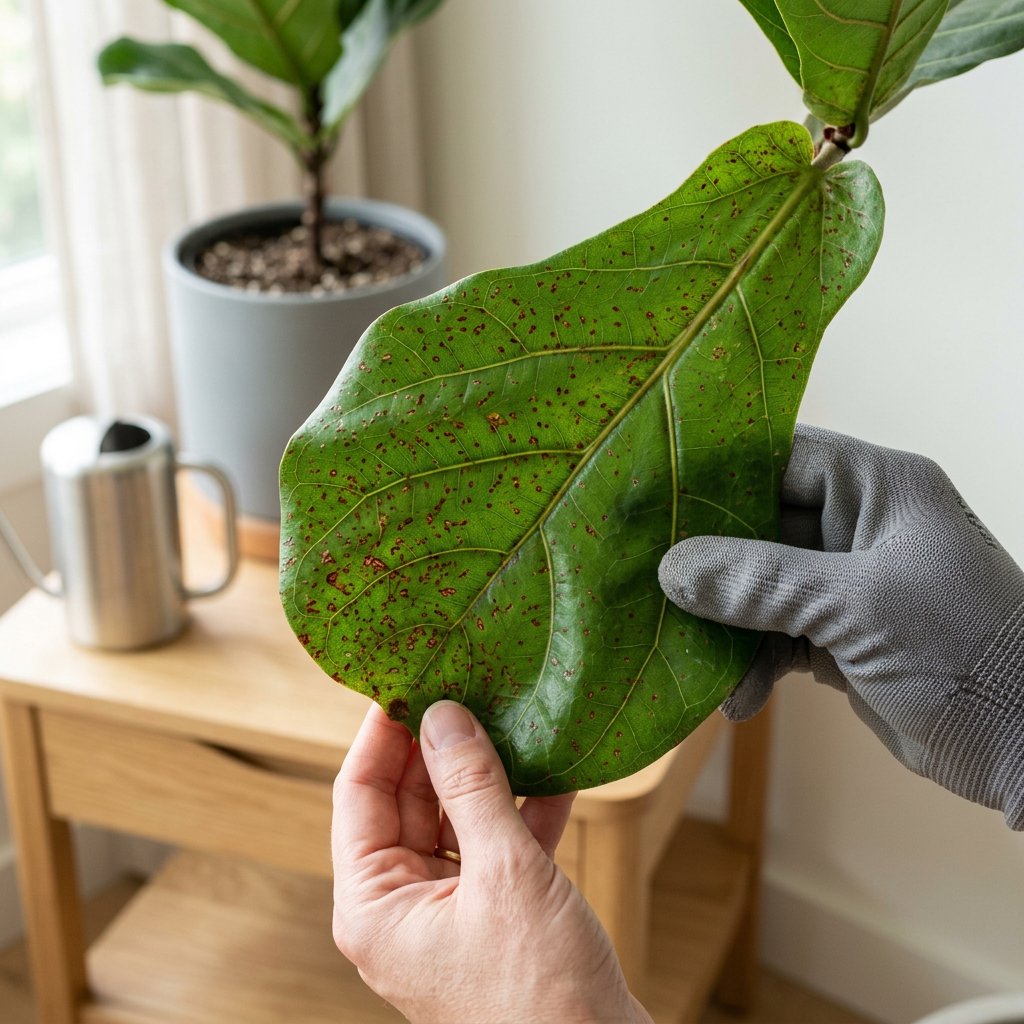
- Dark brown or black spots: Unlike dry, crispy edges that come from underwatering, root rot spots often start in the center of the leaf or at the base near the stem. The spots may also feel slightly soft or mushy.
- Rapidly dropping leaves: It is normal for an old bottom leaf to shed occasionally, but rapid leaf loss—especially of green or newer leaves—is a major red flag.
- Yellowing leaves (Chlorosis): Chlorosis is a botanical term for when leaves lose their green pigment and turn yellow. This happens because damaged roots can no longer absorb essential nutrients from the soil.
- A swampy smell: If you lean in close to the soil and it smells sour, musky, or like a rotting swamp, decay is likely setting in beneath the surface.
The Causes: Why Do Fiddle Leaf Fig Roots Rot?
Despite what the name implies, water itself doesn't directly cause root rot. The true enemy is a lack of oxygen. When your plant's roots sit in waterlogged soil for too long, they literally suffocate. This creates the perfect breeding ground for opportunistic soil fungi to multiply and attack the weakened root system. Common triggers include:
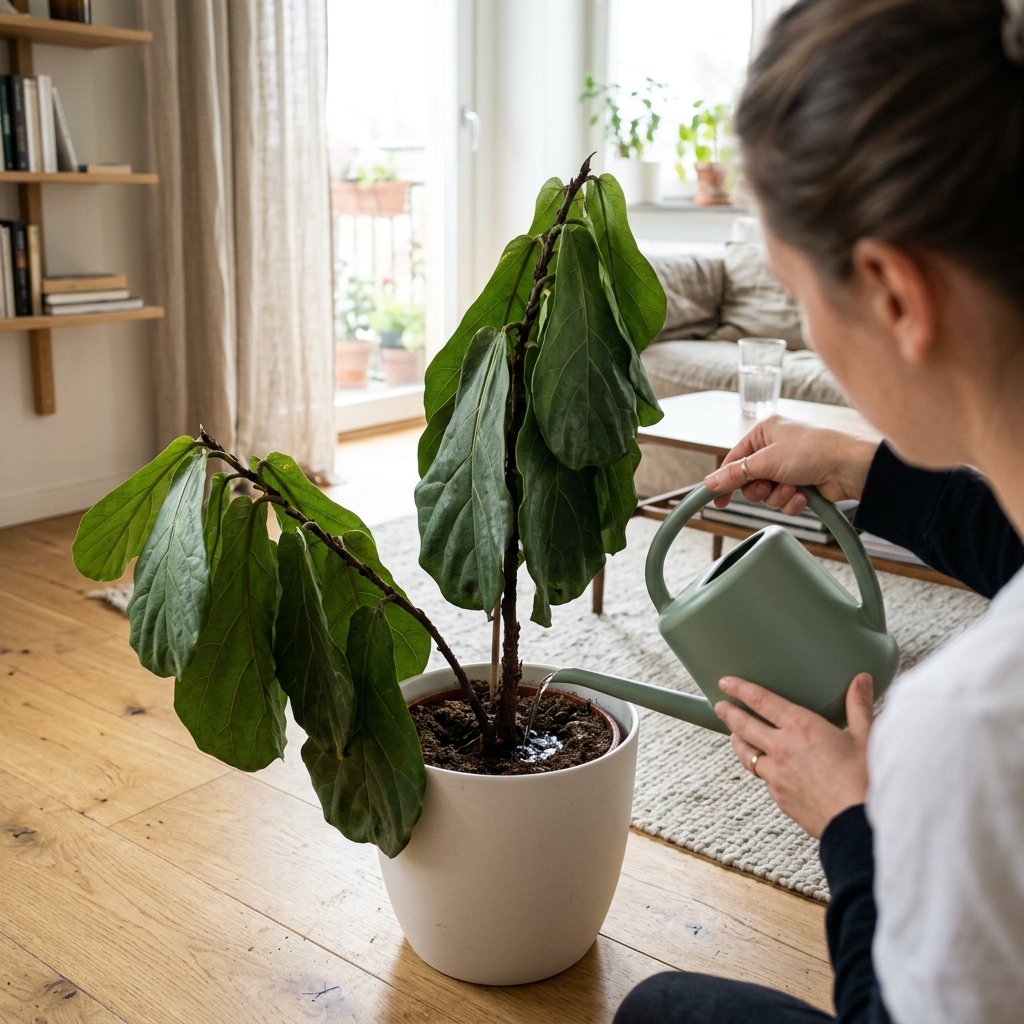
- Overwatering: Watering on a strict weekly schedule rather than physically feeling the soil first to see if the plant is actually thirsty.
- Poor drainage: Pots without drainage holes trap excess water at the bottom, turning the base of the pot into a puddle.
- Dense potting mix: Standard, heavy potting soil holds onto too much moisture for a Fiddle Leaf Fig, which naturally prefers airy, fast-draining conditions.
The Solution: Step-by-Step Root Rot Rescue
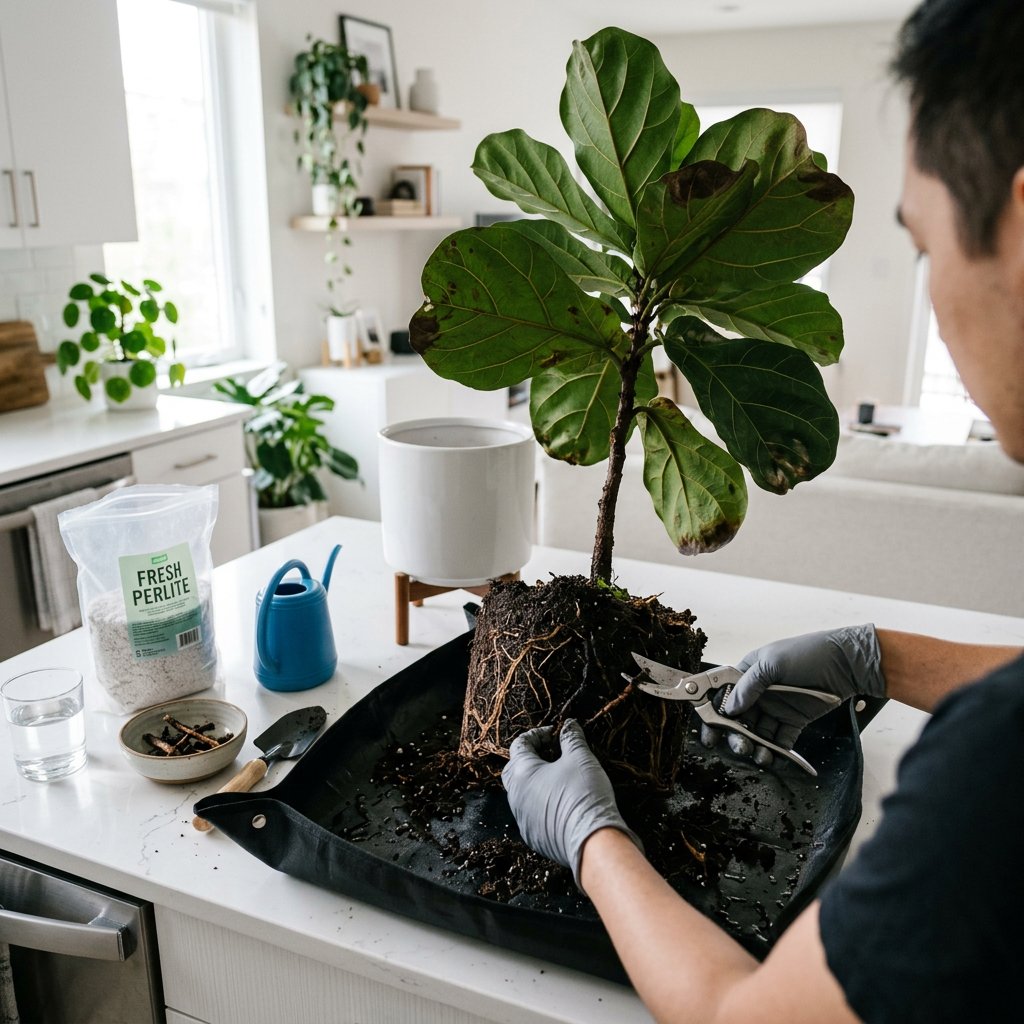
If you suspect root rot, you need to act quickly. Roll up your sleeves, grab some pruning shears, and follow these scientifically backed steps to save your plant:
Step 1: Unpot and Inspect
Gently pull your Fiddle Leaf Fig out of its pot and massage the soil away from the roots. Healthy roots should be firm and light-colored (white, tan, or light brown). Rotted roots will look dark brown or black, feel slimy or mushy, and might pull apart effortlessly when touched.
Step 2: Prune the Decay
Using sterilized scissors or pruning shears (wipe them with rubbing alcohol first!), carefully snip away all the soft, dark, mushy roots. Be ruthless here—leaving even a tiny bit of rot can allow the fungus to continue spreading.
Step 3: Disinfect the Roots
Once you've removed the dead tissue, you need to treat the remaining healthy roots. Gently rinse them with a diluted hydrogen peroxide solution (mix one part 3% household hydrogen peroxide with two parts water). This safely kills lingering fungal spores and delivers a much-needed boost of oxygen directly to the root system.
Step 4: Repot with Proper Soil and Drainage
Do not reuse the old, contaminated soil! Repot your plant in a clean container that has at least one large drainage hole. Use a chunky, well-aerating soil mix. A blend of high-quality indoor potting soil, plenty of perlite, and some orchid bark is perfect for mimicking the Fiddle Leaf Fig's natural environment and ensuring excess water drains quickly.
Step 5: Adjust Your Care Routine
Place your newly potted Fiddle in a spot with bright, indirect sunlight. Hold off on watering for just a few days to let the pruned roots callous over and heal. Going forward, only water when the top two to three inches of soil feel completely dry to the touch.
Patience is Key
Recovering from root rot takes a lot of energy, so your Fiddle Leaf Fig might look a little stagnant or sad for a few weeks after the rescue mission. Don't panic! Give it time, avoid using fertilizers until you see new active growth, and offer it plenty of bright, filtered light. Plant care is all about learning, and overcoming root rot will make you a much more confident plant parent.
Want to keep your plant care routine stress-free? Download the Plantiary app to set customized watering reminders, track your plant's growth, and diagnose future issues before they become emergencies. You've got this, and your Fiddle Leaf Fig does too!