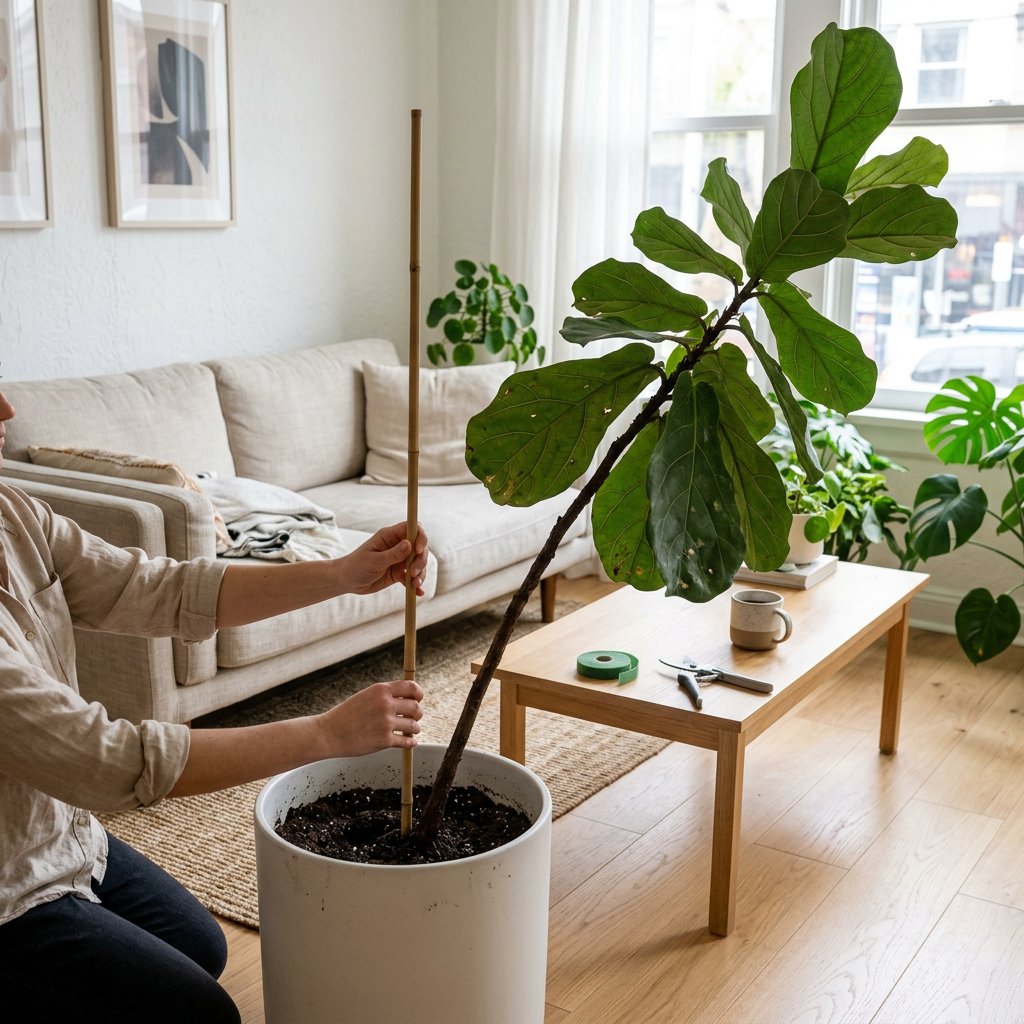
If there is one houseplant that has truly mastered the art of drama, it is the beloved Fiddle Leaf Fig (Ficus lyrata). One day it is standing tall, bringing a lush, architectural vibe to your living room, and the next day, its massive leaves are slumped over toward the floor. Seeing your once-perky plant droop can feel incredibly stressful, but take a deep breath—you are not a bad plant parent!
Fiddle Leaf Figs are notoriously sensitive to change, and a drooping plant is simply their way of communicating that something in their environment needs a little tweak. Every indoor gardener faces this challenge at some point. Fortunately, with a bit of detective work and helpful tools like the Plantiary app to track your care routines, you can get those gorgeous leaves pointing toward the sky once again.
The Problem: Decoding the Droop
When a Fiddle Leaf Fig droops, it is experiencing a loss of turgor pressure. Simply put, turgor pressure is the internal water pressure inside the plant’s cells that keeps the stems rigid and the leaves standing stiff. When this pressure drops, the plant goes limp.
Before we jump into fixing the plant, take a close look at the symptoms. Are the leaves completely green but just hanging downward? Are the bottom leaves turning yellow before dropping? Or are you noticing crispy brown edges? Identifying exactly how your plant is drooping will help us pinpoint the exact cause.
The Causes: Why is Your Fiddle Leaf Fig Sad?
Fiddle Leaf Figs thrive on consistency. When they droop, it is almost always due to an imbalance in their daily routine. Here are the most common culprits:
- Underwatering: This is the most frequent cause of drooping. If the roots don't have enough water to pull up into the foliage, the turgor pressure drops rapidly, causing the entire plant to wilt.
- Overwatering and Root Rot: Ironically, too much water causes the exact same drooping symptom. If the soil stays constantly soggy, the roots suffocate and begin to rot. When roots die, they can no longer absorb water, leading to a thirsty, drooping plant sitting in a pot of mud.
- Environmental Shock: Did you recently bring the plant home from the nursery, repot it, or move it to a different room? Fiddle Leaf Figs absolutely despise being moved. Even a minor change in lighting or humidity can send them into shock.
- Temperature Stress: These plants are tropical. If they are placed near a drafty window, an air conditioning vent, or a radiator, the sudden shifts in temperature will cause them to wilt defensively.
The Solutions: Step-by-Step Revival Guide
Ready to nurse your leafy friend back to health? Follow these actionable steps to safely revive your drooping Fiddle Leaf Fig.
Step 1: Perform the Soil Test Before you do anything, you need to check the soil moisture. Insert your finger about 2 to 3 inches into the topsoil. If it feels bone dry, your plant is likely underwatered. If it feels wet, dense, and smells slightly sour, you are dealing with overwatering. Tip: To prevent future watering mishaps, you can set up a custom watering schedule in your Plantiary app so you always know when it's time for a drink.
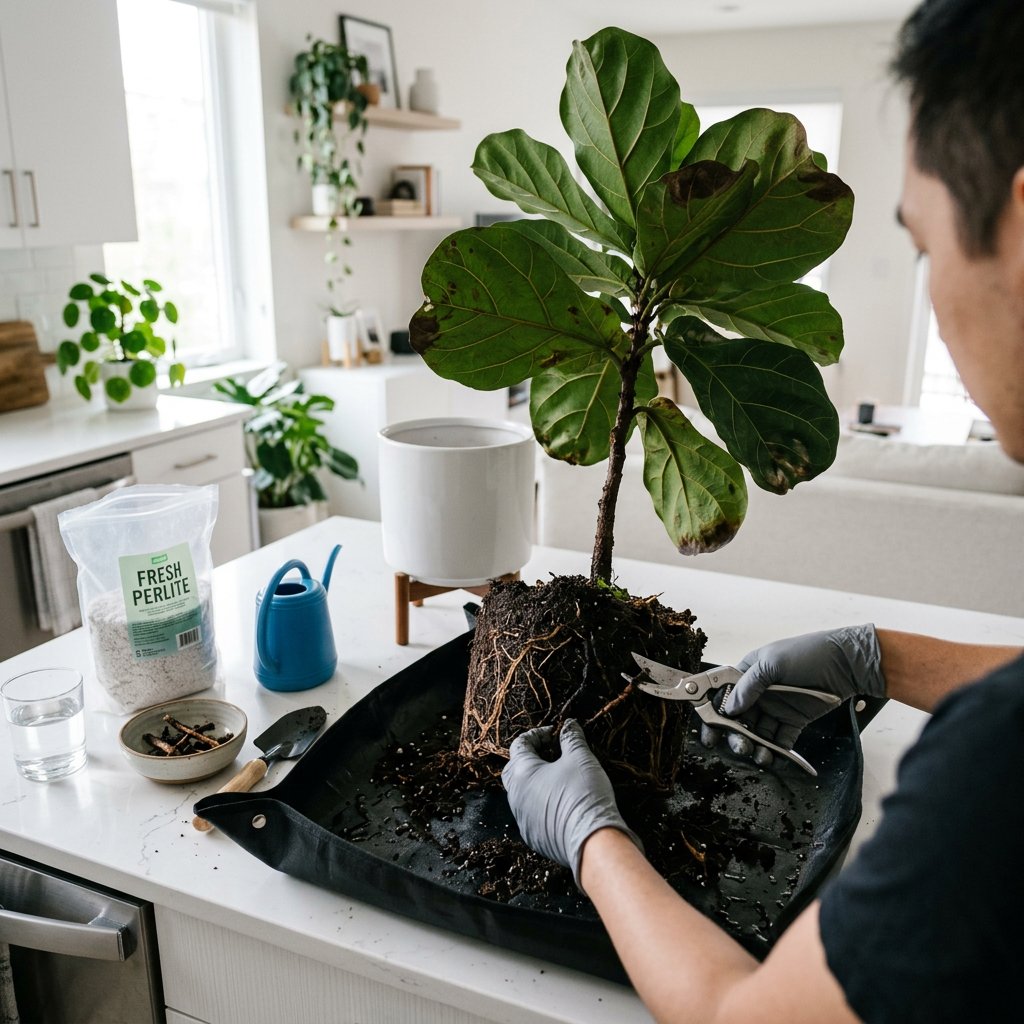
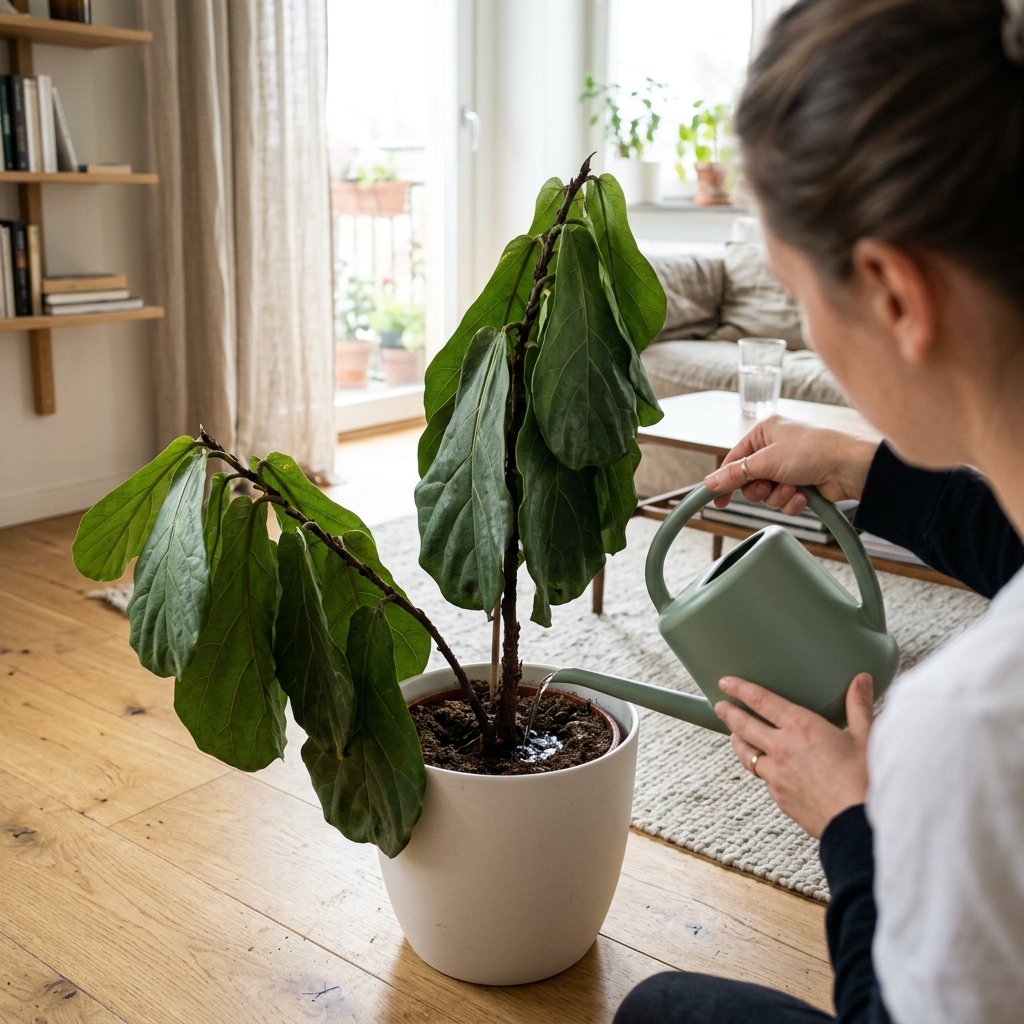
Step 2: Correct Your Watering Technique If the plant is dry, give it a thorough soak. Water the soil evenly until you see water escaping from the drainage holes at the bottom of the pot. Empty the saucer after 15 minutes so the plant isn't left sitting in standing water. If the plant is overwatered, hold off on watering entirely until the top few inches of soil dry out. If you suspect severe root rot, you may need to repot the plant in fresh, well-draining soil.
Step 3: Optimize the Lighting Fiddle Leaf Figs need plenty of bright, indirect sunlight to thrive. If your plant is tucked away in a dark, empty corner, it will slowly weaken and droop. Move it directly in front of an East-facing window, or a few feet back from a South or West-facing window. Just be sure to avoid harsh, direct midday sun, which can scorch their leaves.
Step 4: Shield from Drafts Take a walk around your plant and feel the air. Is there a cold draft from an AC vent hitting the leaves? Is a heater blowing hot air directly onto the trunk? Relocate your plant to a stable, temperature-controlled spot in your home.
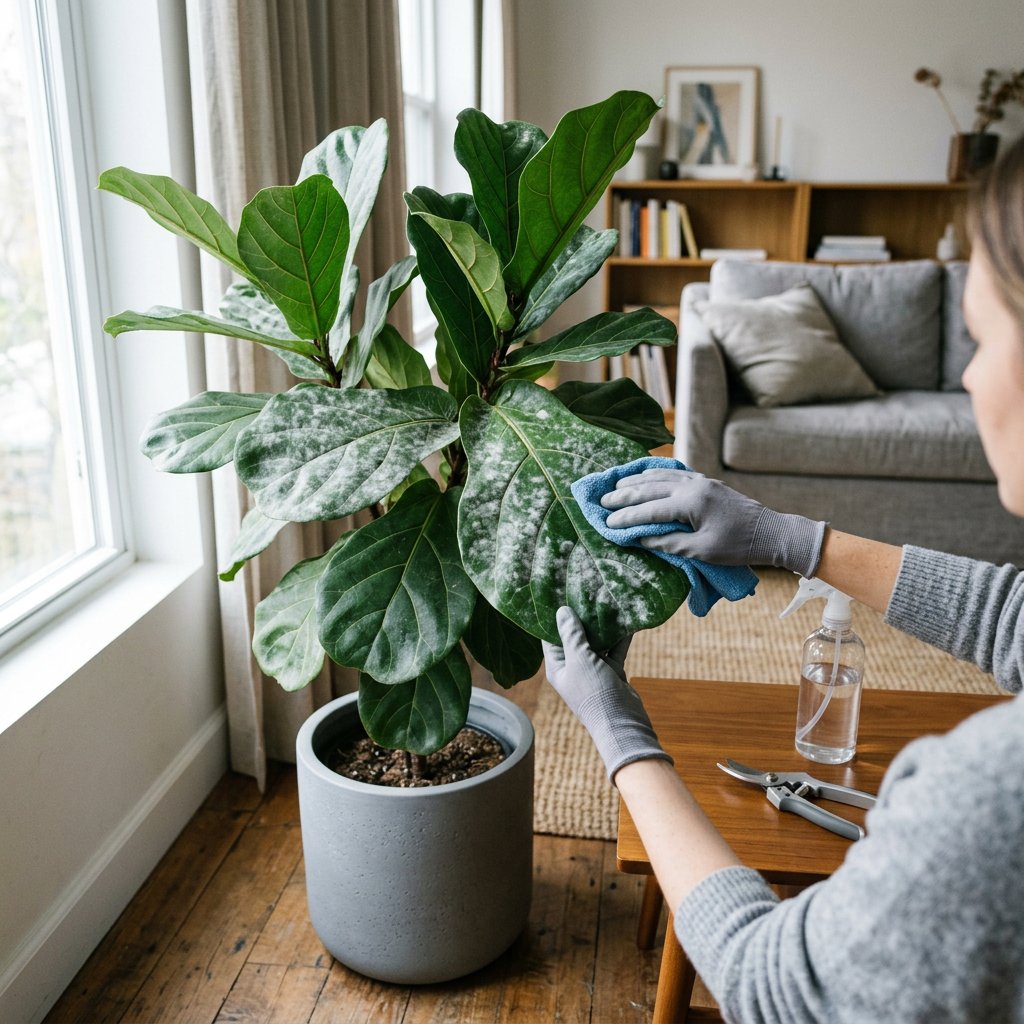
Step 5: Scan for Underlying Illness If you have corrected the watering, lighting, and temperature, but your plant is still drooping or developing strange spots, it might be battling a pest or fungal issue. If you are unsure what is wrong with your plant, you can use the AI-powered plant disease scanner in the Plantiary app to get a diagnosis and a personalized treatment plan in seconds.
Step 6: Practice Patience Finally, give it time! If your plant is drooping due to relocation shock or a recent repotting, it just needs a few weeks to adjust. Leave it alone in a bright, warm spot, maintain a consistent watering routine, and trust the process.
Houseplants are incredibly resilient, and your Fiddle Leaf Fig wants to survive just as much as you want it to. With a little bit of patience, the right environment, and consistent care, your gorgeous tree will be standing proud once again!