You’ve spent months perfecting the lighting and watering schedule for your beloved Fiddle Leaf Fig, only to wake up one morning and find its massive, glossy leaves covered in a strange white powder. Seeing your beautiful plant struggling can feel incredibly discouraging, but please take a deep breath! Plant ailments happen to absolutely every plant parent, no matter how experienced they are.
If you are dealing with this dusty white coating, your plant is likely battling powdery mildew—a very common fungal disease that thrives when environmental conditions are slightly off. The good news? It is entirely treatable, and your Fiddle Leaf Fig can absolutely bounce back. Let’s walk through the symptoms, the underlying causes, and the exact steps you need to take to get those gorgeous green leaves shining again.
The Problem: Identifying Powdery Mildew
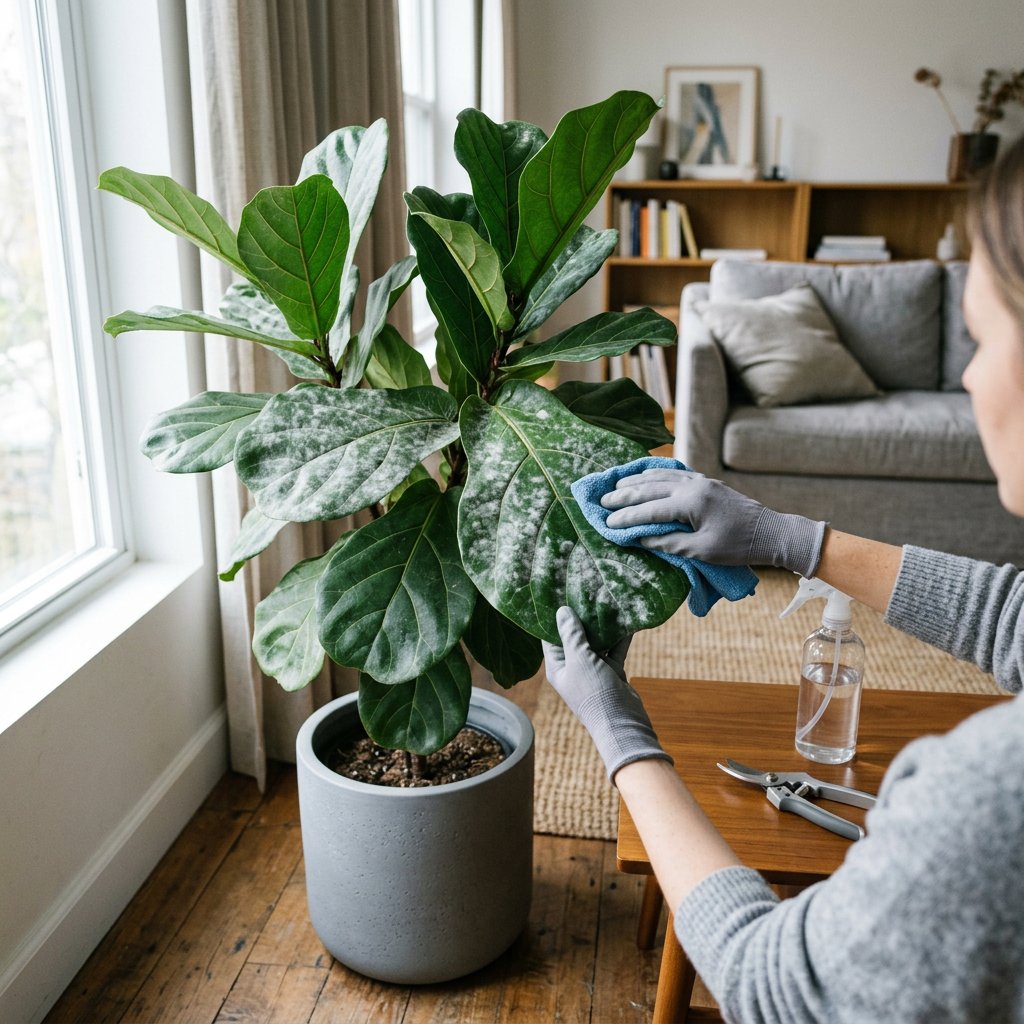
Powdery mildew is a fungal infection that spreads through tiny airborne spores. While it might look like someone accidentally spilled flour or baby powder on your plant, it is actually a living fungus drawing nutrients from your plant’s foliage.
If you are unsure what is wrong with your plant, you can use the AI-powered plant disease scanner in the Plantiary app to get a diagnosis in seconds! If it is indeed powdery mildew, you will likely notice the following symptoms:
- Dusty white or gray spots: These usually appear on the upper surfaces of the leaves first.
- Stunted growth: New leaves may emerge smaller than usual.
- Curling or distorted leaves: As the fungus drains the plant's energy, the foliage can warp or turn yellow (chlorosis—a loss of the green pigment needed for photosynthesis).
- Premature leaf drop: In severe cases, the plant may drop its leaves entirely.
The Causes: Why is My Fiddle Leaf Fig Getting Mildew?
Fungi are opportunistic, meaning they only take hold when the environment invites them in. Powdery mildew typically attacks your Fiddle Leaf Fig due to a combination of these factors:
- Poor Air Circulation: Stagnant air is a fungus's best friend. If your plant is tucked into a tight, draft-free corner, spores can easily settle and multiply.
- High Humidity with Cool Temperatures: While Fiddle Leaf Figs love humidity, high moisture combined with cool air and zero airflow creates a perfect breeding ground for mildew.
- Wet Foliage: Watering your plant from above and leaving water sitting on the leaves encourages fungal spores to germinate.
- Low Light: Mildew thrives in the shade. If your plant isn't getting enough bright, indirect sunlight, it becomes more susceptible to infections.
The Solutions: Step-by-Step Treatment
Ready to banish that white fuzz? Follow these scientifically backed, safe steps to restore your Fiddle Leaf Fig to its former glory. Avoid harsh DIY kitchen pantry remedies, as these can easily burn the delicate tissue of the leaves.
Step 1: Isolate Your Plant
Fungal spores travel easily through the air. As soon as you notice the white mildew, gently move your Fiddle Leaf Fig away from your other houseplants to prevent a full-blown indoor garden outbreak.
Step 2: Wipe Down the Leaves
Take a soft, damp microfiber cloth and gently wipe the white powder off the affected leaves. Make sure to rinse the cloth frequently so you aren't just spreading the spores from one leaf to another. This physically removes the bulk of the fungus, making your treatment much more effective.
Step 3: Apply a Safe Treatment
To kill the remaining microscopic spores, you need a targeted treatment.
- Neem Oil: This natural, plant-based oil acts as a safe and effective fungicide. Spray a diluted neem oil solution all over the leaves (top and bottom) in the evening, out of direct sunlight, to prevent leaf burn.
- Copper Fungicide: If the mildew is stubborn, a commercial liquid copper fungicide formulated for houseplants is an excellent, scientifically proven alternative. Follow the label instructions carefully.
Step 4: Fix the Environment
Treatment won't last if the environment stays the same. Move your Fiddle Leaf Fig to a spot with bright, indirect sunlight. If the room is stuffy, turn on a small oscillating fan to keep the air moving around the foliage.
Step 5: Adjust Your Watering Habits
Stop getting the leaves wet! Water the soil directly, or try bottom-watering (letting the plant soak up water from a tray beneath its pot).
Keep Your Plant Thriving
Recovering from powdery mildew takes a little patience, but with a few adjustments to its environment, your Fiddle Leaf Fig will be pushing out massive, healthy green leaves again in no time.
To prevent future outbreaks, consistency is key. If you struggle to keep track of when to water or when to fertilize, let the Plantiary app do the heavy lifting. By setting up custom care reminders in the app, you can easily maintain the perfect routine to keep your plants robust, resilient, and happily fungus-free!