We’ve all been there. You want to give your beloved Fiddle Leaf Fig (Ficus lyrata) the bright light it desperately craves, so you move it to a sunny patio or right up against a bright, south-facing window. A few days later, you notice alarming, discolored patches on those iconic, violin-shaped leaves.
First of all, take a deep breath and don't beat yourself up! Plant parenting is a journey full of trial and error, and sunburn is an incredibly common bump in the road. While it can look intimidating, your plant is resilient. Let's break down exactly what is happening to your Fiddle Leaf Fig and how you can nurse it back to health.
The Problem: Identifying Sunburn Symptoms
It is easy to misdiagnose sunburn, as Fiddle Leaf Figs are famous for throwing dramatic fits (and dropping leaves) when they are unhappy with their watering schedule. However, sunburn has a few very distinct visual cues:
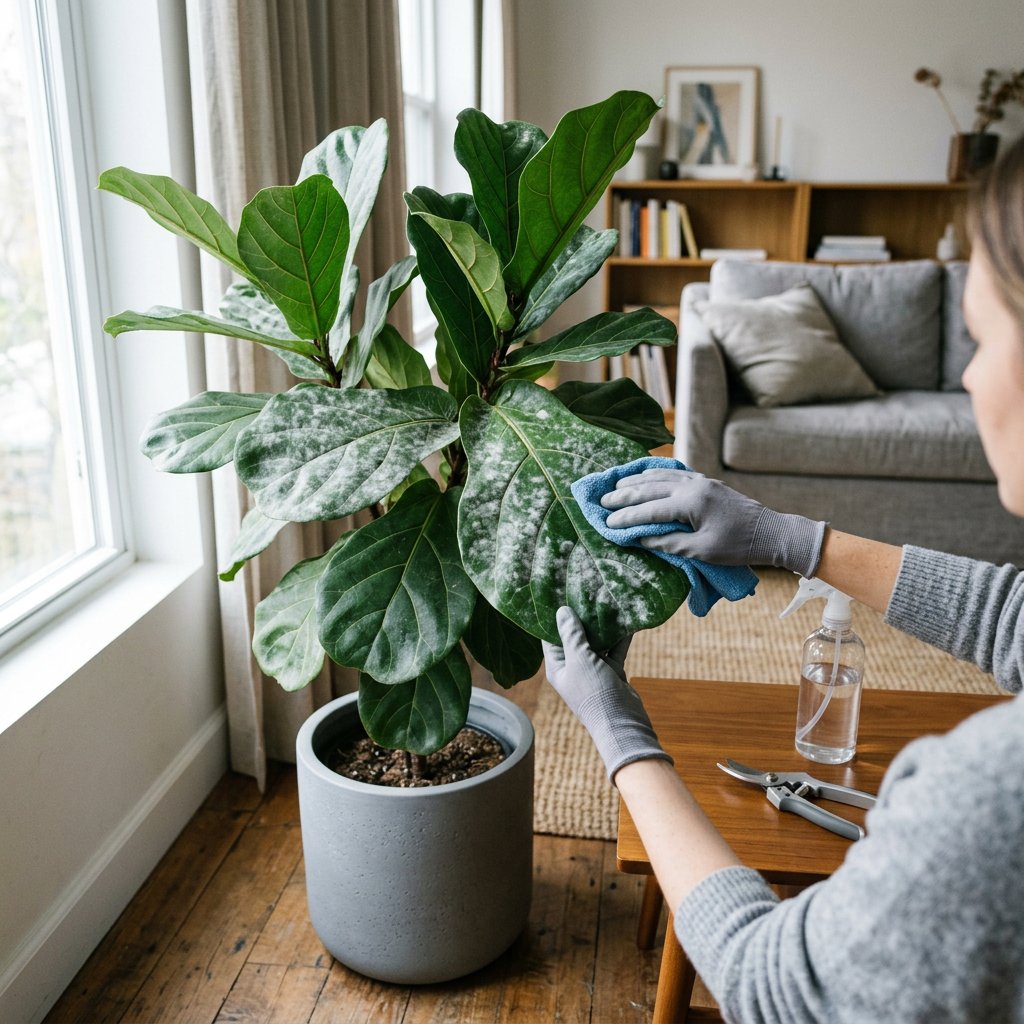
- Bleached or white patches: This is usually the first sign. The top layer of the leaf loses its color and looks washed out or silvery.
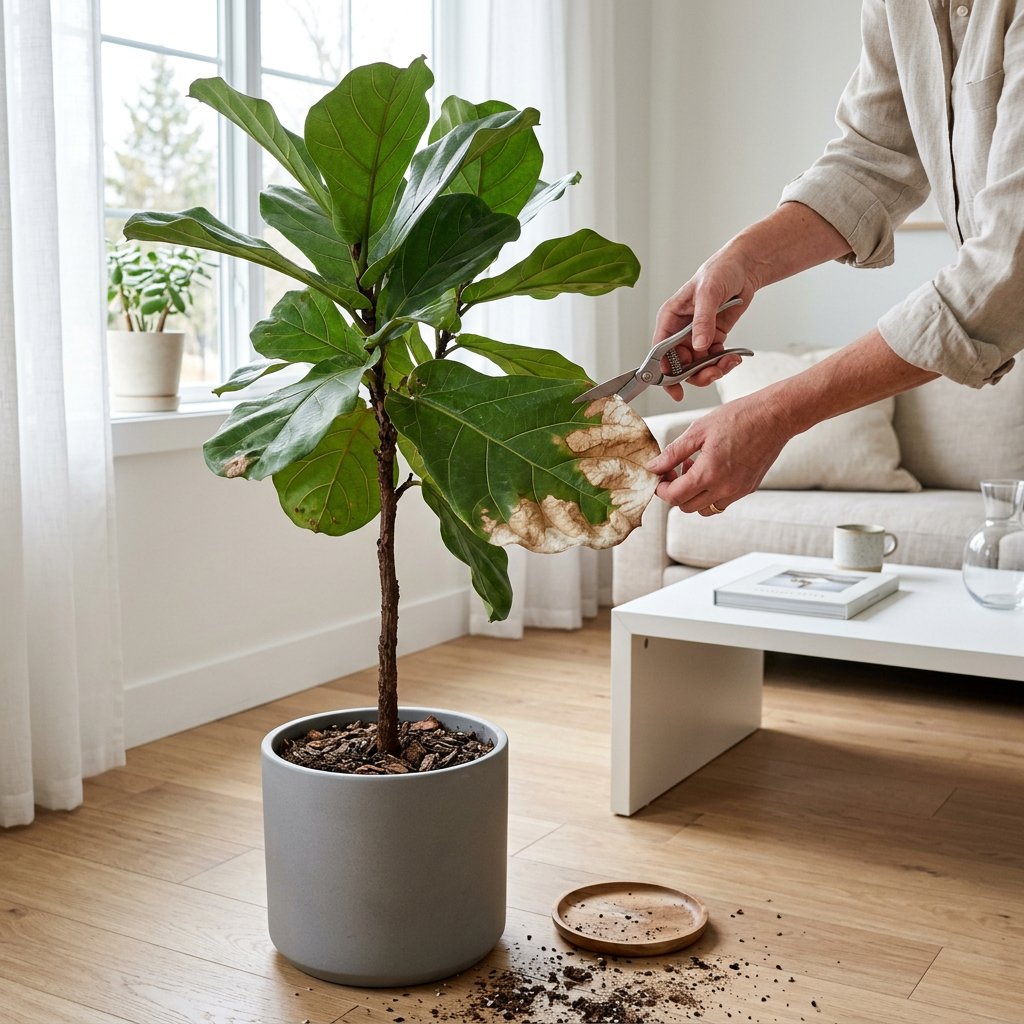
- Crispy, brown patches: Unlike overwatering—which often causes dark, mushy spots near the edges or base of the leaf—sunburn usually creates dry, crispy, and brittle brown spots right in the center or across the upper surface of the leaves facing the light.
- Reddish-brown speckling: Sometimes, young leaves exposed to intense light will develop tiny red dots. This is the plant producing anthocyanins (red pigments) to act as a natural "sunscreen" against UV stress.
If you are ever unsure whether those brown spots are sunburn, a root issue, or a sneaky fungal infection, you can use the AI-powered plant disease scanner in the Plantiary app to get a diagnosis in seconds!
The Causes: Why Did My Plant Burn?
Plants get sunburned for the exact same reason humans do: too much intense UV exposure without proper protection or preparation. In the botanical world, this is known as photodamage. This occurs when the light energy hitting the leaf exceeds what the plant's cells can safely process, physically burning and destroying the tissue.
The most common triggers for Fiddle Leaf Fig sunburn include:
- Sudden Relocation: Moving your plant directly from a dim corner of your living room straight into direct outdoor sunshine.
- The Magnifying Glass Effect: Placing the plant so close to a bright window that the glass actually magnifies the intense afternoon sun rays directly onto the foliage.
The Solutions: Step-by-Step Recovery
It is important to know that once a leaf is sunburned, that specific patch of tissue is dead and will not turn green again. However, the rest of the plant is very much alive! Here is how to help your Fiddle Leaf Fig recover and push out beautiful new growth.
Step 1: Relocate Your Plant Immediately
Move your Fiddle Leaf Fig away from the harsh, direct rays. Pull it a few feet back from the window, or filter the light using a sheer curtain. You do not want to put it in a dark room—it still needs bright, indirect light to generate the energy required for healing.
Step 2: Hydrate Properly
Sun-stressed plants lose moisture much faster than comfortable plants. Check the soil moisture by inserting your finger into the top two inches of the potting mix. If it feels completely dry, give your plant a thorough, deep watering until water freely flows from the drainage holes. Proper hydration helps the plant manage stress and cools its internal systems.
Step 3: Resist the Urge to Prune Everything
When we see an ugly, damaged leaf, our first instinct is to chop it off. Hold off! If the leaf is only partially burned, the remaining green areas are still actively photosynthesizing and providing crucial energy for your plant's recovery.
- When to cut: Only prune a leaf if it is more than 50% damaged or has turned entirely brown and crispy. Always use clean, sterilized pruning shears to prevent introducing bacteria into the open wound.
Step 4: Acclimate for the Future
Fiddle Leaf Figs actually love the sun, but they need to build up a tolerance to it. If you want to move your plant to a brighter spot in the future, you must practice acclimation (often called "hardening off"). Move the plant to the brighter location for just one hour a day, then gradually increase the exposure time by an hour every few days over a two-week period.
Be Patient and Keep Glowing!
Your Fiddle Leaf Fig might look a little less than perfect for a few weeks, but with a slight adjustment to its lighting and consistent care, it will soon reward you with massive, glossy green leaves. Keep tracking its watering schedule and light requirements in your Plantiary app, and remember: every blemish is just a learning experience on your way to becoming a master plant parent!