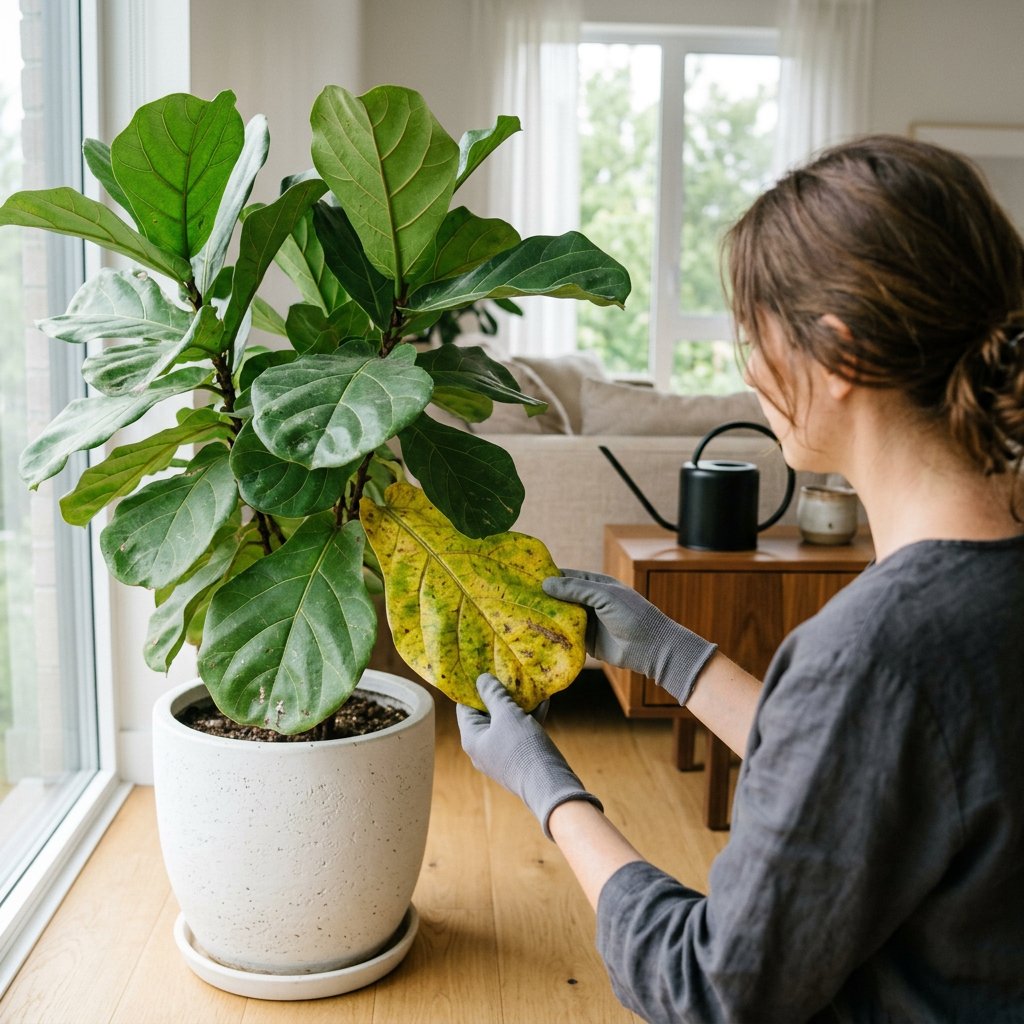
Seeing your majestic Fiddle Leaf Fig drop a bright yellow leaf can feel like a sudden punch to the gut. But take a deep breath! Plant parenting comes with its fair share of bumps in the road, and a yellowing leaf absolutely does not mean you are a bad plant parent. Fiddle Leaf Figs (Ficus lyrata) have a bit of a reputation for being dramatic, but they are also incredibly resilient once you learn to speak their language.
If you're currently staring at a yellowing plant and feeling overwhelmed, remember that the Plantiary app is always right in your pocket. You can simply snap a photo using our AI-powered plant disease scanner to get an instant diagnosis and treatment plan. Until then, let’s play plant detective together and figure out exactly how to bring your leafy friend back to its gorgeous green glory!
The Problem: Decoding the Symptoms
In the botanical world, the yellowing of plant leaves is known as chlorosis. This simply means the leaf is losing chlorophyll, the essential pigment that gives plants their green color and helps them absorb energy from sunlight.
When a Fiddle Leaf Fig experiences chlorosis, it is usually trying to tell you that something in its environment is slightly off balance. The way the yellowing appears can give you huge clues:
- Lower leaves turning yellow and dropping: Usually a watering issue.
- Yellowing all over the plant: Often related to a lack of light or nutrients.
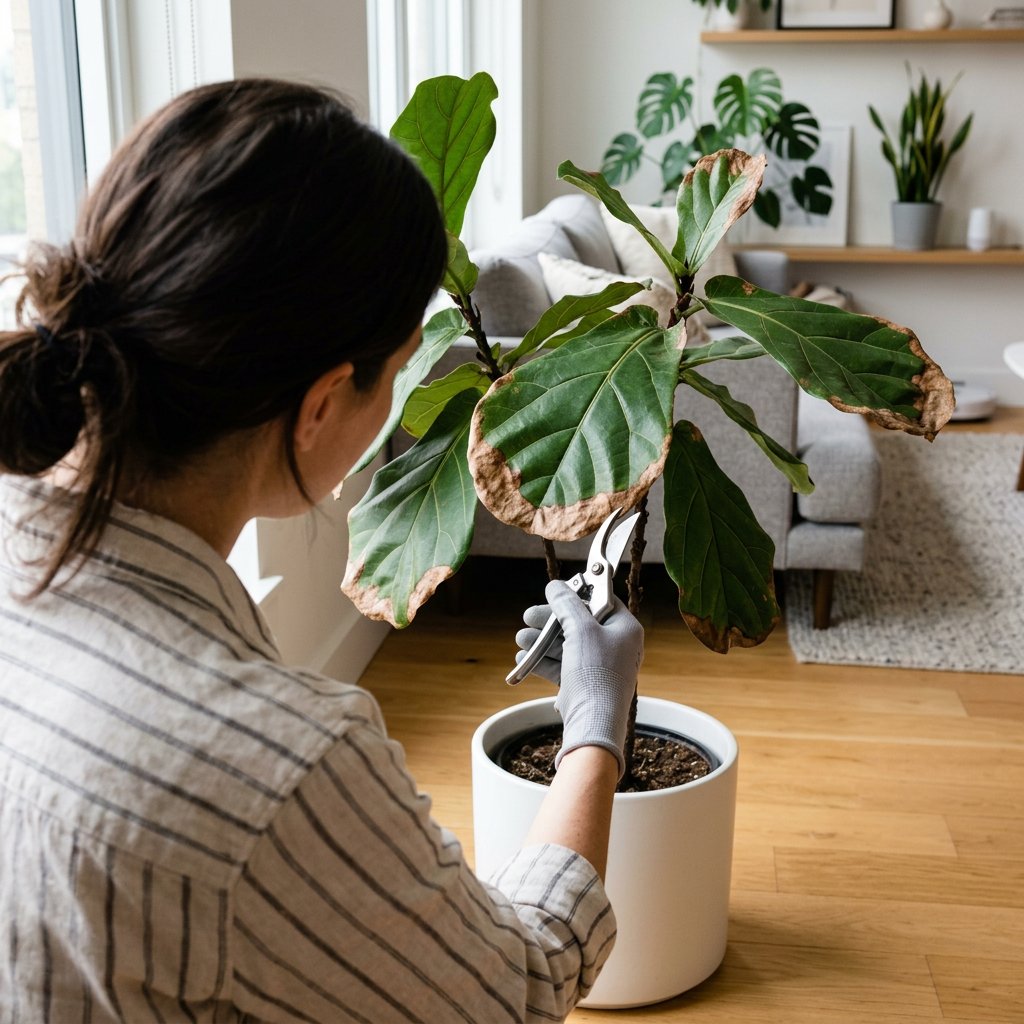
- Yellow edges with brown, crispy spots: Typically points to dehydration or low humidity.
The Causes: Why Are the Leaves Turning Yellow?
Before we can fix the issue, we need to understand what is causing it. Here are the most common reasons your Fiddle Leaf Fig might be losing its color:
- Overwatering and Root Rot: This is the number one culprit! When Fiddle Leaf Figs sit in soggy soil, their roots cannot breathe. This lack of oxygen leads to root suffocation and rot, meaning the plant can no longer pull up the water and nutrients it needs to stay green.
- Underwatering: On the flip side, if you wait too long between waterings, the plant will become severely dehydrated. It will sacrifice its oldest, bottom leaves—turning them yellow and dropping them—to conserve water for the newer growth at the top.
- Lack of Sunlight: Fiddle Leaf Figs are native to sunny West African rainforests. If they are tucked away in a dark corner, they can’t photosynthesize properly, leading to pale, yellowing leaves.
- Nutrient Deficiencies: If your plant has been in the same soil for years, it may have simply run out of food. A lack of essential minerals, particularly nitrogen or iron, often results in yellow foliage.
The Solutions: Step-by-Step Treatment Plan
Ready to help your plant recover? Follow these actionable, science-backed steps to get your Fiddle Leaf Fig back on track.
Step 1: Do the "Finger Test" for Moisture Push your finger about two to three inches into the topsoil. If it feels soaking wet and muddy, you are overwatering. Let the plant dry out completely before watering again. If the soil is rock hard and bone dry all the way through, give your plant a thorough, deep drink until water runs out the bottom.
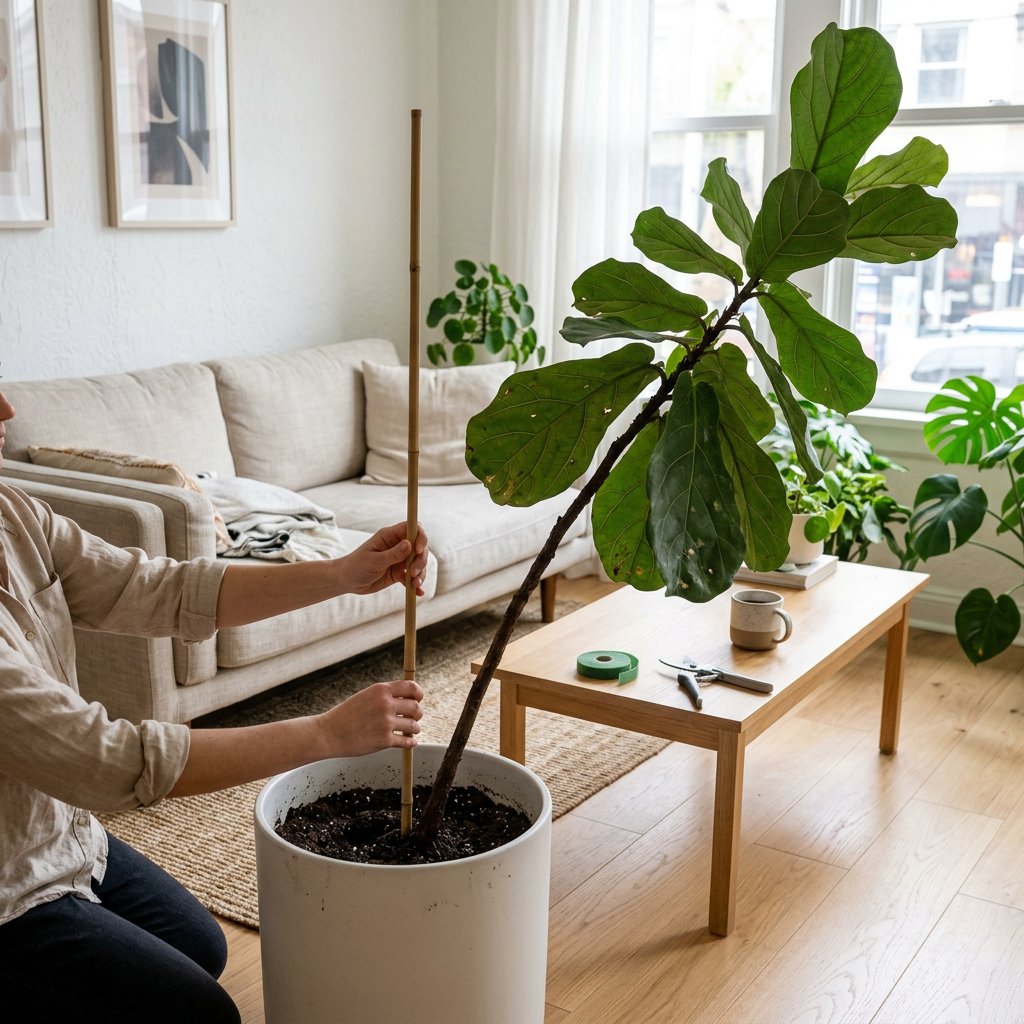
Step 2: Check Your Drainage Fiddle Leaf Figs despise having "wet feet." Ensure your plant's pot has drainage holes at the bottom. After you water your plant, always empty the saucer underneath it. Never let your plant sit in stagnant water for more than 15 minutes.
Step 3: Upgrade Their Lighting Move your plant closer to a window. Fiddle Leaf Figs thrive in bright, indirect sunlight. An East or South-facing window is usually ideal. Just be sure to avoid harsh, direct midday sun, which can scorch their leaves.
Step 4: Establish a Consistent Routine These plants love consistency. Sudden changes in watering habits can stress them out. To take the guesswork out of your routine, use the watering and fertilizing reminders in the Plantiary app to ensure your plant gets exactly what it needs, exactly when it needs it.
Step 5: Safely Remove the Yellow Leaves Once a leaf has turned completely yellow, it will unfortunately never turn green again. The plant is wasting valuable energy trying to keep that dying leaf alive. Using clean, sharp pruning shears, gently snip the yellow leaves off near the main stem. This redirects the plant's energy toward pushing out fresh, healthy new growth!
Keep Growing!
Remember, every fallen leaf is just an opportunity to learn and grow as a plant parent. Don't be too hard on yourself if your Fiddle Leaf Fig is acting fussy right now. By adjusting your watering habits, checking your light, and leaning on the Plantiary community for support, your beautiful indoor tree will be thriving again in no time!