It happens to the best of us. You bring home a ZZ plant (Zamioculcas zamiifolia) because you heard they are the ultimate, indestructible "steel" houseplants. But one day, you look closely and notice that the once-plump, smooth stems are suddenly looking wrinkled, deflated, and sad. First things first: take a deep breath! Seeing your plant struggle can be disheartening, but you are not a bad plant parent. Every plant lover runs into bumps along the road, and the great news is that ZZ plants are incredibly resilient and eager to bounce back.
Let’s dive into what is happening to your plant, why it’s occurring, and how you can nurse it back to its gorgeous, glossy self.
The Problem: What Do Shriveled Stems Mean?
When a ZZ plant is healthy, its thick stems stand tall and smooth. This is due to turgor pressure—which is simply the internal water pressure that keeps plant cells plump, sturdy, and upright.
When turgor pressure drops, the plant essentially deflates. You will typically notice the following symptoms:
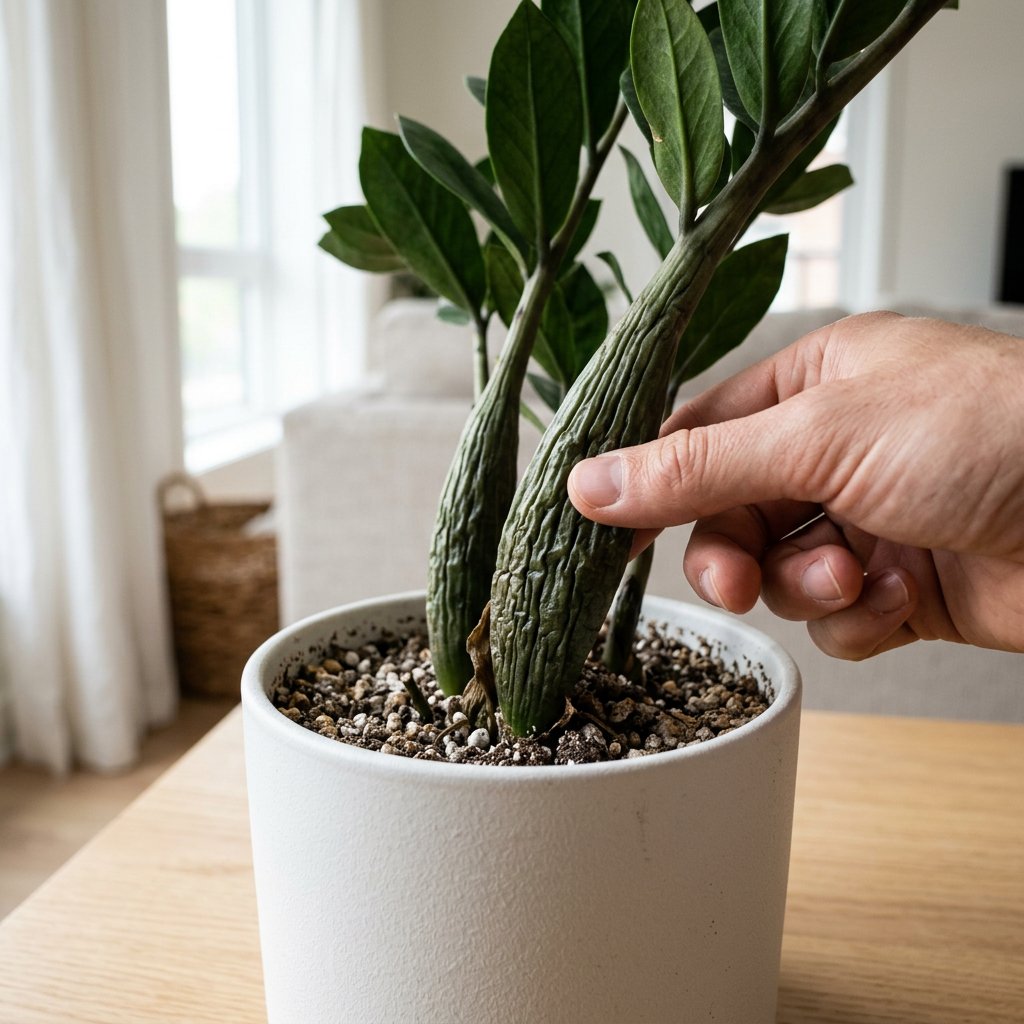
- Deep, vertical wrinkles running up and down the stems.
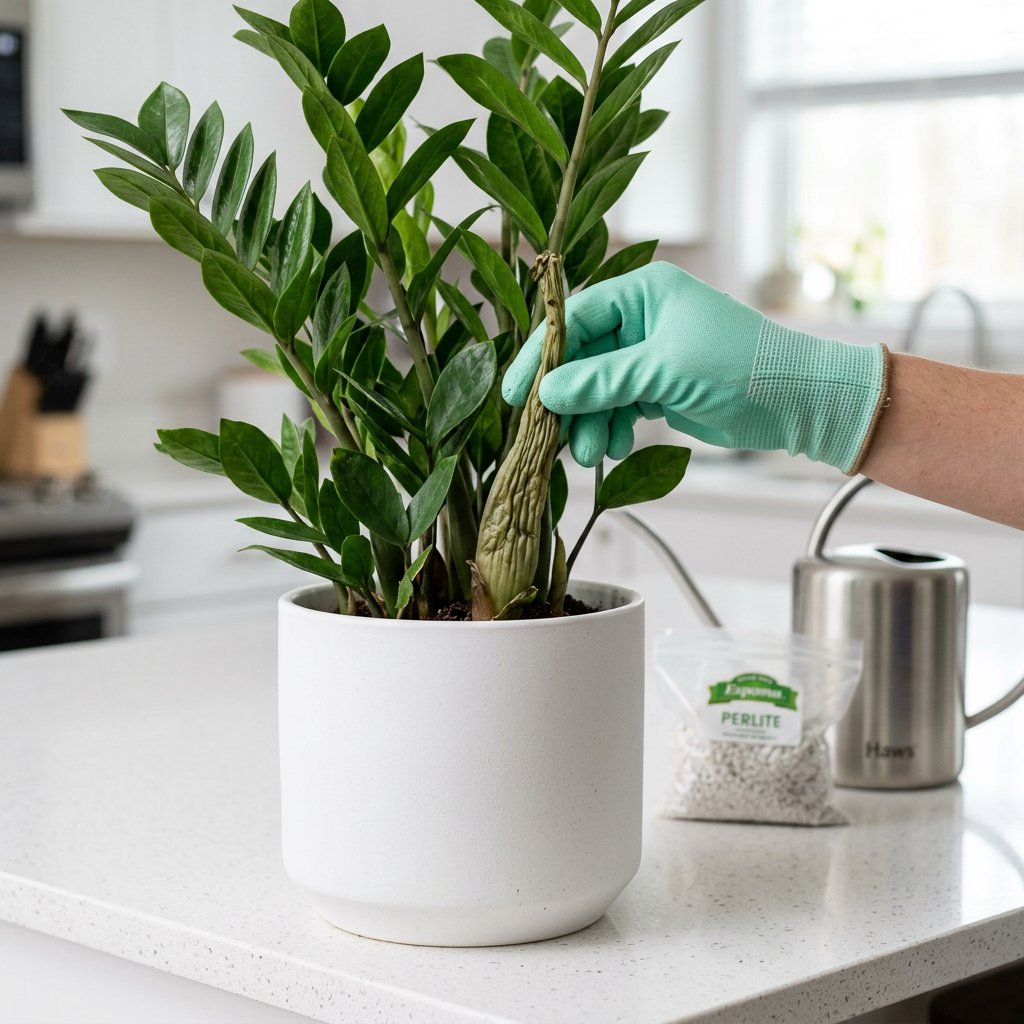
- Stems that look slightly pinched, shrunken, or pruney.
- Drooping or leaning stalks.
- In severe cases, the glossy green leaves may begin to curl or turn yellow.
The Causes: Why Is Your ZZ Plant Wrinkling?
ZZ plants are semi-succulent, meaning they store a massive amount of water in their stems, leaves, and potato-like root structures called rhizomes (thick, underground stems that hold water and nutrients). When those water reserves run dry, the plant shrivels. This happens for two completely opposite reasons:
1. Severe Underwatering
While ZZ plants thrive on neglect and prefer their soil to dry out completely between waterings, they do still need a drink! If your plant has been bone-dry for a month or more, it has likely exhausted the water stored in its rhizomes and stems, causing them to shrink.
2. Overwatering and Root Rot
This is the sneaky culprit. If your plant is sitting in soggy, poorly draining soil, its roots will suffocate and begin to rot. When the roots die, the plant literally loses its ability to drink water. Even though the soil is soaking wet, the plant is dehydrated, leading to the exact same wrinkled, shriveled stems.
The Solutions: Step-by-Step Treatment
To fix your shriveled ZZ plant, we first need to play plant detective. Here is your actionable, step-by-step rescue plan.
Step 1: Diagnose the Root Cause
Stick your finger or a wooden chopstick about two to three inches into the soil.
- If the soil is dusty, hard, and bone-dry: Your plant is underwatered.
- If the soil is wet, heavy, or smells a bit like a swamp: You are dealing with overwatering and root rot.
- Pro Tip: If you are unsure what is wrong with your plant, you can use the AI-powered plant disease scanner in the Plantiary app to get a diagnosis in seconds and receive a customized treatment plan!
Step 2: Treat the Thirsty Plant (For Underwatering)
If your plant is simply parched, it just needs a good, long drink.
- Take your ZZ plant to the sink or shower.
- Slowly pour room-temperature water over the soil until it runs freely out of the drainage holes.
- Alternatively, use the bottom-watering method: place the nursery pot in a bowl of water for 30–45 minutes, allowing the dry soil to soak up moisture like a sponge.
- Let the excess water drain completely. You should see the stems begin to plump back up over the next few days!
Step 3: Rescue the Rotting Roots (For Overwatering)
If wet soil is the issue, we need to act quickly to save the rhizomes.
- Gently remove the ZZ plant from its pot and brush away the soggy soil.
- Inspect the roots and potato-like rhizomes. Healthy roots are firm and white/tan. Rotted roots will be dark brown, mushy, and easily fall apart.
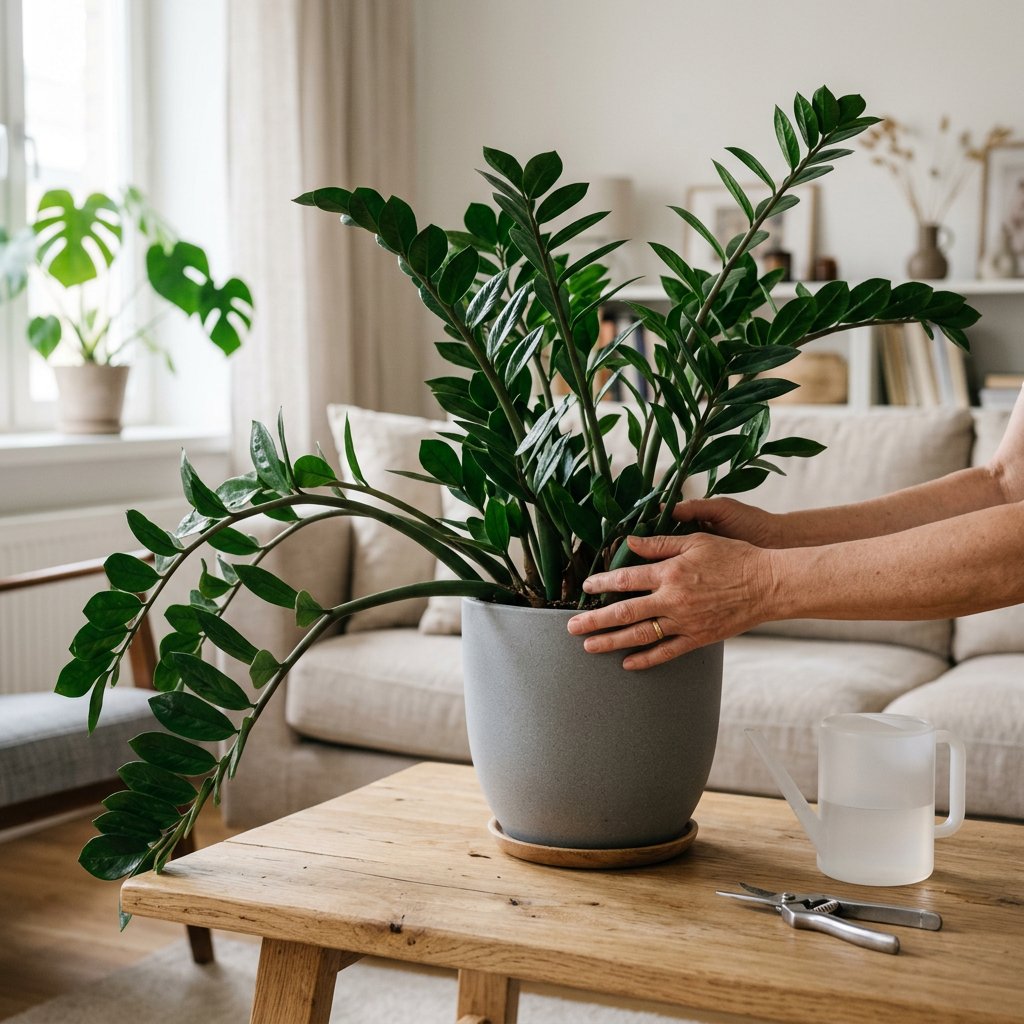
- Using a pair of sterilized scissors or pruning shears, cut away any mushy, rotting roots.
- Repot the plant in a clean pot (with drainage holes!) using a well-aerated, chunky potting mix. A blend of standard indoor plant soil with plenty of perlite and orchid bark is perfect.
Step 4: Master the Watering Schedule
Moving forward, allow the soil to dry out 100% before watering again. Depending on the light and temperature in your home, this usually takes about 2 to 4 weeks. You can use the watering tracker in your Plantiary app to remind you exactly when it's time to check the soil.
Remember, plant care is a journey of trial and error. By taking these simple, scientifically backed steps, you are giving your ZZ plant the best possible chance to recover. Don't be too hard on yourself—just adjust your care routine, and watch those stems plump right back up!