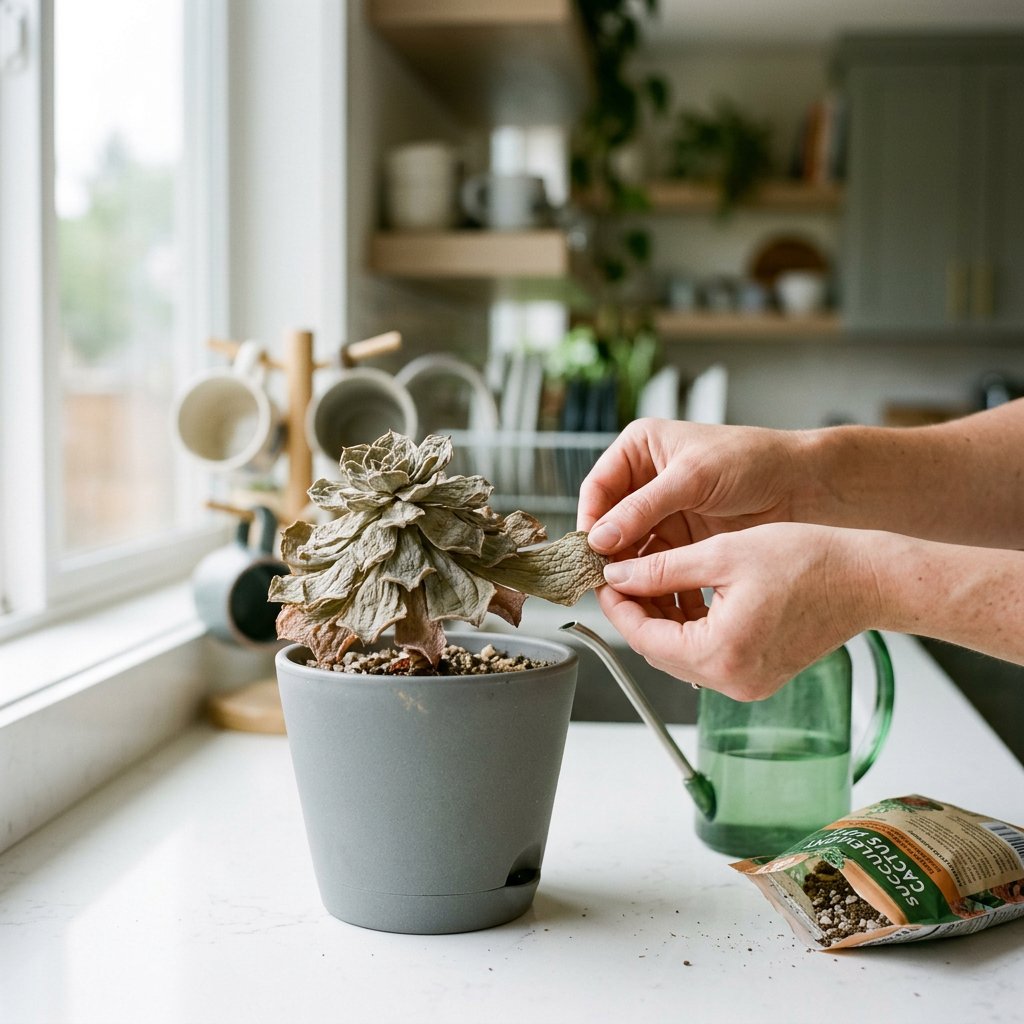
It is a rite of passage for every plant parent: you look at your beloved succulent, expecting plump, juicy foliage, only to find the leaves looking like sad, wrinkled raisins. Take a deep breath! Seeing your plant struggle can be stressful, but shriveled succulent leaves are incredibly common and, in most cases, entirely fixable.
Whether you are a seasoned green thumb or just starting your indoor jungle, diagnosing the issue is half the battle. Let's explore exactly what your plant is trying to tell you and how to bounce it back to health.
The Problem: Decoding the Wrinkles
Succulents are famous for storing water in their thick, fleshy leaves. When that internal water reservoir is depleted or compromised, the leaves lose their turgor pressure—a botanical term for the internal water pressure that keeps plant cells stiff and upright. This loss of pressure leads to a shriveled, deflated appearance.
However, not all wrinkles mean the same thing. Look closely at your plant's symptoms:
- Wrinkled, crispy, and dry all over: Usually points to thirst. The leaves may feel thin and papery to the touch.
- Mushy, translucent, or yellowing leaves: A classic sign of too much water. The leaves might feel squishy or fall off with a gentle tap.
- Only the very bottom leaves are shriveling: This is perfectly normal! As succulents grow, they naturally reabsorb energy from their oldest bottom leaves to produce fresh new growth at the top. Once they dry up completely, you can gently pull them away.
The Causes: Why Is My Succulent Shriveling?
It might sound contradictory, but both underwatering and overwatering can cause your succulent to look dehydrated. Here is how it happens:
- Underwatering: Succulents are famously drought-tolerant, but they aren't drought-immune. If the soil stays bone-dry for weeks on end, the plant begins to consume the water stored in its own leaves to survive, causing them to deflate.
- Overwatering (and Root Rot): This is the tricky one. If a succulent sits in soggy, poorly draining soil, its roots will suffocate and die. This leads to root rot, a fungal or bacterial infection that destroys the root system. Ironically, once the roots rot away, the plant can no longer absorb water. So, even though it is sitting in a wet pot, the leaves shrivel because the plant is functionally dying of thirst.
The Solutions: Your Step-by-Step Water Fix
Please do not feel guilty if you have misjudged your watering routine; succulents can be notoriously picky!
Tip: If you are unsure whether you are dealing with a thirsty plant or a drowning one, you can use the AI-powered plant disease scanner in the Plantiary app to get an accurate diagnosis in seconds before you start treating!
The Fix for Underwatered Succulents
If your plant is simply thirsty (dry, crispy leaves and bone-dry soil), the fix is incredibly satisfying.
- Check the soil: Stick your finger about an inch or two into the soil. If it feels like dry dust, it is time for a drink.
- Use the "Soak and Dry" method: Place the nursery pot in a bowl of water and let it soak from the bottom up for 15-20 minutes. Alternatively, water deeply from the top until water freely runs out of the drainage holes.
- Let it drain: Never let your succulent sit in standing water. Empty the drip tray completely after watering. Within a day or two, those wrinkled leaves should plump right back up!
The Fix for Overwatered Succulents
If your plant is suffering from overwatering or root rot (mushy, translucent leaves and wet soil), you will need to act a bit more like a plant surgeon.
- Unpot the plant immediately: Gently remove your succulent from its wet soil and inspect the roots. Healthy roots are usually light-colored and firm; rotted roots are dark, slimy, and often smell swampy.
- Trim away the rot: Using sterilized scissors, carefully cut away any black, mushy roots or soft stem parts. You must remove all the rot to stop it from spreading.
- Let it callous: Leave the bare plant out on a dry paper towel in a shaded spot for 2 to 3 days. This allows the cut areas to heal (callous over), which prevents bacteria from entering the wounds.
- Repot in fresh soil: Replant your succulent in a dry, well-draining cactus or succulent mix—ideally blended with plenty of perlite or pumice to ensure excellent airflow. Wait a few days before watering to let the plant settle into its new home.
Keeping Your Succulent Plump and Happy
To prevent future shriveling, ensure your plant is getting plenty of bright, indirect sunlight, which helps the soil dry out at a healthy, natural pace. Always use a pot with drainage holes, and remember: it is always better to underwater a succulent than to overwater it!
If you struggle to remember when you last watered your plants, the Plantiary app is your best friend. You can easily set customized watering schedules and track your care routines, taking all the guesswork out of plant parenthood. You've got this, and your succulent will thank you!