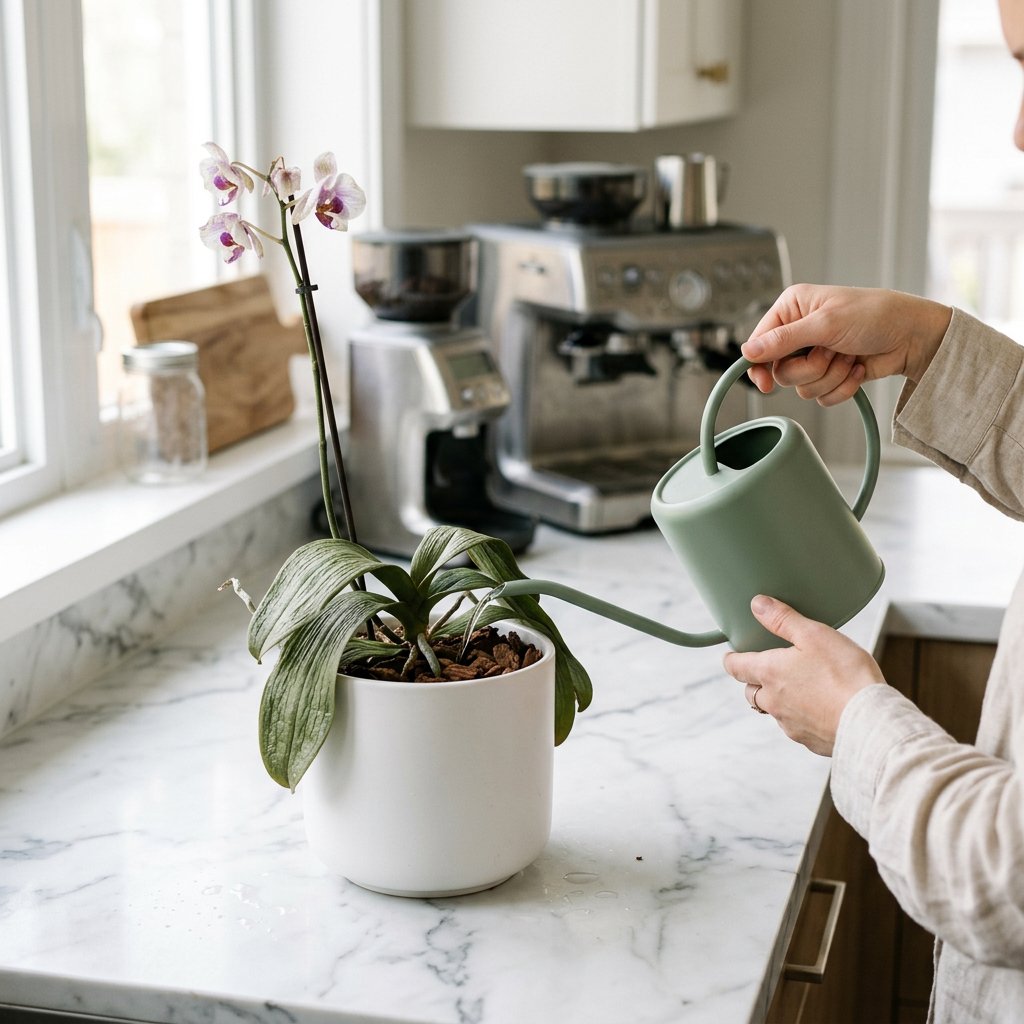
You walk past your beautiful orchid, expecting to see its usual glossy, plump foliage, only to discover that the leaves look like deflated, leathery balloons. If your heart just sank, take a deep breath! Dehydrated, wrinkled orchid leaves are incredibly common, and they happen to the best plant parents. Orchids can be a bit communicative (sometimes dramatically so) when their watering needs aren't being met, but they are also incredibly resilient.
If you are ever unsure of what is wrong with your plant, you can always use the AI-powered plant disease scanner in the Plantiary app to get a diagnosis in seconds. But for now, let’s dive into exactly why your orchid's leaves are wrinkling and how you can nurse your beautiful plant back to health.
The Problem: Recognizing the Symptoms
When an orchid is perfectly healthy, its leaves are stiff, smooth, and capable of holding their own weight. When things go awry with its water supply, you will notice a few distinct symptoms:
- Deep grooves or ribbing: The leaves develop vertical lines and look textured.
- A leathery texture: The foliage feels limp, soft, and bendable.
- Drooping: The leaves lose their turgor pressure—this is simply the internal water pressure that keeps plant cells plump, rigid, and upright. Without it, the plant literally deflates.
The Causes: Too Much or Too Little?
It might seem obvious that a wrinkled, dehydrated leaf means the plant needs more water. However, the true underlying cause can actually be a trick question! Wrinkled leaves almost always point to a watering issue, but it can be caused by either under-watering or over-watering.
- Under-watering: If you frequently forget to water your orchid, the potting medium goes bone dry, and the roots simply have no moisture to pull up into the leaves.
- Over-watering (Root Rot): This is the sneaky culprit. Orchids are epiphytes, meaning in the wild, they grow on tree bark, not in soil. If they sit in soggy, waterlogged potting medium, their roots will suffocate and rot. Once the roots turn to mush, they can no longer absorb water. Ironically, an over-watered orchid will show symptoms of extreme dehydration because its broken root system can't drink.
The Solutions: Your Step-by-Step Watering Fix
Please don't feel guilty if you've accidentally neglected or over-loved your orchid. We can get it back on track! Follow these steps to diagnose and treat the watering issue.
Step 1: Inspect the Roots
To know how to fix the leaves, you must look at the roots. Gently lift your orchid out of its decorative pot and look through the clear plastic nursery pot.
- Thirsty roots will look silvery-gray, dry, and perhaps shriveled.
- Healthy roots will look firm, plump, and bright green.
- Rotted roots will look brown, black, slimy, or feel papery and hollow.
Step 2: Hydrate the Under-Watered Orchid
If your roots are silvery and dry, your orchid is simply thirsty!
- The Soak Method: Fill a bowl with room-temperature water.
- Submerge: Place the orchid's nursery pot into the water, letting the bark medium soak for 15 to 20 minutes.
- Drain: Remove the pot and let all excess water drain away completely before putting it back in its decorative cover. Never let your orchid sit in standing water!
Step 3: Rescue the Over-Watered Orchid
If you spot brown, mushy roots, your plant has root rot and needs a little plant surgery.
- Unpot: Remove the orchid from its soggy potting medium and rinse the roots under lukewarm water.
- Prune: Using sterilized scissors, carefully snip away all the brown, squishy, or hollow roots. Leave only the firm, healthy ones.
- Repot: Place the orchid in a clean pot with fresh, well-draining orchid bark (do not use regular potting soil).
- Hold off on watering: Wait a few days before watering to let the cut roots heal.
Step 4: Establish a Consistent Routine
Going forward, water your orchid only when the potting medium has almost completely dried out and the roots have turned from vibrant green back to a silvery-gray. Remember, you can always log your watering schedule in the Plantiary app to get friendly reminders tailored to your specific plant's needs.
A Quick Note on Patience
Once you correct your watering routine, your orchid will begin to recover. However, botanical healing takes time! While newer or mildly wrinkled leaves may plump back up within a few weeks, older, severely wrinkled leaves might retain their leathery appearance permanently. This doesn't mean you failed; as long as the new leaves growing from the center of the plant are smooth and rigid, you are doing an amazing job. Keep up the great work!