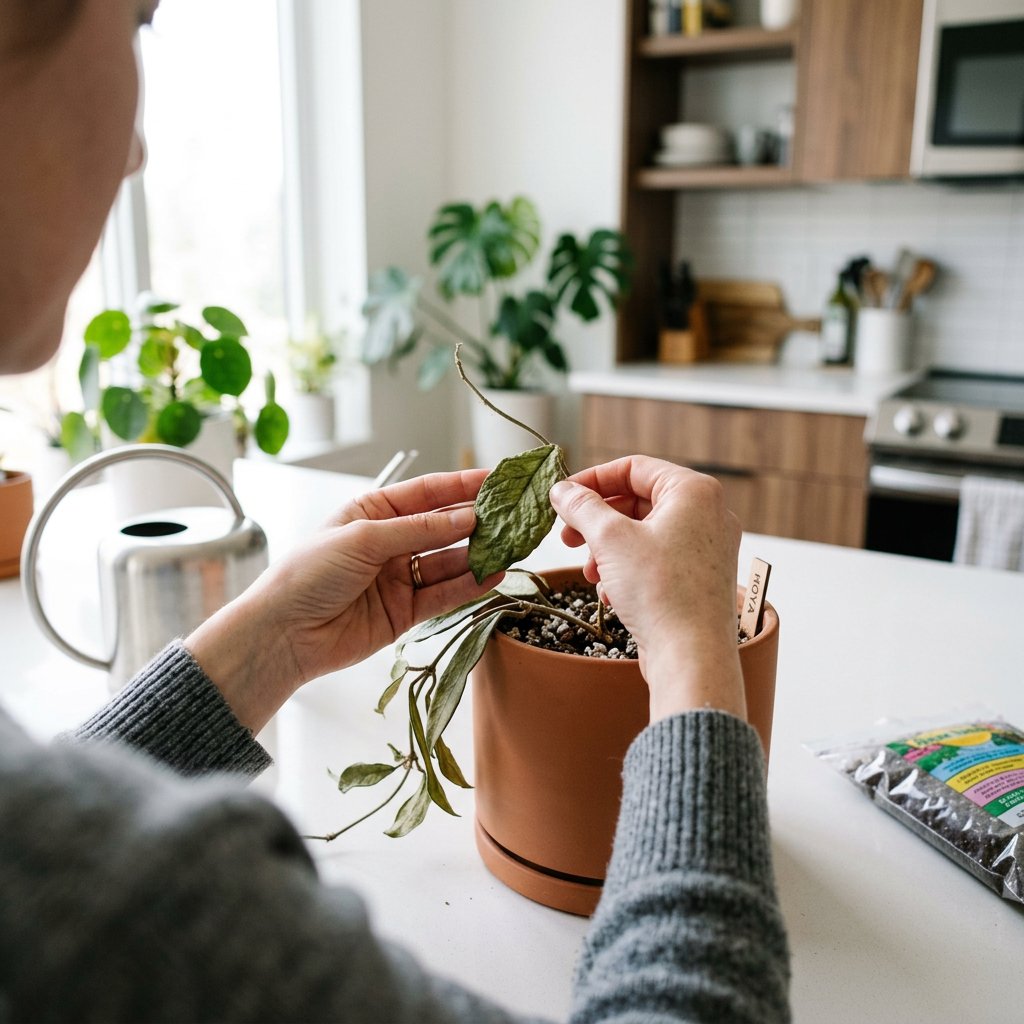
You walk up to your beloved Hoya, expecting to admire its thick, waxy, succulent-like foliage, only to find the leaves looking like deflated, wrinkled balloons. Your heart sinks. Did you forget to water it? Or did you water it too much? Take a deep breath! Plant struggles happen to absolutely every plant parent, and a wrinkled Hoya is one of the most common issues we see.
When your plant's foliage starts to pucker, it is trying to tell you something about its root system. If you are ever unsure what is wrong with your plant, you can always use the AI-powered plant disease scanner in the Plantiary app to get a quick diagnosis. But for now, let's play botanical detective and figure out exactly why your Hoya is wrinkling and how to bring it back to its plump, beautiful self.
The Problem: Decoding Wrinkled Hoya Leaves
Hoyas store water in their thick leaves. When a Hoya is healthy, its leaves are firm and smooth due to turgor pressure—the internal water pressure that keeps plant cells rigid and plump. When the plant cannot get enough water into its leaves, that pressure drops. The cells deflate, and the leaf physically wrinkles, turning soft and pliable.
But here is the tricky part: a lack of water in the leaves can be caused by two completely opposite issues.
The Causes: Thirsty or Root Rot?
To fix your Hoya, we first need to determine if the roots are bone-dry or drowning. Here is how to tell the difference:
Cause 1: Severe Under-Watering (The Thirsty Plant)
Sometimes, life gets busy, and we forget our watering schedule. Because Hoyas are drought-tolerant, they can go a long time without a drink. However, if left dry for too long, the plant will start consuming the water reserves stored in its leaves.
- The Symptoms: The potting soil feels hard, compacted, and bone-dry all the way to the bottom. The wrinkled leaves might feel thin and papery, and you may notice some dry, crispy brown tips on the vines.
Cause 2: Over-Watering and Root Rot
It sounds like a paradox, but too much water also causes dehydration! If a Hoya sits in soggy, poorly draining soil, the roots suffocate from a lack of oxygen. This leads to root rot, a condition where roots decay and turn to mush. Dead roots cannot absorb water. So, even though the soil is soaking wet, the leaves are dying of thirst.
- The Symptoms: The soil is heavy, wet, and might smell a bit swampy. The wrinkled leaves might be accompanied by yellowing near the base of the plant, and the stems might feel mushy or look blackened.
The Solutions: Step-by-Step Treatment
Once you have checked the soil with your finger (or a moisture meter), you are ready to take action. Don't worry—Hoyas are incredibly resilient, and with a little TLC, yours can bounce back!
How to Fix a Thirsty Hoya
If your soil is completely dry, your plant just needs a good, deep drink.
- Step 1: Aerate the soil. If the soil is hard and compacted, gently poke a few holes in it using a chopstick. This helps water reach the roots instead of just sliding down the sides of the pot.
- Step 2: Try bottom watering. Fill a bowl with room-temperature water and set your Hoya's nursery pot inside. Let it soak up water from the bottom drain holes for about 30 to 45 minutes. This ensures the dry soil gets thoroughly rehydrated.
- Step 3: Drain and monitor. Remove the pot from the water and let all excess water drain away completely. Your Hoya’s leaves should start firming up within 24 to 48 hours!
- Step 4: Update your routine. Log your newly watered plant into the Plantiary app and set a customized watering reminder so your Hoya doesn't go quite as thirsty next time.
How to Fix Root Rot
If your soil is wet and you suspect rot, you need to act quickly to save the healthy roots.
- Step 1: Unpot the plant. Gently remove your Hoya from its wet soil. Rinse the roots under room-temperature running water so you can see what you are working with.
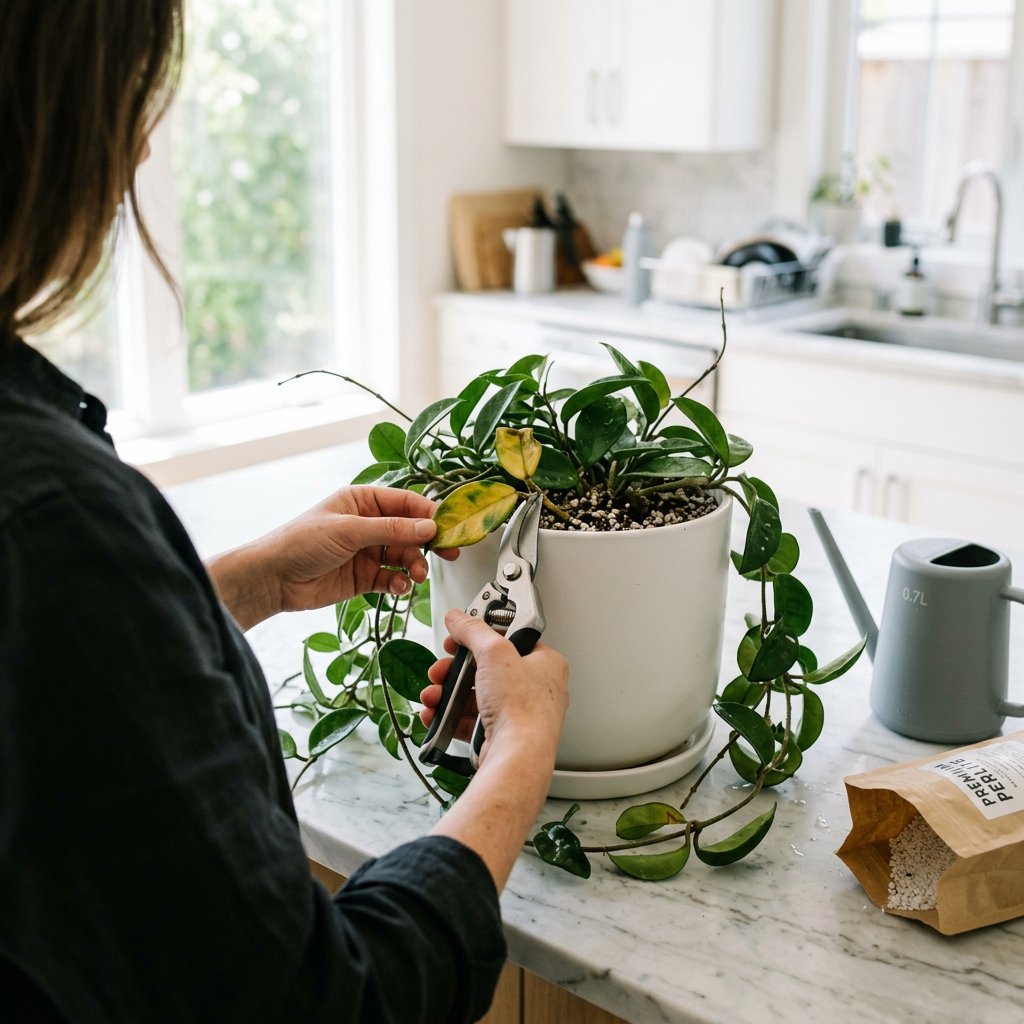
- Step 2: Inspect and prune. Healthy Hoya roots are firm and typically white or light tan. Rotted roots are dark brown or black, mushy, and easily slide off like a wet paper straw. Using sterilized pruning shears, cut away all the mushy, rotting roots.
- Step 3: Repot in an airy mix. Hoyas are epiphytes, meaning they naturally grow on trees, not in dense dirt. Repot your plant in a fresh, chunky soil mix. A great DIY blend is equal parts high-quality potting soil, orchid bark, and perlite. Ensure the new pot has excellent drainage holes!
- Step 4: Hold off on heavy watering. Lightly dampen the new soil, but do not soak it. Give the plant a few weeks in bright, indirect light to recover and grow new roots.
Seeing wrinkled leaves on your favorite Hoya can be stressful, but it is also a wonderful opportunity to learn more about how your plants communicate. By paying attention to the soil moisture and acting promptly, you can save your plant and become a more confident plant parent in the process. Remember, if you ever feel stuck, the Plantiary app is always right in your pocket, ready to help you care for your indoor jungle!