The Hoya Hindu Rope (Hoya carnosa compacta) is an absolute showstopper. With its cascading vines and beautifully twisted, tortuous leaves, it is a living piece of art in any plant collection. But because of those gorgeous, tightly curled crevices, it also happens to be the ultimate hiding spot for one of the most stubborn houseplant pests: the mealybug. If you’ve just noticed tiny, white, fuzzy masses tucked inside the folds of your beloved Hoya, take a deep breath. Please don't feel guilty or discouraged—pest outbreaks happen to literally every plant parent, no matter how experienced they are! If you are ever unsure whether that white fuzz is a pest or just normal plant tissue, you can always use the AI-powered plant disease scanner in the Plantiary app to get a highly accurate diagnosis in seconds.
Let’s dive into how to identify, understand, and safely eradicate mealybugs from your Hoya Hindu Rope.
The Problem: Symptoms of Mealybugs on a Hoya Hindu Rope
Mealybugs are tiny, sap-sucking insects that love warm, humid environments. Because the Hindu Rope plant has highly folded leaves, mealybugs can easily set up camp unnoticed until the population explodes. Here is what to look out for:
- Cotton-like fluff: You will see small, white, fuzzy masses hidden inside the curled leaves or where the leaf meets the stem. This is the waxy protective coating the bugs build around themselves.
- Sticky residue: You might notice a shiny, sticky substance on the leaves or the floor below the plant. This is called honeydew, which is essentially the sugary waste excreted by the bugs after they feed on your plant’s sap.
- Black sooty mold: If honeydew is left on the plant, a harmless but ugly black fungus called sooty mold can grow on top of it, blocking sunlight from reaching the leaves.
- Yellowing or dropping leaves: As the bugs continuously drain the plant’s sap, the Hoya becomes stressed, leading to yellowing foliage and stunted growth.
The Causes: How Did They Get Here?
You might be wondering how these fuzzy invaders found their way into your home. Mealybugs are incredibly sneaky hitchhikers.
- New plant additions: Bringing home a new, infested plant from the nursery is the most common way mealybugs enter a home.
- Summer vacations outdoors: If you put your Hoya outside to enjoy the summer humidity, bugs can easily attach themselves.
- Fresh produce and open windows: Mealybugs can occasionally hitch a ride on fruits, vegetables, or fresh-cut flowers, or simply blow in through a torn window screen.
- The perfect architecture: While not a "cause," the tight, twisted folds of the Hindu Rope create a safe, protected microclimate that mealybugs naturally gravitate toward.
The Solutions: Step-by-Step Mealybug Treatment
Because of the Hoya Hindu Rope's unique shape, simply spraying the plant usually isn't enough; the liquid can't always penetrate the tightly rolled leaves. You will need a thorough, hands-on approach.
Step 1: Quarantine Your Plant Immediately
As soon as you spot a mealybug, move your Hoya to a completely separate room, far away from your other houseplants. Mealybugs can easily crawl to neighboring pots, so isolating the infected plant is crucial to stop the spread.
Step 2: The Alcohol Swab Method
Because sprays can't reach deep into the leaf folds, you have to get in there manually.
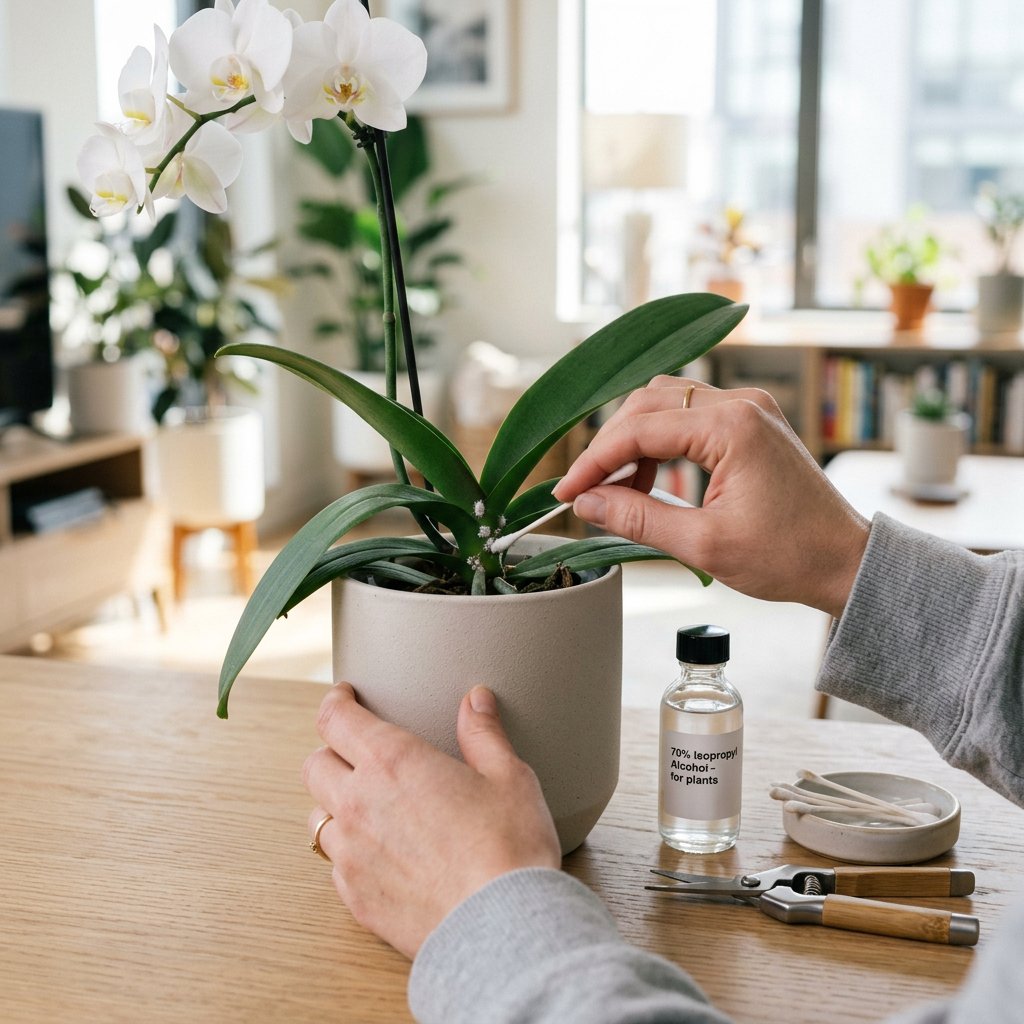
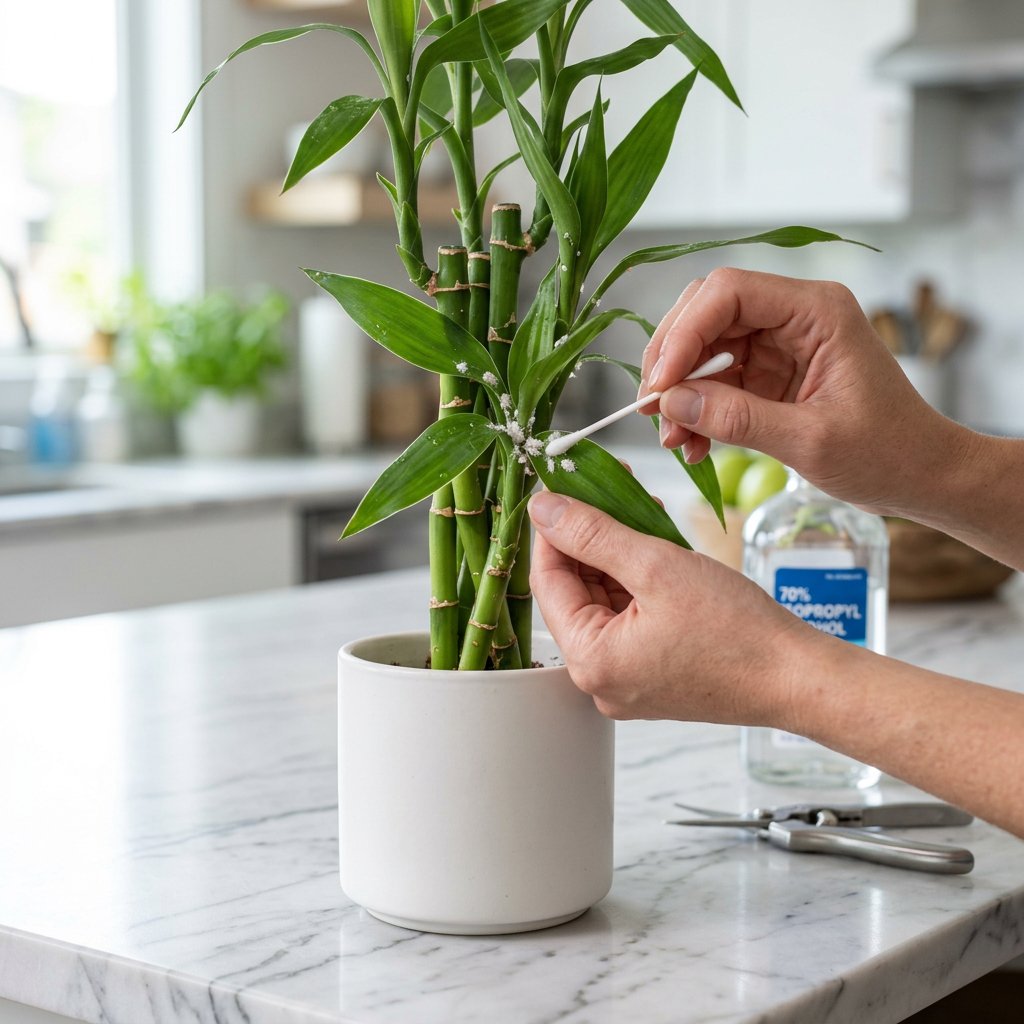
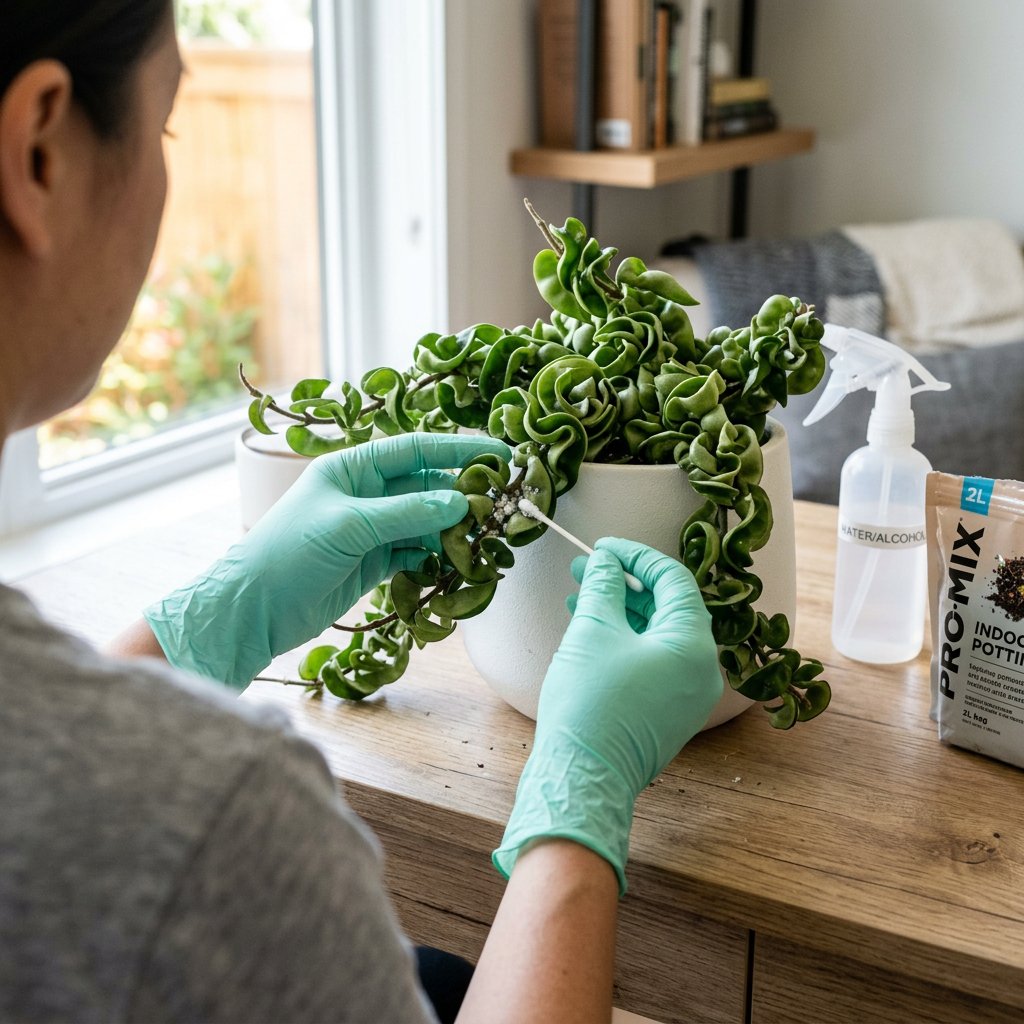
- Dip a cotton swab (Q-tip) or a soft-bristled makeup brush into 70% isopropyl rubbing alcohol.
- Gently dab every single white, fuzzy spot you see. The alcohol instantly melts away their waxy coating and kills the bugs on contact.
- Carefully unfold the leaves as much as possible to check inside the crevices.
Step 3: Give Your Hoya a Gentle Shower
Once you have treated the visible bugs with alcohol, take your Hoya to the bathroom or kitchen sink. Use lukewarm water to gently shower the foliage. This helps wash away dead bugs, leftover alcohol, and the sticky honeydew. Keep the water pressure light so you don’t snap the delicate vines.
Step 4: Apply Neem Oil or Insecticidal Soap
After the plant has dried from its shower, you need to apply a residual treatment to catch any microscopic crawlers you missed.
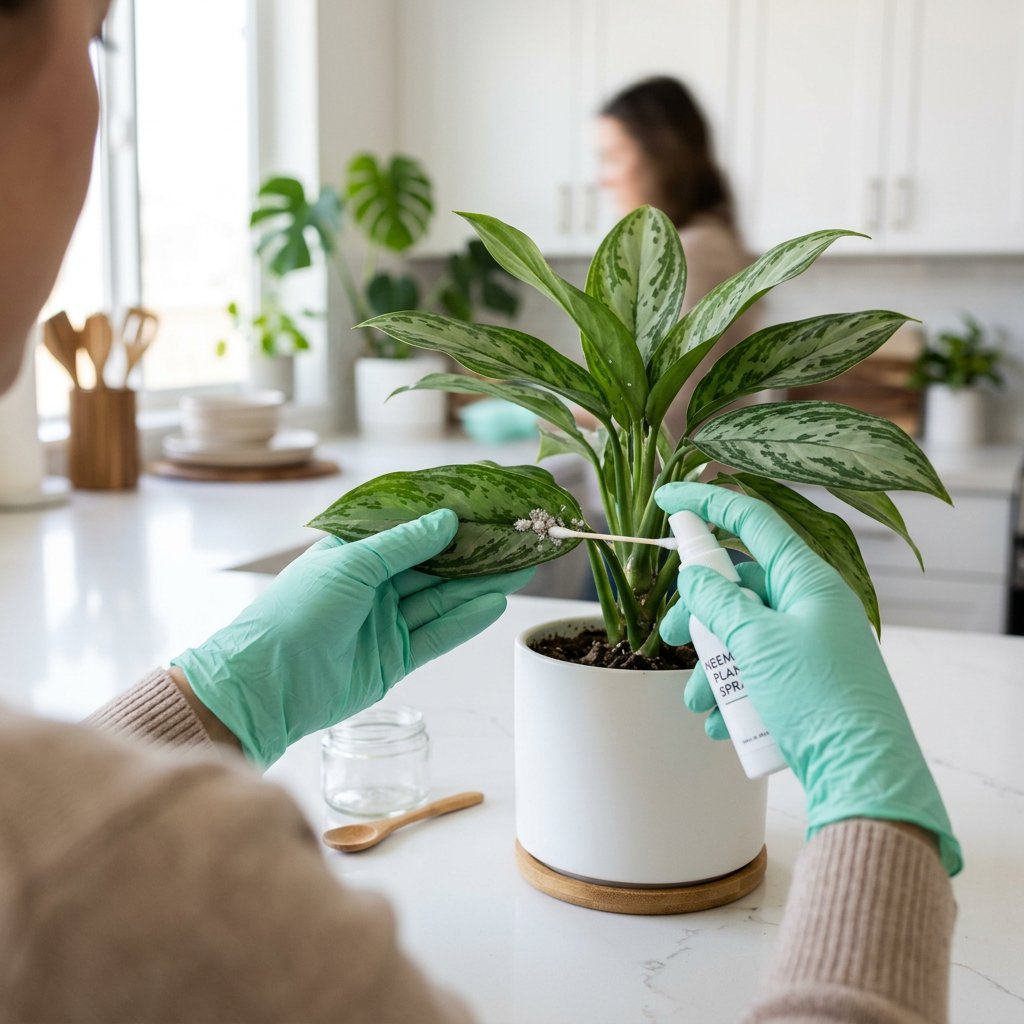
- Generously spray the plant with a commercial insecticidal soap or a high-quality neem oil mixture.
- Make sure the spray coats the top and bottom of the leaves, and drips down into the twisted folds.
- Botanical Tip: Always apply oils or soaps in the evening or away from direct sunlight, as treating a plant in bright light can cause the wet leaves to burn.
Step 5: Monitor and Repeat
Mealybugs have a life cycle of several weeks, and eggs can hatch after your first treatment. You must repeat the alcohol swabbing and spraying process every 5 to 7 days for about a month. To stay on track, you can use the Plantiary app to set a custom care reminder, ensuring you never miss a treatment day!
Treating a Hoya Hindu Rope takes a little bit of patience, but it is absolutely worth the effort. By staying consistent with these safe, proven steps, your beautiful vine will be pest-free, thriving, and putting out gorgeous clusters of star-shaped flowers again before you know it. Keep up the great work!