Have you recently noticed tiny, white, cotton-like fluffs appearing on the vibrant green stalks of your beloved Lucky Bamboo? Don’t panic! Discovering pests on your indoor plants can feel incredibly overwhelming, but take a deep breath and remember: it happens to literally every plant parent. You are not doing a bad job!
Those little white cotton balls are likely mealybugs, one of the most common houseplant pests in the world. The good news is that Lucky Bamboo (Dracaena sanderiana) is a remarkably resilient plant. With a little bit of patience and the right treatment plan, you can easily nurse your green companion back to perfect health. Plus, if you are ever unsure what is wrong with your plant, you can use the AI-powered plant disease scanner in the Plantiary app to get a diagnosis in seconds.
Here is exactly how to identify, understand, and safely eradicate mealybugs from your Lucky Bamboo.
The Problem: Spotting Mealybug Symptoms
Mealybugs are tiny, soft-bodied insects that survive by piercing plant tissue and sucking out the nutrient-rich sap. Because Lucky Bamboo has tight, overlapping crevices where the leaves meet the central stalk, it creates the ultimate cozy hiding spot for these sneaky bugs.
If you suspect an infestation, look out for these common symptoms:
- White, fuzzy masses: These usually look like tiny pieces of cotton stuck in the joints of the plant or under the leaves. This fuzz is actually a protective wax the bugs secrete.
- Sticky residue: You might notice a shiny, sticky substance on the leaves or the table beneath your plant. This is called honeydew (a sugary liquid waste excreted by the pests after they feed on sap).
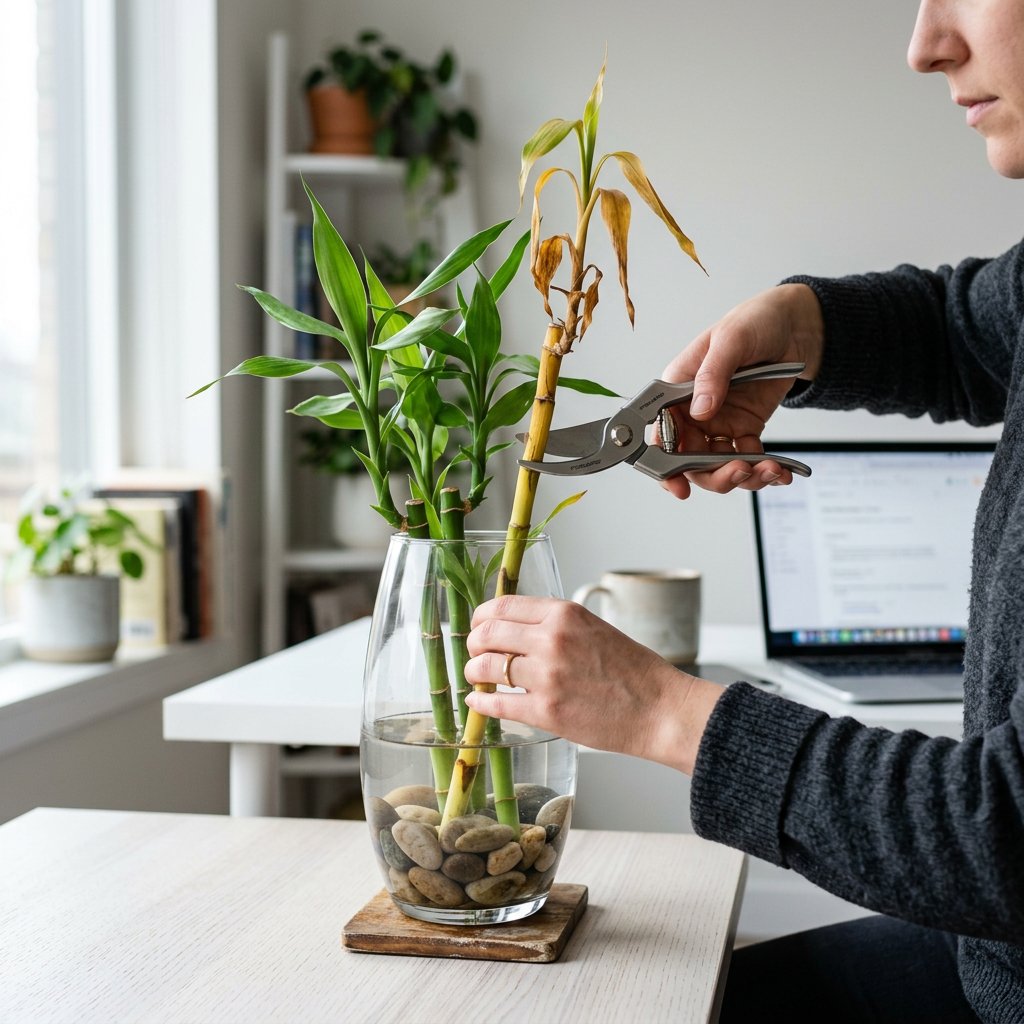
- Yellowing leaves: As the bugs drain the plant's nutrients, you will likely see chlorosis (the loss of green pigment, causing the leaves to turn pale or yellow).
- Stunted growth: New leaves may emerge deformed, or the plant may simply stop growing altogether.
The Causes: Why Did Mealybugs Crash the Party?
Mealybugs don't just appear out of thin air, though it often feels like it! Understanding how they arrived can help you prevent future breakouts.
- Hitchhiking on new plants: This is the most common cause. A recently purchased plant from a nursery or grocery store often harbors a few hidden mealybugs that eventually spread to your Lucky Bamboo.
- Open windows or doors: During the warmer months, female mealybugs or young "crawlers" can easily blow in on a breeze.
- Plant stress: Plants that are stressed from improper watering, poor lighting, or temperature drops have weakened immune systems, making them highly susceptible to pest attacks.
The Solutions: Step-by-Step Treatment Guide
Please avoid using harsh household chemicals or unverified DIY trends (like applying mayonnaise or dish detergents with heavy degreasers), as these can severely damage your plant's pores. Instead, follow this scientifically safe, step-by-step treatment plan to evict these pests for good.
Step 1: Isolate Your Plant
The moment you spot that telltale white fuzz, move your Lucky Bamboo away from all your other houseplants. Mealybugs can crawl from pot to pot, so a strict quarantine is your best first line of defense.
Step 2: The Physical Removal
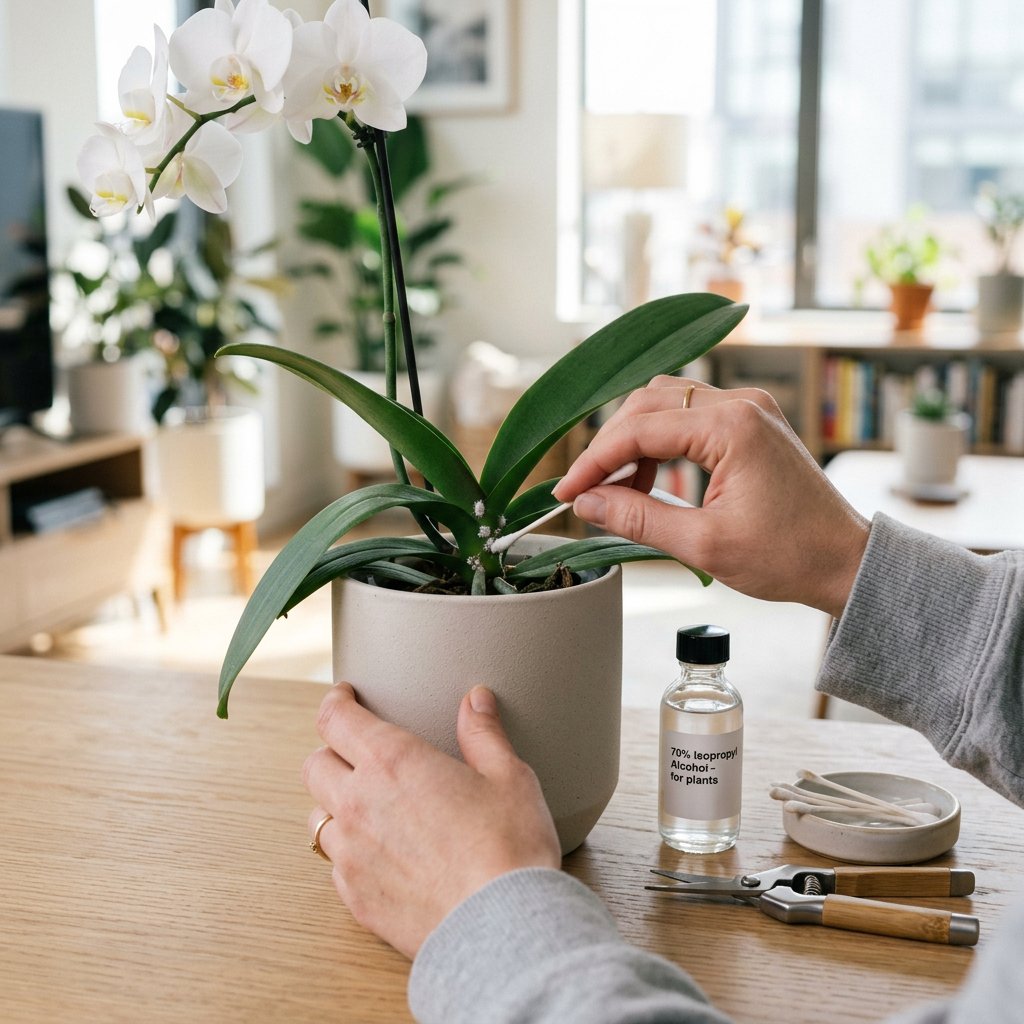
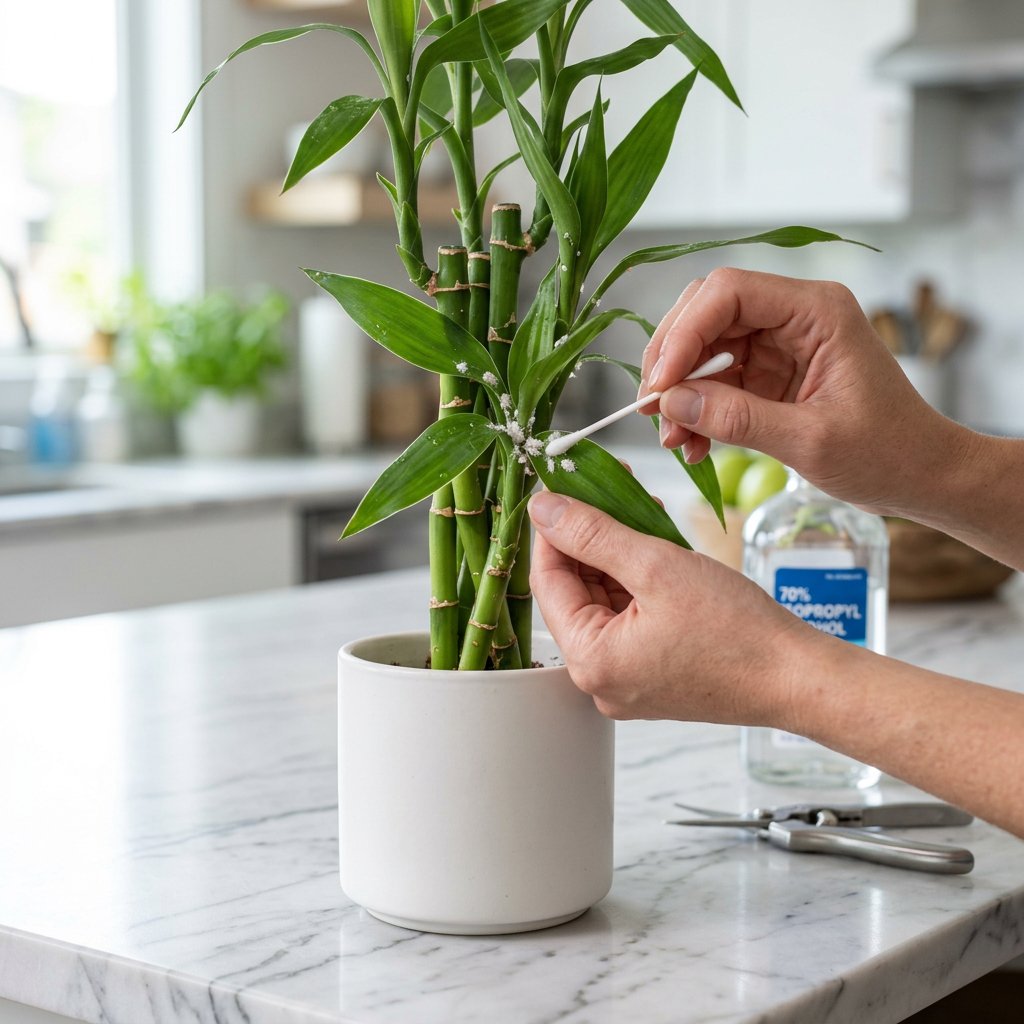
Grab some cotton swabs (Q-tips) and a bottle of 70% isopropyl rubbing alcohol. Dip the cotton swab into the alcohol and gently dab every single white fuzzy spot you see. The alcohol instantly breaks through the mealybug's protective waxy coating and kills them on contact. Be sure to check the tight spaces between the stalks and the leaves!
Step 3: Give Your Bamboo a Shower
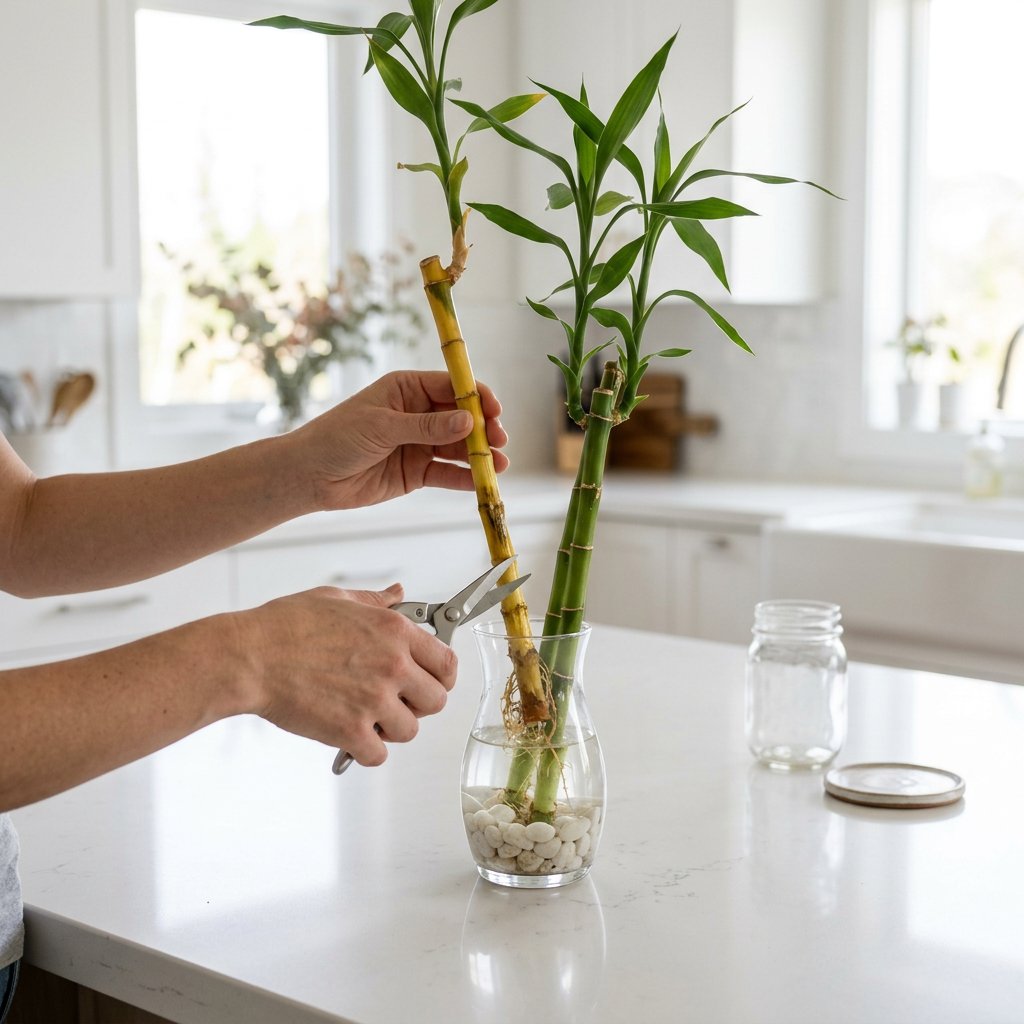
Once you’ve removed the visible adults, take your Lucky Bamboo to the sink or shower. Using a gentle stream of lukewarm water, rinse the entire plant. This physical force will safely wash away remaining juvenile bugs (crawlers) and rinse off any sticky honeydew.
Step 4: Apply a Safe Treatment
To prevent a newly hatched generation from taking over, treat the foliage with a scientifically proven horticultural spray. You can use a commercial insecticidal soap or pure, cold-pressed Neem Oil mixed with water. Spray the plant thoroughly, ensuring the liquid drips down into the leaf joints. Repeat this treatment every 7 to 10 days until you no longer see any bugs.
Step 5: Clean the Setup
If your Lucky Bamboo is growing in water and pebbles, take the time to wash the vase and thoroughly rinse the stones with hot water. Pests can sometimes hide near the waterline!
Eradicating mealybugs takes a little bit of persistence, but your Lucky Bamboo will thank you with fresh, green growth in no time. To help keep your newly recovered plant thriving, be sure to log your treatments and set up customized watering and care reminders in your Plantiary app. You've got this!