Discovering a pest on your elegant orchid can be a heartbreaking moment for any plant parent. You water it perfectly, provide the ideal amount of bright, indirect sunlight, and suddenly, you spot tiny white fuzz hiding on the leaves. Take a deep breath! Plant pests are a completely normal part of the indoor gardening journey, and dealing with them doesn’t mean you’re a bad plant owner.
If that fuzzy invader looks a lot like tiny pieces of cotton, you are likely dealing with mealybugs. If you are ever unsure what is wrong with your plant, you can use the AI-powered plant disease scanner in the Plantiary app to get an accurate diagnosis in seconds. Let's explore how to safely, gently, and effectively evict these unwanted guests so your orchid can thrive again.
The Problem: Identifying Mealybug Symptoms
Mealybugs are small, soft-bodied insects that feed on the nutrient-rich sap of your plants. Because orchids have thick, juicy leaves and lots of hidden crevices, they are a favorite target. Keep an eye out for these telltale signs:
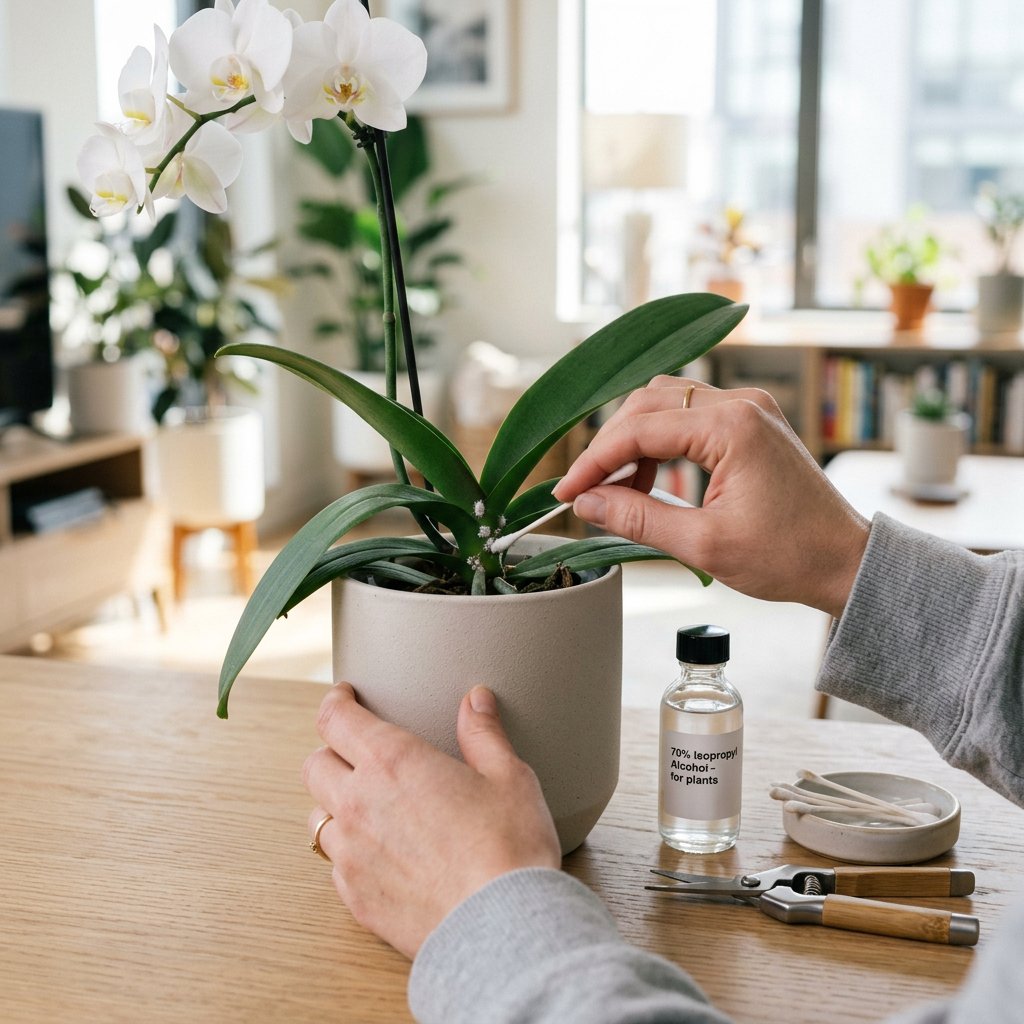
- Cotton-like clusters: You will usually spot white, fluffy masses hiding in the joints where the leaves meet the stem, on the undersides of leaves, or even tucked inside the delicate flowers.
- Honeydew: This is a sticky, clear substance secreted by the bugs as they feed on the plant's sap. If your orchid’s leaves feel inexplicably sticky to the touch, mealybugs might be the culprit.
- Sooty mold: If honeydew is left untreated, it can attract a dark, powdery fungus known as sooty mold. While the mold itself doesn't attack the plant, it coats the leaves, blocking sunlight and preventing the plant from photosynthesizing properly.
- Yellowing or drooping leaves: As the bugs drain the plant's sap, the orchid loses vital nutrients. This often leads to chlorosis—a condition where leaves turn yellow and pale due to a lack of chlorophyll—giving the plant a generally wilted, sad appearance.
The Causes: How Did They Get Here?
You might be wondering how these pests magically appeared in your living room. Don't blame yourself! Mealybugs are stealthy hitchhikers, and they can enter your home in a few common ways:
- New plant additions: The most frequent cause is bringing home a new houseplant from a nursery or store that already has a hidden, microscopic infestation.
- Summer vacations: If you put your orchids outside on a patio to enjoy the warm summer humidity, they might pick up pests from nearby outdoor garden plants.
- Contaminated tools and airflow: In rare cases, mealybug crawlers (the microscopic, highly mobile young bugs) can blow in through an open window, hitch a ride on a pet's fur, or spread via unsterilized pruning shears.
The Solutions: Step-by-Step Mealybug Treatment
Orchids are notoriously sensitive to harsh chemical pesticides, so we want to treat them gently but effectively. Skip the risky DIY kitchen remedies (like rubbing mayonnaise or dish soap on the leaves) and follow these scientifically proven steps to save your plant.
- Step 1: Isolate the infected orchid immediately. Mealybugs spread to nearby plants incredibly quickly. As soon as you notice the white fuzz, move your orchid to a separate room away from your other houseplants to contain the outbreak.
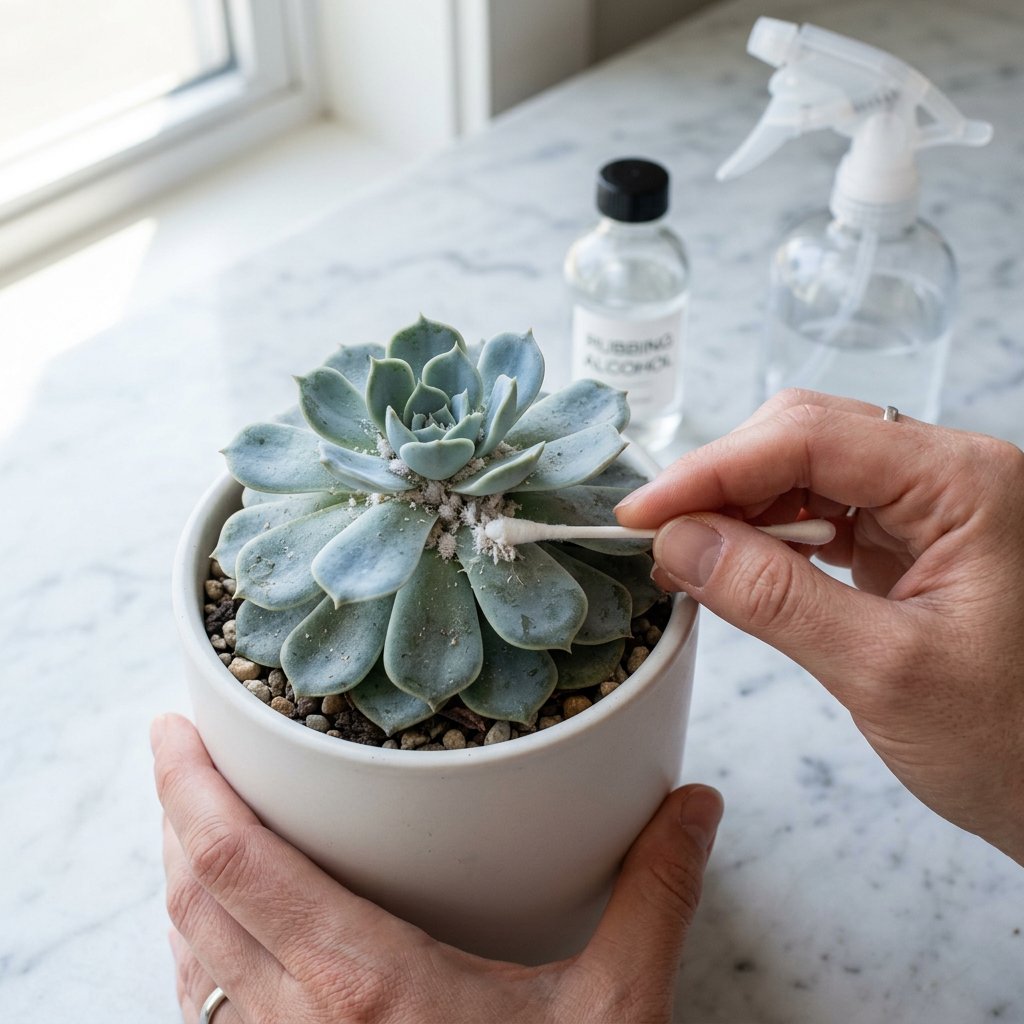
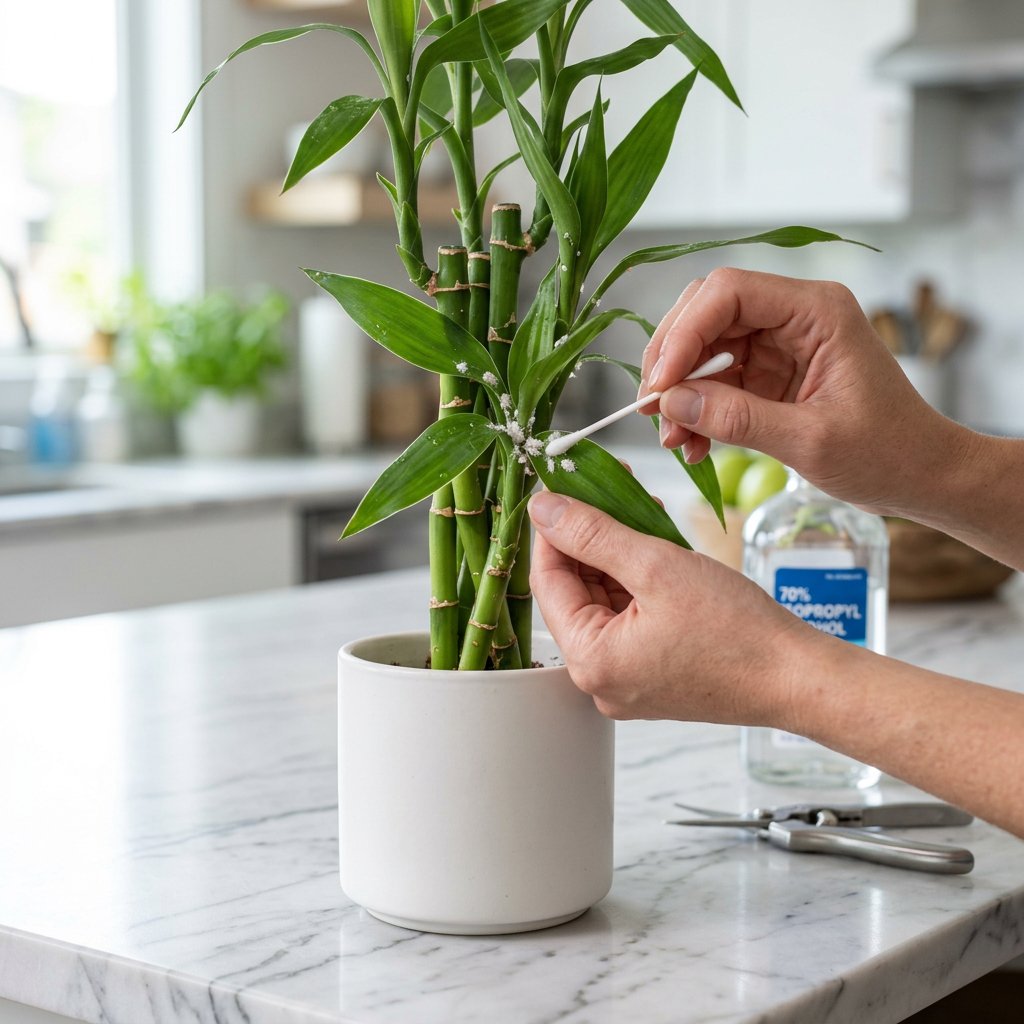
- Step 2: Manually remove the visible bugs. Dip a cotton swab (Q-tip) in 70% isopropyl (rubbing) alcohol. Gently dab the white cottony masses. The alcohol safely dissolves the bug's protective waxy coating and kills them on contact. Be sure to check all the hidden nooks, including the base of the orchid and under the blooming flowers.
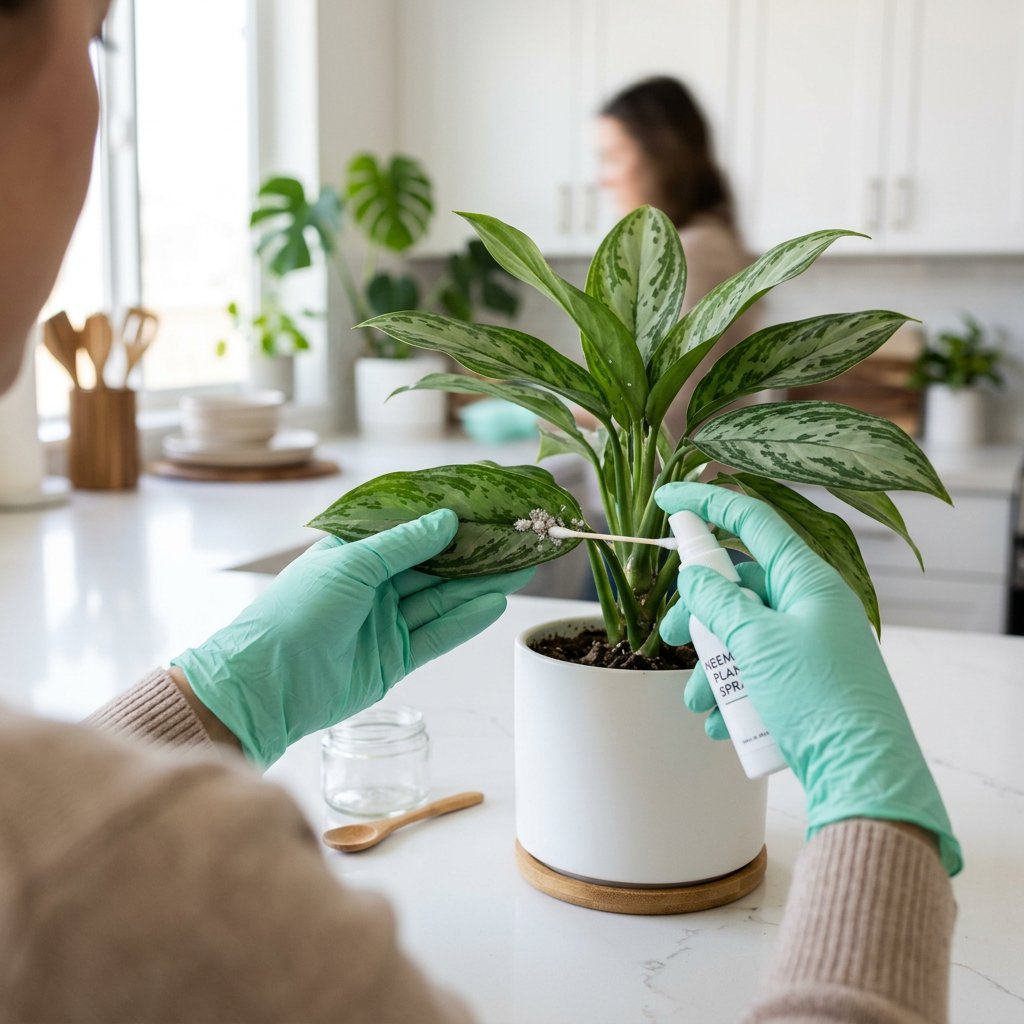
- Step 3: Apply a gentle, safe insecticidal spray. For any microscopic crawlers you might have missed, you’ll need a broader treatment. Lightly spray the plant with a commercial insecticidal soap or horticultural neem oil. Neem oil is a natural, plant-based treatment that disrupts the insects' feeding and reproductive cycles. Pro tip: Always apply oils or sprays in the evening or away from direct sunlight, as wet leaves can suffer from sunburn.
- Step 4: Check the root system. Some species of mealybugs love to hide in the potting media and feed on the roots. If the infestation is severe or keeps returning, carefully take the orchid out of its pot. If you see white fuzz in the bark, rinse the roots thoroughly with lukewarm water, sanitize the pot, and repot the orchid in fresh, sterile orchid bark.
- Step 5: Monitor consistently. Keep your orchid in quarantine for at least three to four weeks. Check it every few days and repeat the rubbing alcohol or neem oil treatment weekly until you are 100% sure the bugs are gone.
Rescuing an orchid from mealybugs takes a little bit of patience, but seeing those beautiful, elegant blooms recover is incredibly rewarding. Remember, even the most experienced botanists battle pests! Keep checking your plants, provide them with good airflow, and don't hesitate to lean on technology for help. You can easily set up care reminders, track your watering schedules, and monitor your treatment progress using the Plantiary app. You've got this, and your orchid will thank you!