Have you ever peeked closely at your favorite succulent, only to find what looks like tiny tufts of cotton hiding in the crevices of its leaves? Take a deep breath! Finding pests on your beloved plants can be incredibly frustrating, but please don't feel guilty. Dealing with pests is simply a normal rite of passage for every plant parent. Those little white fluffs—known as mealybugs—are incredibly common, and more importantly, they are entirely treatable. Whether you have an Echeveria, an Aloe, or a Jade plant, we are here to walk you through exactly how to banish these bugs and nurse your plant back to health. Plus, if you ever spot a weird bump or spot and aren't quite sure what it is, you can always use the AI-powered plant disease scanner in the Plantiary app to get an accurate diagnosis in seconds!
The Problem: Spotting the Fuzzy Invaders
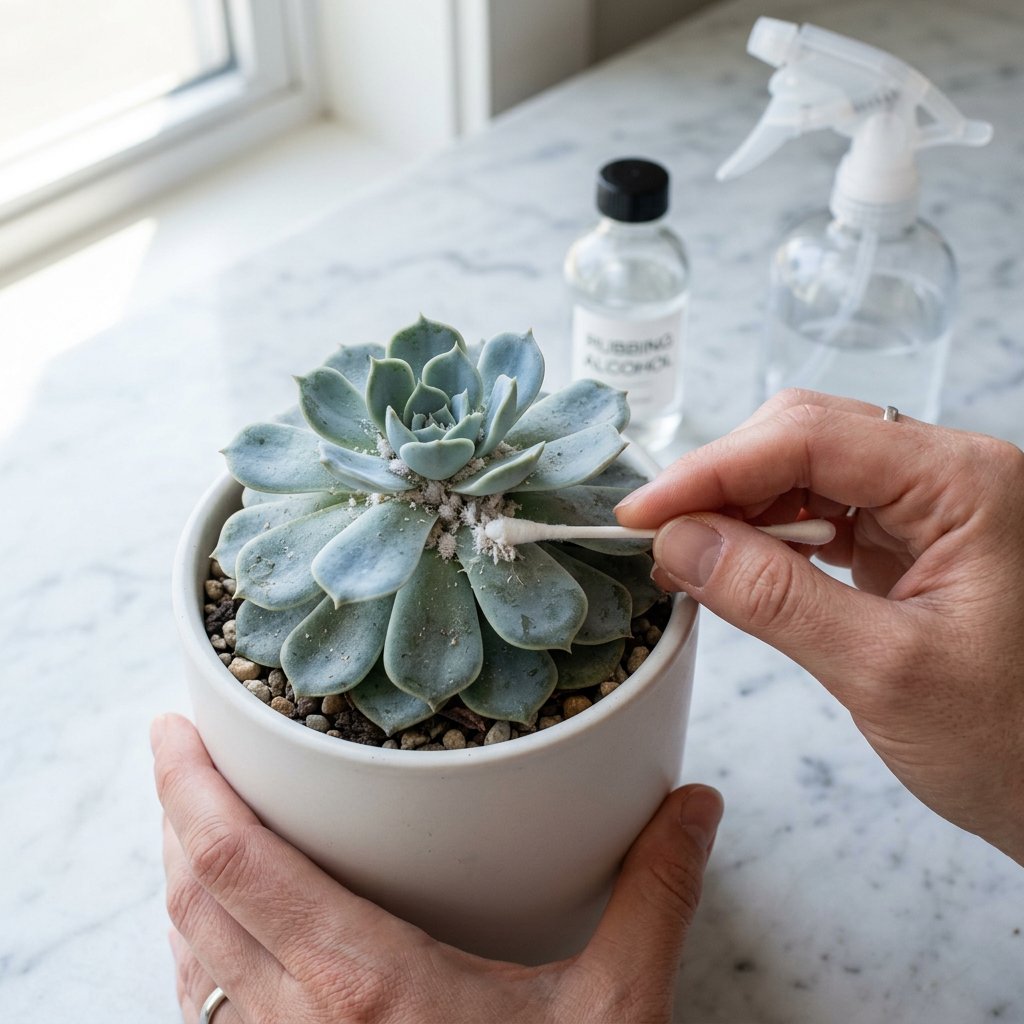
Mealybugs are tiny, soft-bodied insects that feed on plant sap. To protect themselves, they secrete a powdery, waxy coating that makes them look like minuscule pieces of cotton or white mold. Because succulents have lots of tight, fleshy crevices, they are the perfect hiding spot for these sneaky pests.
Here is what you should look out for:
- White, cottony webbing: Usually found clustered in the tight joints where the leaves meet the stem, or deep in the crown of the plant.
- Sticky residue: As mealybugs feed, they excrete a sugary liquid called honeydew. This stickiness can sometimes attract ants or lead to a black fungal growth known as sooty mold.
- Deformed or stunted growth: Because the bugs are quite literally sucking the energy out of your plant, new leaves may grow in misshapen.
- Chlorosis: This is a botanical term for the yellowing of plant tissue caused by a lack of chlorophyll. You might notice your succulent's vibrant leaves turning pale or yellow as the infestation progresses.
The Causes: Why Are Mealybugs on My Succulents?
Pests don't appear out of thin air, but they are opportunistic. Here are a few reasons they might have set up camp on your succulent:
- Nursery Hitchhikers: The most common cause is simply bringing a new, secretly infested plant into your home.
- Ideal Environments: Mealybugs thrive in warm environments. While succulents love warmth, poor air circulation indoors can create a breeding ground for pests.
- Stressed Plants: If your succulent is suffering from etiolation—a term for when a plant stretches out unnaturally and becomes weak due to a lack of sunlight—its immune system drops, making it a prime target for sap-sucking insects.
- Overwatering: Excess moisture and over-fertilization can cause a rush of soft, lush growth on succulents, which is exactly what mealybugs love to eat.
The Solutions: Your Step-by-Step Treatment Guide
Put away the harsh home kitchen remedies—things like mayonnaise or dish soap can damage your succulent's natural protective coating (the farina). Instead, let's stick to safe, scientifically proven methods to clear this up!
Step 1: Isolate the infected plant. The moment you spot a mealybug, move your succulent away from your other houseplants. Mealybugs can easily crawl from pot to pot, so a temporary quarantine is essential to protect your indoor jungle.
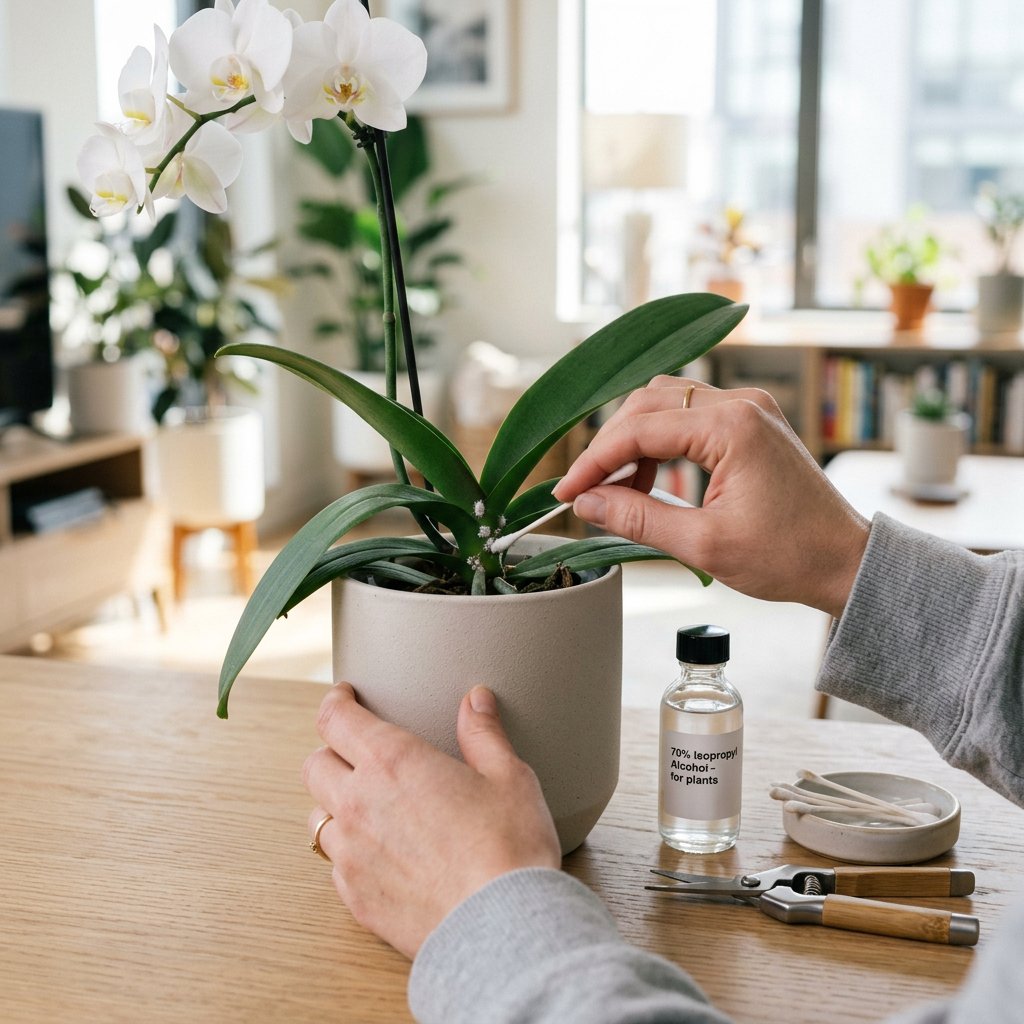
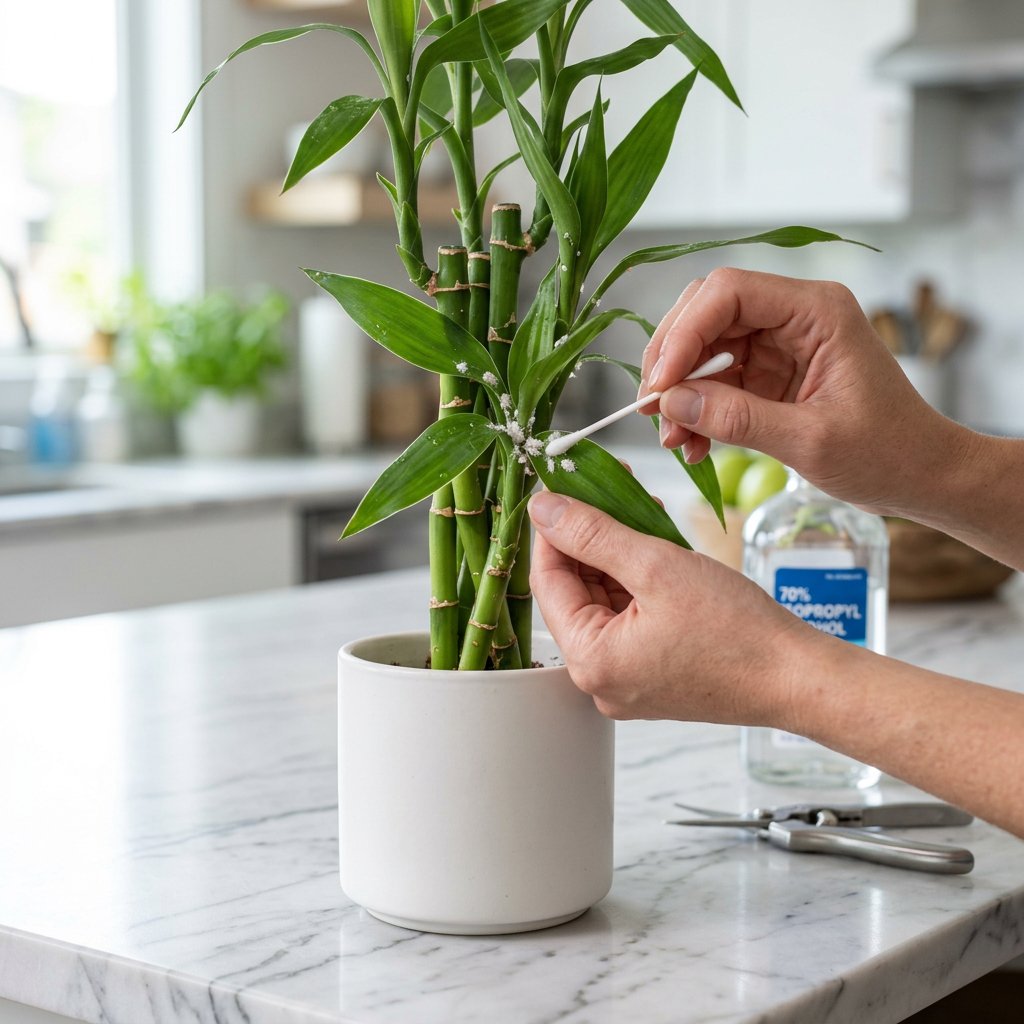
Step 2: The Isopropyl Alcohol spot treatment. For light infestations, grab a Q-tip and dip it in 70% isopropyl (rubbing) alcohol. Gently dab the cotton swab directly onto the white fuzzy bugs. The alcohol instantly breaks down their waxy protective coating and kills them on contact. You will see them turn a reddish-brown color when they die.
Step 3: Spraying for larger infestations. If the mealybugs have taken over the plant, mixing a spray is much more efficient. Combine 70% isopropyl alcohol and water in a 1:1 ratio in a spray bottle. Thoroughly mist the plant, making sure to get into all the hidden nooks and crannies. Important tip: Keep your freshly sprayed succulent out of direct sunlight until the leaves are completely dry. Exposing wet, alcohol-treated leaves to the sun can cause phytotoxicity, which is a fancy word for chemical leaf burn.
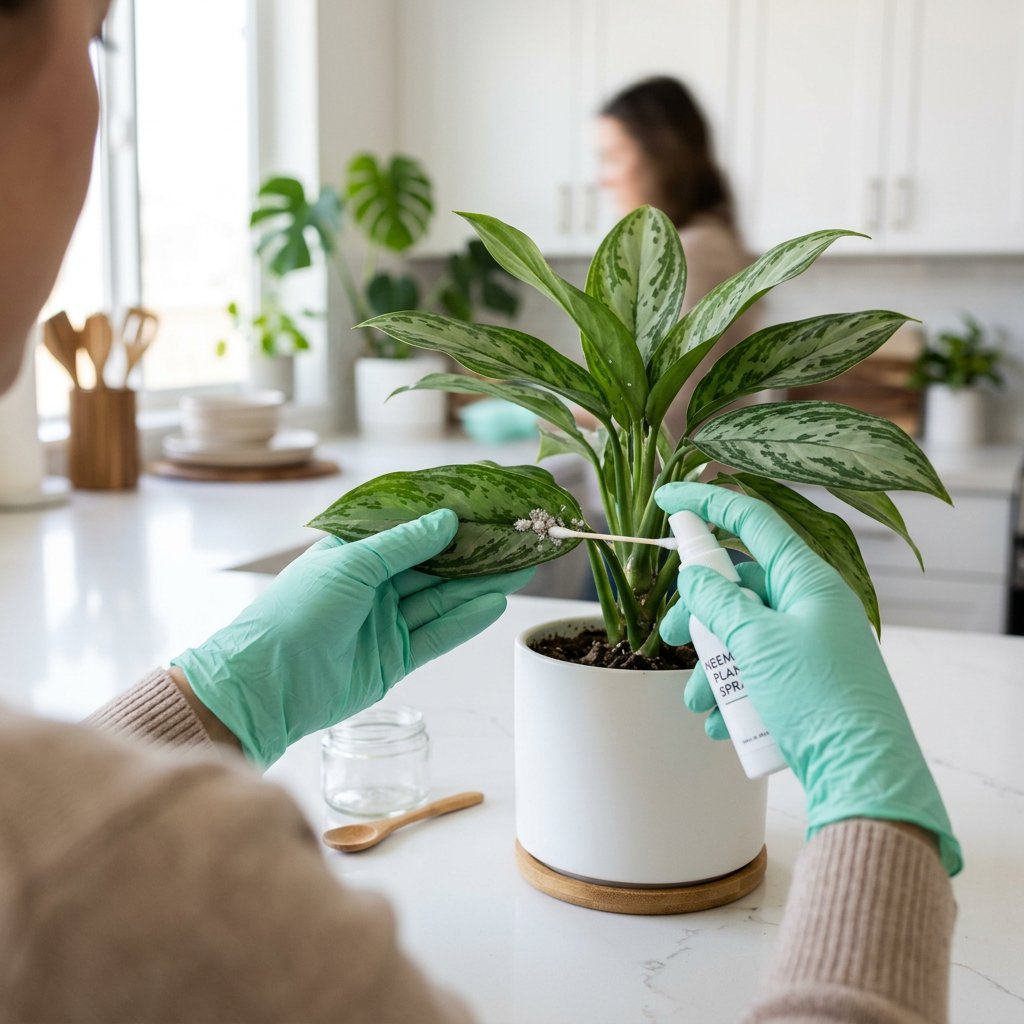
Step 4: Apply Neem Oil. Once the alcohol has dried, you can treat the plant with a properly diluted neem oil spray. Neem oil is a natural, scientifically proven horticultural oil that disrupts the pests' reproductive cycle, ensuring that any hidden eggs won't mature.
Step 5: Check the roots. If you have treated the leaves multiple times but your succulent is still dying, you might have root mealybugs. These look like white chalky deposits in the soil. If you suspect this, gently unpot your plant, wash the roots completely clean with water, and repot it in a fresh, well-draining succulent mix in a sanitized pot.
Step 6: Monitor and repeat! Mealybug eggs can hatch a few days after your initial treatment. Be patient and repeat Step 2 or Step 3 every 5 to 7 days until you haven't seen a single bug for a full two weeks.
Don't Give Up on Your Green Friends!
Seeing pests on your plants can feel defeating, but nursing a plant back to health is one of the most rewarding experiences a plant parent can have. You caught the problem, you have the knowledge to fix it, and your succulent will thank you for the extra love.
To help prevent future outbreaks, keep your succulents strong by providing plenty of light and avoiding overwatering. Let the Plantiary app help you out by setting up customized watering schedules and care reminders. You've got this!