It can be a heartbreaking moment for any plant parent: you’re happily admiring the gorgeous, patterned leaves of your Chinese Evergreen (Aglaonema), only to spot tiny, white, fuzzy clumps hiding in the crevices of the stems. Take a deep breath—don't panic, and definitely don't blame yourself! Pests are a completely normal part of the houseplant journey, and even the most seasoned indoor gardeners battle them from time to time.
Chinese Evergreens are famously resilient, making them highly capable of bouncing back from a pest encounter. Today, we’re going to help you tackle one of the most common indoor plant invaders: mealybugs.
The Problem: Symptoms of Mealybugs on Chinese Evergreens
Mealybugs are small, soft-bodied insects that sustain themselves by piercing your plant’s tissue and drinking its sap. Because they are so tiny, they often go unnoticed until their population grows. Here is what to look out for:
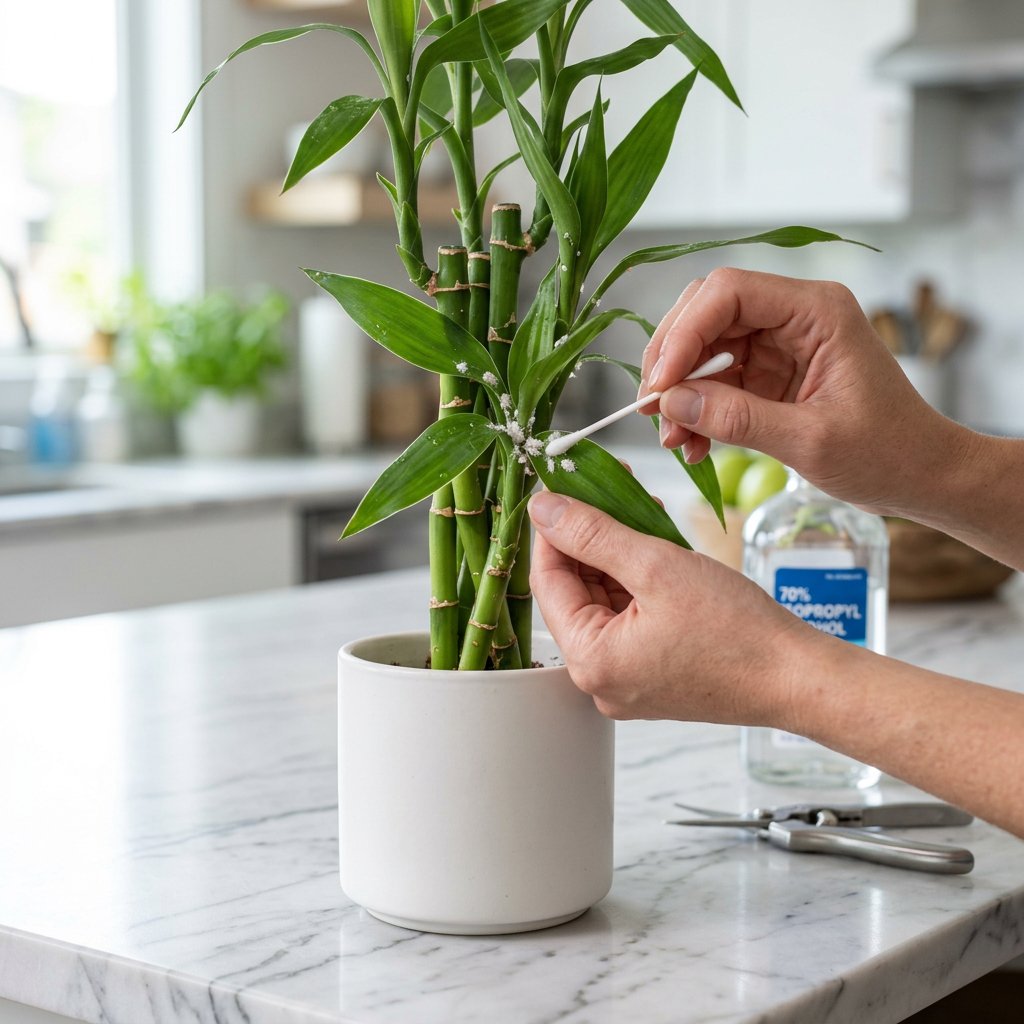
- Cotton-like clusters: This is the most obvious sign. Mealybugs secrete a white, waxy substance that looks like tiny tufts of cotton. They love to hide in the tight spaces where the leaves meet the main stem (the leaf axils) and under the foliage.
- Sticky residue: As mealybugs feed, they excrete a sticky, sugary substance called honeydew. If left untreated, honeydew can invite sooty mold, a black, powdery fungus that blocks sunlight from reaching the leaves.
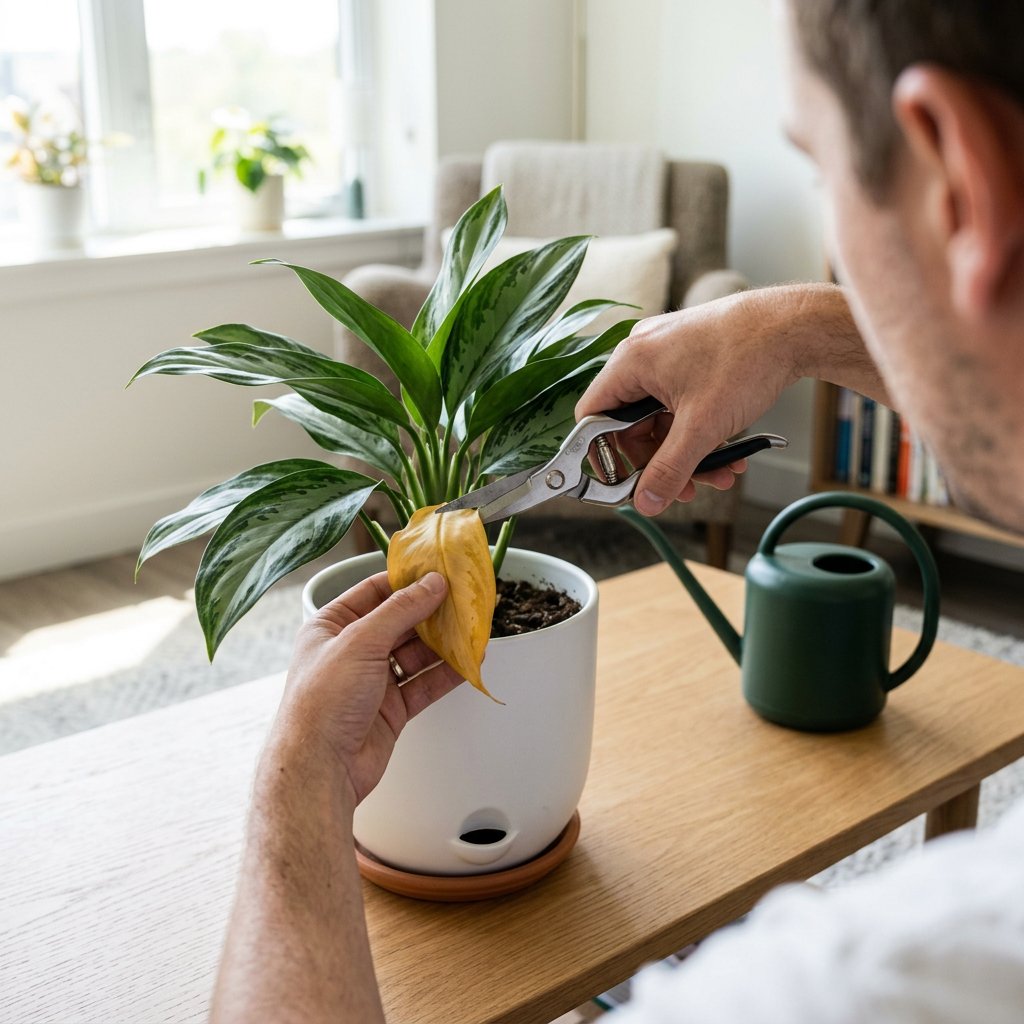
- Chlorosis (Yellowing leaves): When bugs suck the sap out of your plant, it loses its essential nutrients and green pigment. This condition, known as chlorosis, leaves the foliage looking pale, yellow, and sickly.
- Drooping or stunted growth: A severe infestation will drain your Chinese Evergreen's energy, causing new leaves to emerge small or deformed.
If you are looking at your plant and wondering, "Is this a mealybug or just dust?", don't guess! You can use the AI-powered plant disease scanner in the Plantiary app to get an accurate diagnosis in seconds.
The Causes: Where Do Mealybugs Come From?
Mealybugs don't just appear out of thin air. They are excellent hitchhikers and usually find their way onto your Chinese Evergreen through one of the following ways:
- New plant additions: This is the most common cause. A new plant from the nursery might look healthy but could be carrying microscopic eggs or hidden pests.
- Outdoor summering: If you put your Chinese Evergreen on the patio during the warm months, pests from the garden can easily make themselves at home.
- Contaminated soil or tools: Reusing unsterilized pots or old potting mix can sometimes introduce dormant pests into your home.
- Weakened immune systems: Plants experiencing stress from poor lighting or improper watering are more susceptible to pest outbreaks.
The Solutions: Step-by-Step Mealybug Treatment
When treating pests, always rely on scientifically proven, safe horticultural methods. Avoid internet myths like rubbing mayonnaise or dish detergent on your leaves, which can severely damage the plant's delicate pores. Instead, follow these reliable steps to nurse your Chinese Evergreen back to health:
Step 1: Isolate your plant immediately. As soon as you spot mealybugs, move your Chinese Evergreen away from your other houseplants. Mealybugs can easily crawl to neighboring pots, so a temporary quarantine is essential.
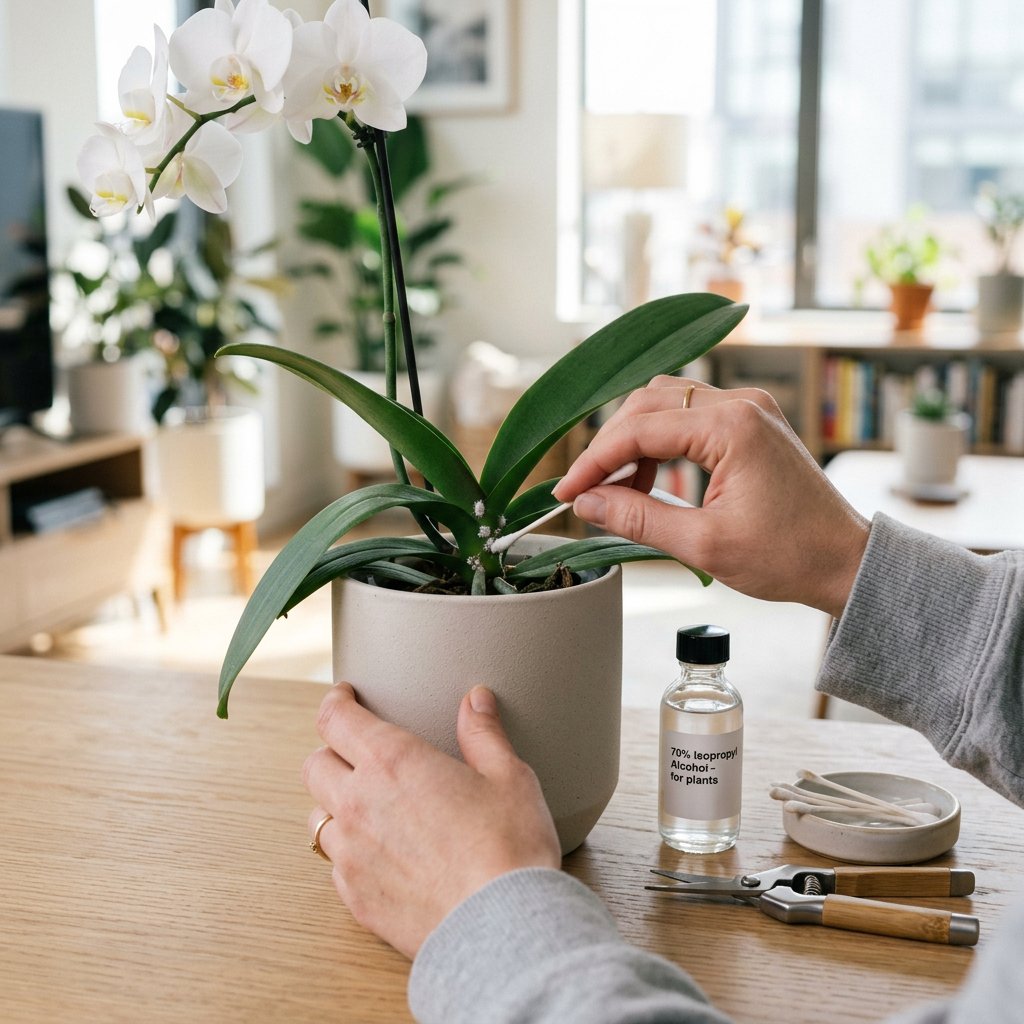
Step 2: Spot-treat with rubbing alcohol. Dip a cotton swab (Q-tip) into 70% isopropyl rubbing alcohol and gently dab it directly onto the mealybugs. The alcohol instantly dissolves their protective waxy coating and eliminates them on contact.
Step 3: Wash the foliage. Take your plant to the sink or shower and gently wash the leaves with lukewarm water. The physical force of the water will help dislodge any remaining bugs and wash away the sticky honeydew. Pro tip: Tilt the pot or cover the soil with plastic wrap so the soil doesn’t become waterlogged during the shower.
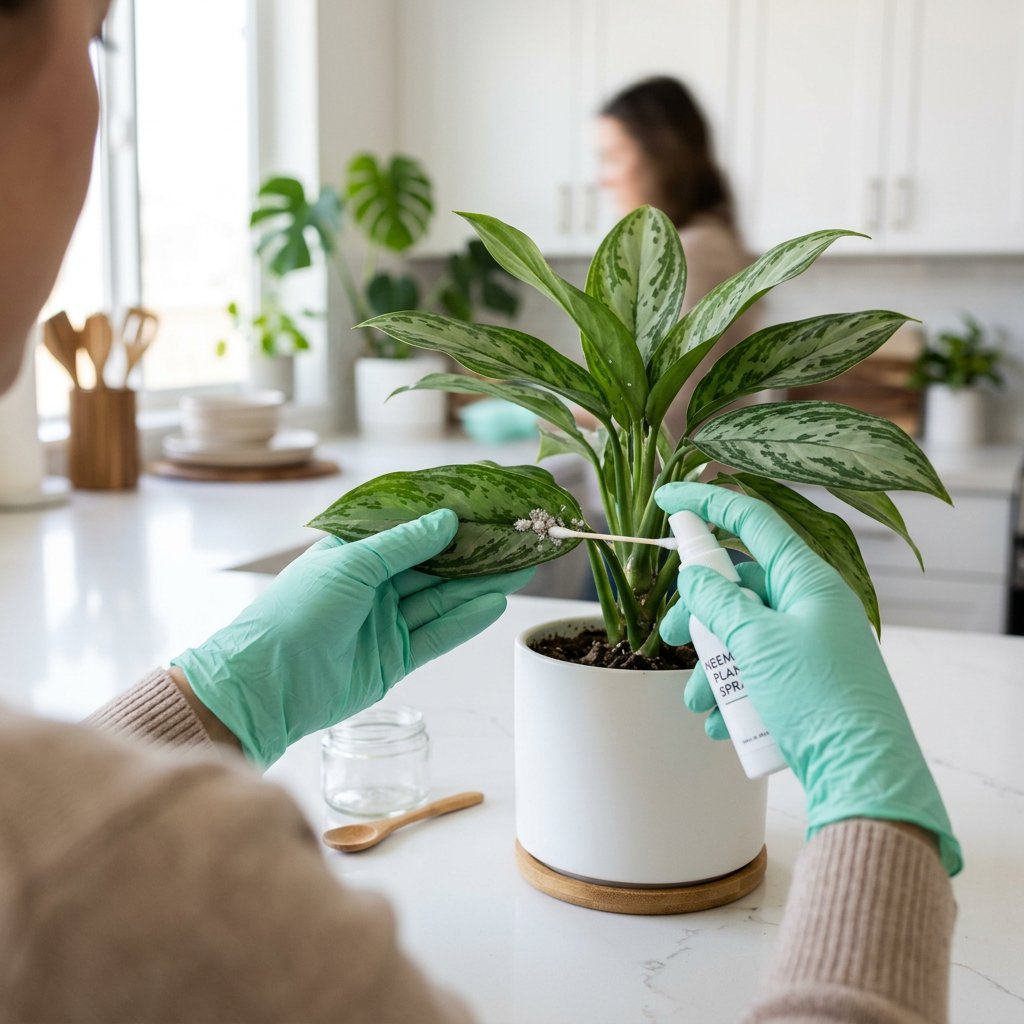
Step 4: Treat with Neem Oil or Insecticidal Soap. Once the plant is dry, spray it thoroughly with a commercially formulated insecticidal soap or a diluted neem oil mixture. Neem oil is a natural, scientifically proven treatment that disrupts the insect's life cycle and prevents them from feeding. Make sure to spray the undersides of the leaves and the stems where pests love to hide.
Step 5: Monitor and repeat. Pest control is a marathon, not a sprint. Because mealybug eggs can hatch a few days after your initial treatment, you will need to repeat the neem oil or insecticidal soap spray every 7 to 10 days until you no longer see any signs of bugs.
You've Got This!
Dealing with mealybugs can feel overwhelming, but your Chinese Evergreen is a tough, forgiving plant. By acting quickly, isolating the plant, and using safe, proven treatments, your leafy companion will be pushing out beautiful, healthy new growth in no time. Keep using the Plantiary app to set up care reminders, and remember—every pest you conquer just makes you a stronger, smarter plant parent!