Seeing your normally lush and vibrant Chinese Evergreen (Aglaonema) develop yellow leaves can be disheartening, but please don't panic! Plant hiccups happen to absolutely every plant parent, no matter how experienced they are.
This yellowing—a process botanists call chlorosis, which simply means the plant is losing its green pigment due to stress or nutrient issues—is just your plant's way of communicating. Your Chinese Evergreen is telling you that something in its environment needs a slight tweak. If you are ever unsure what is wrong with your plant, you can always use the AI-powered plant disease scanner in the Plantiary app to get a diagnosis in seconds.
Let’s take a deep breath, investigate what your plant is trying to say, and get your leafy friend back to its thriving, gorgeous self!
The Problem: Reading the Symptoms
Before we can fix the issue, we need to look closely at the yellow leaves. The way your plant is yellowing provides massive clues about what is going wrong:
- Soft, mushy yellow leaves: Usually a sign of too much moisture.
- Dry, crispy yellow leaves: Often points to extreme thirst or too much direct sunlight.
- Only the very bottom leaves are yellowing: This is often completely natural and nothing to worry about!
The Causes: Why is Your Chinese Evergreen Turning Yellow?
To find the perfect cure, we need to pinpoint the root cause. Here are the most common reasons your Aglaonema might be turning yellow:
1. Overwatering and Poor Drainage
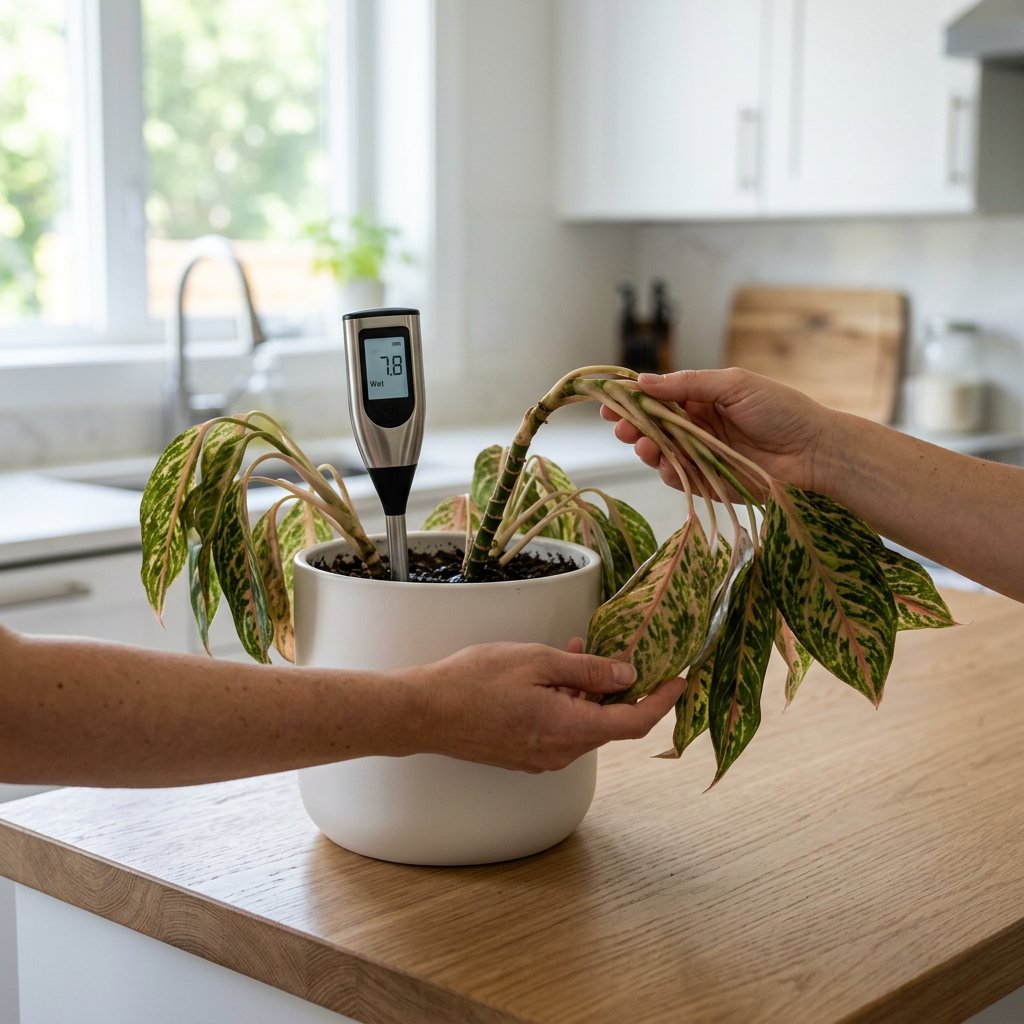
This is the number one culprit for indoor houseplants. When a Chinese Evergreen sits in soggy, waterlogged soil, the roots cannot breathe. This leads to suffocation and root rot, preventing the plant from absorbing the water and nutrients it needs to keep its leaves green.
2. Underwatering
While they are remarkably forgiving, Chinese Evergreens cannot survive in bone-dry soil forever. If the soil becomes completely parched, the plant will sacrifice its older leaves, turning them yellow and crispy to conserve water for the main stem.
3. Lighting Extremes
Aglaonemas are famous for tolerating low light, but they still need some light to photosynthesize. If placed in a pitch-black corner, they will eventually weaken and yellow. Conversely, if you place them in direct, harsh sunlight, the leaves will scorch, bleach, and turn a pale, sickly yellow.
4. Natural Aging
If your plant is pushing out plenty of healthy new growth at the top, but occasionally dropping a single yellow leaf at the very bottom near the soil, congratulations! Your plant is perfectly healthy. This is just natural aging, where the plant sheds old foliage to direct energy toward new leaves.
The Solutions: Step-by-Step Treatment
Now that we know what might be bothering your plant, let's take action. Follow these simple steps to restore your Chinese Evergreen's health.
Step 1: Perform a soil moisture test. Poke your finger about two inches deep into the soil. If it feels wet and muddy, overwatering is your issue. If it feels like dry dust all the way through, your plant is extremely thirsty. Only water your Chinese Evergreen when the top 50% of the soil feels completely dry to the touch.
Step 2: Inspect your drainage. Ensure your plant is in a pot with drainage holes. If it is sitting in a decorative pot with no holes, water will pool at the bottom. Always empty the drainage saucer 15 minutes after watering so your plant’s roots aren't left sitting in a puddle.
Step 3: Adjust the lighting. Move your plant to a spot where it receives bright to medium indirect light. A few feet away from an east or north-facing window is usually the sweet spot. Keep it out of harsh, direct afternoon sun rays to prevent leaf burn.
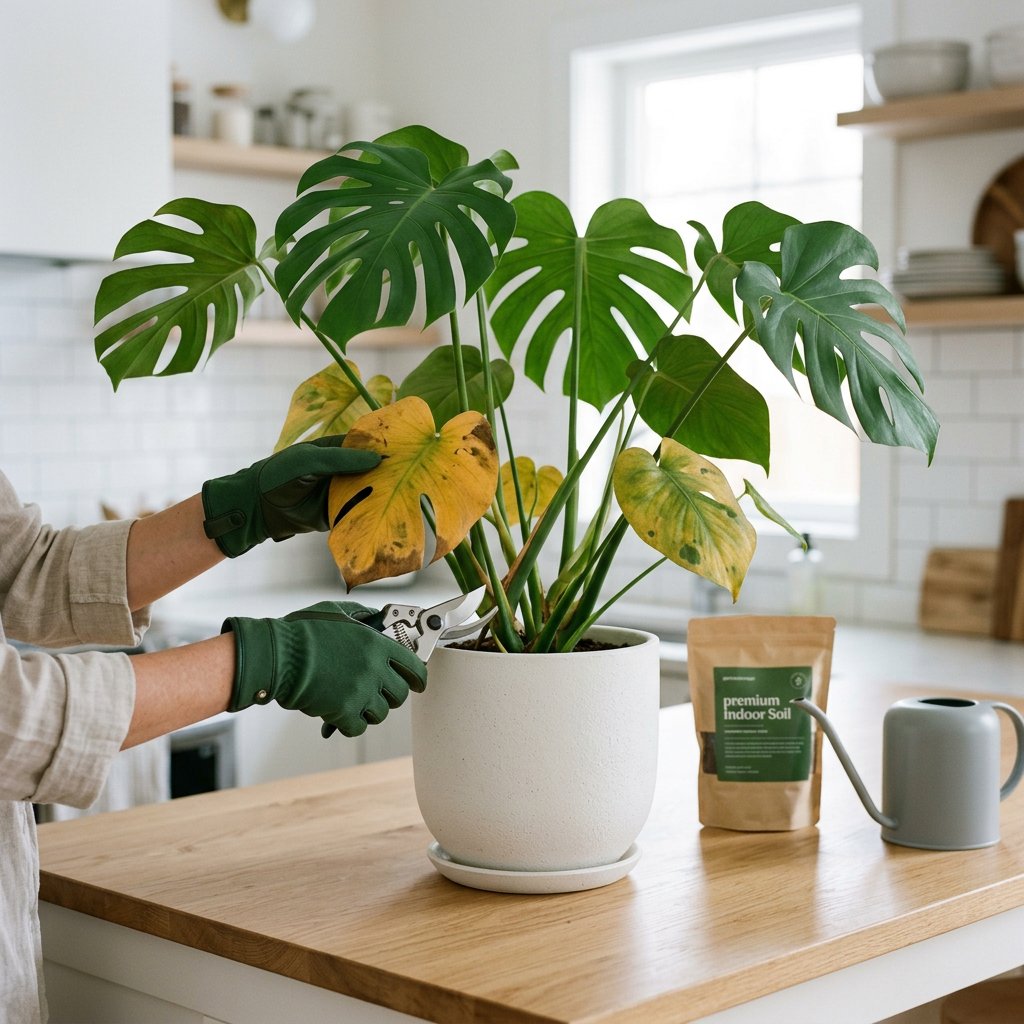
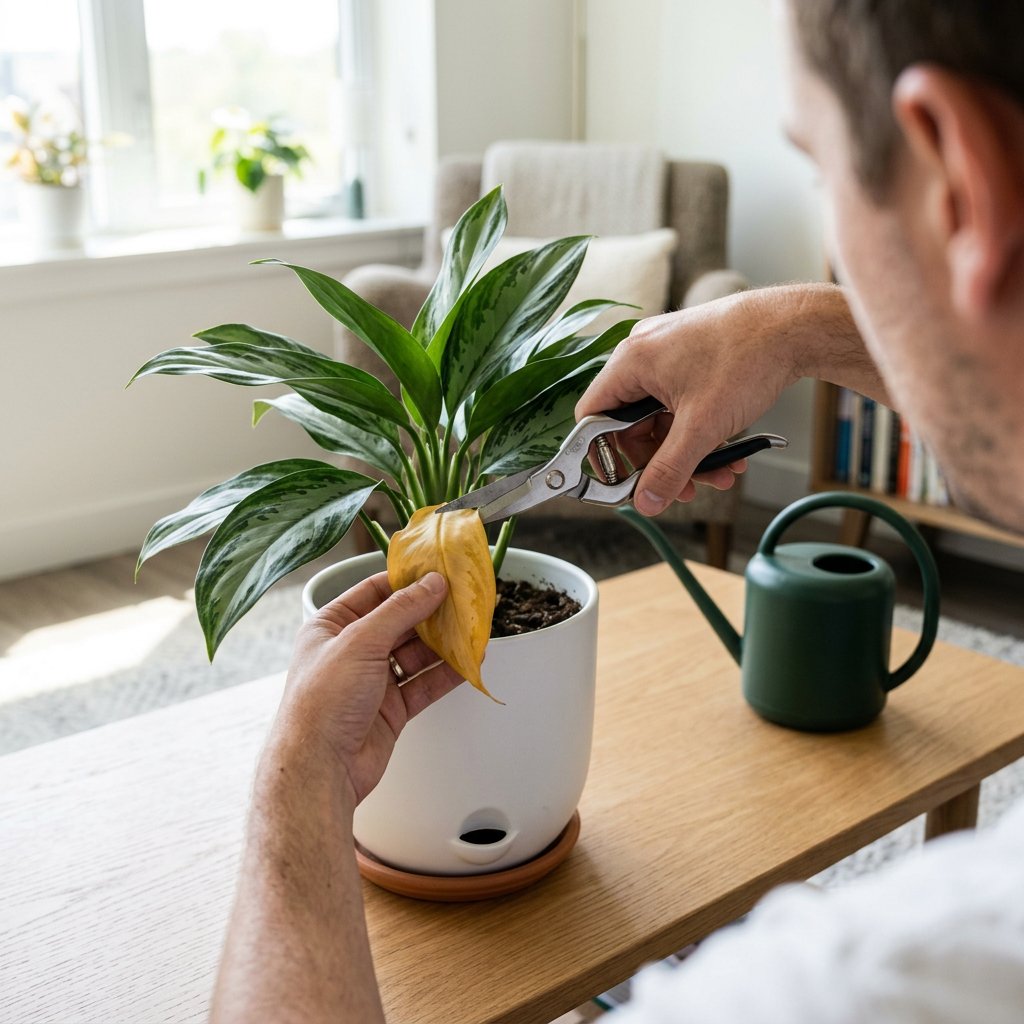
Step 4: Prune the yellow leaves. Once a leaf turns completely yellow, it will not turn green again. Leaving it on the plant actually drains the plant's energy. Take a pair of clean, sterilized scissors or pruning shears and snip the yellow leaves off near the base of the stem. This instantly makes the plant look better and redirects its energy toward healing and new growth.
Step 5: Monitor and be patient. Plants work on their own timeline. After you adjust your watering routine or move the plant to better light, give it a few weeks to acclimate.
Caring for plants is a learning journey, and a few yellow leaves are just stepping stones to becoming a better plant parent. Stay observant, keep adjusting, and remember to log your watering schedule in the Plantiary app to prevent overwatering in the future. You've got this!