There is nothing quite as disheartening as watching your vibrant, resilient Lucky Bamboo suddenly turn yellow and mushy. If your beloved plant is looking a little under the weather, take a deep breath—you are not alone, and you are certainly not a bad plant parent! Rot is an incredibly common issue with this popular houseplant. Thankfully, with a little botanical know-how and some quick action, you can often rescue it. Plus, setting up care reminders in your Plantiary app can help prevent these hiccups in the future. Let's dive into exactly how to stop your Lucky Bamboo from rotting and bring it back to life.
The Problem: Spotting the Symptoms of Rot
Lucky Bamboo (which is actually a type of Dracaena, not real bamboo at all!) is famous for being virtually indestructible. However, when things go wrong, the distress signals usually show up at the stem and roots. Here is what you should look out for:
- Mushy Stems: The stalk feels squishy or hollow to the touch instead of firm and sturdy.
- Yellowing or Browning: Rapid discoloration spreading from the bottom of the stalk upward.
- Foul Odor: A noticeable, swampy, or rotten egg smell coming from the water or soil.
- Slimy Roots: Healthy roots are usually orange, red, or light tan. Rotting roots will look black, dark brown, and feel slimy and fragile.
The Causes: Why is Your Lucky Bamboo Rotting?
To fix the issue, we first need to understand what caused it. Rot is almost always a result of environmental stress that allows harmful fungi or bacteria to attack the plant.
- Poor Water Quality: Tap water is often treated with chlorine and fluoride. Over time, these chemicals can cause toxic burns to the roots, leading to dead tissue that eventually rots.
- Stagnant Water: If you grow your plant in a vase of water and pebbles, failing to change the water regularly creates an anaerobic (oxygen-lacking) environment. This is a perfect breeding ground for rot-causing bacteria.
- Overwatering in Soil: If your Lucky Bamboo is planted in soil, a pot without drainage holes or a dense soil mix will suffocate the roots, leading to root rot.
- Fertilizer Burn: Liquid fertilizers can easily burn delicate water-grown roots, triggering decay. Lucky Bamboo actually needs very little fertilizer to thrive!
If you are unsure what is wrong with your plant or want to confirm if it is rot versus a different issue, you can use the AI-powered plant disease scanner in the Plantiary app to get a diagnosis in seconds.
The Solutions: Step-by-Step Treatment to Save Your Plant
Once rot sets in, it spreads quickly. You will need to perform a little plant surgery, but do not worry—it is much easier than it sounds!
Step 1: Remove and Inspect
Gently take your plant out of its container. Rinse the roots and lower stem under room-temperature running water to wash away any slime, algae, or old soil. This allows you to clearly see exactly where the healthy tissue ends and the rot begins.
Step 2: Prune Away the Rot
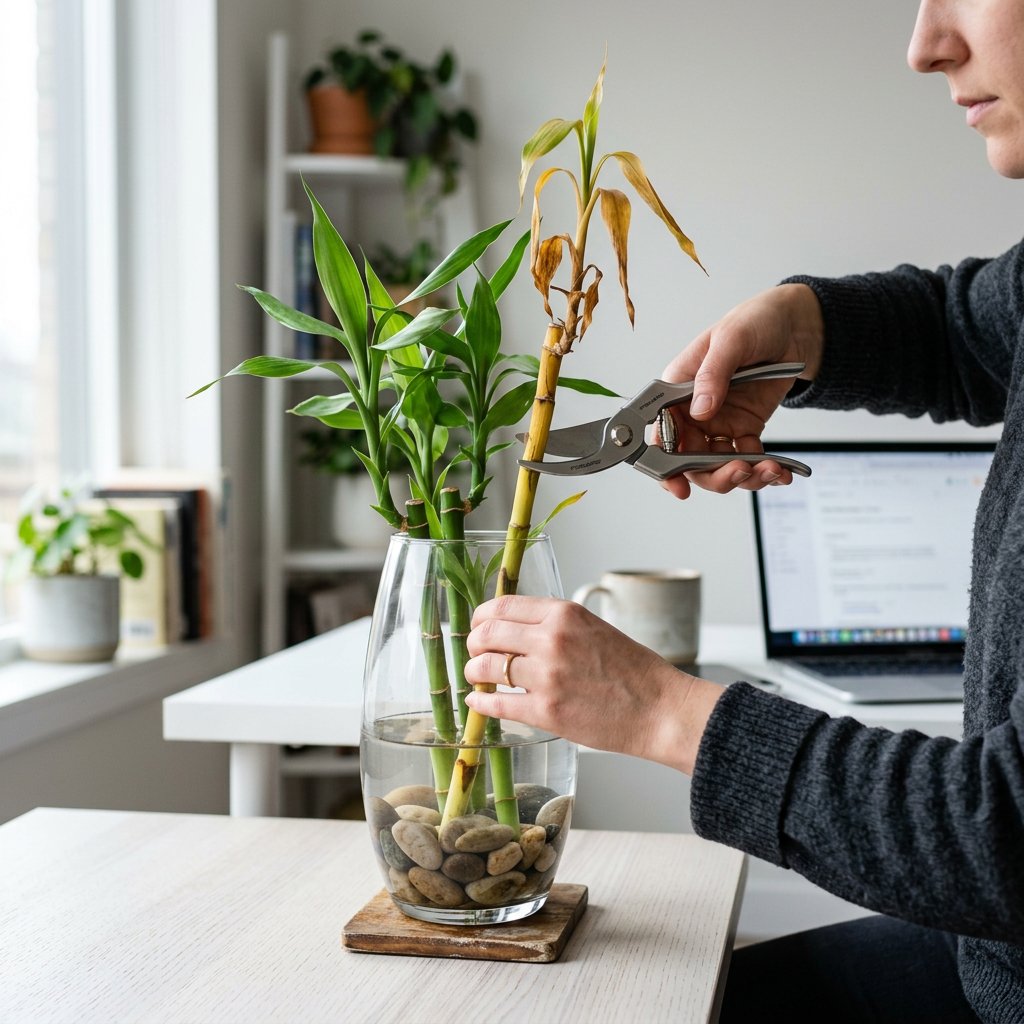
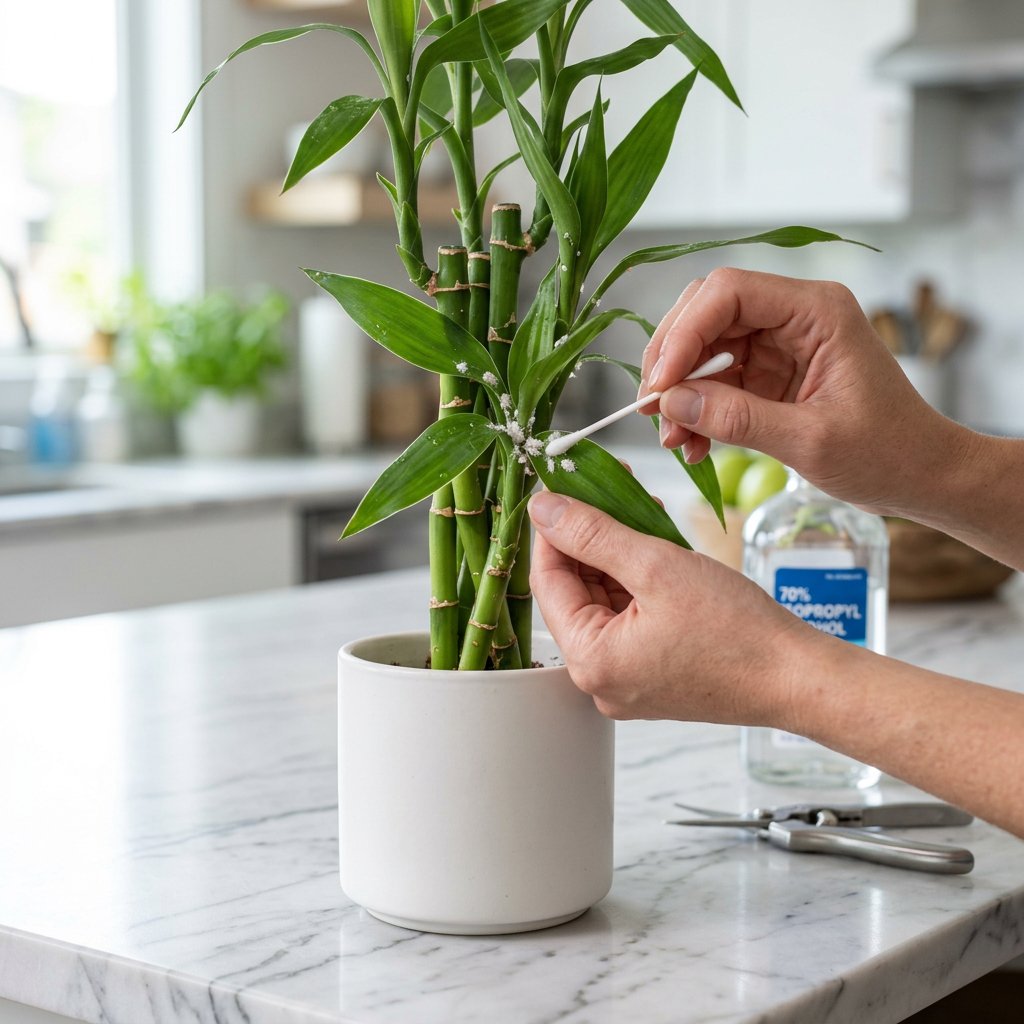
Using a pair of sharp scissors or pruning shears (wiped down with rubbing alcohol to sterilize them), cut away all the mushy, dark, or foul-smelling parts of the plant.
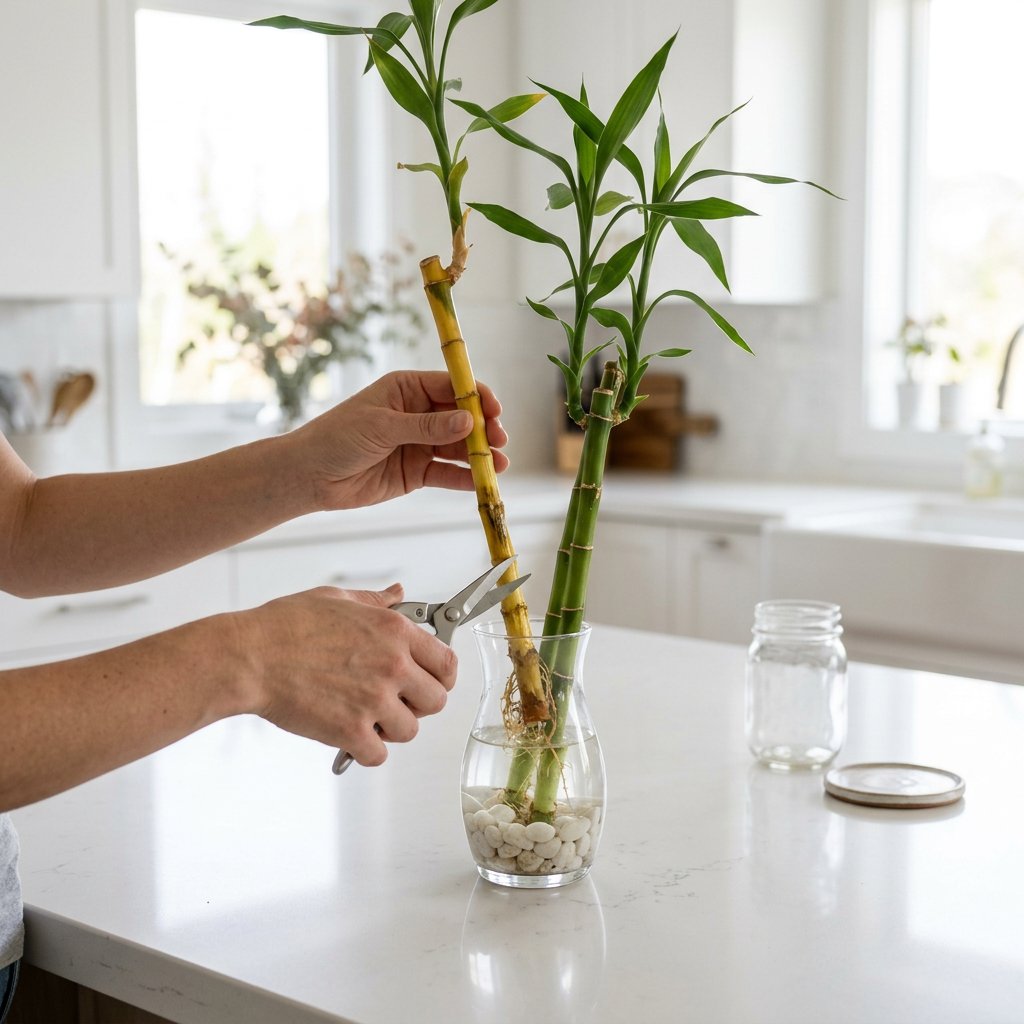
- If only the roots are rotting: Carefully trim off the black, slimy roots, leaving any firm, healthy ones intact.
- If the stem itself is rotting: You must cut the stem above the rot. Make a clean, horizontal cut at least an inch above the highest yellow or mushy section. Check the inside of the remaining upper stalk—it should look completely white and firm. If there are brown spots inside, cut a little higher until you hit perfectly healthy tissue.
Step 3: Sanitize the Environment
Do not put your freshly pruned, vulnerable plant back into a dirty home! Wash its vase thoroughly with hot, soapy water. If you use decorative pebbles, boil them in water for 10 minutes to kill any lingering bacteria or fungal spores.
Step 4: Provide Fresh Water or Soil
Place your revived Lucky Bamboo back into its clean container.
- For water setups: Use bottled spring water, distilled water, or rainwater. Fill the vase with just enough water to submerge the bottom 1 to 2 inches of the roots or the newly cut stem.
- For soil setups: Repot the plant in a fresh, well-draining potting mix (mixing in a handful of perlite works wonders). Ensure the pot has a drainage hole at the bottom so excess water can escape.
Looking Forward to Healthy Growth
Seeing a plant struggle can be stressful, but plant parenting is a journey full of learning curves. Once you have removed the rot and provided clean, chemical-free water, your Lucky Bamboo has a fantastic chance of pushing out fresh, healthy roots.
Remember to change the water every 10 to 14 days, keep the plant out of harsh direct sunlight to avoid algae blooms, and use the Plantiary app to easily track your water-changing schedule. You've got this!