Have you recently noticed your vibrant Lucky Bamboo slowly turning a concerning shade of yellow? Take a deep breath and please don't be hard on yourself—you are not a bad plant parent! It is completely normal to feel a little discouraged when our indoor companions start looking under the weather, but mysterious yellowing is an incredibly common hurdle that happens to almost everyone.
Your Lucky Bamboo (Dracaena sanderiana—which, fun fact, isn’t actually a true bamboo at all!) is famous for being an adaptable, low-maintenance houseplant. However, it does have a few specific environmental preferences. Let’s decode what your plant is trying to tell you and walk through exactly how to nurse it back to health.
The Problem: Reading the Symptoms
Before we can fix the issue, we need to look closely at what is happening to the plant. Yellowing on a Lucky Bamboo can present itself in a few different ways:
- Slight yellowing on the leaf tips: Often a sign of mild stress.
- Yellowing starting at the base of the stalk: Usually indicates an issue with the roots or the water it’s sitting in.
- The entire stalk turning yellow and mushy: This is a clear sign of severe distress or rot, meaning the internal tissues are breaking down.
The Causes: Why is Your Lucky Bamboo Yellowing?
Lucky Bamboo is incredibly sensitive to a few specific environmental factors. Here are the most common scientific reasons behind the yellowing:
- Tap Water Toxicity: This is the number one culprit! Most municipal tap water contains chlorine, fluoride, and heavy metals. When exposed to these chemicals over time, the plant experiences chlorosis—a condition where the plant struggles to produce green chlorophyll, leading to a pale, yellow appearance.
- Direct Sunlight: In nature, these plants grow under the canopy of larger trees. If placed in a sunny windowsill, the intense direct UV rays will actually sunburn the plant, bleaching the green color right out of the stalks.
- Over-Fertilization: Lucky Bamboo requires very little food. Too much liquid fertilizer can cause chemical burns to the delicate root system, manifesting as yellowing stalks.
- Stagnant Water and Bacteria: If your plant is growing in a vase of water rather than soil, failing to change the water frequently can allow harmful fungi and bacteria to multiply, leading to stem rot.
The Solutions: Step-by-Step Treatment
If your plant is sick, don't worry! Here is your actionable, step-by-step rescue plan to stop the yellowing in its tracks.
Step 1: Diagnose and Assess the Damage Gently feel the yellowing stalk. Is it firm, or is it soft and mushy? If you are unsure what is wrong with your plant, you can use the AI-powered plant disease scanner in the Plantiary app to get a diagnosis in seconds. This will help you pinpoint exactly which stressor is affecting your bamboo.
Step 2: Upgrade Your Water If your plant is growing in water, immediately dump out the old water and wash the vase (and the decorative pebbles) with mild soap and warm water to remove any bacterial buildup. Refill the container with bottled spring water, distilled water, or collected rainwater. If you must use tap water, let it sit out in an open container for 24 hours so the chlorine can evaporate before giving it to your plant.
Step 3: Relocate for Better Light Move your Lucky Bamboo away from harsh, direct sunlight. Find a cozy spot in your home that receives bright, indirect light, or even moderate shade. A few feet away from an east-facing or north-facing window is usually the perfect sweet spot.
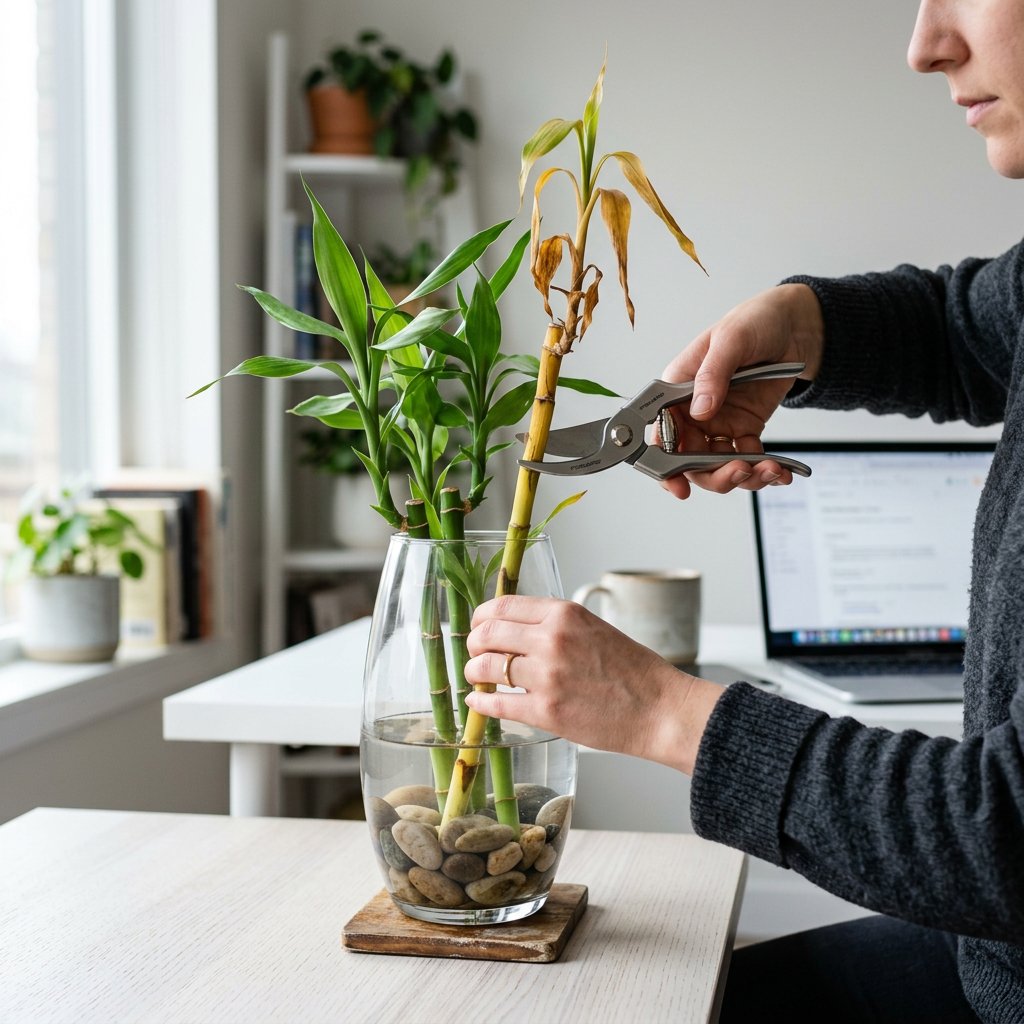
Step 4: Perform Gentle Plant Surgery Here is the tough truth of botany: once a stalk turns completely yellow, it is dead and cannot turn green again. Leaving a rotting yellow stalk in the arrangement will spread bacteria to the remaining healthy green stalks.
- Remove the yellow stalk from the container entirely.
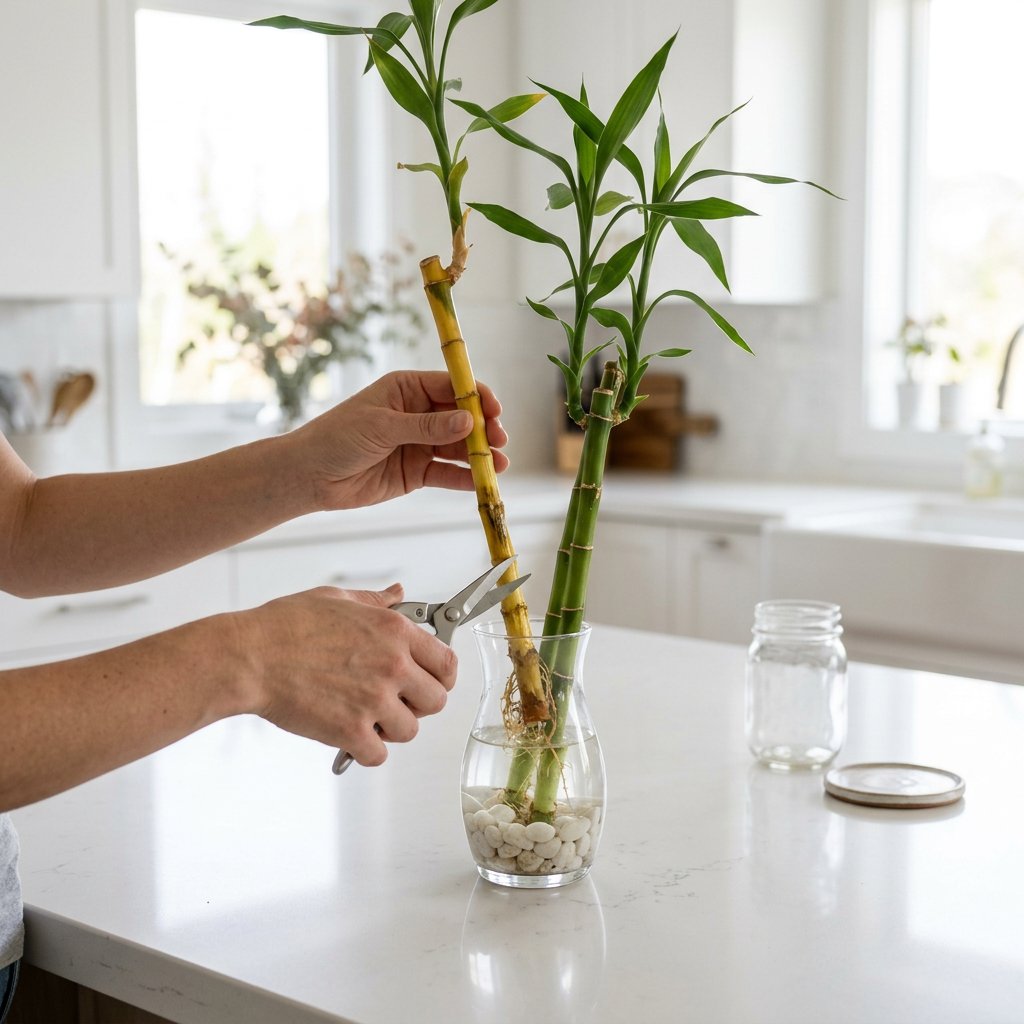
- If the base is yellow but the top leaves and shoots are still bright green, you can save the plant by propagating it!
- Take a pair of sterilized scissors or pruning shears and cut the healthy green top off, slicing about an inch above the yellow, rotting section.
- Place the fresh green cutting into a new glass of clean, distilled water. Within a few weeks, it will grow a brand new, healthy root system!
Remember, plant care is a learning journey. By adjusting its water and light, and using helpful tools like the Plantiary app to keep track of your care schedule, your remaining Lucky Bamboo stalks will continue to bring vibrant greenery and good energy into your home for years to come!