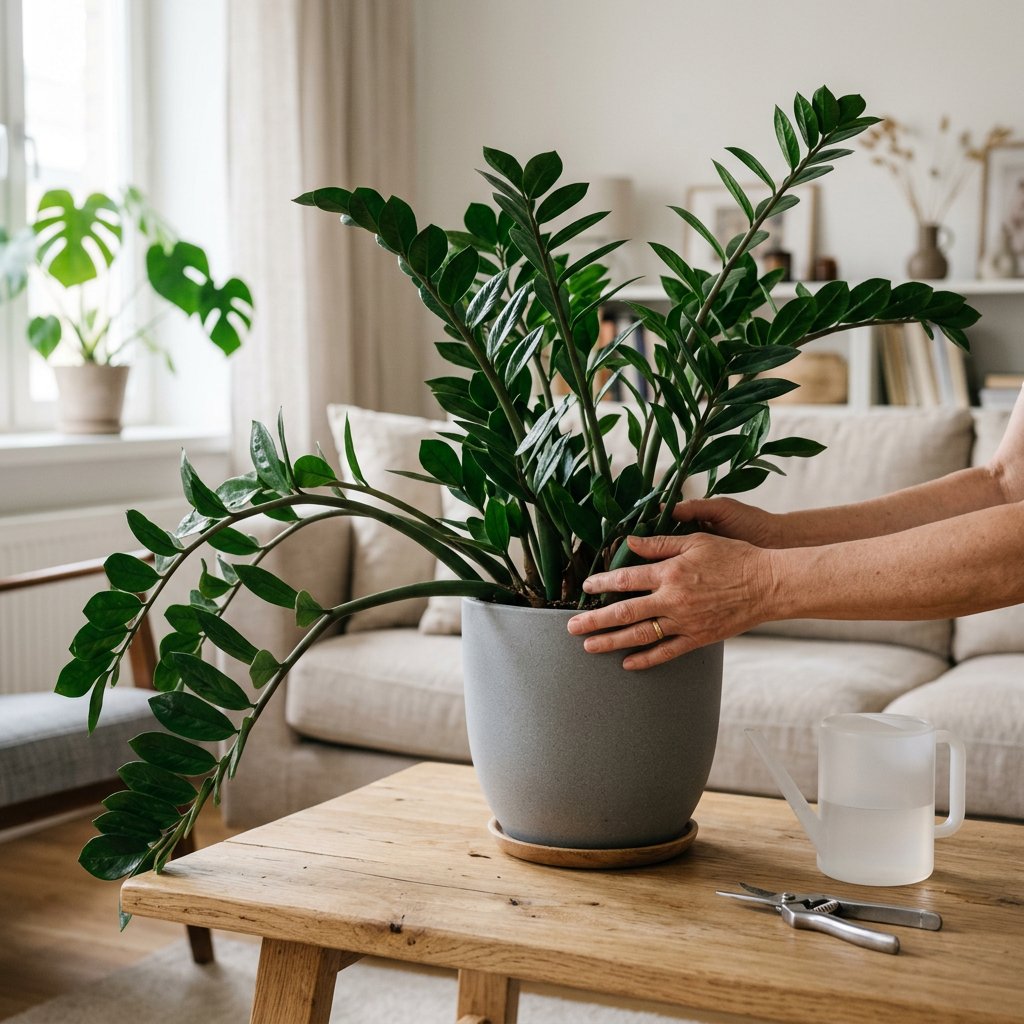
You walk into your living room and notice your normally upright, architectural ZZ plant looks a bit... floppy. Don't panic! Even the most experienced plant parents face a leaning ZZ plant at some point. Known for their near-indestructible nature, it can feel discouraging when they suddenly start to droop, but please know that this is incredibly common and usually very easy to fix.
Whether you’re a beginner or a seasoned indoor jungle owner, we’ll help you figure out what's going on and get your plant standing tall again. And remember, if you ever feel stuck or overwhelmed, the Plantiary app is always right in your pocket to help you track your plant's care schedule and keep it thriving.
The Problem: Spotting the Symptoms
Before we dive into the fix, let's look at what your plant is actually doing. A leaning ZZ plant (Zamioculcas zamiifolia) usually exhibits a few clear signs:
- Stalks that are splaying outward from the center instead of growing straight up.
- Heavy stems bowing or arching toward the nearest window.
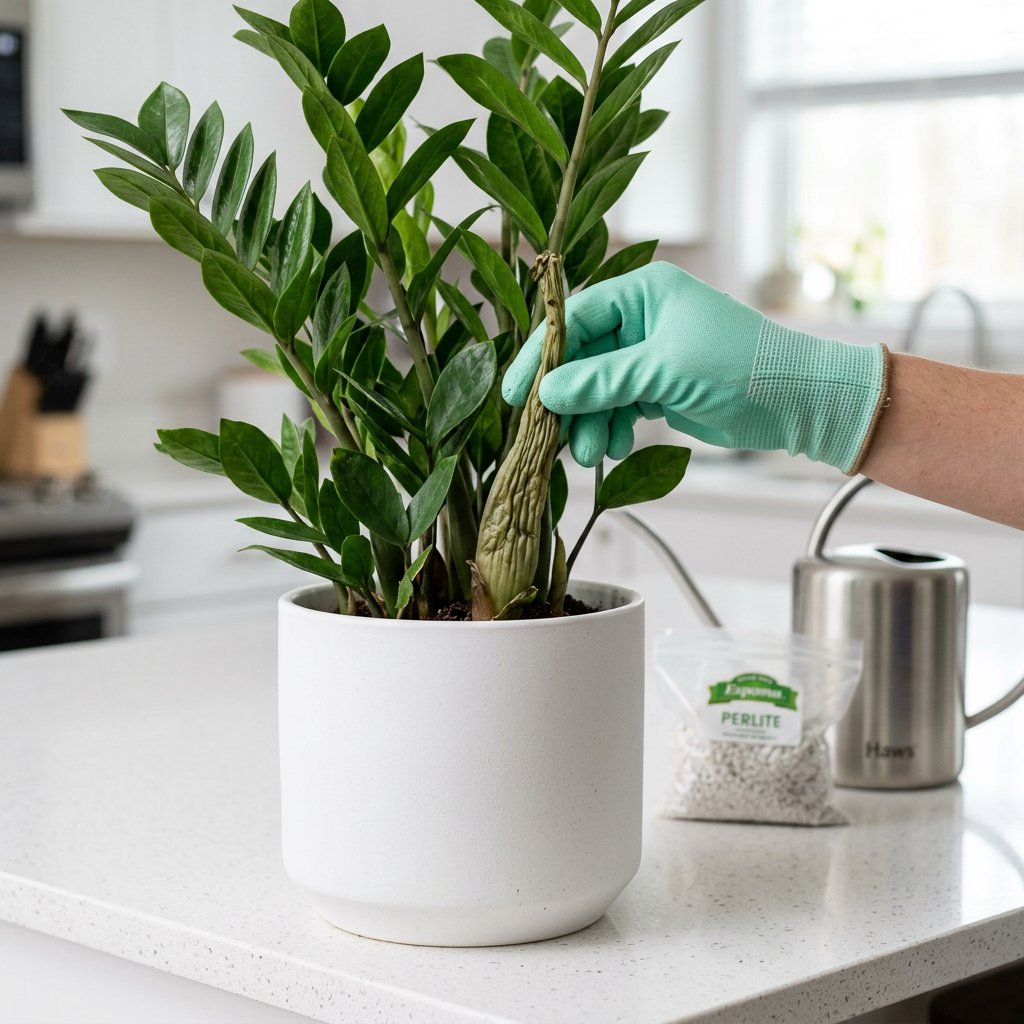
- Limp, wrinkled, or yellowing stems that collapse under their own weight.
The Causes: Why is My ZZ Plant Drooping?
To fix the lean, we first need to understand the "why." Here are the most common culprits behind a floppy ZZ plant:
1. Reaching for the Light (Etiolation)
ZZ plants are famously sold as "low-light" plants. While they can survive in dark corners, they don't necessarily thrive there. If your plant is placed too far from a window, it may experience etiolation—a botanical term for when a plant's stems stretch out and become weak, thin, and leggy in a desperate search for sunlight. This weak growth simply cannot support the weight of the leaves.
2. Watering Woes (Overwatering or Underwatering)
Under the soil, ZZ plants have bulbous, potato-like structures called rhizomes, which are expertly designed to store water.
- Overwatering: If the soil stays constantly wet, these rhizomes can rot and turn mushy. Without a solid, healthy foundation, the stalks will simply fall over.
- Underwatering: Conversely, if you completely forget to water your plant for months, it will deplete its water reserves. The stems will lose their turgor pressure (internal water pressure) and flop over from dehydration.
3. Top-Heavy Growth
Sometimes, your plant is perfectly healthy but has just grown too big! Mature ZZ plant stalks can become quite heavy, and gravity simply takes over, causing them to arch outward.
The Solutions: Step-by-Step Treatment
Ready to play plant doctor? Here is how to correct your leaning ZZ plant and restore its beautiful shape.
Step 1: Inspect the Soil and Roots
First, check the moisture level of your soil. Stick your finger about two inches deep into the pot.
- If it feels bone dry and the stems look wrinkled, give it a thorough watering.
- If the soil feels soggy and smells slightly sour, you might be dealing with root rot. Unpot the plant gently and inspect the rhizomes. Snip away any mushy, black roots with sterile scissors, and repot the plant in fresh, dry soil.
- Pro Tip: To prevent future watering mishaps, set up a custom watering schedule in the Plantiary app!
Step 2: Adjust the Lighting
If your soil is fine, light is likely the issue. Move your ZZ plant to a spot with bright, indirect sunlight. To keep the plant growing straight upward instead of bowing toward the sun, make it a habit to rotate the pot a quarter-turn every week.
Step 3: Provide Physical Support
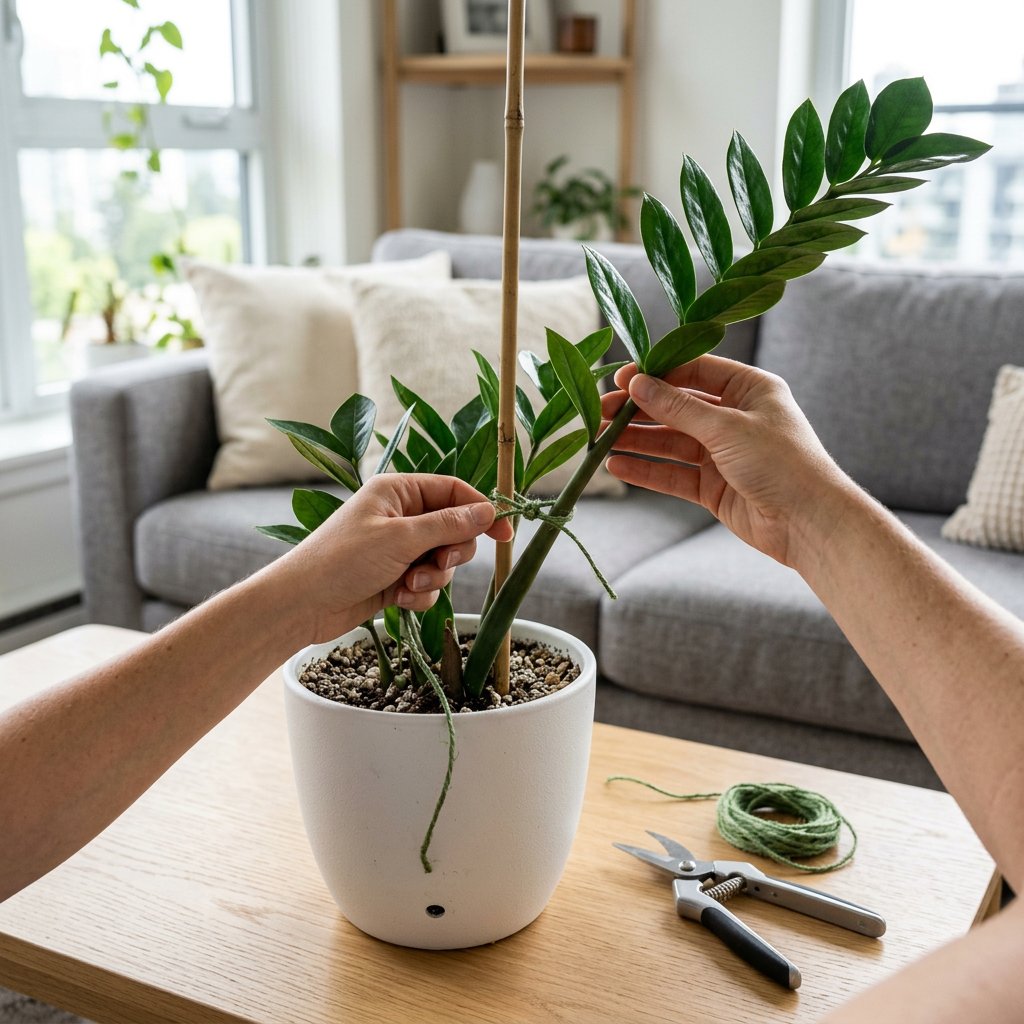
For stems that have grown too heavy or are currently recovering, a little physical support goes a long way. Take a bamboo plant stake, insert it gently into the soil near the center of the plant (being careful not to pierce a rhizome), and use soft plant twine or a garden velcro tie to loosely secure the leaning stems to the stake.
Step 4: Repot if Rootbound
If your plant is bursting out of its nursery pot, the roots may not have enough soil left to anchor them properly. Repot your ZZ plant into a container that is just one to two inches wider than the current one. Always use a highly well-draining soil mix, like a cactus or succulent blend, to keep those rhizomes happy.
Step 5: Prune the Damage
If a stem is completely yellowed, mushy at the base, or snapped, it sadly won't recover. Don't feel bad about this! Simply use clean, sharp pruning shears to cut the damaged stem off at the soil line. This redirects the plant's energy into pushing out healthy, new, upright growth.
Houseplant hiccups happen to all of us, so don't be too hard on yourself. With a quick adjustment to its environment and a little TLC, your ZZ plant will bounce back. If you are ever unsure what is wrong with your plant, you can use the AI-powered plant disease scanner in the Plantiary app to get a professional diagnosis in seconds. Happy planting!