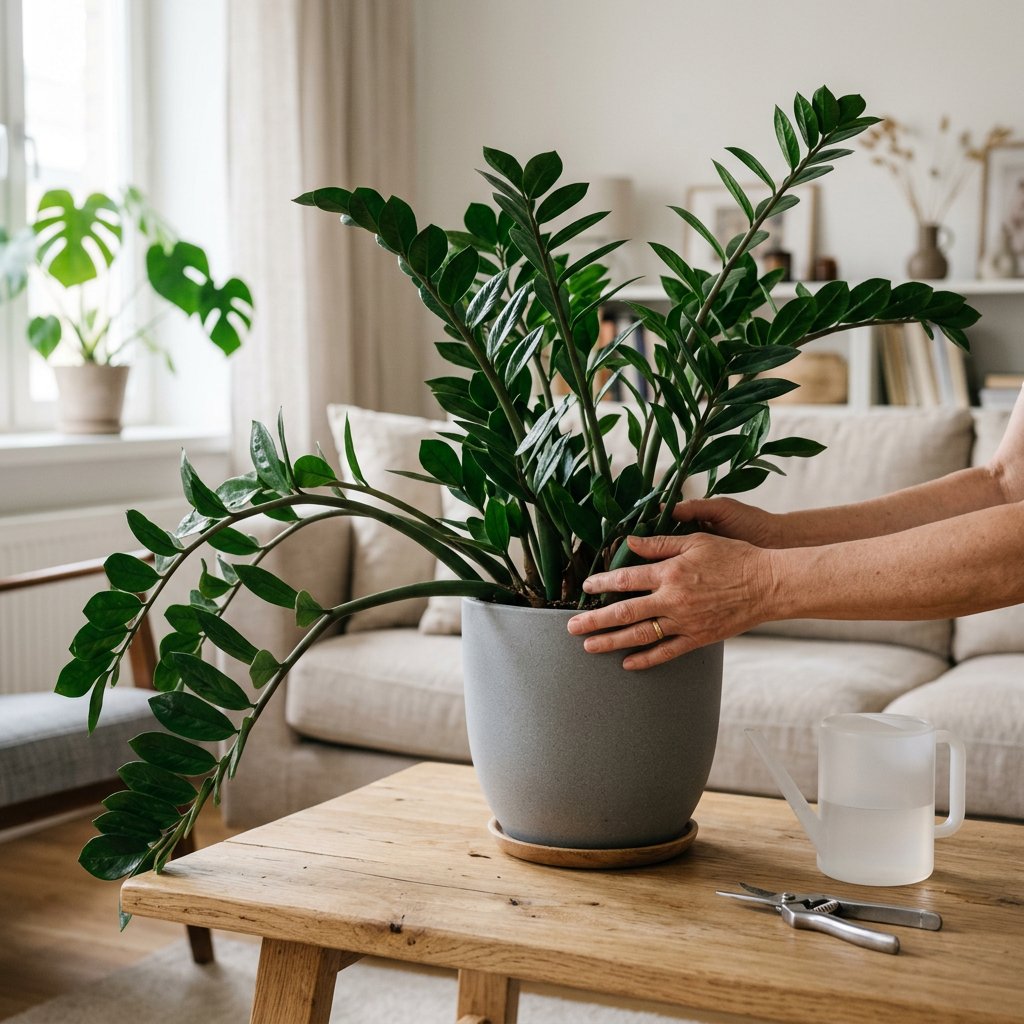
You brought home a ZZ Plant (Zamioculcas zamiifolia) because you heard it was virtually indestructible. With its thick, glossy green leaves and upright posture, it brings a beautiful architectural element to any room. So, seeing those magnificent, sturdy stems suddenly droop, lean, or fall completely over can be more than a little heartbreaking!
First of all, take a deep breath. Plant hiccups happen to every single plant parent, no matter how experienced they are. Your ZZ Plant is incredibly resilient, and with a little bit of detective work, we can get it standing tall again.
If you are ever unsure what is wrong with your leafy friend, you can always use the AI-powered plant disease scanner in the Plantiary app to get an accurate diagnosis in seconds. However, if your ZZ Plant is actively flopping over, let’s explore the most common culprits and how to fix them.
The Problem: Recognizing a Drooping ZZ Plant
Before we dive into the cure, it helps to understand what your plant is experiencing. When a ZZ Plant falls over, the symptoms usually manifest in a few distinct ways:
- The outward flop: Stems splay outward from the center, looking loose and unanchored.
- The mushy base: The bottom of the stem near the soil line looks dark, wrinkled, or feels squishy to the touch.
- The spaghetti stretch: Stems look unusually long, thin, and pale before bending under their own weight.
- The crispy lean: Stems look shriveled, and leaves may be turning brown and dry.
The Causes: Why Your ZZ Plant is Bowing Down
To treat the plant, we first need to identify the root cause of the falling stems.
1. Overwatering and Root Rot (The #1 Culprit)
ZZ plants have incredible, potato-like root structures called rhizomes. These rhizomes store massive amounts of water, allowing the plant to survive long periods of drought. However, if the soil stays constantly wet, these water-storing organs will quite literally drown and rot. When the rhizomes become mushy, they can no longer support the heavy stems above ground, causing the plant to collapse.
2. Lack of Light (Etiolation)
While ZZ plants are famously marketed as "low-light" plants, they still need some light to thrive. If kept in a pitch-black corner, your plant will experience etiolation—a botanical term for when a plant stretches out abnormally long and thin in a desperate search for sunlight. These stretched stems become weak and top-heavy, eventually flopping over.
3. Extreme Underwatering
Yes, they love to dry out, but they aren't plastic! If you completely forget to water your ZZ Plant for several months, the plant will use up all the water reserves in its rhizomes. The stems will begin to shrivel, lose their structural integrity, and slowly droop.
4. Heavy New Growth
Sometimes, a falling stem isn't a sign of disease at all. As ZZ plants mature, they can push out massive, heavy new stems. If the root system hasn't anchored deeply enough yet, the sheer weight of this healthy new growth can cause a slight lean.
The Solutions: Step-by-Step Treatment to Save Your ZZ Plant
Ready to play plant doctor? Follow these actionable steps to get your ZZ Plant on the road to recovery.
Step 1: Inspect the soil and roots. Gently wiggle the drooping stem. Does it feel loose and squishy at the base? If the soil is soaking wet, carefully pull the plant out of its pot. Inspect the fleshy rhizomes. Healthy rhizomes are firm and light-colored; rotting rhizomes are dark, smelly, and mushy.
Step 2: Trim the damage and repot (If overwatered). If you find root rot, don't panic! Use a pair of sterilized scissors to cut away any mushy, brown roots and rhizomes. If a fallen stem is completely rotted at the base, cut it off completely (you can propagate the healthy top half in water!). Repot the remaining healthy plant in a fresh, chunky, well-draining soil mix (adding perlite or orchid bark works wonders) and ensure the pot has drainage holes.
Step 3: Adjust your watering schedule. ZZ Plants thrive on neglect. You should only water them when the soil is 100% completely dry from top to bottom. To take the guesswork out of your routine, use the watering tracker in the Plantiary app to set customized, safe watering reminders based on your plant's specific needs.
Step 4: Optimize the lighting. If your plant is suffering from etiolation (stretching), move it closer to a window. Bright, indirect sunlight is the sweet spot. While you can't shrink the already-stretched stems, providing better light ensures all future growth will be thick, compact, and strong enough to support itself.
Step 5: Provide structural support. If your plant is perfectly healthy but just a bit top-heavy, give it a helping hand! Insert a bamboo stake or a decorative plant support hoop into the soil and gently tie the leaning stems to it using soft plant tape or twine.
Patience is Key
Seeing your plants struggle can feel discouraging, but remember that caring for houseplants is a learning journey. By adjusting your watering habits, checking the light, and giving your ZZ Plant a little extra TLC, you will have it looking lush and structural again in no time. You've got this!