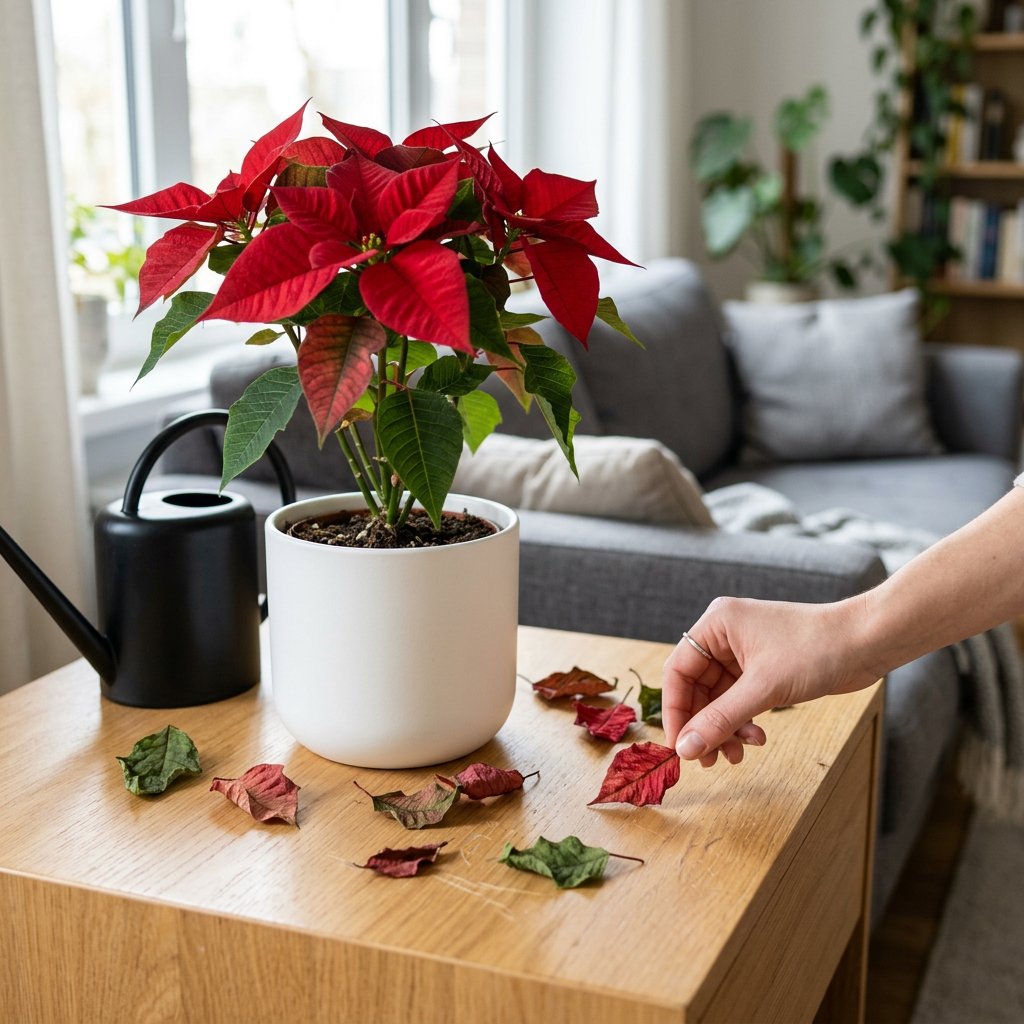
You brought home a stunning, vibrant Poinsettia for the holidays, but fast forward a few weeks, and it’s suddenly shedding leaves faster than a snowy winter tree. If your festive favorite is looking a little bare, take a deep breath! Poinsettias (Euphorbia pulcherrima) are notoriously dramatic, and leaf drop is an incredibly common issue that almost every plant parent experiences. You haven’t failed your plant; it’s simply trying to tell you that something in its environment needs a little tweak.
Let's dive into the common reasons behind this botanical drama and learn how to get your beautiful plant back on track.
The Problem: Spotting the Symptoms
Before we can fix the issue, it is helpful to observe how the leaves are falling. Different symptoms can point to different underlying problems:
- Green leaves dropping suddenly: Usually a sign of immediate environmental shock, like a sudden chill or a blast of hot air.
- Lower leaves turning yellow and falling: Often points to watering issues or a lack of light reaching the bottom of the plant.
- Crisp, brown, and curling leaves: A strong indicator of severe underwatering or extremely dry air.
The Causes: Why Your Poinsettia is Dropping Leaves
To stop the leaf drop, we need to understand abscission—the botanical term for a plant intentionally shedding its leaves due to stress. Here are the most common stress factors for Poinsettias:
- Temperature Shock and Drafts: Poinsettias are native to the warm, tropical climates of Mexico. They despise cold drafts from frosty windows and open doors, just as much as they hate the dry, scorching heat from radiators and fireplaces.
- Improper Watering: Both overwatering and underwatering will cause leaf drop. Overwatering leads to root rot (a fungal condition where roots suffocate and decay in soggy soil), preventing the plant from absorbing nutrients. Underwatering, on the other hand, forces the plant to drop leaves to conserve its remaining moisture.
- The Dreaded Foil Sleeve: Those shiny decorative foil wrappers look beautiful, but they trap excess water at the bottom of the pot, creating a swampy environment that guarantees root rot.
- Lack of Sunlight: Poinsettias need plenty of bright light to thrive indoors. If they are placed in a dim corner, they won't have enough energy to support their lush foliage.
If you are unsure what is exactly wrong with your plant, don't worry! You can use the AI-powered plant disease scanner in the Plantiary app to snap a quick photo and get an accurate diagnosis in seconds.
The Solutions: Step-by-Step Treatment
Ready to play plant doctor? Follow these actionable, science-backed steps to stop the leaf drop and help your Poinsettia recover.
Step 1: Remove the Decorative Foil If your plant is still sitting in its holiday foil sleeve, take it off immediately, or at least poke several large drainage holes in the bottom. Your plant needs to breathe, and excess water must be allowed to escape freely.
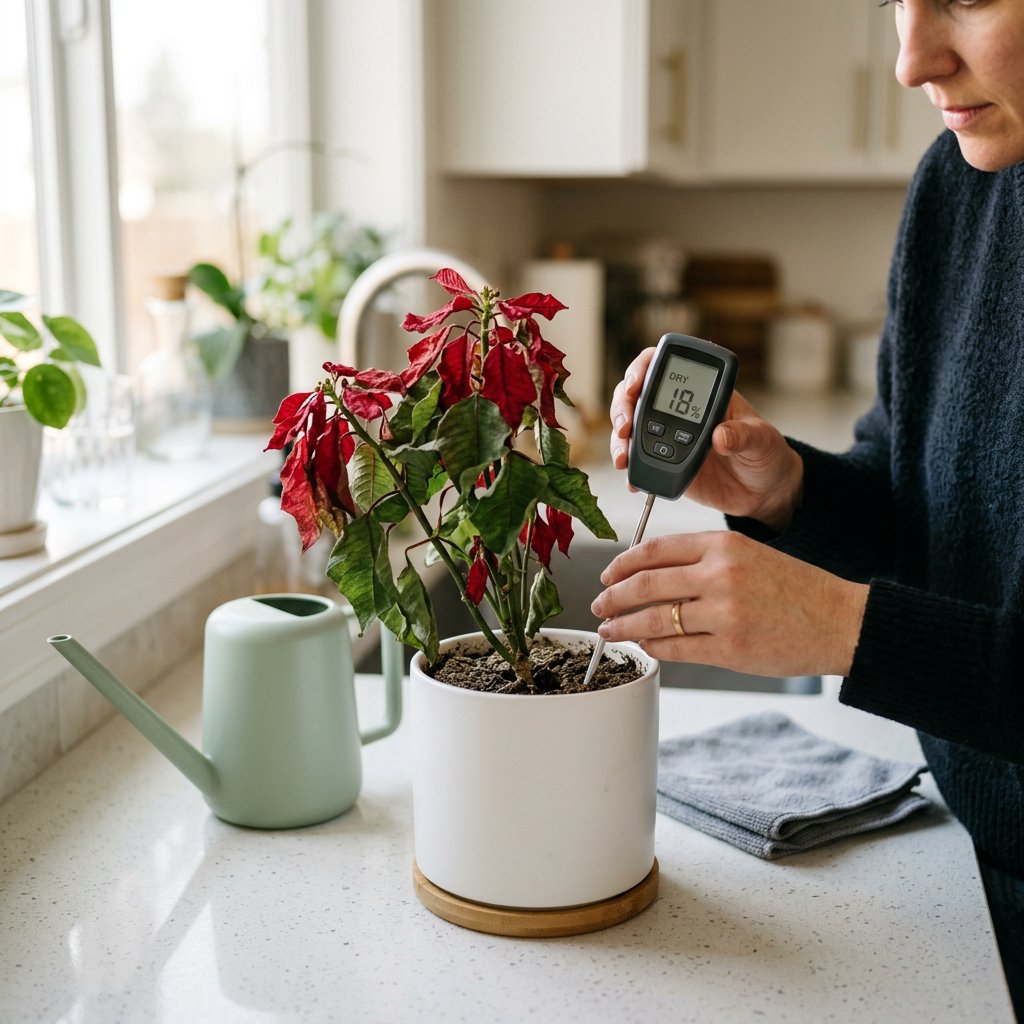
Step 2: Assess and Adjust Your Watering Check the moisture level of the soil by inserting your finger about an inch deep.
- If it feels bone dry, give the plant a thorough watering until water runs out of the drainage holes.
- If it feels wet and soggy, hold off on watering completely. Allow the top couple of inches of soil to dry out before giving it another drink.
Step 3: Relocate for Temperature Control Move your Poinsettia to a cozy, stable environment. Keep it far away from drafty doors, drafty windowsills, heating vents, and space heaters. They prefer a steady room temperature between 65°F and 70°F (18°C - 21°C).
Step 4: Optimize the Lighting Find a spot where your plant will receive at least six hours of bright, indirect sunlight daily. An east-facing or south-facing window with a sheer curtain is an excellent choice to provide gentle, bright light without scorching the leaves.
Step 5: Boost the Humidity Safely Since winter indoor air can be incredibly dry, you can help your Poinsettia by placing a humidifier nearby or setting the plant’s pot on a pebble tray filled with a little water (making sure the bottom of the pot isn't touching the water directly).
Caring for houseplants is a learning journey, so be patient with yourself and your Poinsettia. While fallen leaves won't reattach, correcting its care will stop further dropping and encourage healthy, new growth over time. To make your life even easier, try using the Plantiary app to set up customized watering and care reminders. With a little consistency and love, you'll be a Poinsettia pro in no time!