You’ve just brought home a stunning, vibrant Poinsettia, but a few days later, its spectacular red and green leaves are suddenly drooping. Seeing your beautiful festive plant look sad can be incredibly frustrating, but please take a deep breath—you haven't failed as a plant parent! Wilting is a very common reaction for these sensitive plants when transitioning from a greenhouse to a new home environment. If you are ever unsure what is wrong with your plant, you can use the AI-powered plant disease scanner in the Plantiary app to get an accurate diagnosis in seconds. But for now, let’s explore exactly why your Poinsettia is wilting and how we can gently and safely nurse it back to health.
The Problem: Recognizing the Symptoms
Poinsettias (Euphorbia pulcherrima) are highly expressive plants. When they are unhappy, they let you know almost immediately. Before we treat the plant, verify what you are seeing. You might notice:
- Drooping or sagging leaves that look soft, limp, and lifeless.
- Crispy, curling edges on the lower green foliage.
- Sudden leaf drop, where seemingly healthy leaves fall off at the slightest touch or movement.
The Causes: Why is Your Poinsettia Wilting?
To save your plant safely, we first need to play a little botanical detective. Here are the most common, scientifically proven reasons behind a wilting Poinsettia:
- Improper Watering: This is the number one culprit. Interestingly, both underwatering and overwatering cause wilting. When heavily overwatered, the plant suffers from root rot—a condition where suffocated roots decay in waterlogged soil. Because the dead roots can no longer absorb water or oxygen, the plant literally wilts from dehydration despite sitting in wet soil.
- The Foil Wrapper Trap: Most Poinsettias are sold wrapped in beautiful foil sleeves. While festive, these wrappers trap excess water at the bottom, turning the bottom of the pot into a swamp and leading directly to the root rot mentioned above.
- Temperature Stress: Poinsettias are native to the warm climates of tropical Mexico. They absolutely despise cold drafts from winter windows or blasts of dry heat from radiators. Such extremes drastically increase transpiration (the rate at which plants lose water vapor through their leaves), causing severe dehydration and drooping.
The Solutions: Step-by-Step Treatment
Ready to revive your plant? Follow these scientifically backed, safe steps to bring your Poinsettia back to its vibrant self.
Step 1: Diagnose the Soil Moisture
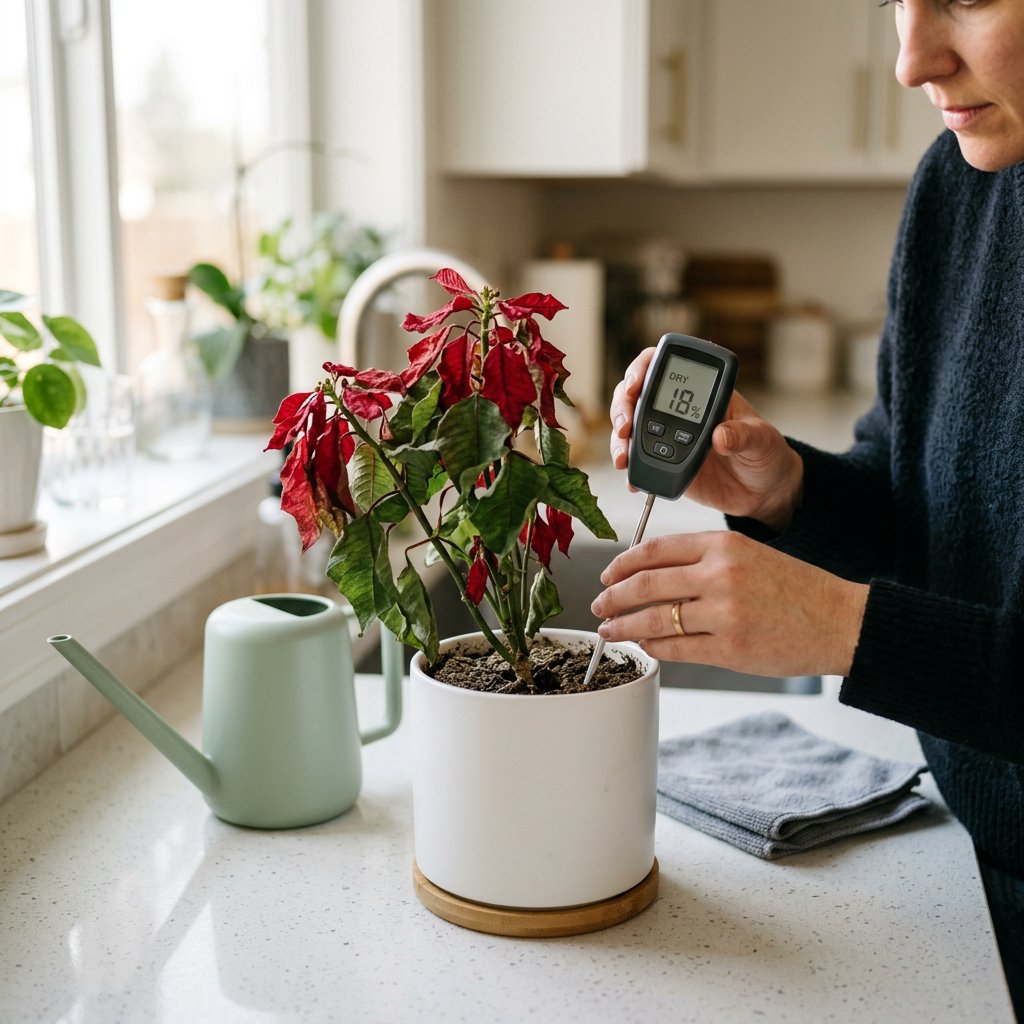
Before adding a single drop of water, stick your finger about two inches deep into the topsoil.
- If it feels bone dry, your plant is underwatered and thirsty.
- If it feels soggy, heavy, or smells sour, your plant is overwatered.
Step 2: Fix the Drainage (Remove the Foil!)
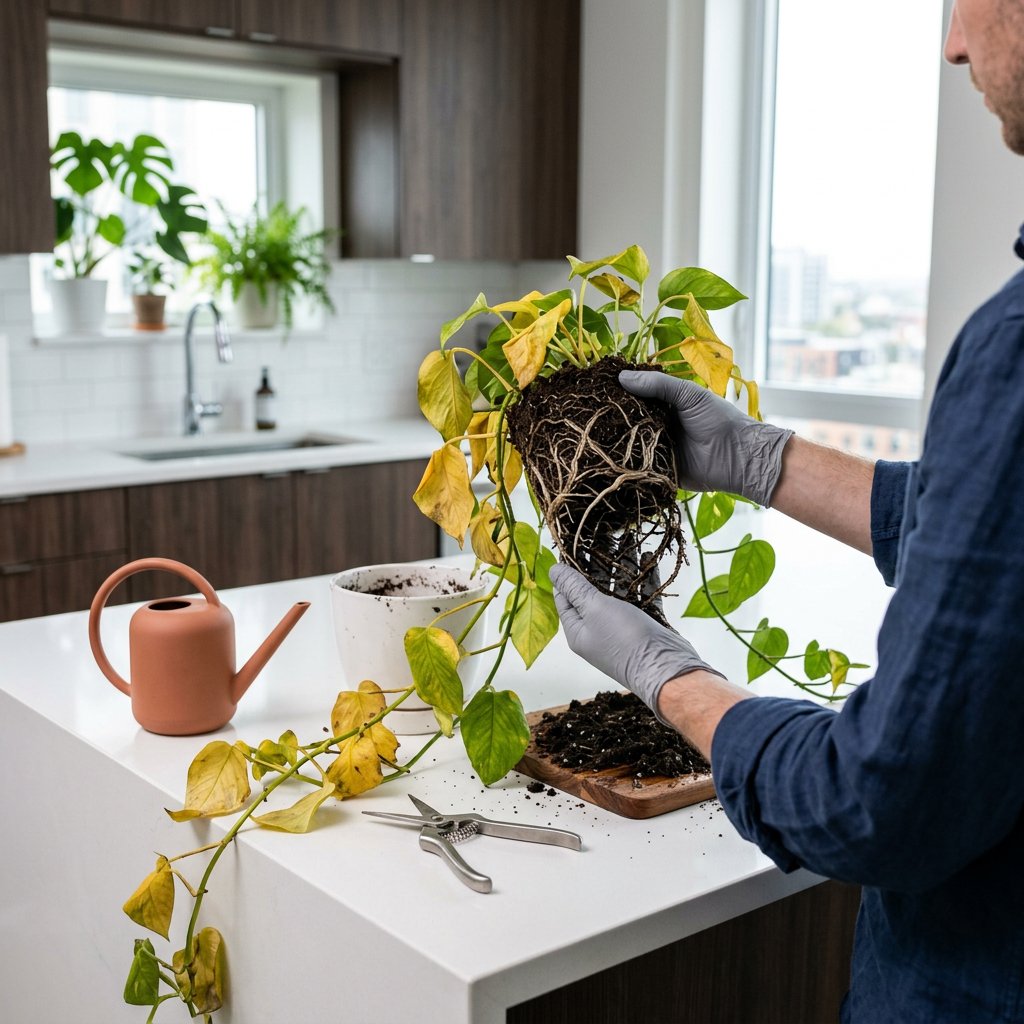
If your plant is sitting in a decorative foil wrapper, remove it entirely so the pot can breathe. If you discovered in Step 1 that the soil is completely waterlogged, gently slide the plant out of its plastic nursery pot. Place the wet root ball on a layer of newspaper or paper towels for a few hours to draw out the excess moisture, then return it to the pot.
Step 3: Implement the "Soak and Drain" Method
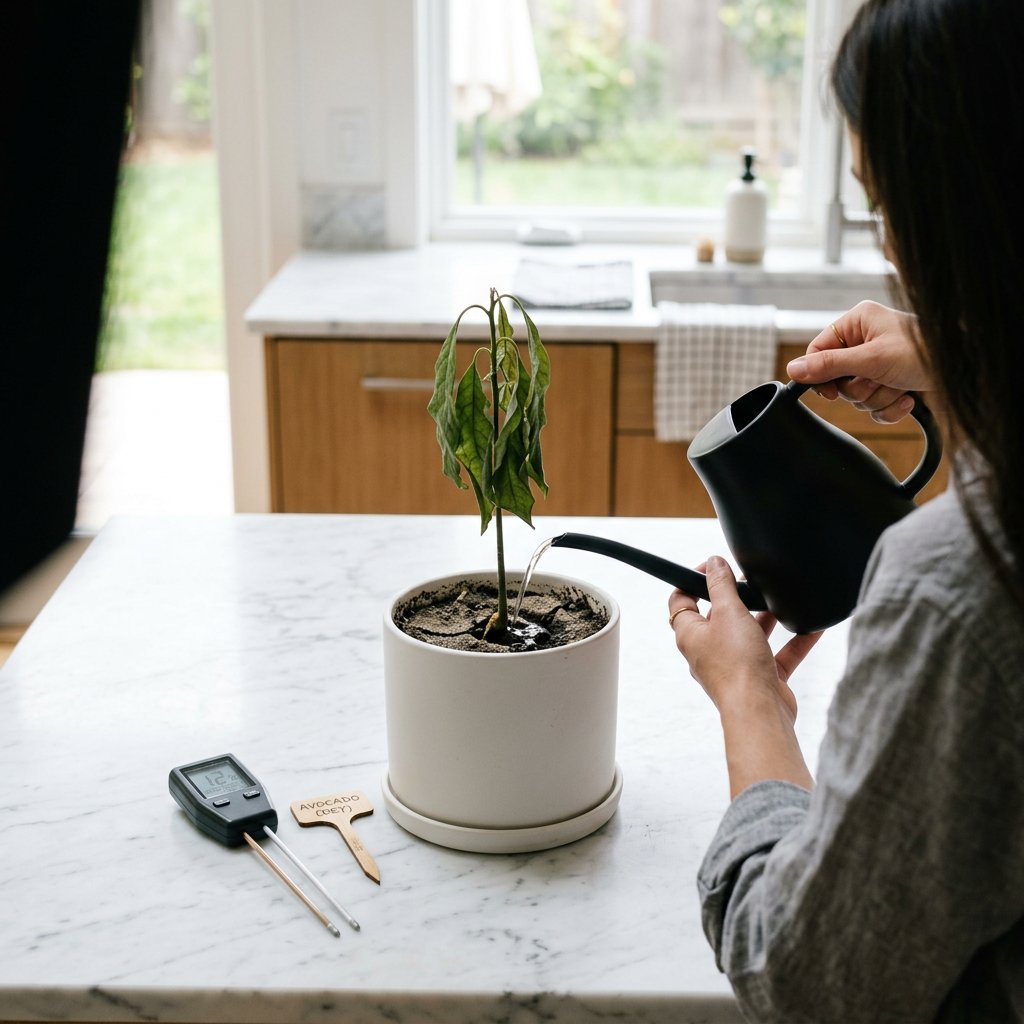
Moving forward, only water your Poinsettia when the top two inches of soil feel dry to the touch. When it is time to water, take the plant to the sink. Thoroughly soak the soil until water runs freely out of the bottom drainage holes. Let it drain completely in the sink for 15 minutes before putting it back on its decorative saucer. Never let the pot sit in standing water!
Step 4: Relocate for Temperature Harmony
Move your Poinsettia to a cozy spot where it receives bright, indirect sunlight. Protect it by keeping it strictly away from:
- Open exterior doors and drafty, poorly insulated windows.
- Direct heat sources like air vents, fireplaces, and space heaters.
- Aim for a stable room temperature between 65°F and 70°F (18°C - 21°C).
Step 5: Prune Safely
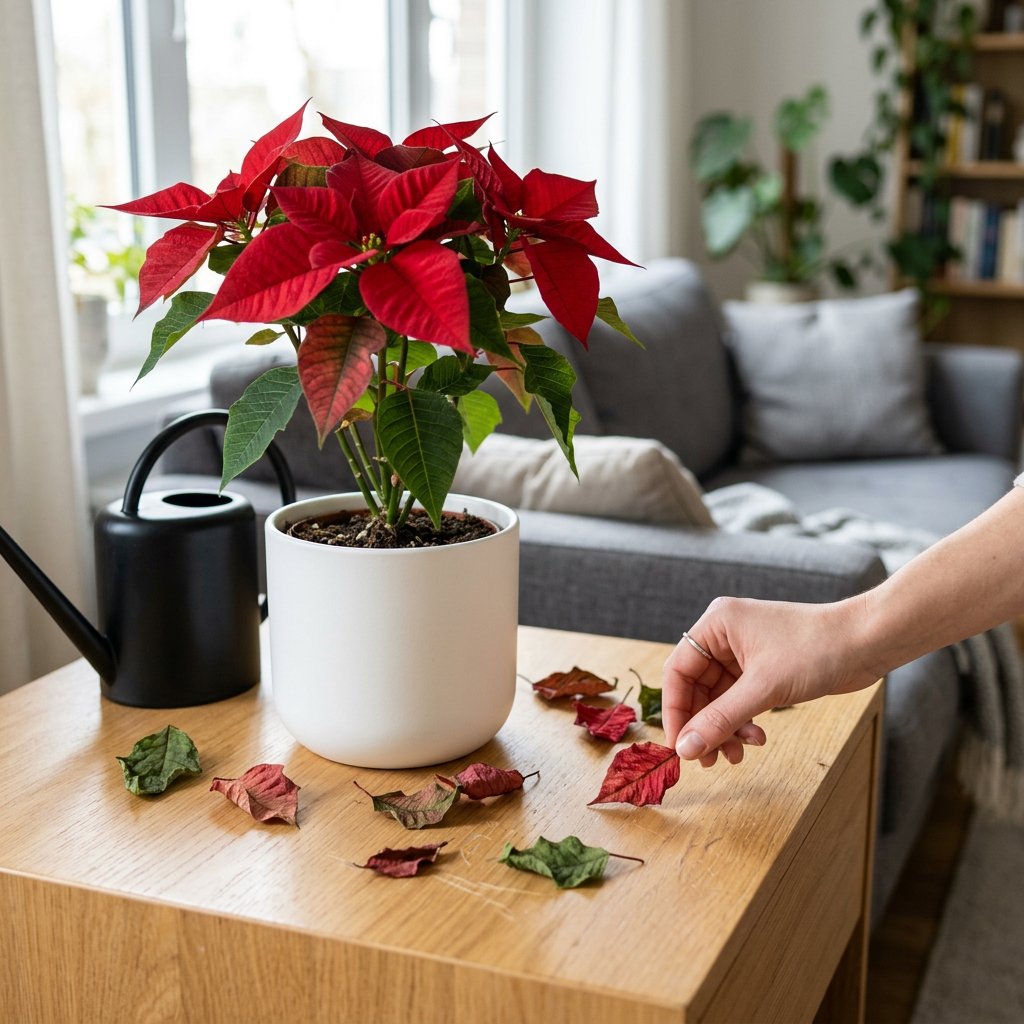
Using a clean, sterilized pair of scissors, gently snip away any completely crispy, yellowed, or dead leaves so the plant can direct its energy into healthy growth. Botanist Tip: Poinsettias produce a milky white sap when their stems or leaves are broken. This sap can be mildly irritating to the skin, so it is highly recommended to wear a pair of gardening gloves during this step and wash your hands immediately afterward!
Keep Your Poinsettia Thriving
Remember, nursing a stressed plant back to health takes a little bit of time and patience. Don't be discouraged if it loses a few more leaves before it stabilizes. It is simply adjusting to its new routine, and so are you! To take the guesswork out of your plant care, log your newly revived Poinsettia into the Plantiary app. You can easily set up smart watering schedules and track its recovery journey, ensuring it stays healthy, bold, and beautiful for months to come.