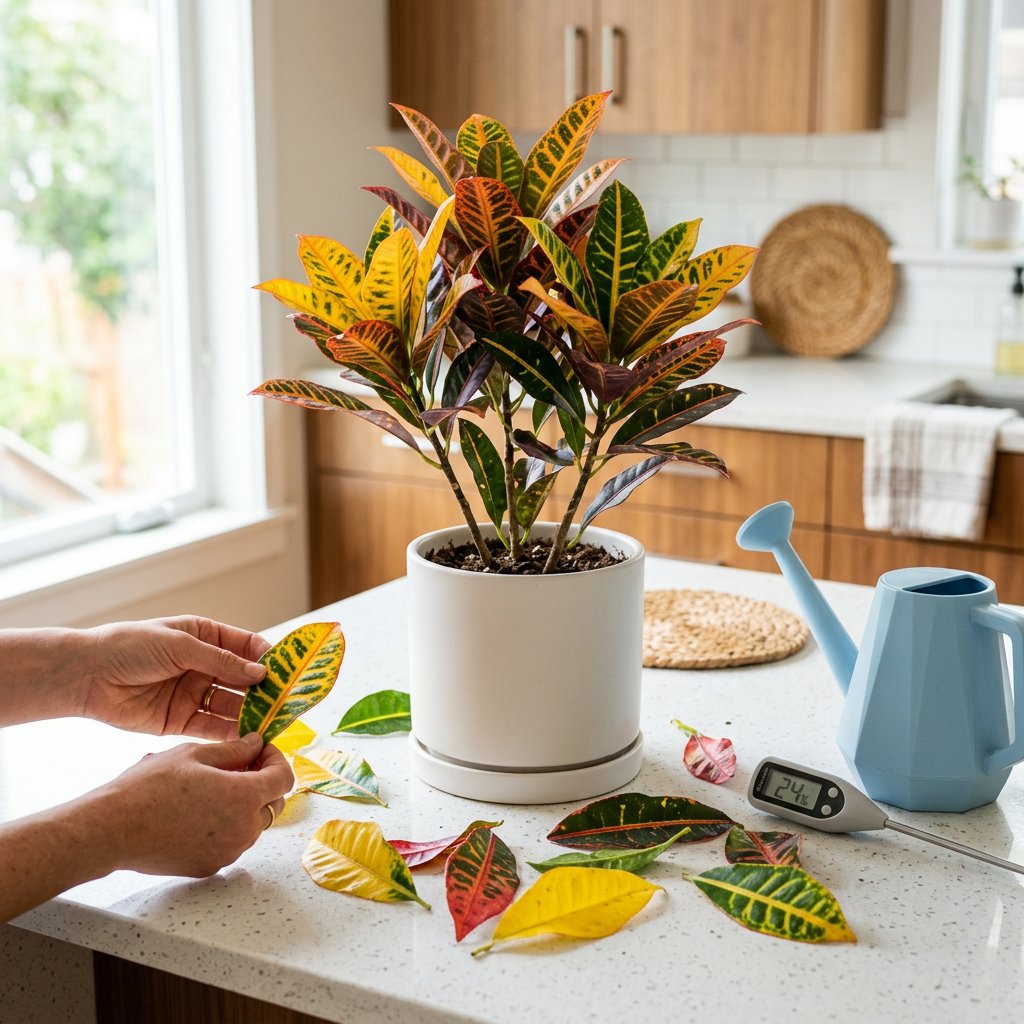
Crotons (Codiaeum variegatum) are famous for their fiery, vibrantly patterned foliage, making them a show-stopping addition to any indoor jungle. But if your once-lush plant has suddenly started shedding its leaves like a tree in late autumn, it is incredibly easy to feel a wave of panic.
First, take a deep breath! Leaf drop is a very common issue, and it absolutely does not mean you are a bad plant parent. Crotons are notoriously dramatic, and they are quick to express their displeasure when their routine is disrupted. Let’s figure out exactly what is bothering your plant and how to get it back to its colorful, thriving self.
The Problem: Understanding the Symptoms
Before we can fix the issue, we need to observe how the plant is behaving. Croton leaf drop rarely happens without a few warning signs. You might notice:
- Bottom-up dropping: The oldest, lowest leaves turn yellow and fall off first.
- Crispy, brown edges: Leaves dry out at the tips before tumbling to the floor.
- Sudden mass shedding: The plant looks perfectly green and healthy, but leaves are dropping rapidly overnight.
The Causes: Why is Your Croton Unhappy?
Crotons are tropical plants that crave consistency. When their ideal conditions are not met, they react by shedding foliage to conserve energy. Here are the most common culprits:
1. Environmental Shock
If you recently brought your Croton home from the nursery, repotted it, or moved it to a different room, it is likely experiencing environmental shock. Crotons despise change. A sudden shift in humidity, light, or temperature will almost always trigger a tantrum of dropping leaves.
2. Watering Woes (Too Much or Too Little)
Watering issues are the leading cause of houseplant struggles.
- Overwatering: If the soil stays soggy, your plant may develop root rot—a fungal condition where the roots literally suffocate, turn to mush, and can no longer absorb nutrients or water. This leads to limp, yellowing leaves that fall off.
- Underwatering: If the soil is completely bone dry, the plant will drop its crisp, dry leaves to prevent further moisture loss.
3. Temperature Fluctuations and Drafts
Hailing from tropical climates, Crotons need warmth. If your plant is sitting near a drafty window, an AC vent, or a radiator, the constant blasts of hot or cold air will severely stress the plant.
4. Inadequate Lighting
Crotons need plenty of bright light to maintain their stunning colors. If placed in a dark corner, the plant may experience etiolation—a botanical term for when a plant stretches out weakly toward the light and drops its lower leaves to conserve energy.
The Solutions: Step-by-Step Treatment
Ready to nurse your Croton back to health? Follow these actionable steps to stop the leaf drop and encourage fresh new growth.
Step 1: Stabilize the Environment Pick a bright, warm spot for your Croton and leave it there. Resist the urge to keep moving it around your house. Ensure the location is away from drafty doors, heating vents, and air conditioners.
Step 2: Correct Your Watering Routine Never water your Croton on a strict calendar schedule. Instead, check the soil by pushing your finger about two inches deep into the pot.
- If the top two inches are dry, it’s time to water thoroughly until moisture drains out the bottom.
- If it still feels wet, wait a few more days. Always ensure your pot has drainage holes to prevent root rot!
Step 3: Maximize the Light Move your Croton to a spot where it receives bright, indirect sunlight for at least 6 to 8 hours a day. An East or West-facing window is usually perfect. If you don't have enough natural light, consider setting up a basic LED grow light to keep your plant happy.
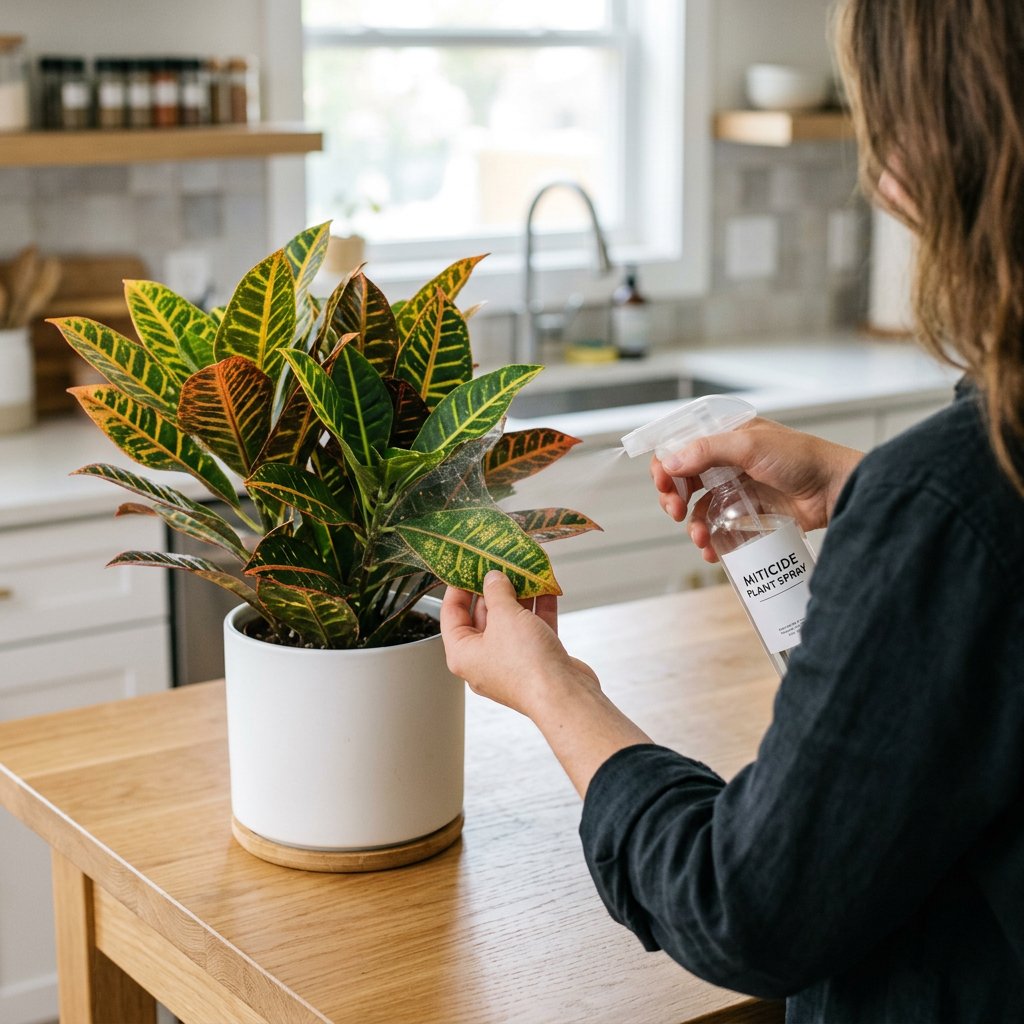
Step 4: Scan for Sneaky Pests Sometimes, microscopic bugs like spider mites suck the sap from Croton leaves, causing them to yellow and drop. Inspect the undersides of the leaves for fine webbing or tiny white dots. If you spot pests, wipe the leaves down with a damp cloth and treat the plant with a gentle, organic neem oil spray.
Step 5: Be Patient Once you have corrected the care conditions, your Croton will need time to recover. It may continue to drop a few leaves for another week or two as it stabilizes. Don't panic—just maintain consistent care, and you will soon see tiny green buds forming on the bare stems!
Houseplants are a learning journey, and every dropped leaf is simply a lesson in what your plant needs. If you are ever unsure about what is wrong with your plant, you can use the AI-powered plant disease scanner in the Plantiary app to get an accurate diagnosis and a customized treatment plan in seconds. Keep your chin up, stay consistent, and your Croton will be flourishing again before you know it!