Have you noticed the spectacular fiery reds, bright yellows, and deep oranges of your Croton starting to fade? It can be incredibly disappointing when a houseplant known for its dramatic foliage starts looking a bit dull, reverting to plain green. But take a deep breath—you have not failed as a plant parent!
Crotons (Codiaeum variegatum) are famously expressive plants, and losing their color is simply their way of asking for a little environmental tweak. Plant hiccups happen to all of us, even the most seasoned indoor gardeners. Let's figure out why your Croton is losing its vibrant hues and how you can bring that tropical sunset back into your home. And remember, if you are ever unsure what is wrong with your plant, you can use the AI-powered plant disease scanner in the Plantiary app to get a diagnosis in seconds!
The Problem: Spotting the Symptoms
Before we can restore your plant's rainbow of colors, we need to identify exactly what is going wrong. You might be noticing a few of these common symptoms:
- Fading Variegation: Variegation (the natural appearance of differently colored zones or patterns on plant leaves) begins to disappear, and older leaves turn completely green.
- Dull New Growth: New leaves are emerging as a solid, flat green instead of sporting the colorful veins and speckles you are used to.
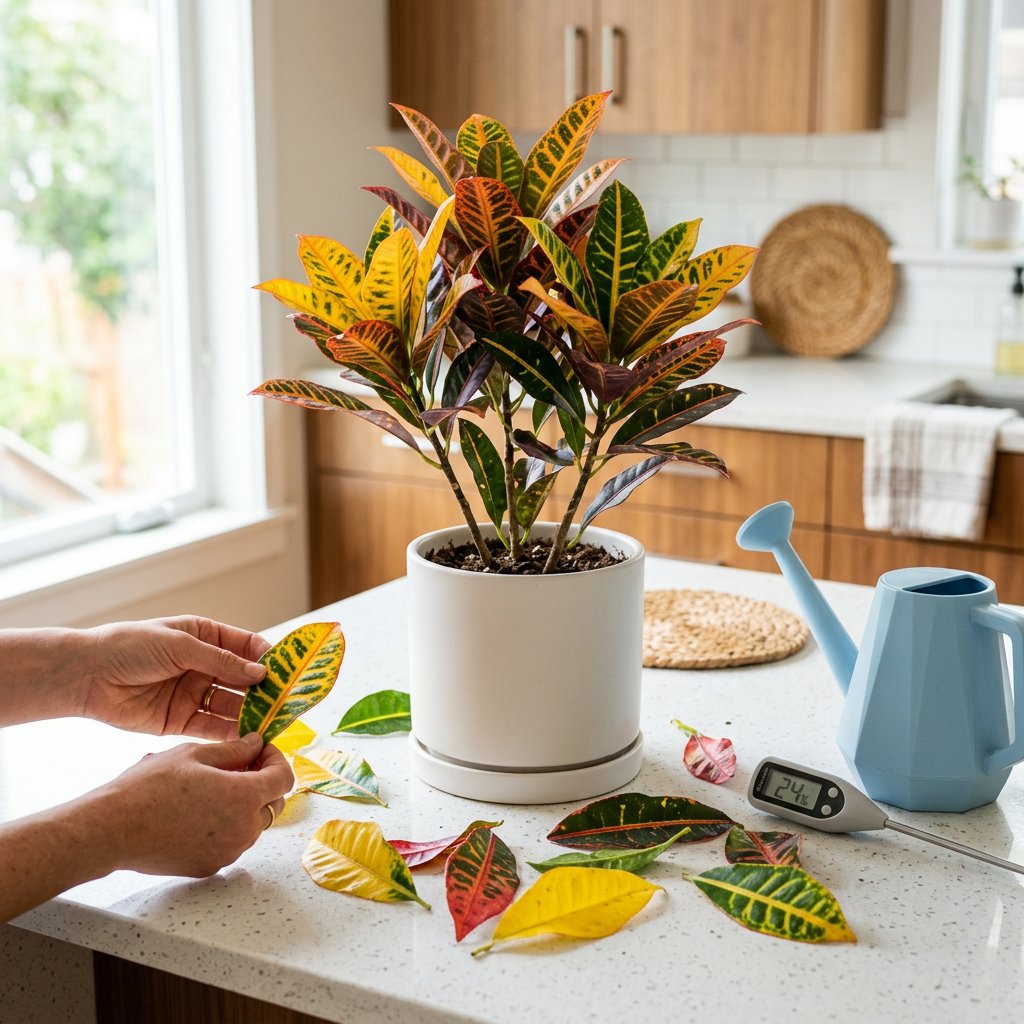
- Drooping or Dropping Leaves: The foliage lacks its usual perky posture, and you may find leaves shedding more frequently than normal.
The Causes: Why is Your Croton Fading?
Understanding the "why" is the first step to helping your plant thrive. Here are the most common reasons your Croton is losing its color:
1. Insufficient Light (The #1 Culprit)
Crotons use a lot of energy to produce those beautiful red, pink, and yellow pigments. When they don't receive enough sunlight, they switch into survival mode. They start producing more chlorophyll—the green pigment responsible for photosynthesis—to capture as much light as possible. This overproduction of green completely masks the vibrant colors.
2. Watering Woes
Inconsistent watering causes serious root stress. Whether you are overwatering (which can drown the roots) or underwatering (which dehydrates the plant), a stressed Croton will prioritize basic survival over producing colorful, vibrant foliage.
3. Temperature Shocks and Low Humidity
Because Crotons are native to tropical regions, they absolutely love warmth and moisture in the air. If your plant is sitting near a cold, drafty window or a drying air conditioning vent, the environmental stress can cause its colors to wash out and its leaves to drop.
4. Nutrient Deficiencies
A lack of essential minerals in the soil can lead to dull foliage. Sometimes this presents as chlorosis, a condition where leaves turn unusually pale or yellow because the plant lacks the nutrients needed to produce healthy plant tissue.
The Solutions: Step-by-Step Treatment
Ready to bring the color back? Follow these safe, scientifically proven steps to nurse your Croton back to its vibrant self.
Step 1: Chase the Sun (Gradually!) Your Croton needs bright, indirect sunlight to maintain its colors. Move your plant to an East or South-facing window where it can get at least 4 to 6 hours of bright light daily. Pro tip: Move the plant gradually over a week or two. Sudden exposure to intense, direct sun can cause leaf scorch (sunburn).
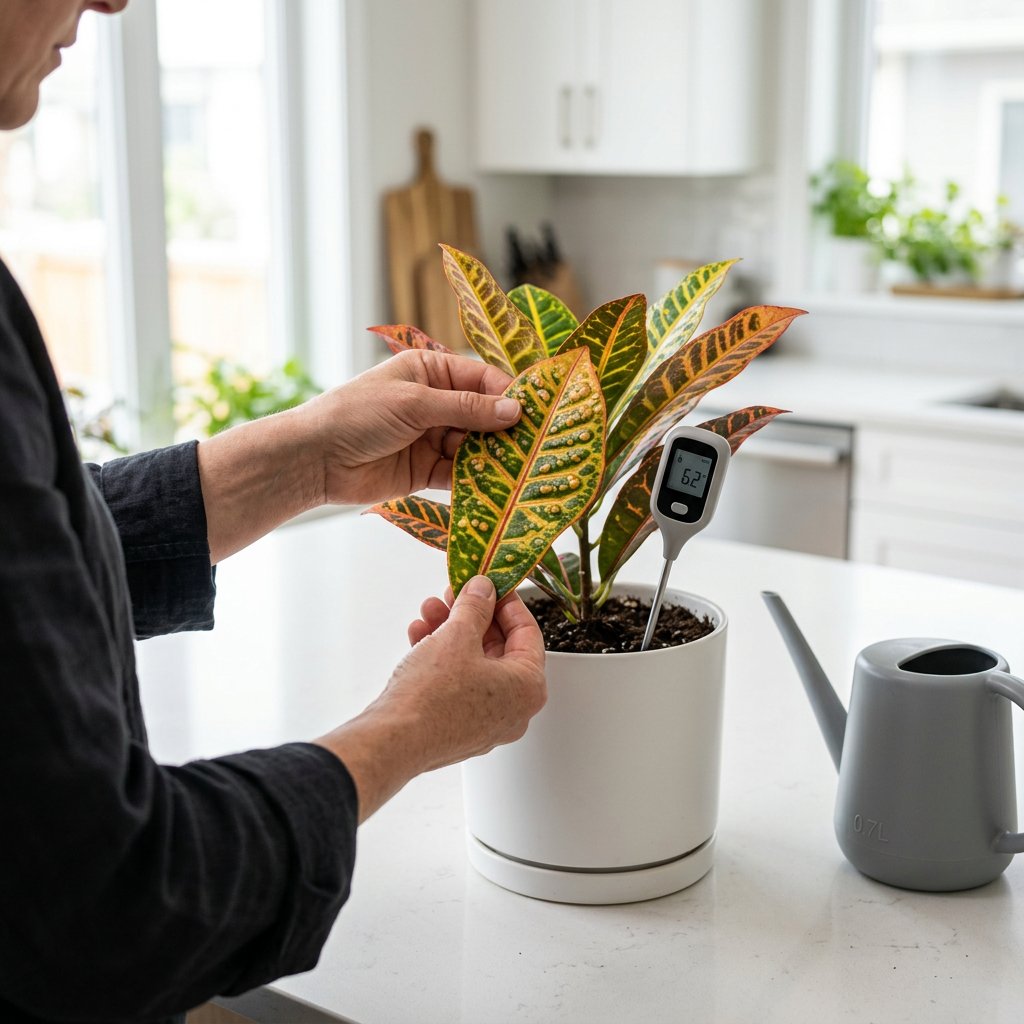
Step 2: Master Your Watering Routine Allow the top 1 to 2 inches of the soil to dry out completely before watering again. When you do water, soak the soil thoroughly until water runs out of the drainage holes at the bottom of the pot. Never leave your plant sitting in a saucer of standing water. To take the guesswork out of this, use the care scheduling feature in the Plantiary app to remind you exactly when your Croton needs a drink!
Step 3: Create a Tropical Oasis Protect your Croton from extreme temperature fluctuations. Keep it in a room that stays between 60°F and 80°F (15°C - 26°C). To boost humidity safely, place a humidifier near the plant or set the pot on a pebble tray filled with water (ensuring the bottom of the pot isn't touching the water directly).
Step 4: Feed for Foliage During the active growing season (spring and summer), feed your Croton once a month with a balanced, water-soluble houseplant fertilizer. This will replenish the soil with the essential macronutrients your plant needs to produce strong, colorful new leaves.
Patience is a Plant Parent’s Best Friend
Bringing a Croton back to its full, colorful glory is incredibly rewarding, but it won't happen overnight. It can take a few weeks for new, brightly colored growth to emerge once you've corrected the environment. Be patient with your plant, and be kind to yourself! By adjusting its light, water, and humidity, you are setting your Croton up for years of brilliant, beautiful growth. You've got this!