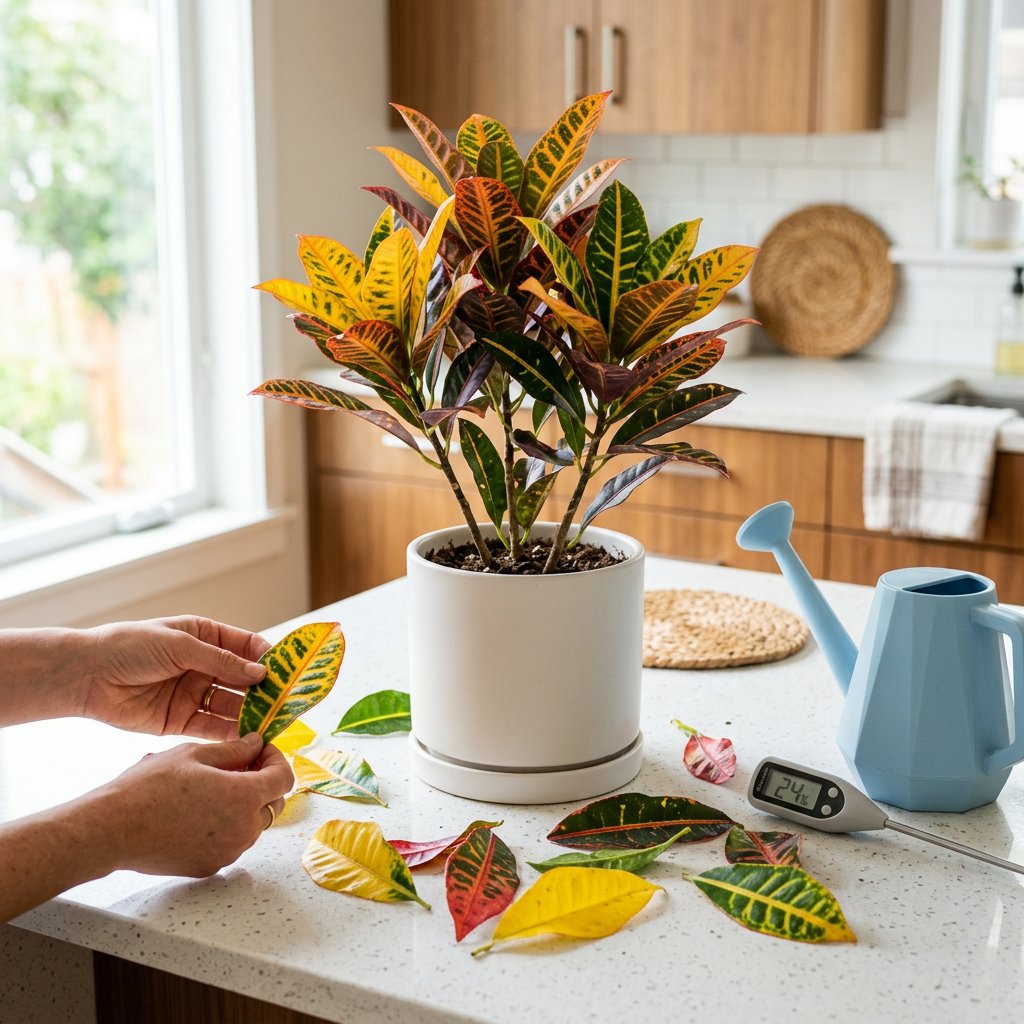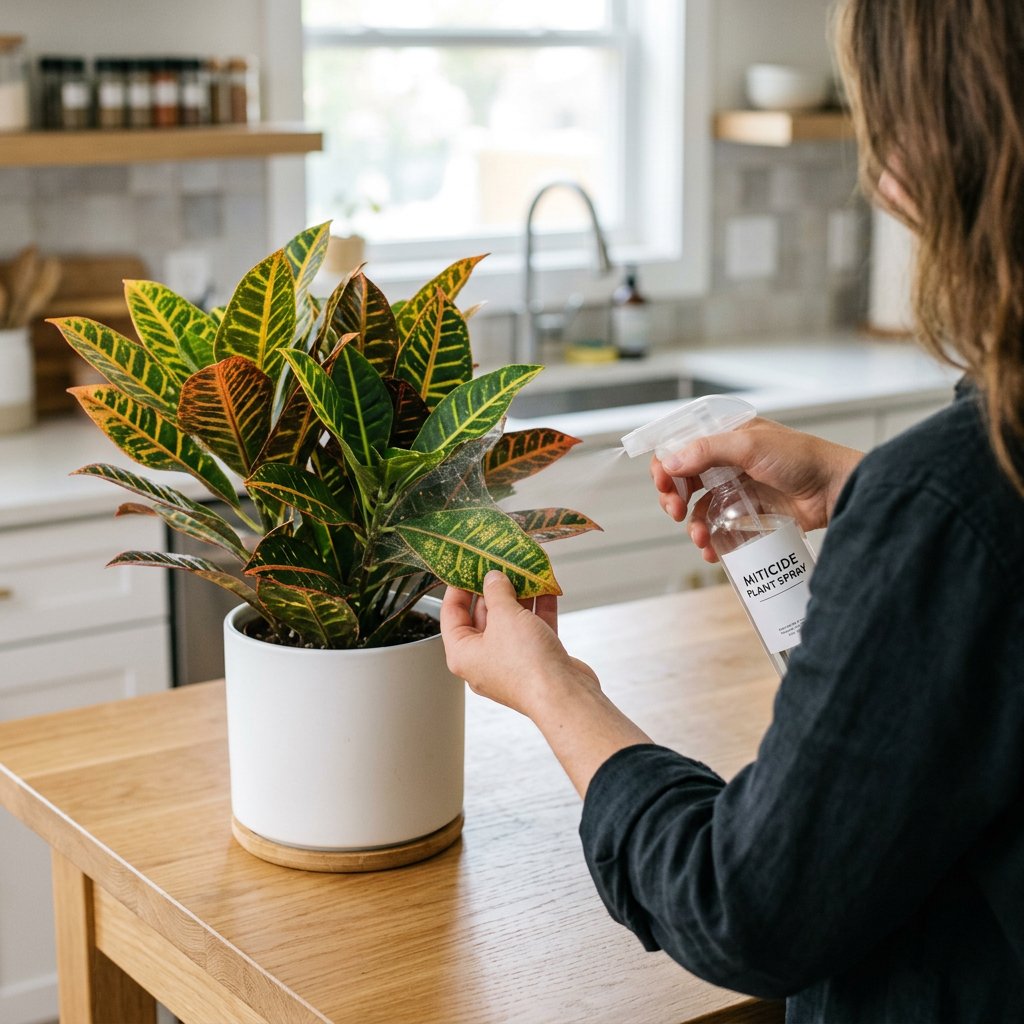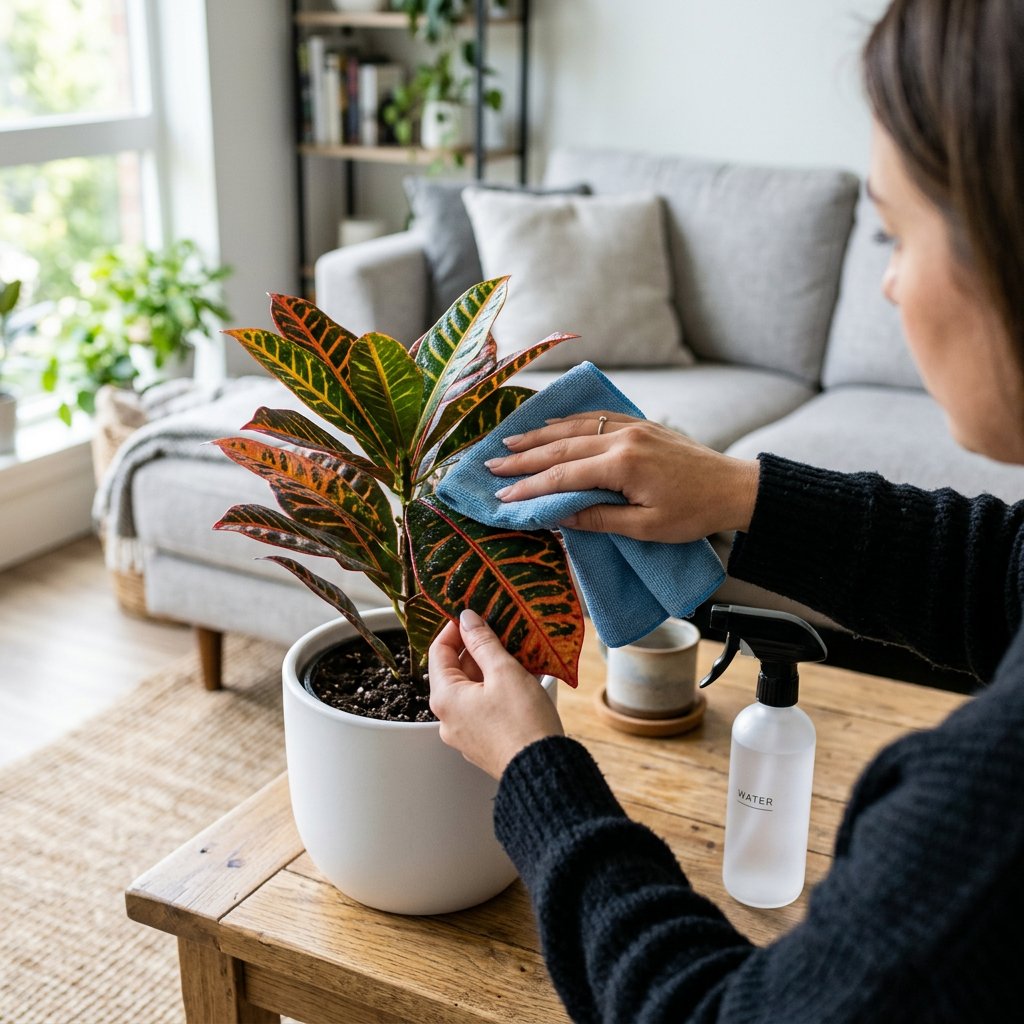
Crotons are undeniable showstoppers. With their fiery red, vibrant yellow, and deep green foliage, they instantly bring a slice of the tropics into our homes. But if you’ve recently noticed weird, crusty bumps on the undersides of those beautiful leaves, or if your plant seems to be drooping no matter what you do, you might be dealing with watering stress and a condition called edema. First, take a deep breath! Please do not feel guilty. Crotons are notoriously dramatic, and watering issues happen to absolutely every plant parent, from eager beginners to seasoned botanists. Diagnosing the issue is half the battle, and you are already on the right track to helping your plant thrive again.
The Problem: Spotting Edema and Watering Stress
When a Croton is unhappy with its watering routine, it communicates through its leaves. While simple overwatering might cause the foliage to wilt or drop off entirely, a specific type of watering stress manifests as edema.
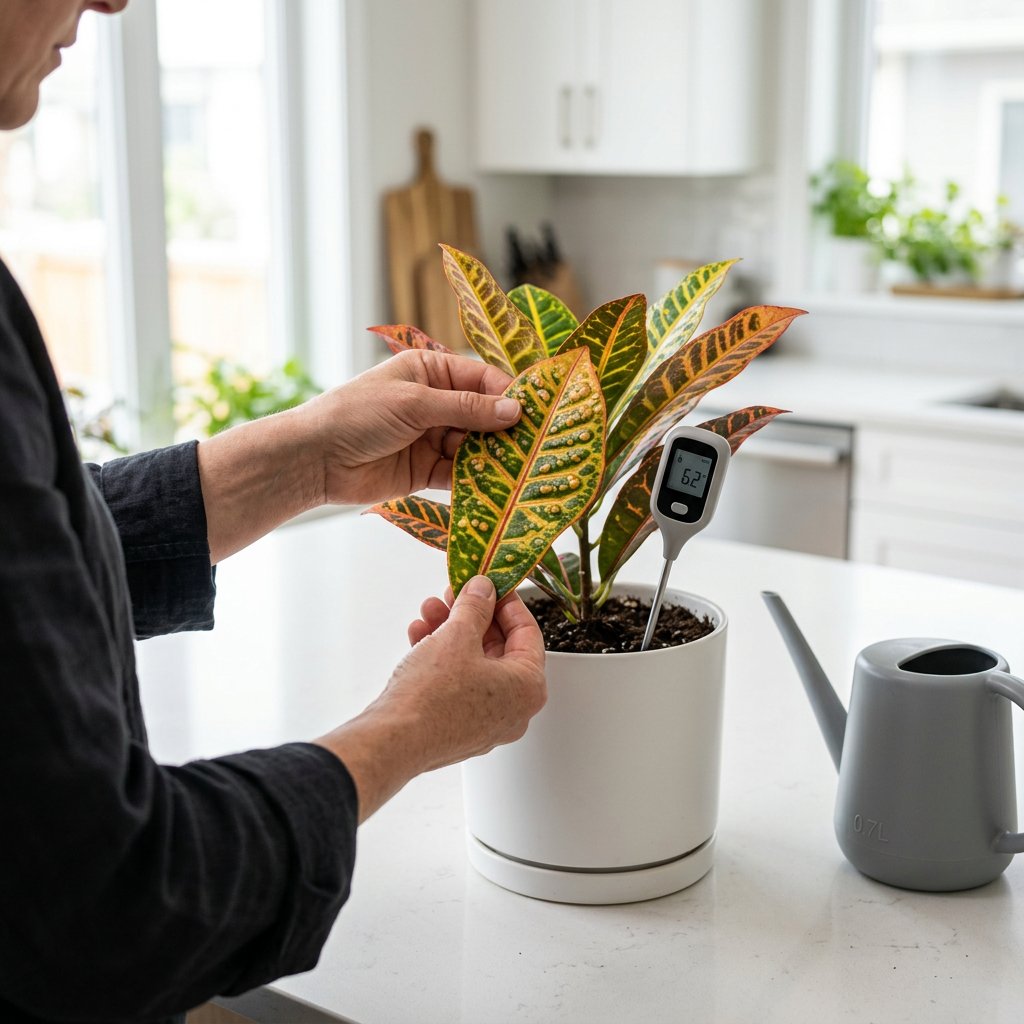
Edema (sometimes spelled oedema) is a physiological disorder—meaning it is not caused by a pest or a disease, but rather by how the plant is functioning in its environment. Simply put, it is a condition where the plant takes up water faster than it can use it or release it.
Symptoms to look out for:
- Water-soaked blisters: Tiny, raised bumps that usually appear on the undersides of the leaves.
- Corky scabs: As those blisters age, the plant cells eventually burst and heal over, leaving behind dry, brown, crusty, or corky spots.
- Drooping or wilting: Even though the plant has too much water inside its cells, the heavy, water-logged soil can suffocate the roots, causing the overall plant to look limp and exhausted.
The Causes: Why is Your Croton Stressed?
To fix edema and watering stress, it helps to understand a little bit about plant biology. Plants "sweat" through a process called transpiration, releasing moisture from their leaves into the air.
Edema occurs when the roots are drinking up water like a sponge, but the leaves aren't transpiring fast enough to let that water out. This pressure builds up until the plant's cells literally burst. Here is what triggers that imbalance:
- Inconsistent Watering: Letting the soil dry out completely until it becomes a brick, and then suddenly flooding it with water, shocks the root system.
- Poor Drainage: If your Croton is sitting in heavy, compacted soil or a decorative pot without drainage holes, the roots are constantly soaking in a puddle.
- Environmental Factors: High humidity, cool temperatures, and poor airflow can drastically slow down your plant's transpiration rate, trapping the water inside the leaves.
The Solutions: Step-by-Step Treatment
While you cannot reverse the corky scars on the currently affected leaves, you can easily correct the environment so that all new growth is smooth, vibrant, and perfectly healthy. Here is exactly how to rehab your stressed Croton.
Step 1: Regulate your watering habits Stop watering on a strict calendar schedule (like "every Sunday"). Instead, water your Croton only when the top two inches of the soil feel dry to the touch. When you do water, soak the soil thoroughly until water runs out the bottom, and then let it drain completely.
Step 2: Upgrade the drainage situation If your pot doesn’t have a drainage hole, it’s time to repot! Choose a container with ample drainage. Use a well-aerated potting mix—adding a handful of perlite or orchid bark to standard indoor potting soil works wonders for allowing excess water to escape and letting the roots breathe.
Step 3: Boost airflow and light To help your Croton transpire properly, move it to a bright, warm spot. Crotons love bright, indirect light and can even handle some direct morning sun. Ensure there is good air circulation in the room; a gentle breeze from an open window or a small fan will encourage the leaves to release excess moisture safely.
Step 4: Use technology to take the guesswork out If you are unsure what is wrong with your plant, or if you suspect those bumps might be a pest rather than edema, you can use the AI-powered plant disease scanner in the Plantiary app to get an accurate diagnosis in seconds. The Plantiary app can also help you set up customized watering reminders based on your specific plant's needs, preventing watering stress before it starts.
Remember, plants are incredibly resilient. By tweaking your watering routine and improving drainage, your Croton will bounce back with brilliant, healthy new leaves in no time. Keep observing, keep adjusting, and happy growing!