It is incredibly frustrating when the brilliant red, orange, and yellow foliage of your Croton Petra begins to look dull and sickly. If you’ve noticed your plant struggling lately, please don't beat yourself up. Pests are a completely normal part of being a plant parent, and even the most experienced indoor gardeners deal with them. One of the most common culprits for a fading Croton is the dreaded spider mite. These tiny arachnids love to feast on vibrant houseplants, but don't panic! With a little patience and the right care routine, your plant will bounce back.
If you are ever unsure what is wrong with your plant, you can use the AI-powered plant disease scanner in the Plantiary app to get a fast, accurate diagnosis in seconds.
The Problem: Identifying Spider Mite Symptoms
Spider mites are incredibly small—about the size of a grain of pepper—making them hard to spot with the naked eye until the infestation grows. Here is what to look out for on your Croton Petra:
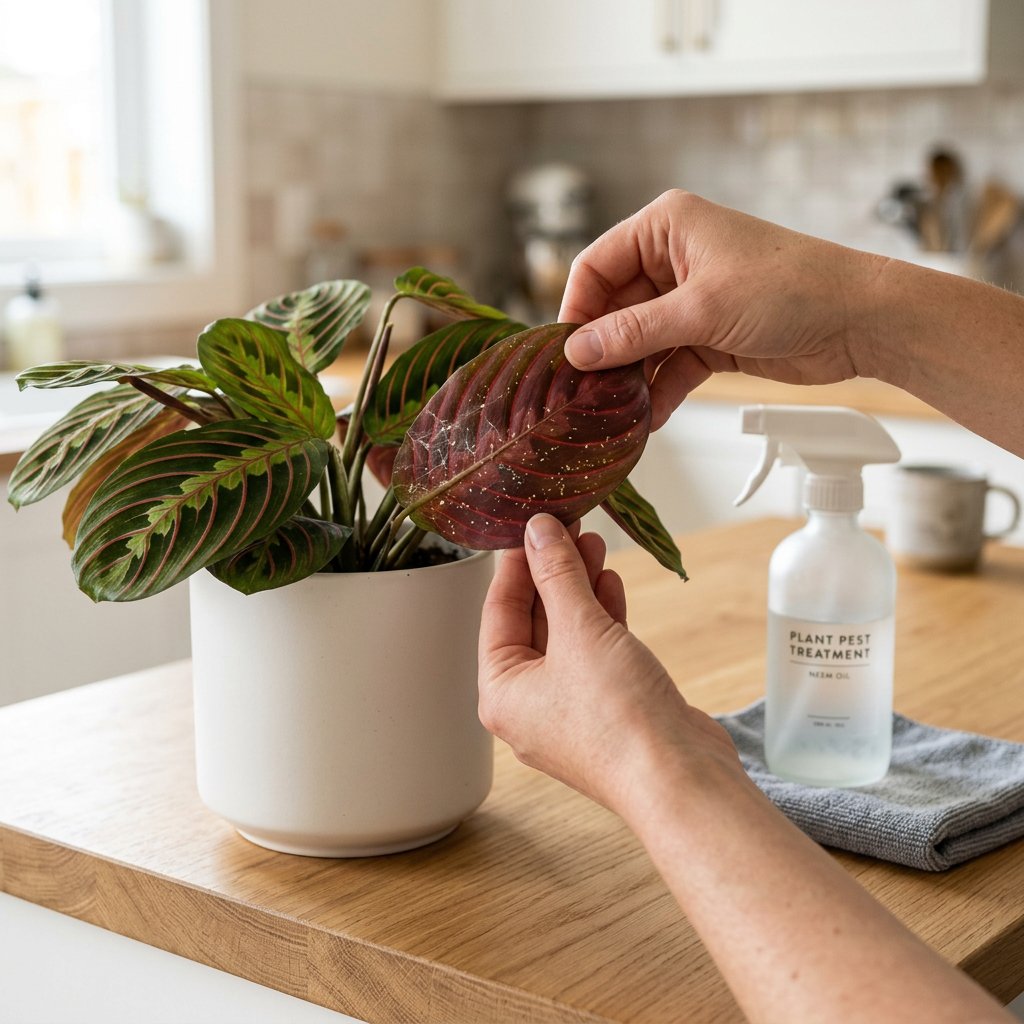
- Stippling: This is the appearance of tiny pale or yellow dots scattered across the leaves. It happens because the mites are piercing the plant tissue and sucking out the sugary sap.
- Fine Webbing: Look closely at the undersides of the leaves and where the stems meet the main branch. Spider mites spin delicate, silky webs to protect their colonies and travel across the plant.
- Chlorosis: As the mites drain the plant's nutrients, the leaves suffer from chlorosis—the widespread yellowing of plant tissue caused by a loss of chlorophyll (the green pigment necessary for photosynthesis).
- Crispy Edges and Leaf Drop: If left untreated, the stressed Croton will eventually start dropping its beautiful leaves as a trauma response.
The Causes: Why Are Spider Mites Attacking Your Croton?
To prevent future outbreaks, it helps to understand why spider mites moved in in the first place.
- Dry Indoor Air: Spider mites absolutely thrive in hot, bone-dry environments. If you are running your central heating during the winter or keeping your plant near an AC draft, the lack of atmospheric moisture creates a perfect breeding ground for them.
- Underwatering: A thirsty Croton is a stressed Croton. When a plant lacks water, its natural defenses drop, making it highly susceptible to opportunistic pests.
- Hitchhikers: Sometimes, pests simply hitch a ride indoors from an open window, a newly purchased nursery plant, or even your clothing after you've been working outside.
The Solutions: Step-by-Step Treatment Plan
Treating spider mites requires consistency. Because their life cycle is very short, you need to disrupt their breeding over a period of a few weeks. Follow these proven, safe steps to save your Croton Petra:
Step 1: Isolate the Plant The very first thing you should do is move your Croton Petra away from your other houseplants. Spider mites can easily travel on a light breeze or across touching leaves, so a strict quarantine is essential to protect your indoor jungle.
Step 2: Give It a Shower Spider mites hate water, and their webbing is easily washed away. Gently place your Croton in the shower or sink and spray the foliage with room-temperature water. Be sure to tilt the plant and target the undersides of the leaves where the mites hide. This physical removal instantly knocks down a huge portion of the pest population.
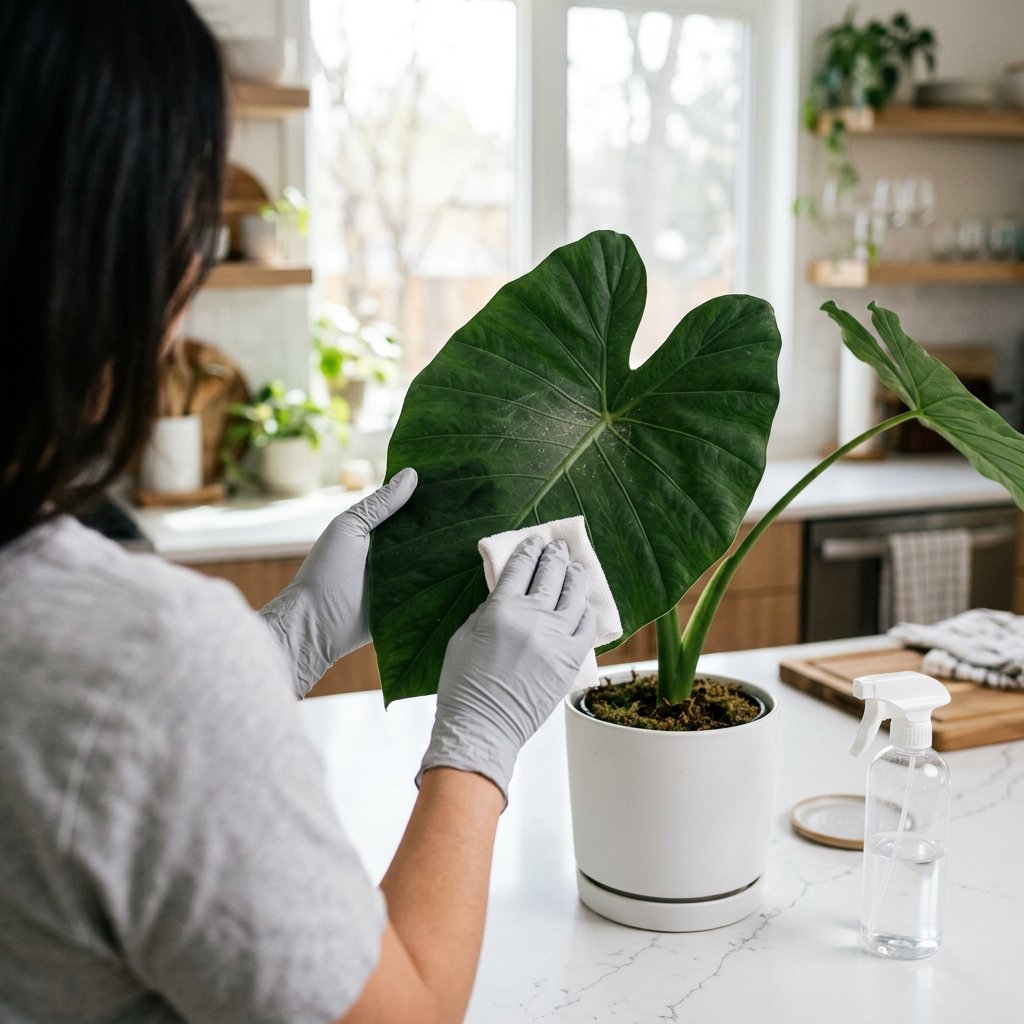
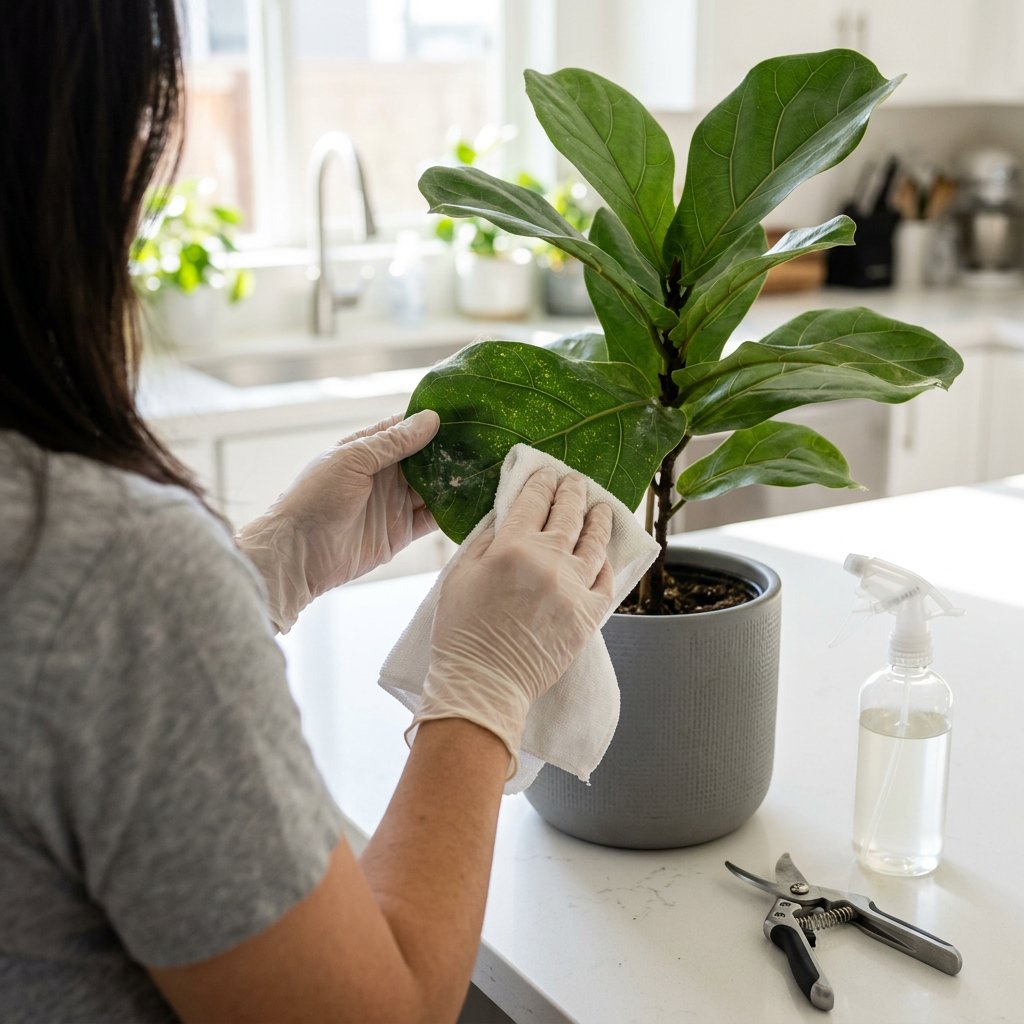
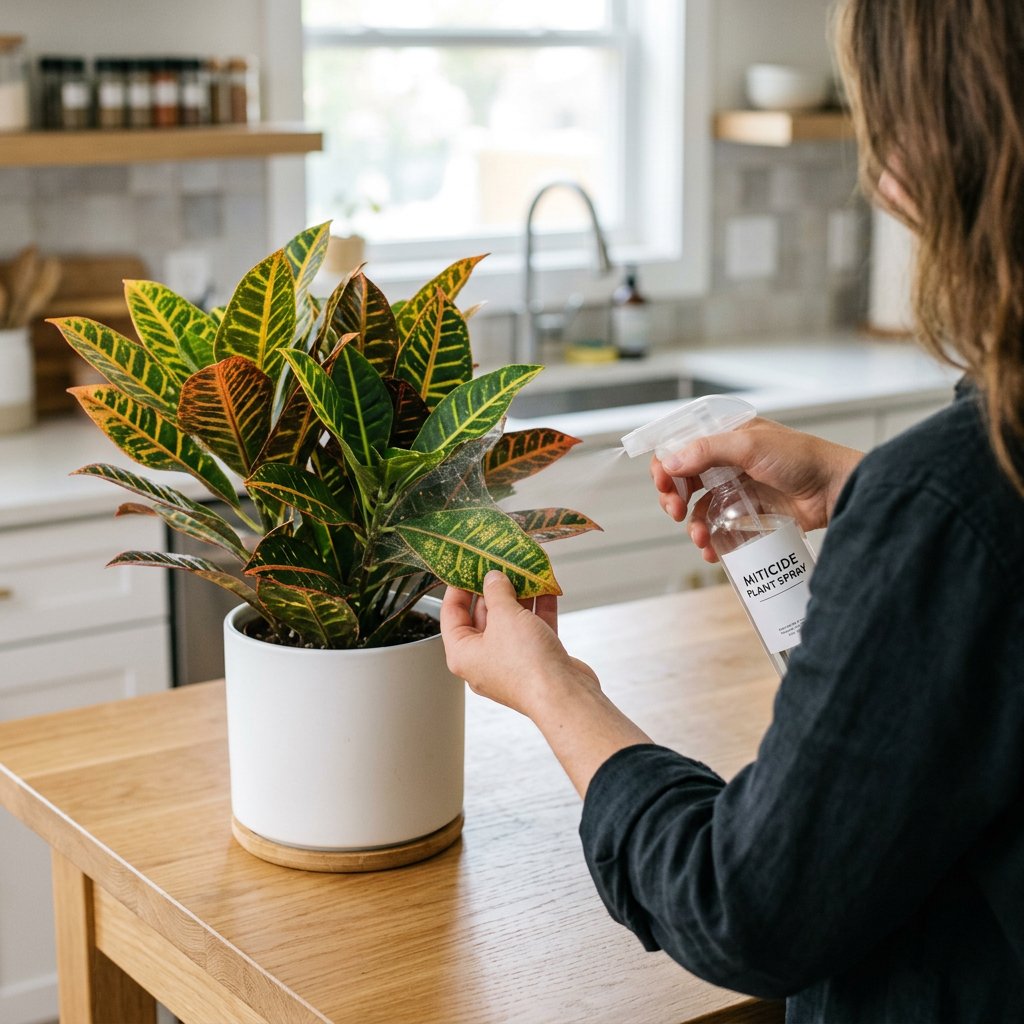
Step 3: Treat with Neem Oil or Insecticidal Soap Avoid harsh chemical pesticides or unverified DIY kitchen remedies (like rubbing mayonnaise or household cleaners on leaves), which can clog the plant's pores and burn sensitive foliage. Instead, use a high-quality insecticidal soap or a diluted neem oil spray. Thoroughly spray the entire plant, focusing heavily on the undersides of the leaves and the crevices of the stems.
- Pro Tip: Apply these treatments in the evening or away from direct sunlight, as wet leaves combined with bright light can suffer from sunburn. Repeat this treatment every 5 to 7 days for about three weeks to catch any newly hatched eggs.
Step 4: Boost the Ambient Humidity Since spider mites hate moisture, increasing the humidity around your Croton Petra is the best long-term defense. You can run a small humidifier near the plant, place the pot on a pebble tray filled with a shallow layer of water, or group it closely with other plants to create a naturally humid microclimate.
Keep Your Croton Thriving
Recovering from a pest infestation takes a little time, but your Croton Petra is an incredibly resilient plant. Don't be discouraged if it drops a few leaves during the treatment process—this is just the plant safely conserving its energy for new growth.
To stay on top of your watering schedule and prevent the dry, drought-like stress that invites spider mites in the first place, don't forget to set up customized care reminders in your Plantiary app. You've got this, and your plant will be flashing its brilliant, colorful foliage again in no time!