Noticing tiny, uninvited guests setting up camp on your beloved Ficus lyrata (commonly known as the Fiddle Leaf Fig) can make your heart sink. These magnificent plants are famous for their massive, glossy, violin-shaped leaves, so seeing them lose their luster is incredibly frustrating. If you’ve discovered a spider mite infestation, take a deep breath and don't panic! Feeling guilty is completely normal, but pest issues happen to absolutely every plant parent, regardless of experience. Your Fiddle Leaf Fig is resilient, and together, we can get it back to its vibrant, healthy self.
Let’s break down exactly what you are dealing with, why it happened, and the safest, most effective ways to evict these pests for good.
The Problem: Spotting Spider Mites on Your Fiddle Leaf Fig
Spider mites are not actually insects; they are minuscule arachnids (relatives of spiders) that feed on the sap—the nutrient-rich fluid—inside your plant’s leaves. Because they are so small, usually looking like tiny moving specks of dust, the damage is often noticed before the pests themselves.
Here are the classic symptoms of a spider mite infestation on a Ficus lyrata:
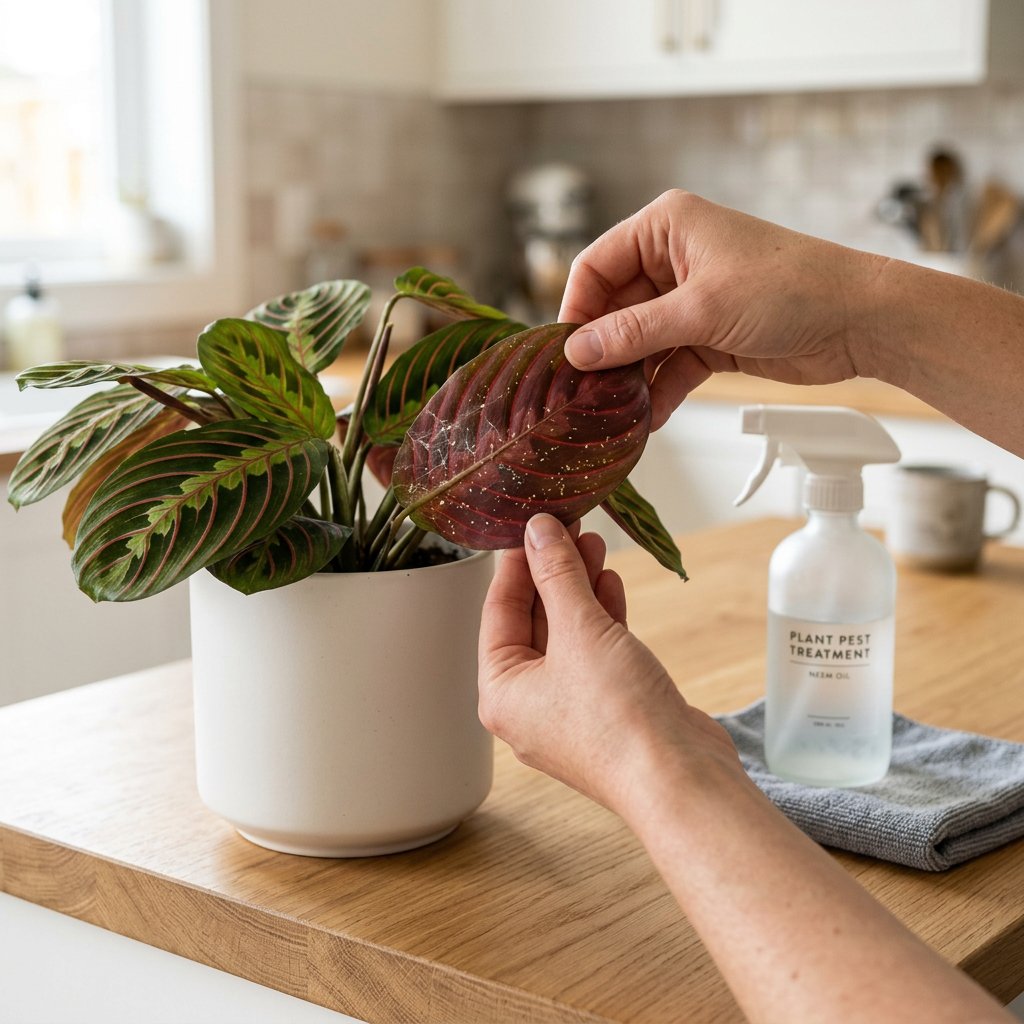
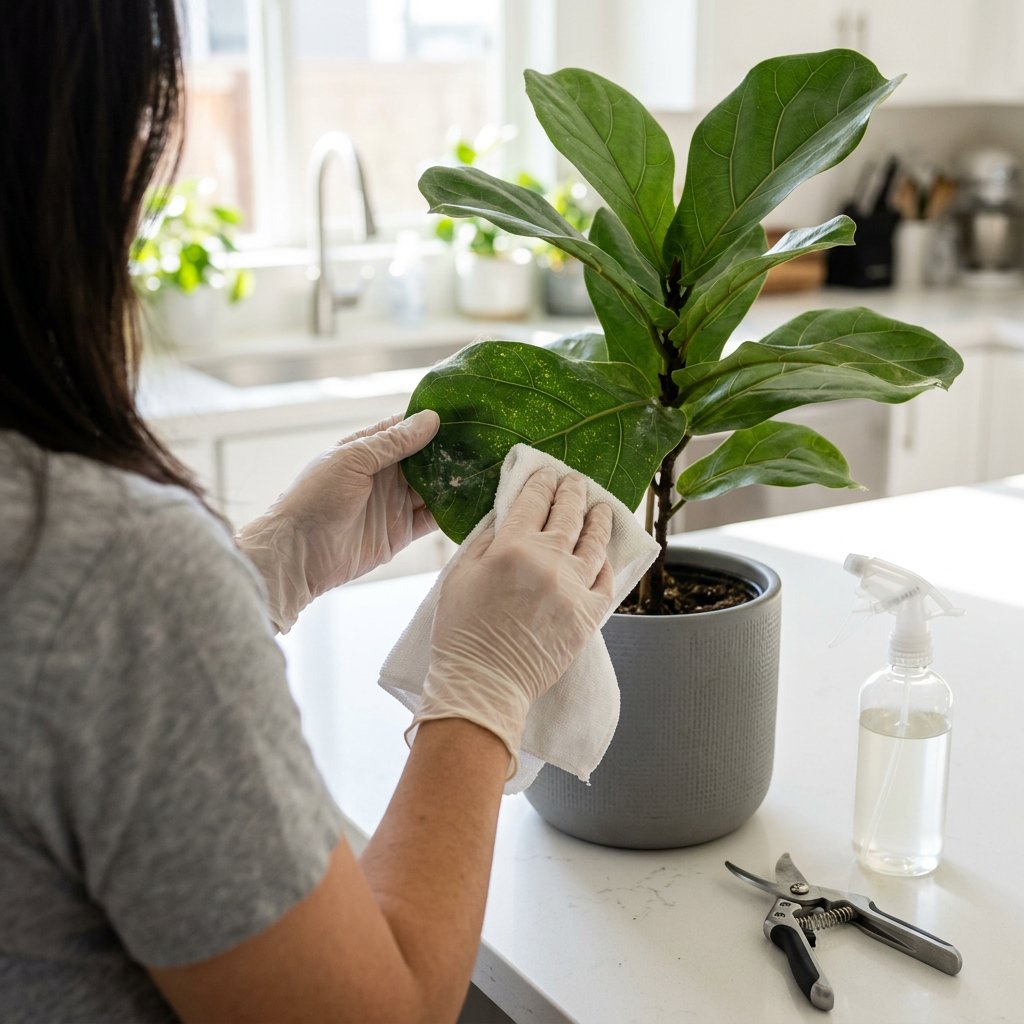
- Stippling: This is one of the first signs of damage. Stippling refers to clusters of tiny yellow or white dots on the surface of the leaf. It happens because the mites are piercing the plant cells and sucking out the chlorophyll.
- Fine Webbing: As their name suggests, spider mites spin delicate, silky webs. You will usually find these webs tucked into the crevices where the leaf stems meet the main trunk, or underneath the leaves.
- Dull, Fading Foliage: The once-glossy leaves will begin to look dusty, matte, and washed out.
- Leaf Drop: In severe, untreated cases, the stressed plant will start dropping its lower leaves.
If you are unsure what is wrong with your plant, you can use the AI-powered plant disease scanner in the Plantiary app to get a diagnosis in seconds! Simply snap a photo of the damaged leaf, and the app will guide you.
The Causes: Why Did Spider Mites Attack?
Understanding why spider mites chose your Fiddle Leaf Fig is the key to preventing them in the future. These pests are opportunists, and they thrive under very specific conditions:
- Dry Air (Low Humidity): Spider mites absolutely love dry environments. This is why infestations frequently peak in the winter when our indoor heating systems dry out the air, or in naturally arid climates.
- Plant Stress: A Fiddle Leaf Fig that is underwatered or lacking proper light is stressed. Stressed plants have weaker natural defenses, making them a prime target for pests.
- Hitchhiking: Mites often enter our homes on brand-new plants straight from the nursery, or they can even waft in through an open window on a warm, breezy day.
The Solutions: Step-by-Step Spider Mite Treatment
Forget the strange home remedies you might read about online—treating your plant requires scientifically proven, safe methods. Here is your actionable rescue plan:
Step 1: Isolate Your Plant
As soon as you spot webs or stippling, move your Fiddle Leaf Fig away from your other houseplants immediately. Spider mites can spread like wildfire, so placing your plant in a separate room (a "plant quarantine") is crucial to protect the rest of your indoor jungle.
Step 2: Give Your Ficus a Shower
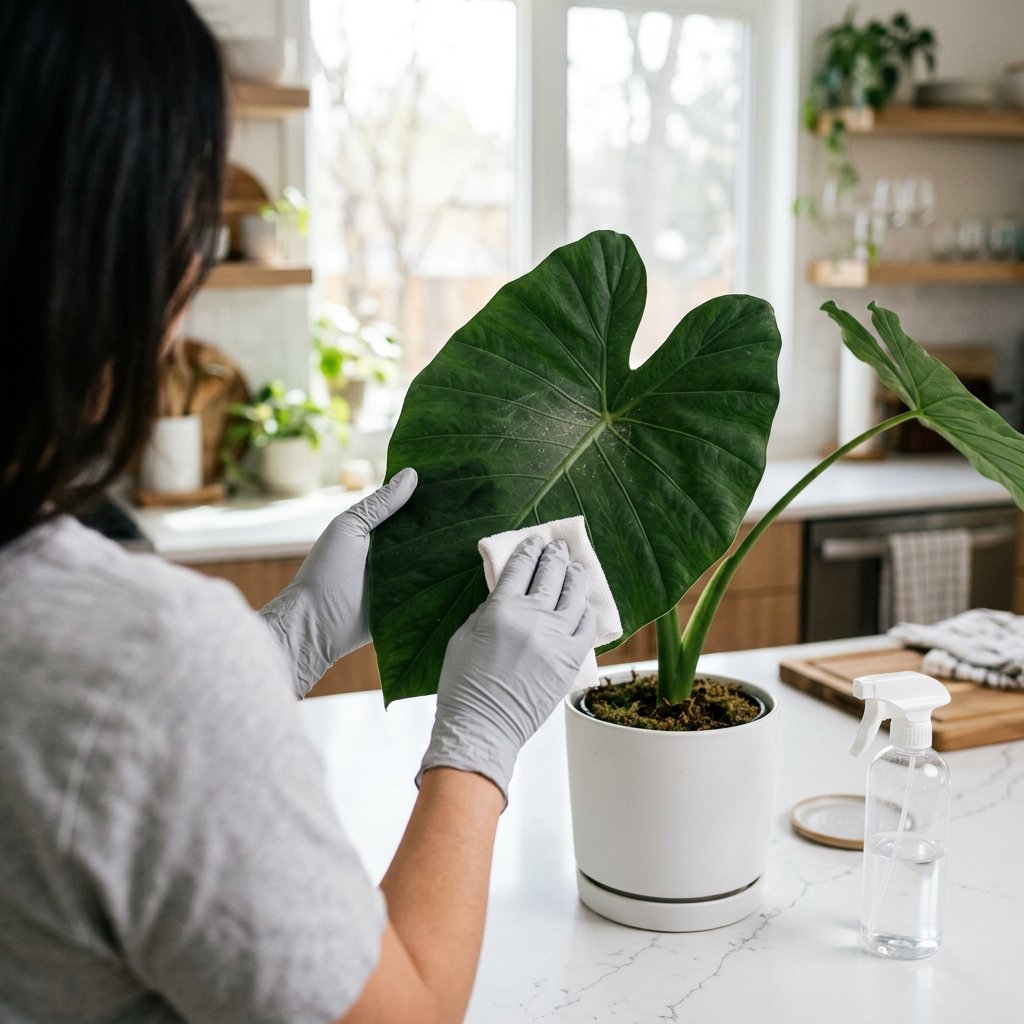
The large, broad leaves of the Ficus lyrata are actually a huge advantage here. Take your plant to the shower or outside (if the weather is mild) and gently spray the foliage with lukewarm water. The physical force of the water will knock the majority of the mites and their eggs right off. Gently wipe both the tops and the undersides of the leaves with a soft, damp microfiber cloth.
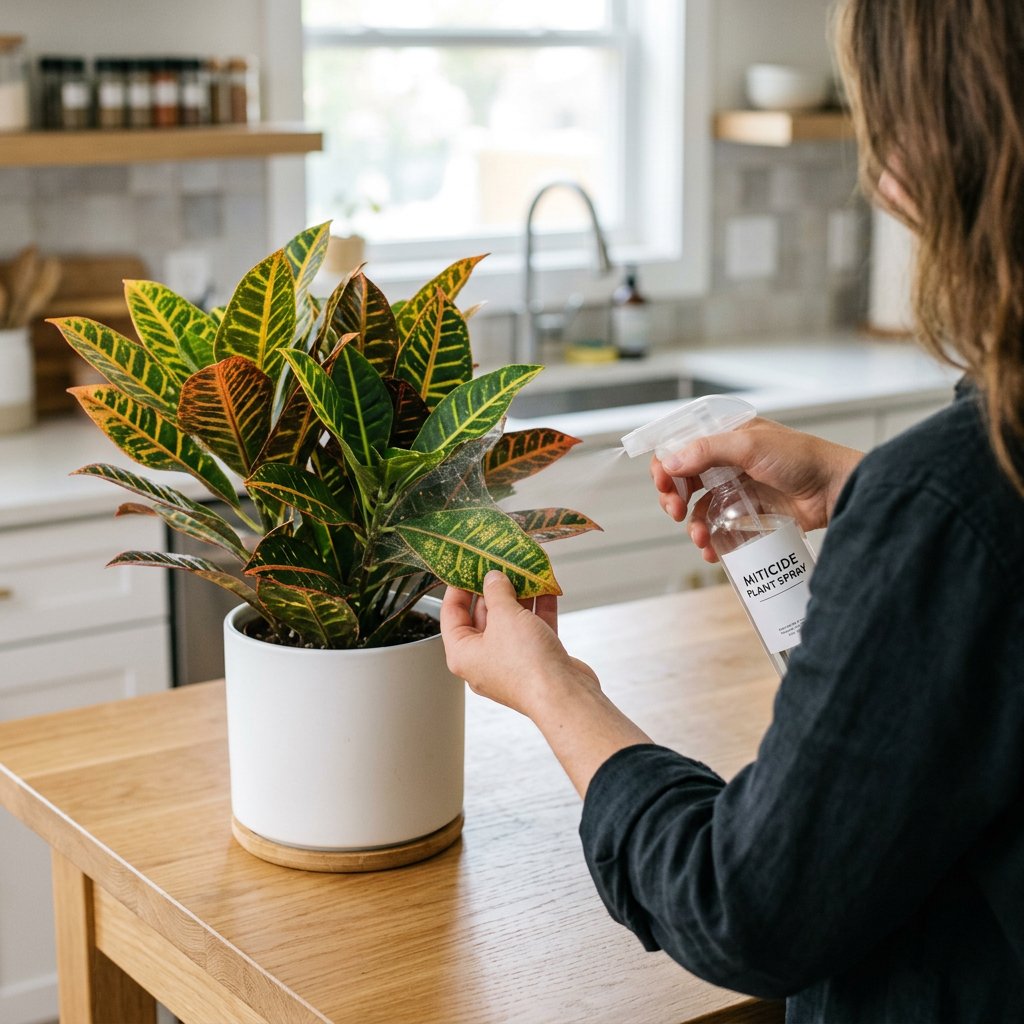
Step 3: Treat with Horticultural Oil or Soap
Once the leaves are dry, it’s time to treat the plant to kill any remaining mites.
- Neem Oil: This is a natural, highly effective plant-based oil that disrupts the life cycle of pests. Mix a neem oil solution according to the bottle's instructions and thoroughly spray the plant, paying special attention to the undersides of the leaves.
- Insecticidal Soap: Alternatively, a commercial insecticidal soap works by safely breaking down the outer shell of the mites.
- Important Note: Never place your plant in direct sunlight while the leaves are wet with oil or soap, as this can cause severe sunburn.
Step 4: Boost the Humidity
Because spider mites hate moisture, altering their environment is your best long-term defense. Add a humidifier near your Fiddle Leaf Fig to keep the ambient humidity above 50%. Grouping plants together (once the infestation is fully gone) can also create a naturally humid microclimate.
Patience and Prevention
Spider mite eggs hatch every few days, meaning a single treatment won't cut it. You will need to repeat Step 2 and Step 3 every 5 to 7 days for about three weeks to ensure you break the reproductive cycle entirely.
Don't be discouraged if it takes a little time for your Fiddle Leaf Fig to bounce back. Plant care is a journey of learning and adapting! To keep your green friends thriving and to remember your watering and humidity checks, set up a custom care schedule within your Plantiary app. With a little consistency and a lot of love, your Ficus lyrata will be pushing out beautiful, glossy new leaves again in no time.