Have you noticed your once-vibrant, purple-striped Tradescantia looking a little dull lately? Please don’t worry! It is incredibly common for these stunning houseplants—often known as Inch Plants—to lose their signature coloring and slowly fade to a plain, leafy green. If your plant has lost its brilliant spark, do not feel guilty. Houseplant care is a continuous learning curve, and even the most seasoned plant parents experience fading foliage from time to time.
The great news is that your plant's brilliant purple and silver coloring is absolutely recoverable! Let's dive into why your Tradescantia is fading and explore the exact, scientifically backed steps to bring its vibrant colors back to life. If you ever feel stuck or unsure about a plant's health, remember that you can always use the AI-powered plant disease scanner in the Plantiary app to get a reliable diagnosis in seconds.
The Problem: Recognizing the Symptoms
Before we fix the issue, it helps to understand what the plant is experiencing. A fading Tradescantia usually presents a few key symptoms:
- Loss of Variegation: The striking pink, purple, or silver stripes gradually disappear, leaving the leaves solid green.
- Pale or Washed-Out Foliage: The undersides of the leaves, which are usually a deep magenta, become a pale, washed-out purple or green.
- Stretching Stems: The stems become long and sparse, with large gaps between the leaves. Botanists call this etiolation—a process where a plant stretches out and becomes thin because it is desperately reaching out to find a better light source.
The Causes: Why Do Tradescantias Turn Green?
To restore your plant, we first need to identify the root cause of the fading. Usually, it comes down to one of these environmental factors:
- Inadequate Light (The #1 Culprit): Plants produce anthocyanins—the pigments responsible for beautiful purple, red, and pink colors—partly as a natural sunscreen to protect their leaves from bright light. If your Tradescantia is kept in a dim corner, it doesn't need this "sunscreen." Instead, it produces more green chlorophyll to maximize its ability to photosynthesize in low light.
- Excessive Fertilizer: While fertilizing is generally good, giving your plant a high-nitrogen fertilizer too often will push it to produce rapid, green foliage at the expense of its colorful variegation.
- Watering Stress: Both overwatering and severe underwatering cause root stress, which can lead to dull, faded, or yellowing leaves.
- Old Age: It is completely natural for the oldest leaves near the base of the soil to fade, dry up, and fall off as the plant focuses its energy on new growth.
The Solutions: Step-by-Step Color Restoration
Ready to get those gorgeous colors back? Follow these actionable steps to nurse your Tradescantia back to its former glory.
Step 1: Upgrade Their Lighting
Since lack of light is the most common cause of fading, relocating your plant is your first line of defense.
- Move your Tradescantia to a spot that receives bright, indirect sunlight.
- An east-facing or west-facing window is ideal, as a few hours of gentle morning or late afternoon direct sun will highly encourage the plant to produce those vibrant purple pigments again.
- Note: Avoid harsh, midday direct sun, which can scorch their delicate leaves.
Step 2: Give It a Bold Haircut
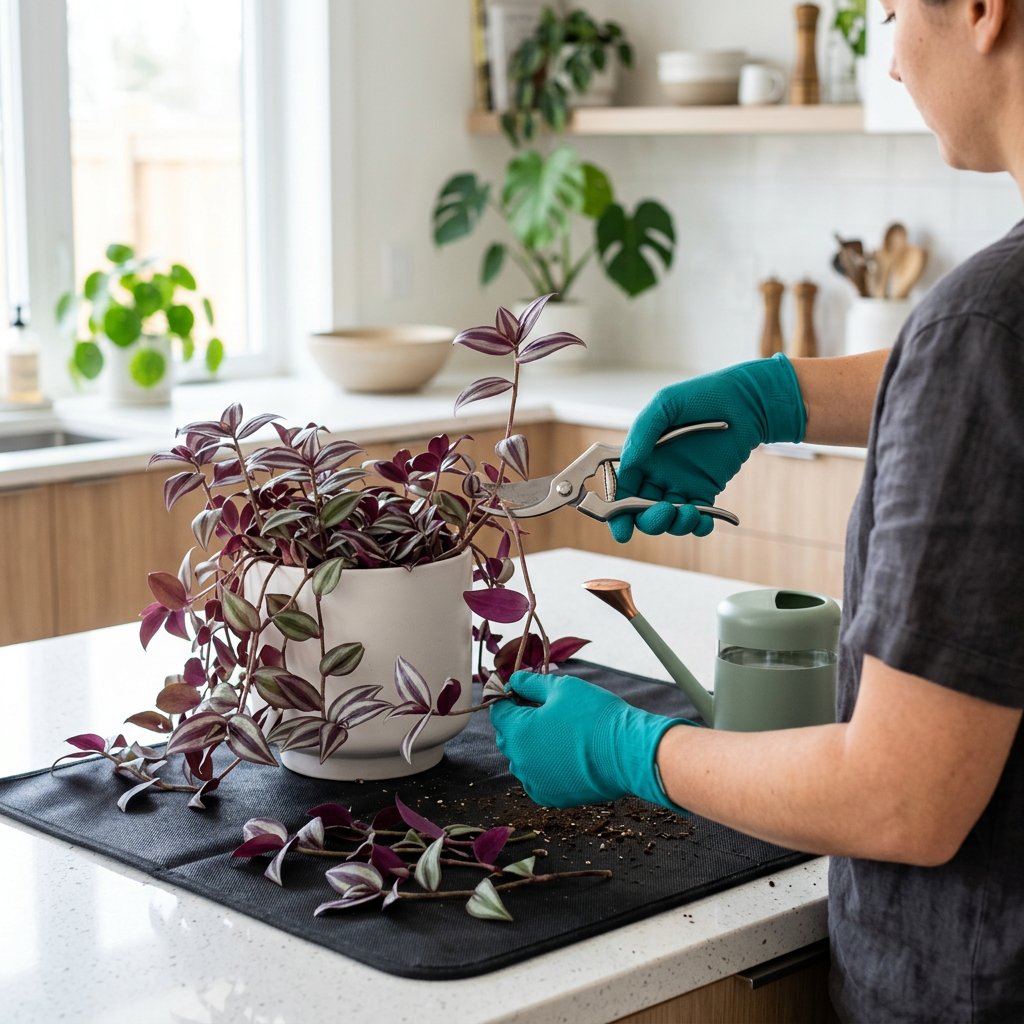
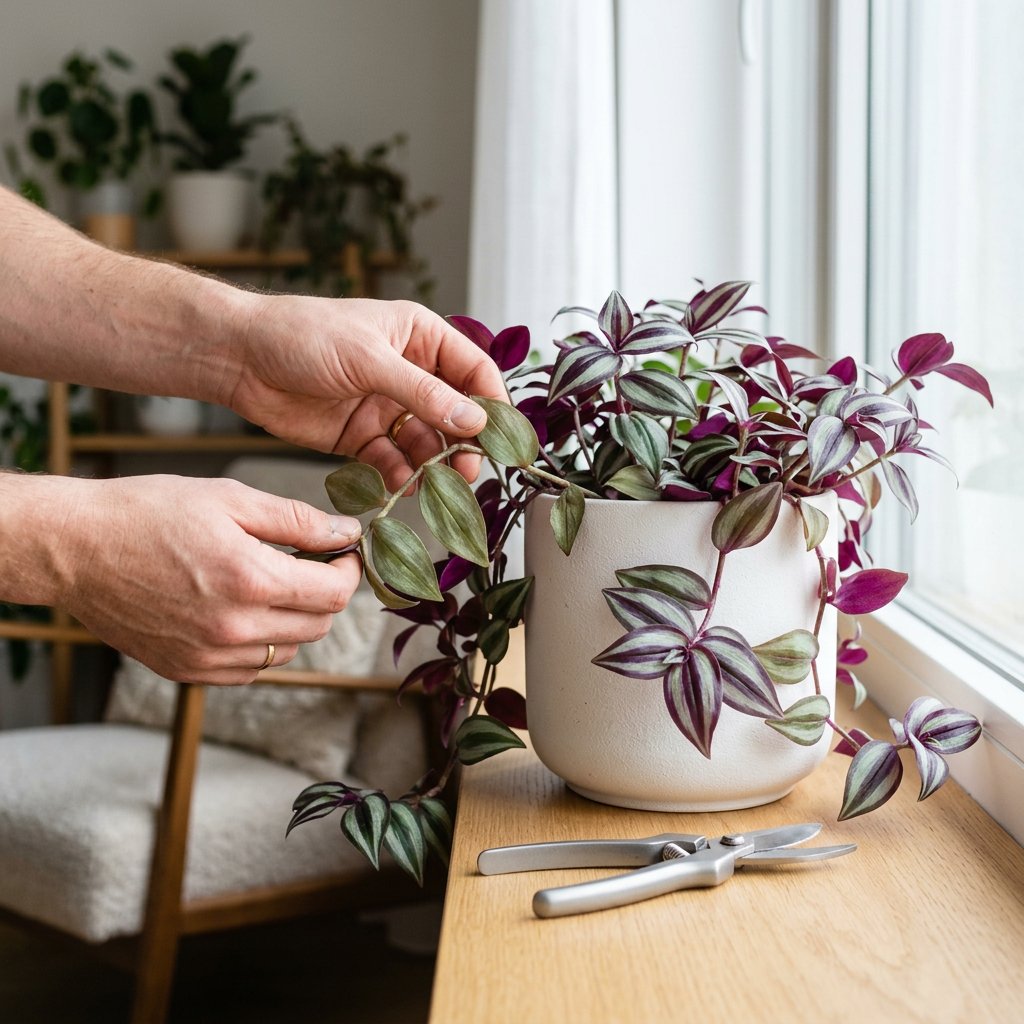
Don’t be afraid to grab your pruning shears! Snipping off the long, green, leggy stems will encourage the plant to branch out, resulting in a much bushier, fuller plant. Plus, the new growth that emerges (provided the light is right) will come in brightly colored.
- Simply cut the stems right above a leaf node (the little bump where a leaf meets the stem).
- You can take those cut stems, pop them directly back into the soil, and they will easily root, giving you an even fuller pot!
Step 3: Optimize Your Watering Routine
Tradescantias love moisture, but they hate sitting in soggy soil.
- Water your plant thoroughly only when the top one to two inches of the soil feels dry to the touch.
- Ensure your pot has drainage holes so excess water can escape. If you struggle to remember when to water, you can easily set up customized care and watering reminders in your Plantiary app to keep your routine perfectly on track.
Step 4: Adjust Your Feeding Schedule
If you’ve been heavy-handed with the plant food, it’s time to take a break.
- Flush the soil with fresh water to wash away excess fertilizer salts.
- Moving forward, only feed your Tradescantia once a month during the active growing season (spring and summer) using a balanced, water-soluble houseplant fertilizer diluted to half-strength.
Patience Brings Purple!
Restoring a faded Tradescantia is a highly rewarding process, but it does take a little bit of time. The existing green leaves may not completely change back to purple, but by following these steps, all the new growth will emerge with that dazzling, colorful variegation you fell in love with. Keep your chin up, adjust its care, and your beautiful plant will be thriving again before you know it!