We have all been there. You brought home a lush, vibrant Tradescantia zebrina—with its stunning purple and sparkling silver stripes—but a few months later, it looks like a sparse, spindly vine with massive gaps between the leaves.
First off, take a deep breath and do not feel guilty! Plant parenthood is a constant learning journey, and dealing with a "leggy" plant is practically a rite of passage. These fast-growing trailing plants are notorious for becoming a bit unruly indoors. Let's dive into exactly why your beautiful plant is looking a little stretched out and how you can easily restore it to its former bushy glory.
The Problem: Recognizing a Leggy Tradescantia
When we say a plant is "leggy," we are usually referring to a botanical process called etiolation. Etiolation simply means that a plant is stretching its stems out abnormally long and thin in a desperate search for a better light source.
Here are the tell-tale symptoms that your Tradescantia zebrina is etiolated:
- Wide gaps between leaves: The stem is highly visible, and leaves are spaced far apart.
- Faded foliage: The brilliant purple and silver colors have turned dull or mostly green.
- Smaller new growth: The leaves emerging at the tips are noticeably smaller than the older leaves.
- A "bald" crown: The top of the soil is completely bare, with long vines hanging over the edges.
The Causes: Why Is Your Tradescantia Stretching?
Understanding the root cause of the issue is the best way to prevent it from happening again. For the Tradescantia zebrina, legginess usually boils down to a few environmental factors:
- Insufficient Light: This is the number one culprit. When your plant isn't getting enough sunshine, it redirects all its energy into growing longer vines to "reach" across the room toward the nearest window.
- Natural Aging Habit: In the wild, these plants creep along the ground, rooting as they go. Older leaves near the base naturally dry up and fall off over time, leaving bare stems behind.
- Lack of Pruning: Because they grow so rapidly, Tradescantias require routine haircuts to stay compact. Without pruning, they will just keep growing straight down.
Tip: If you are noticing other symptoms alongside the legginess—like yellowing leaves, mushy stems, or mysterious spots—and aren't sure what is going on, you can use the AI-powered plant disease scanner in the Plantiary app to get a quick, accurate diagnosis!
The Solutions: Step-by-Step Treatment
The great news is that Tradescantia zebrina is incredibly resilient. You haven't failed; you just need to give it a little spa day! Follow these actionable steps to fix your leggy plant.
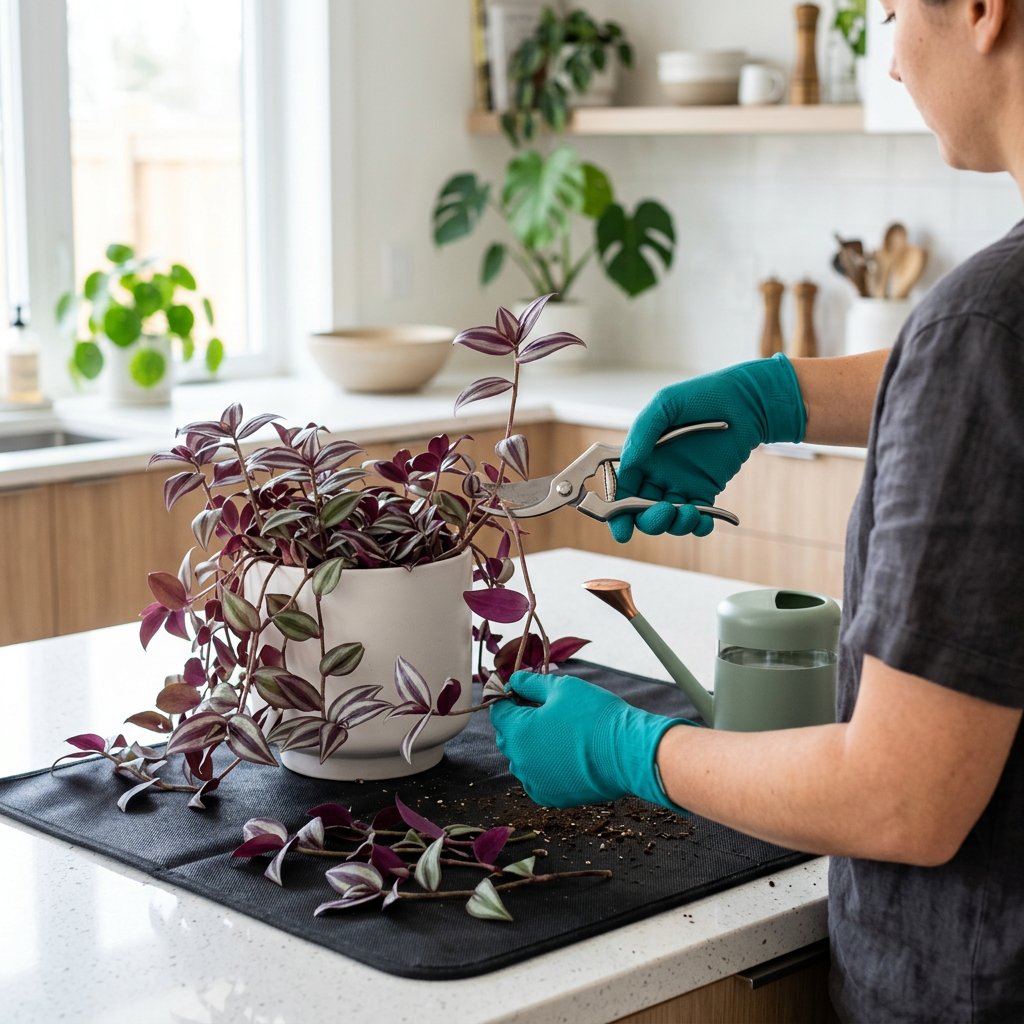
Step 1: The "Chop and Prop" Technique Do not be afraid to grab your scissors! The quickest way to fix a leggy vine is to cut it. Using clean, sharp shears, snip off the long, bare vines. Make your cut just below a node (the little swollen bump on the stem where leaves and roots emerge).
Step 2: Root Your Cuttings Those vines you just chopped off? They are going to create your new, bushy plant! Remove the bottom-most leaves from your cuttings so the stem is bare at the bottom. You can place these cuttings in a glass of water, where they will usually grow roots in just a few days. Alternatively, Tradescantia is so hardy that you can skip the water and poke the bare stems directly back into the mother plant’s soil to fill in that bald top!
Step 3: Upgrade Their Lighting To prevent the new growth from stretching out again, you need to alter its light conditions. Relocate your plant to a spot that receives bright, indirect light. An east-facing or west-facing window is usually perfect. The brighter the indirect light, the more vibrant those purple stripes will become!
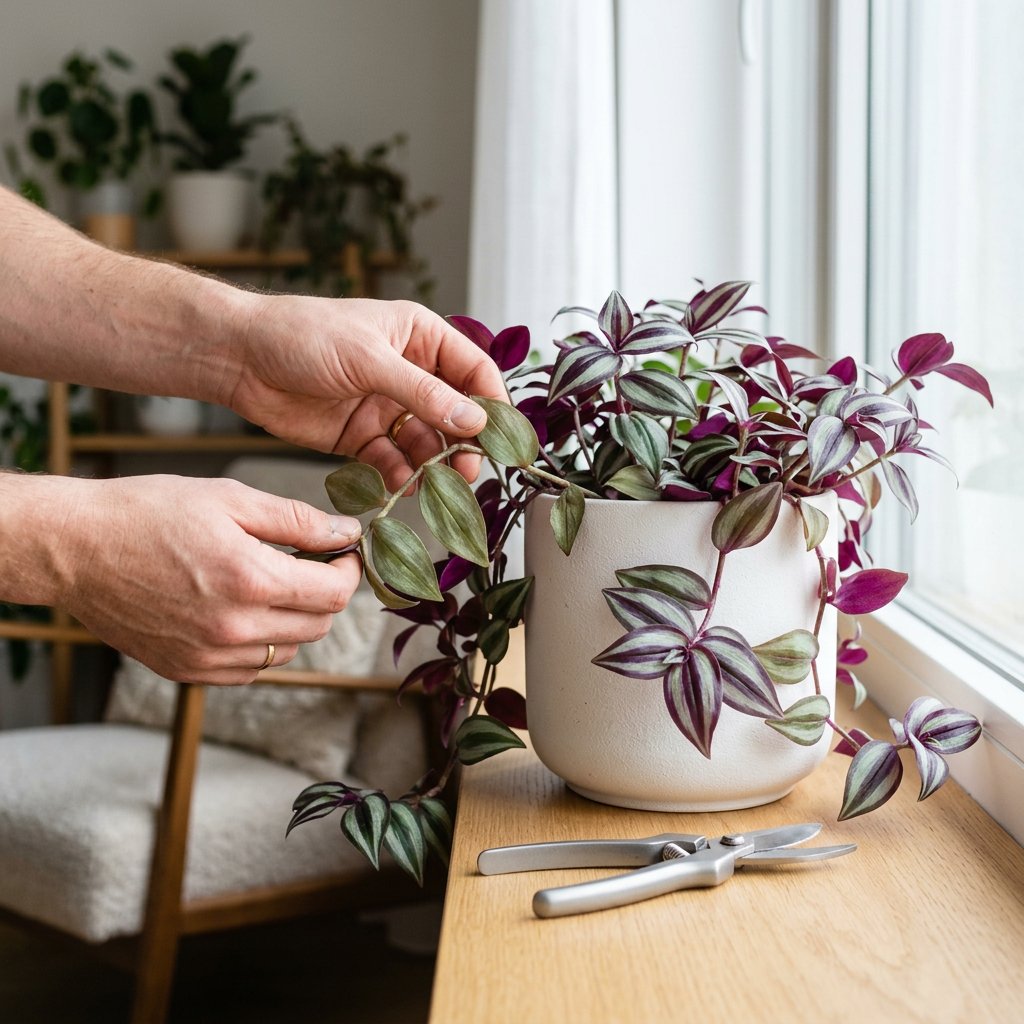
Step 4: Establish a Pruning Routine Moving forward, make pinching back your plant a habit. By gently pinching off the very tips of the growing vines with your fingers, you force the plant to branch out. This encourages lateral (sideways) growth rather than just vertical vines, resulting in a much fuller canopy.
Embrace the Journey
Remember, even the most experienced indoor gardeners have to chop and restart their Tradescantias every year or two to keep them looking fresh. It is simply part of this specific plant's lifecycle!
To stay on top of your plant's care, you can use the Plantiary app to set customized watering and pruning reminders, ensuring your Tradescantia zebrina gets exactly what it needs, right when it needs it. Grab your shears, give your plant a fresh start, and enjoy the rewarding process of watching it bounce back!