Have you been staring at your beloved Monstera deliciosa, waiting patiently for those iconic, Swiss-cheese-like holes to appear, only to find long, stretched-out stems and small, solid leaves? Please don't worry or feel guilty! It is incredibly common for indoor Monsteras to struggle with this, and every plant parent has faced a stubborn, uncooperative plant at some point.
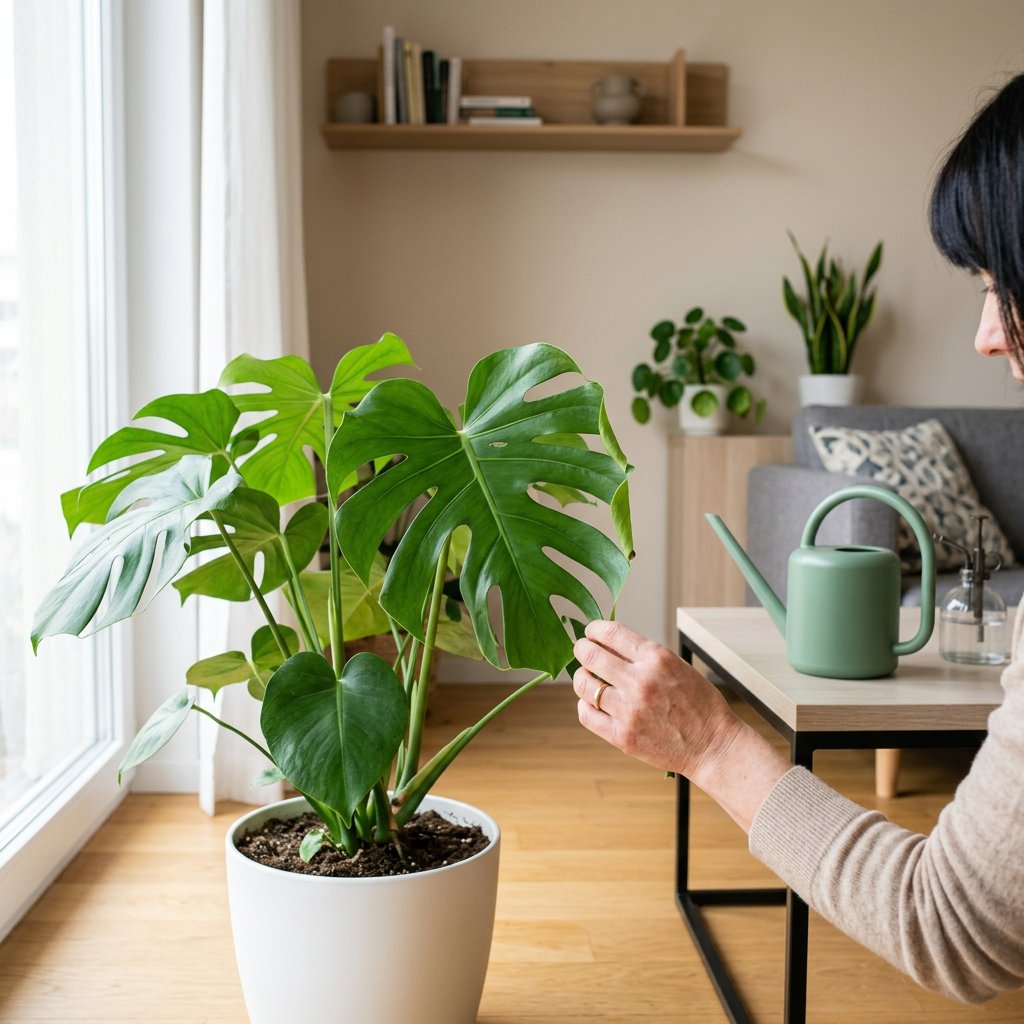
Those beautiful signature splits and holes are botanically known as fenestrations. When your Monstera isn't producing them, it isn't dying; it is simply trying to tell you something about its current environment. Let’s explore why your plant is looking a little sparse and how you can gently guide it back to growing large, stunning, split leaves.
The Problem: Recognizing a Leggy Monstera
Before we fix the issue, it helps to know exactly what is happening. A "leggy" plant is one that has unusually long stems with very few leaves. You will notice that the distance between each leaf—known as the internode—is stretched out, making the plant look bare and unbalanced.
In botany, this stretching process is called etiolation. Etiolation is a fascinating survival mechanism: when a plant isn't getting what it needs to thrive, it stops producing large leaves and instead pours all its energy into growing taller as fast as possible, desperately reaching out to find a better environment.
Common symptoms include:
- Long, weak, or floppy stems
- Smaller than average leaves
- Solid, heart-shaped leaves with absolutely no fenestrations (splits)
- A leaning plant that looks heavy on one side
The Causes: Why is Your Monstera Stretching?
Understanding the "why" makes the "how to fix it" much easier. Here are the primary culprits behind a leggy Monstera:
- Insufficient Light: This is the number one cause of etiolation. In their natural tropical habitat, Monsteras grow under the bright, dappled light of the forest canopy. If your plant is tucked away in a dark corner, it will stretch to find the sun, completely sacrificing leaf splits in the process.
- Lack of Support: Monsteras are epiphytes, meaning they are natural climbers that use their aerial roots to attach to tree trunks. Without something to climb, they often trail along the ground, producing smaller, un-split leaves.
- Immaturity: It is worth noting that baby Monsteras naturally have solid leaves. A plant usually needs to be at least two to three years old before it starts producing fenestrations!
The Solutions: Step-by-Step Treatment
If your plant is mature enough but still growing leggy, solid leaves, here is how you can rehabilitate it.
Step 1: Upgrade Your Lighting
Your Monstera needs bright, indirect light to develop those gorgeous splits. Move your plant closer to an east-facing or bright south-facing window, but keep it out of harsh, direct afternoon sun which can scorch the leaves. If you are unsure if a spot is bright enough, or if you suspect another underlying issue, you can use the AI-powered plant scanner in the Plantiary app to get an instant environment and health check!
Step 2: Add a Climbing Support
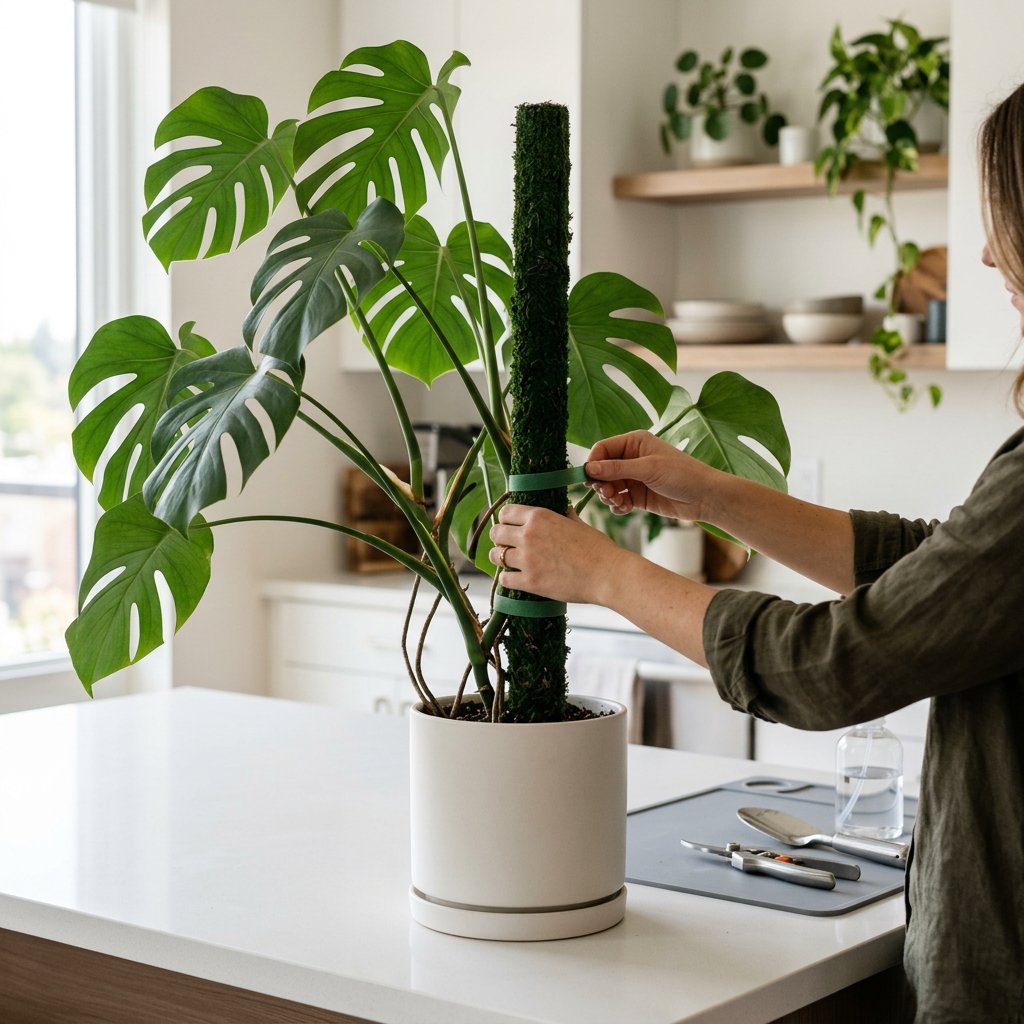
To encourage large, mature foliage, you need to mimic its natural environment. Insert a moss pole, coco coir pole, or wooden trellis into the center of the pot. Gently tie the thickest stems to the pole using soft plant ties. Once the plant feels stabilized and starts climbing upward, it feels secure enough to expend energy on larger, fenestrated leaves.
Step 3: Prune the Leggy Growth
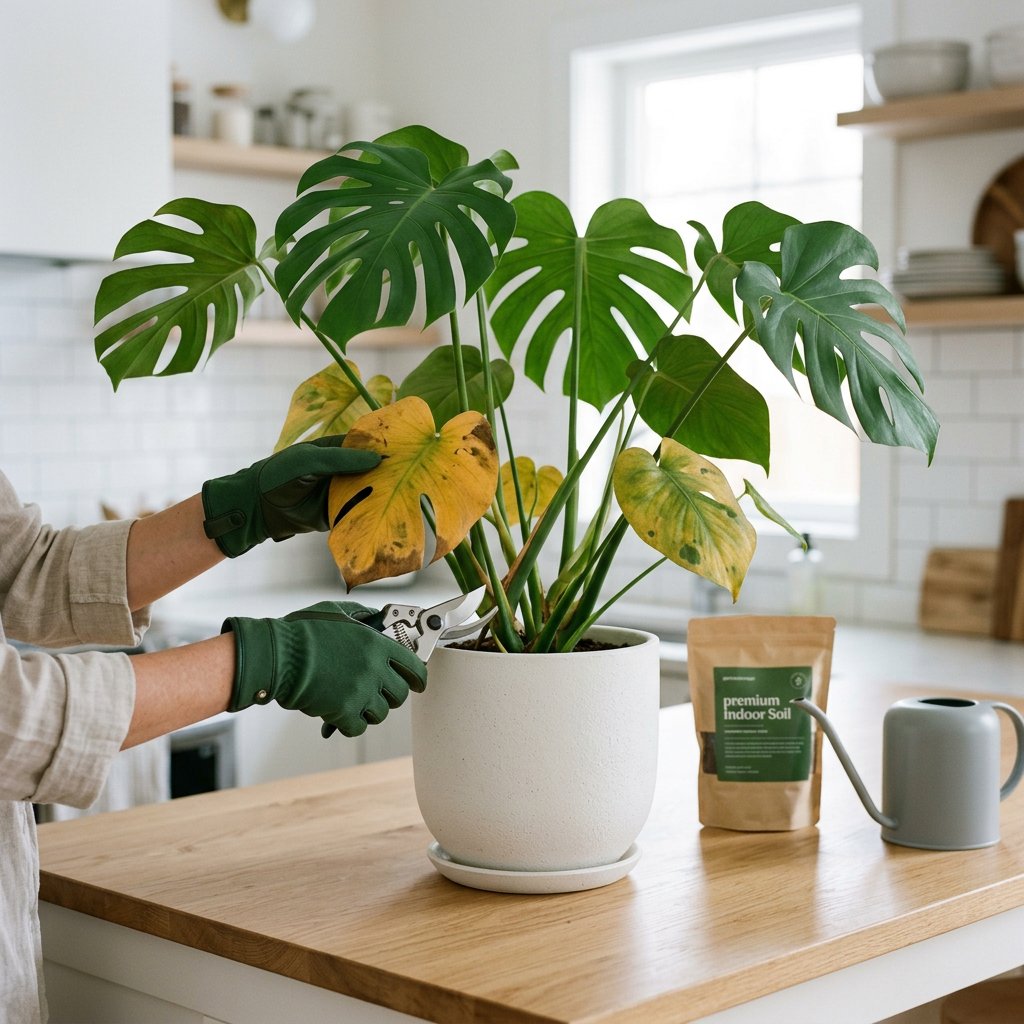
This step can feel intimidating, but it is highly effective! Pruning your plant encourages new, fuller, and healthier growth. Using clean, sterilized shears, snip off the long, leggy vines just below a node (the small bump where a leaf and root emerge). Do not throw those cuttings away—you can easily propagate them in water to create brand-new baby Monsteras!
Step 4: Optimize Watering and Nutrition
A stressed plant won't produce large leaves. Ensure you are allowing the top two inches of the soil to dry out completely before watering again. During the active growing seasons (spring and summer), feed your Monstera once a month with a balanced, water-soluble houseplant fertilizer to give it the vital nutrients it needs to push out massive foliage.
Patience is key here. Your Monstera won't magically transform overnight, but by adjusting its light, giving it a shoulder to lean on, and trimming back the weak growth, you are setting it up for massive success. Keep nurturing, and soon enough, you'll be rewarded with those spectacular, split leaves you’ve been dreaming of!