Every plant parent dreams of that iconic, tropical foliage—the large, glossy leaves with stunning splits and holes that have taken over modern home decor. But what happens when your Monstera deliciosa keeps pushing out plain, solid, heart-shaped leaves month after month?
If you're feeling frustrated or wondering if you have a "broken" plant, take a deep breath! You haven't done anything wrong, and plant issues like this happen to absolutely everyone. Getting those beautiful splits—a fascinating botanical process called fenestration (which simply means creating "window-like openings" in the leaf)—takes a mix of time, the right environment, and a little patience.
Let's dive into why your Monstera is keeping its leaves whole and exactly what you can do to encourage that beautiful, holey growth.
The Problem: Missing the Iconic Splits
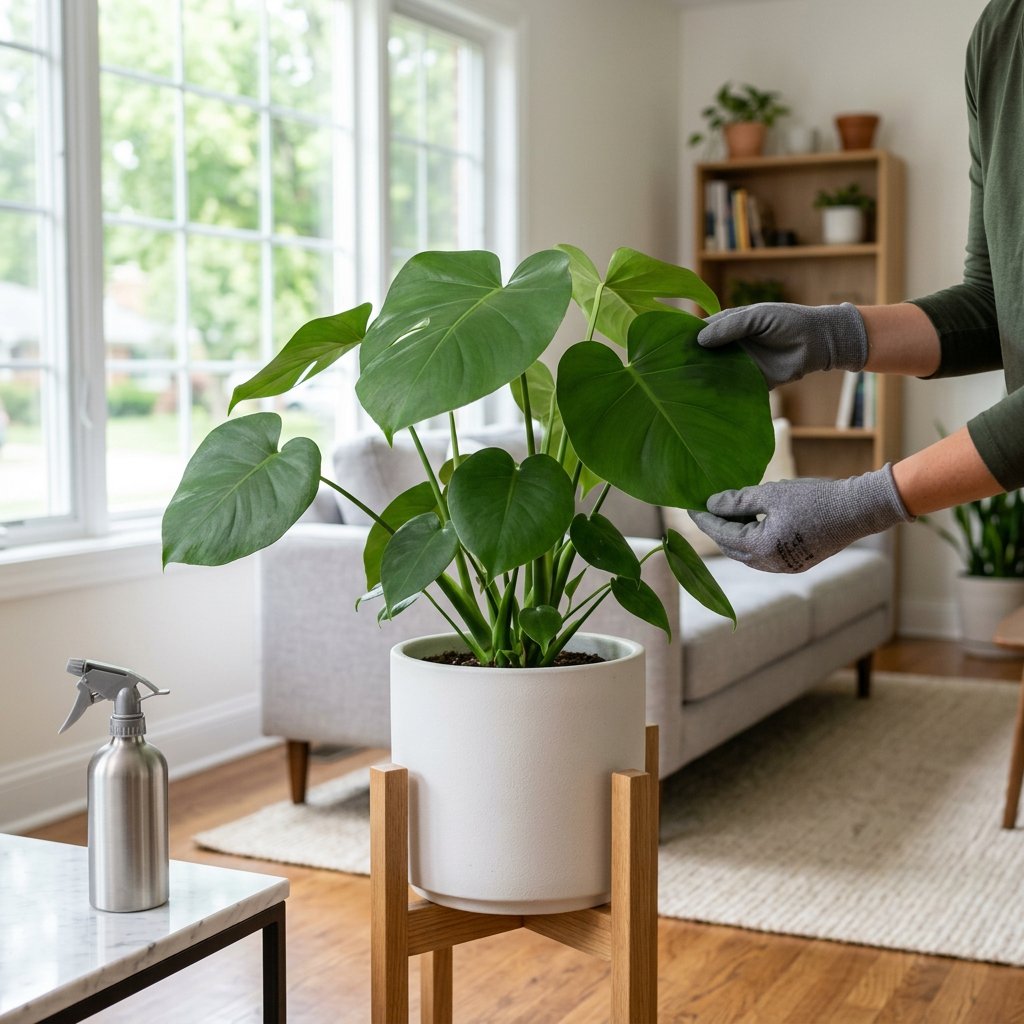
The symptoms are quite straightforward: your Monstera is actively growing, but the new leaves are emerging as solid, heart-shaped canvases without any holes or deep cuts along the edges.
It is incredibly important to remember that a lack of fenestration is not a disease. It doesn't mean your plant is dying or actively declining. It is simply a reflection of your plant’s current life stage or its environmental conditions. Your Monstera is just waiting for the right signals to level up!
The Causes: Why Are Your Monstera Leaves Solid?
To fix the issue, we first have to understand how Monsteras behave in their natural habitat—the floor of the tropical rainforest. Here are the main reasons your plant might be holding back:
- Age and Maturity: Baby Monstera plants do not have splits. In the wild, they start on the dark forest floor as solid-leaved vines. They only develop fenestrations as they mature and climb upward toward the canopy.
- Insufficient Light: This is the number one environmental cause. Fenestrations actually evolved to allow light to pass through upper leaves to reach the lower leaves, and to help the large leaves withstand heavy tropical rain and winds. If your plant is living in a dim corner, it won't expend the energy to create large, fenestrated leaves.
- Lack of Climbing Support: Monsteras are epiphytes—meaning they are plants that naturally grow on other plants or trees for physical support. If your Monstera is just trailing out of a pot, it thinks it's still crawling on the forest floor and will remain in its juvenile stage.
- Poor Nutrition: Making massive, complex leaves requires a lot of energy. A lack of essential nutrients in the soil can keep your plant's growth stunted.
The Solutions: How to Encourage Fenestration
Ready to see those splits? Follow these actionable steps to give your Monstera exactly what it needs to thrive.
Step 1: Be Patient with Your Plant Baby
If you recently brought home a small Monstera in a 4-inch or 6-inch pot, it might just be a toddler! Generally, a Monstera deliciosa needs to be around two to three years old before it starts producing fenestrated leaves. Continue giving it love, and the splits will come naturally with time.
Step 2: Optimize Your Lighting
If your plant is mature enough but still producing solid leaves, it needs more light. Move your plant closer to an east-facing or bright west-facing window. You want to provide bright, indirect light. Avoid placing it in harsh, direct midday sun, which can scorch the leaves. Conversely, too little light causes etiolation (when a plant stretches out weakly and looks "leggy" in search of sunlight).
Step 3: Give It a Leg Up (Literally)
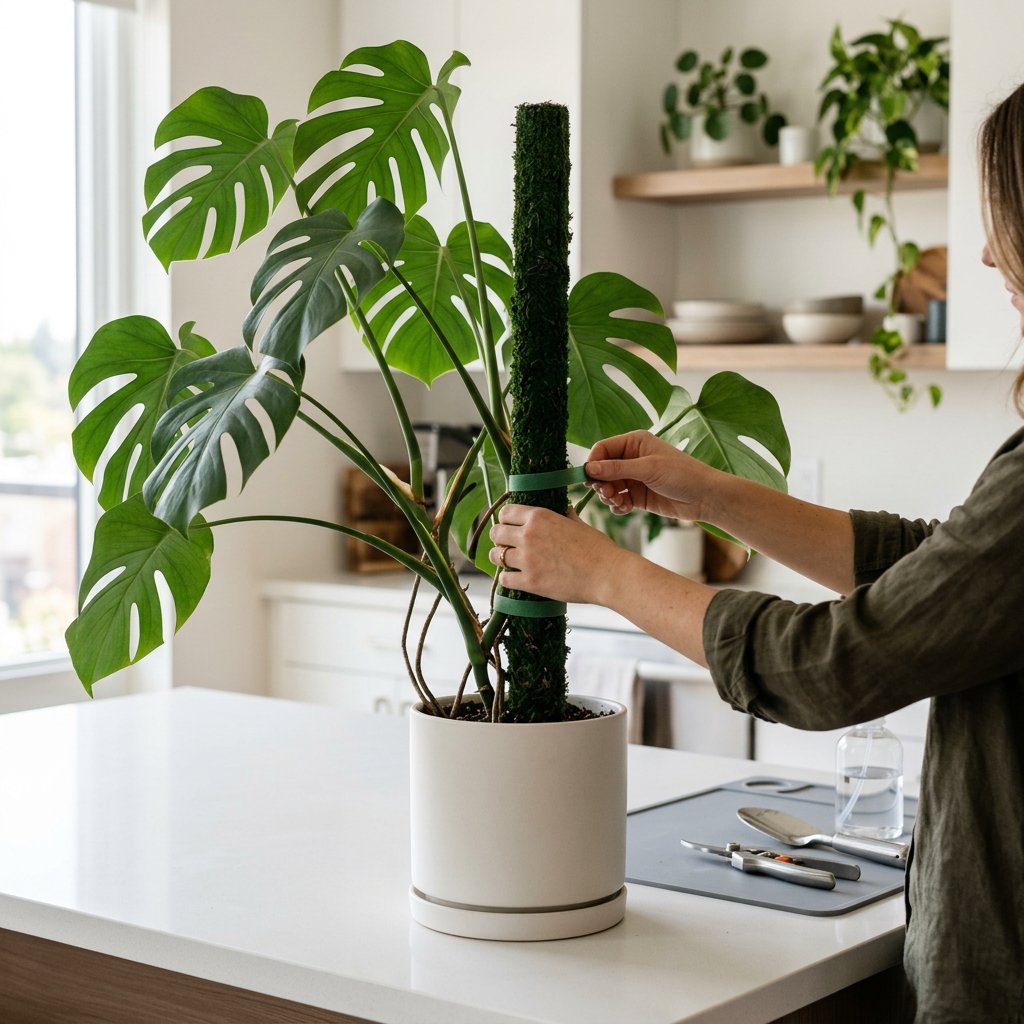
Because Monsteras are natural climbers, adding a support structure is a game-changer. Insert a moss pole, a coco coir pole, or a wooden trellis into the center of the pot. Gently tie the thick stems and aerial roots to the pole. This physical support mimics a tree trunk, tricking the plant into thinking it is climbing toward the forest canopy, which aggressively triggers mature, fenestrated growth.
Step 4: Establish a Consistent Care Routine
During the active growing seasons (spring and summer), feed your Monstera once a month with a balanced, water-soluble liquid houseplant fertilizer. Pair this with a proper watering schedule—water deeply when the top two inches of the soil feel dry to the touch.
Need help keeping track of all this? If you're struggling to remember when to water or fertilize, you can easily set up customized care reminders in the Plantiary app. Furthermore, if you suspect your Monstera's lack of growth is accompanied by worrying symptoms like yellowing leaves or dark brown spots, you can use the AI-powered plant disease scanner in the Plantiary app to get a reliable diagnosis in seconds!
Don't feel discouraged if your Monstera takes a little time to adapt. By increasing its light, giving it something to climb, and loving it through its juvenile phase, you will be rewarded with spectacular, tropical splits before you know it. You've got this!