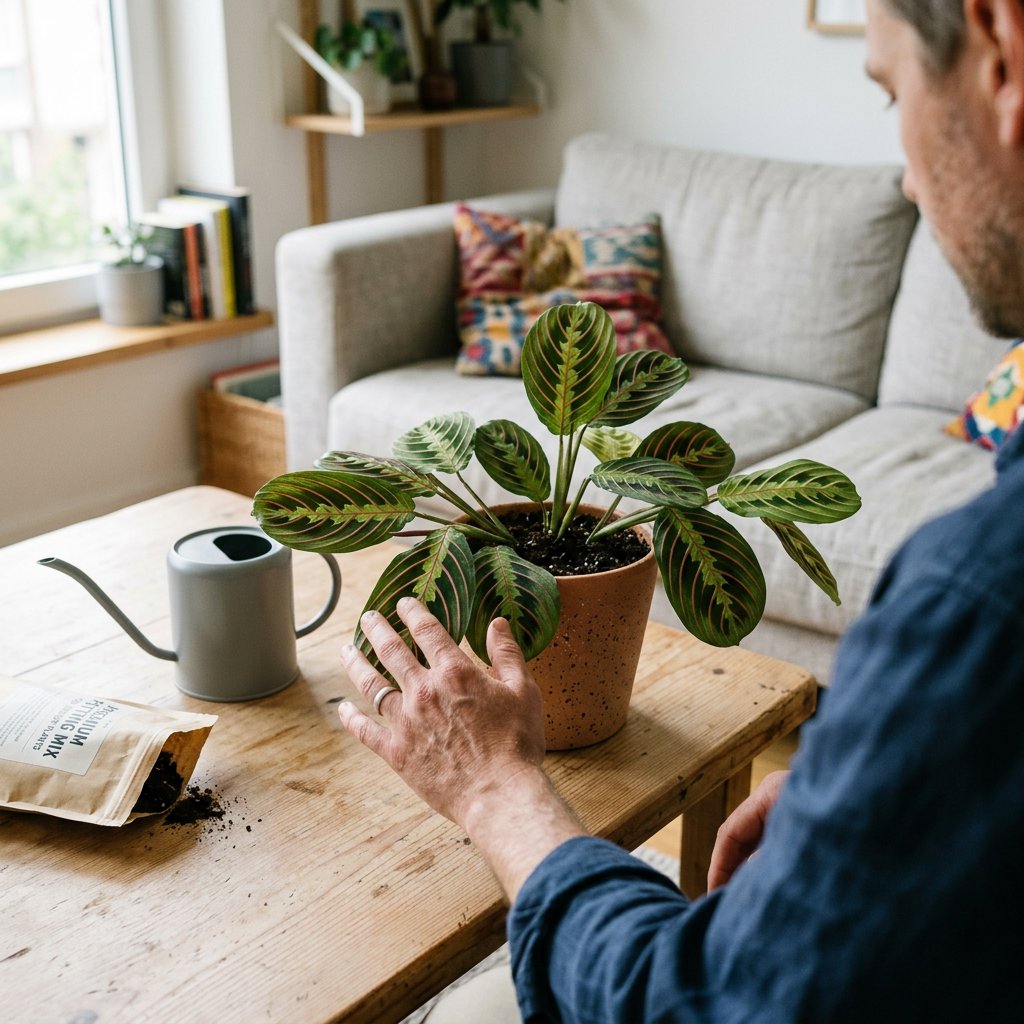
It is one of the most magical things about being a plant parent: watching your beautiful Prayer Plant (Maranta leuconeura) slowly fold its leaves upward as the sun goes down, as if hands folding in an evening prayer. But what happens when night falls and those gorgeous, patterned leaves just stay flat? If you are staring at your plant wondering what went wrong, take a deep breath. You are not a bad plant parent, and your plant is not necessarily doomed! Plants have their own unique ways of communicating stress, and a lack of movement is simply your Maranta's way of asking for a little extra help.
Let's dive into why your Prayer Plant has stopped its evening routine and how you can gently guide it back to its happy, praying self.
The Problem: Understanding Your Plant's "Praying" Habit
To understand why your plant is protesting, it helps to know why it moves in the first place. This fascinating daily rhythm is a botanical phenomenon called nyctinasty (pronounced nik-tuh-nas-tee). Simply put, nyctinasty is a plant's natural response to the cycle of light and dark.
Right at the base of every leaf is a tiny, joint-like structure that acts like a hinge. When the plant is perfectly healthy and its environment is balanced, changes in water pressure inside this "hinge" cause the leaves to raise at night and lower during the day. When your Prayer Plant stops praying, it usually means that an environmental stressor is interrupting this delicate internal clock.
The Causes: Why Is Your Prayer Plant Staying Flat?
If your Maranta is refusing to fold its leaves, the issue almost always boils down to a disruption in its care routine or environment. Here are the most common culprits:
- Improper Lighting: Prayer plants thrive on bright, indirect light. If they receive too much harsh, direct sunlight, their leaves can become washed out or scorched, and they will stay flat to protect themselves. Conversely, if they are placed in a dark corner, they lose the strong day-to-night contrast needed to trigger their nyctinastic movement.
- Moisture Stress: These plants are famously dramatic about their soil moisture. Underwatering deprives the plant of the internal water pressure required to move its leaves. On the flip side, overwatering can suffocate the roots, leading to root rot and an inability to absorb water at all.
- Low Humidity: Marantas are tropical understory plants, meaning they are used to the muggy, humid air of the jungle. If the air in your home is too dry, the leaves will often curl at the edges, develop crisp brown tips, and lose their ability to move freely.
- Temperature Shock: Sudden drafts from air conditioners, open winter windows, or heating vents can shock your plant's system, causing it to freeze up and stop moving.
The Solutions: How to Get Your Plant Praying Again
Don't worry—most Prayer Plants bounce back beautifully once their basic needs are met! Follow these step-by-step instructions to get your plant's internal clock ticking again.
Step 1: Adjust the Lighting
Assess where your plant is living. Move it to a spot where it receives plenty of bright, indirect light. A few feet away from an east-facing or north-facing window is usually the sweet spot. If your only option is a bright south-facing window, use a sheer curtain to filter the harsh rays.
Step 2: Perfect Your Watering Routine
Prayer plants like their soil to feel like a wrung-out sponge—consistently moist, but never soaking wet.
- Poke your finger about an inch into the topsoil. If it feels completely dry, it is time to water.
- Water the plant thoroughly until moisture drains out of the bottom of the pot.
- Empty the saucer underneath immediately so the roots do not sit in stagnant water.
Step 3: Boost the Humidity
If the edges of your plant's leaves are crispy, low humidity is likely the thief stealing your plant's prayers.
- Place a small humidifier near your plant to provide a consistent stream of moisture.
- Alternatively, create a pebble tray: fill a shallow dish with pebbles and water, and place the plant pot on top (ensuring the bottom of the pot isn't touching the water).
- Grouping your houseplants together can also create a naturally humid microclimate!
Step 4: Keep Temperatures Cozy and Stable
Ensure your Prayer Plant is in a room that stays between 65°F and 80°F (18°C - 27°C). Walk around your plant and check for drafts. If it is sitting directly in the line of an AC vent, a drafty door, or a radiator, relocate it to a calmer, more stable environment.
If you have adjusted its environment and your plant still looks sick, droopy, or has strange spots on its leaves, you don't have to guess what's wrong! You can use the AI-powered plant disease scanner in the Plantiary app to get an instant diagnosis and a customized treatment plan.
Remember, houseplant care is a journey of learning and adjusting. By providing the right balance of light, moisture, and humidity, your Prayer Plant will soon be raising its leaves to greet the evening once again! Keep up the great work, and happy planting!