You bought a gorgeous Peace Lily adorned with elegant, white, sail-like blooms, but months later, it has become just a pot of green leaves. If you are staring at your plant wondering why it refuses to flower, take a deep breath! You are definitely not alone. It is incredibly common for indoor plants to take a blooming hiatus, and it rarely means you are a bad plant parent. Sometimes, they just need a gentle change in their environment to get back into their flowering groove. Whether you are a seasoned indoor gardener or just starting your journey with the Plantiary app by your side, we are here to help you solve the mystery of the missing blooms.
The Problem: All Leaves, No Flowers
The primary symptom is straightforward: your Peace Lily (Spathiphyllum) is pushing out plenty of lush, green foliage, but the striking white blooms are nowhere to be found.
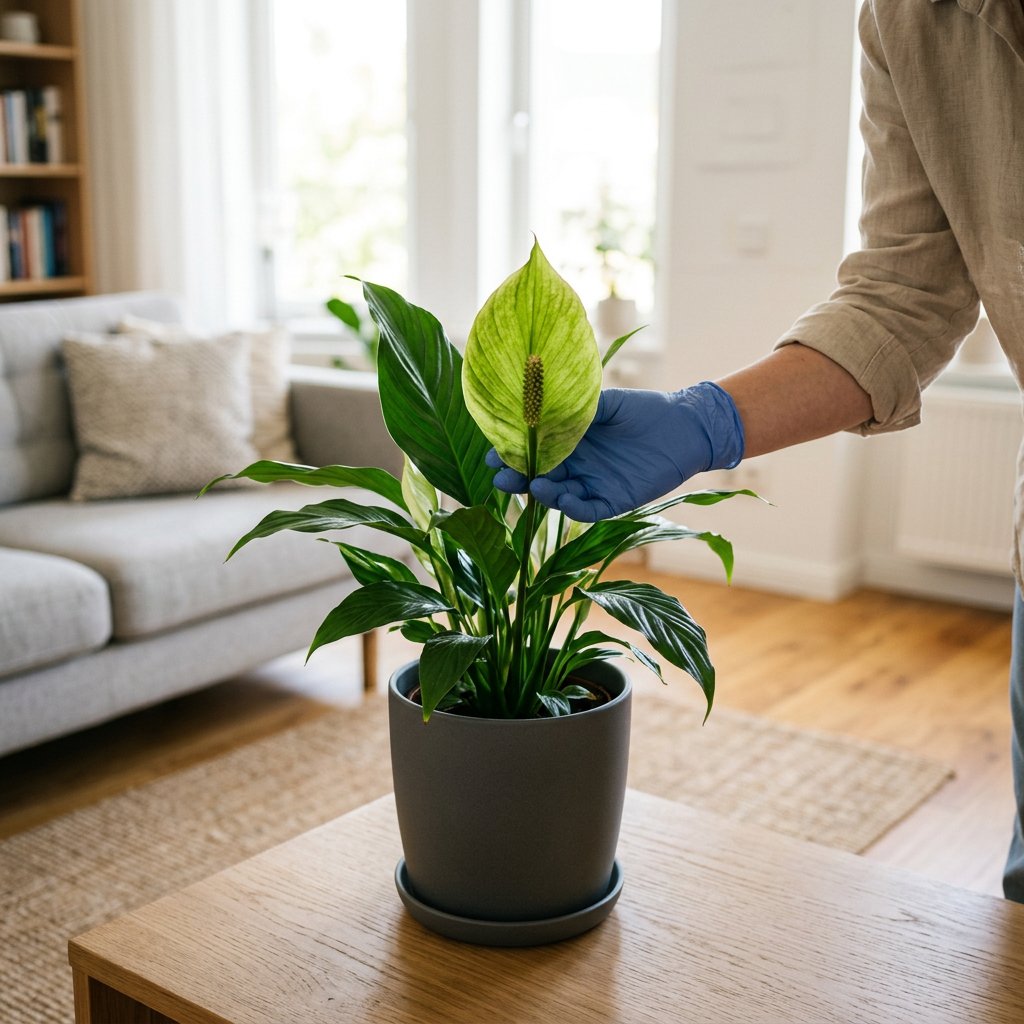
To understand the problem, it helps to know a little botanical secret. The beautiful white "petal" of a Peace Lily isn't actually a flower at all! It is a modified leaf called a spathe, which serves to protect the spadix—the spiky, textured stalk in the center that holds the plant's true, microscopic flowers. When a Peace Lily refuses to bloom, it means the plant is prioritizing basic survival and leaf growth over the energy-intensive process of producing those beautiful spathes.
The Causes: Why Is Your Peace Lily Striking?
When a plant stops blooming, it is simply trying to tell us that something in its environment isn't quite right. Here are the most common reasons your Peace Lily is withholding its flowers:
- Insufficient Light: Peace Lilies are heavily marketed as "low-light" plants. While they will certainly survive in a dark corner, they will not thrive. Low light means low energy, and creating blooms requires a massive amount of solar energy.
- Nutrient Imbalance: If you are feeding your plant a fertilizer that is heavily skewed toward nitrogen, you are encouraging the plant to grow foliage. Too much nitrogen suppresses the production of flowers, which relies on phosphorus.
- Watering Stress: Peace Lilies are famous for their dramatic fainting spells when they are thirsty. However, chronic underwatering or overwatering forces the plant into survival mode.
- Age and Root Space: If your plant is very young, it simply might not be mature enough to flower. Conversely, if your plant is severely root-bound (meaning the roots have completely run out of room and are tightly coiled inside the pot), the resulting stress can halt bloom production.
- Temperature Fluctuations: Peace Lilies are tropical plants. Cold drafts from AC units or drafty windows can shock them out of their blooming cycle.
The Solutions: Step-by-Step Treatment for Beautiful Blooms
Ready to coax those beautiful white spathes back to life? Follow these simple, actionable steps to encourage your Peace Lily to bloom again.
Step 1: Upgrade Their Lighting Move your Peace Lily to a spot that receives bright, indirect sunlight. A few feet away from an east-facing or north-facing window is usually perfect. You want the plant to see the sky, but you don't want the sun's harsh rays touching the leaves directly, as this can cause sunburn.
Step 2: Adjust Your Fertilizer Routine During the active growing seasons (spring and summer), switch to a blooming fertilizer. Look for a well-balanced liquid fertilizer, or one where the middle number on the N-P-K ratio (Phosphorus) is slightly higher. Dilute it to half-strength and feed your plant every 4 to 6 weeks.
Step 3: Master the Watering Schedule Consistency is key. Water your Peace Lily when the top inch of the soil feels dry to the touch. Ensure your pot has drainage holes so the roots aren't sitting in stagnant water. If you struggle to remember when to water, you can easily set up smart watering reminders using the Plantiary app so your plant stays perfectly hydrated without the guesswork!
Step 4: Check the Temperature and Humidity Keep your plant in a cozy environment between 65°F and 85°F (18°C - 29°C). Since they originate from tropical rainforests, they also appreciate a boost in humidity. Grouping plants together or placing a humidifier nearby will mimic their natural habitat and encourage flowering.
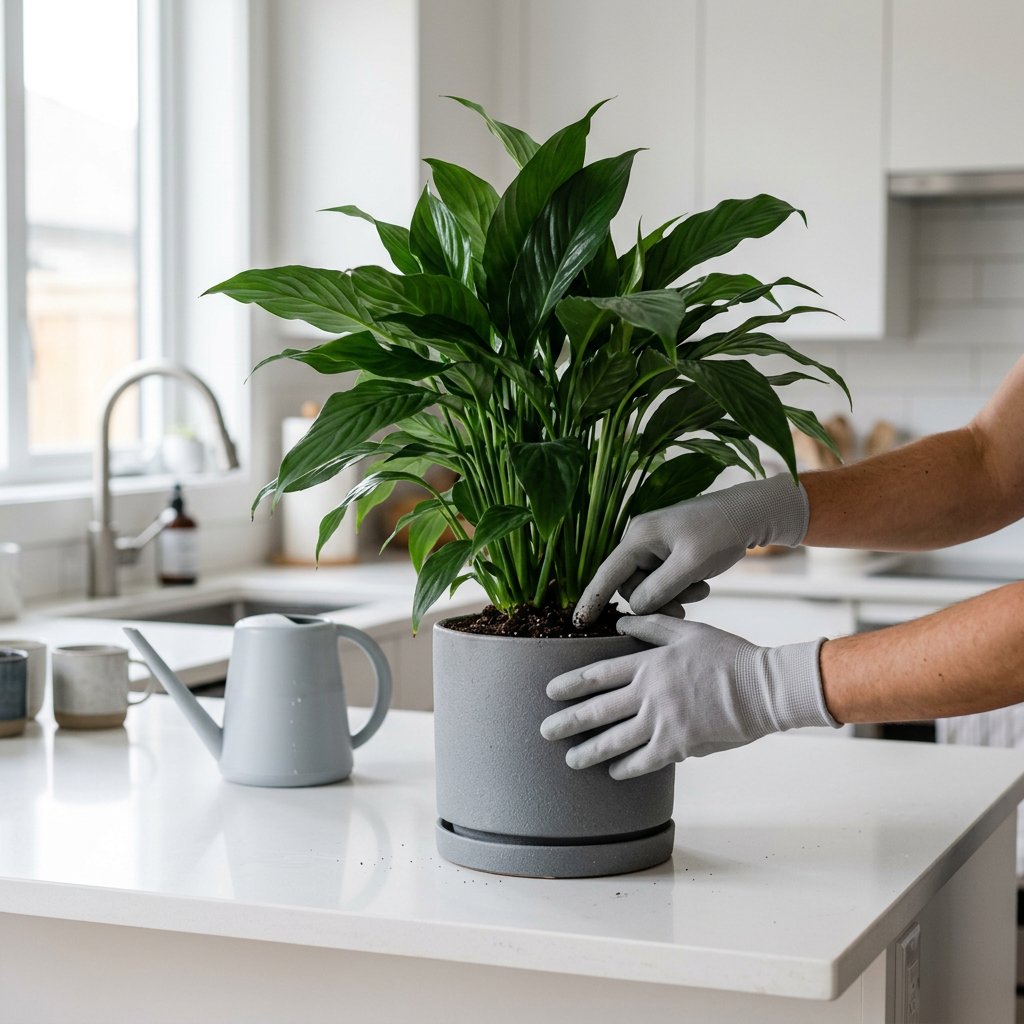
Step 5: Inspect the Roots If it has been a few years since you last repotted your plant, gently pull it out of its nursery pot. If it is a solid mass of roots with very little soil left, it's time to upgrade! Move it to a pot that is just one to two inches wider in diameter. Note: Peace Lilies actually like to be slightly snug in their pots to bloom, so don't put them in a massive container!
Patience is your best tool here. Once you correct these environmental factors, it may take a few weeks or even months for your plant to reward you with new blooms. If you are ever unsure whether your Peace Lily is suffering from a pest issue, a nutrient deficiency, or just stubbornness, you can use the AI-powered plant disease scanner in the Plantiary app to get a diagnosis in seconds! Keep up the great work, and happy growing!