Peace Lilies (Spathiphyllum) are beloved for their elegant white blooms and lush, forgiving green foliage. But let's be honest, those wide, gorgeous leaves are absolute magnets for trouble. If you have recently noticed a dull, grayish layer on your plant, or worse, strange white cotton-like tufts hiding in the crevices, take a deep breath and don't panic! It happens to the very best of plant parents.
Indoor environments create the perfect storm for two common Peace Lily invaders: everyday dust and sneaky mealybugs. If you are ever unsure what exactly is attacking your indoor jungle, you can use the AI-powered plant disease scanner in the Plantiary app to get a highly accurate diagnosis in seconds. For now, let's dive into identifying these issues and look at how to get your Peace Lily healthy, glossy, and thriving again.
The Problem: Is it Dust, Mealybugs, or Both?
It is incredibly easy to confuse a dusty leaf with a pest infestation. Because dust reduces plant vitality, it often invites pests right in, meaning you might be dealing with both at the same time. Here are the symptoms to look out for:
- A dull, grayish film: This is typical household dust. While it seems harmless, a thick layer of dust blocks sunlight, preventing your plant from photosynthesizing effectively.
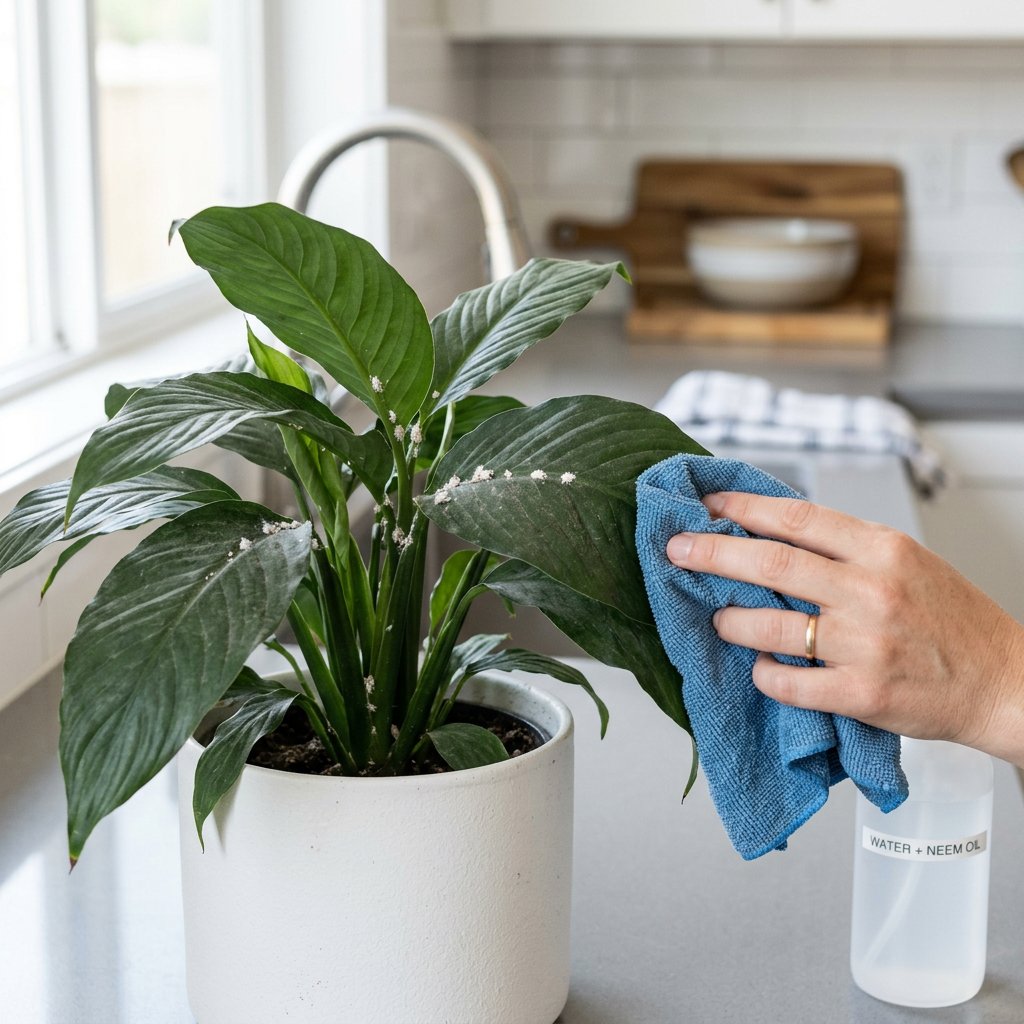
- White, cottony masses: If you see fluffy, sticky white webbing concentrated where the stems meet the leaves or hidden under the foliage, you have mealybugs.
- Sticky residue: Mealybugs are sap-sucking insects that secrete a sweet, sticky substance called honeydew. If left untreated, honeydew can lead to black sooty mold.
- Yellowing leaves: As mealybugs drain the plant's sap, the leaves will likely experience chlorosis (a botanical term for the yellowing of healthy green tissue due to a lack of chlorophyll).
The Causes: Why Your Peace Lily?
If your plant is struggling, you might be wondering what you did wrong. The answer is absolutely nothing! Houseplants are simply adapting to an unnatural indoor environment.
- Broad leaves act as dust catchers: The Peace Lily's large, flat surface area naturally collects airborne particles floating around your home.
- Dry indoor air: Mealybugs thrive in warm, dry environments. Central heating or air conditioning can drastically lower indoor humidity, creating a perfect breeding ground for these pests.
- Cozy hiding spots: The tight crevices where Peace Lily stems emerge from the base provide excellent, protected homes for mealybugs to multiply completely unnoticed.
The Solutions: Step-by-Step Treatment for Dust and Pests
Ready to rescue your plant? Grab some basic supplies and follow these scientifically proven steps. Please avoid traditional, unverified DIY home remedies—like rubbing mayonnaise or pantry oils on the leaves—as these will clog the plant's pores and cause more harm than good!
Step 1: Isolate your Peace Lily As soon as you spot mealybugs, move your Peace Lily away from your other houseplants. Mealybugs are notorious for crawling over to neighboring pots.
Step 2: Give it a lukewarm shower Take your plant to the bathroom or sink. Using lukewarm water and a gentle spray, thoroughly rinse the foliage. This will immediately wash away the layer of dust and physically dislodge a large portion of the mealybugs.
Step 3: Spot-treat the pests Once the leaves are dry, inspect the tight crevices. Dip a cotton swab into 70% isopropyl rubbing alcohol and dab it directly onto any remaining mealybugs or white fluff. The alcohol breaks down their protective waxy coating and eliminates them instantly.
Step 4: Apply insecticidal soap or Neem oil To prevent the surviving microscopic eggs from hatching, treat the foliage with a commercially formulated insecticidal soap or a diluted neem oil spray. Neem oil is a safe, natural, and highly effective horticultural treatment. Spray the tops and bottoms of the leaves, as well as the stems, and wipe them gently with a soft microfiber cloth.
Step 5: Maintain routine cleaning Going forward, gently wipe your Peace Lily's leaves with a damp cloth every two weeks. This keeps the dust at bay, maximizes the light the plant can absorb, and gives you a chance to inspect for early signs of pests.
You've Got This!
Dealing with dust and pests is just a normal, temporary bump in the plant parenthood journey. With a little patience and some gentle cleaning, your Peace Lily will be pushing out brilliant white blooms again before you know it.
Want to stay one step ahead of plant problems? Download the Plantiary app to set up custom watering schedules and leaf-cleaning reminders, ensuring your indoor jungle stays happy, healthy, and bug-free all year round!