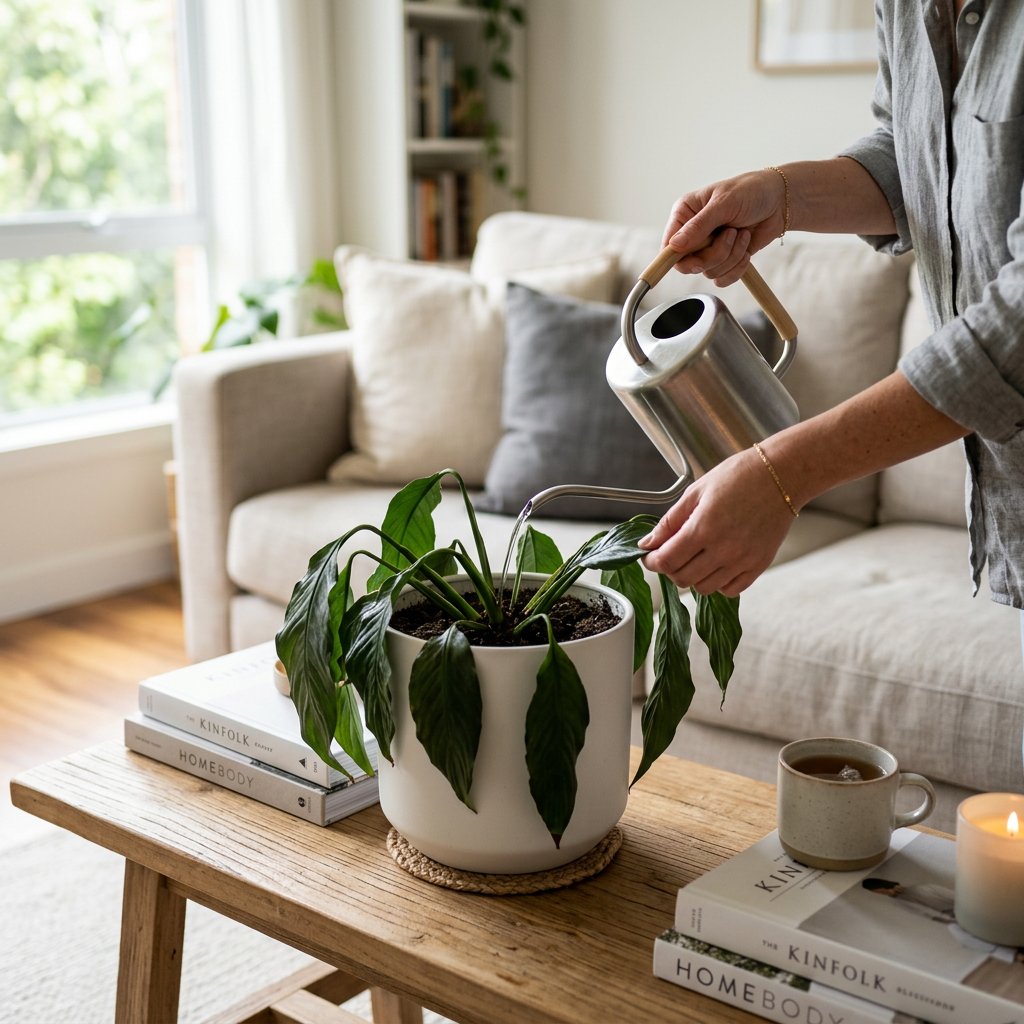
Have you ever noticed your beautiful Peace Lily drooping dramatically, even when you feel like you’re doing everything right? Please don't worry, and definitely don't be hard on yourself! Every plant parent has been there. Peace Lilies (Spathiphyllum) are famously expressive plants, often performing a theatrical "faint" when they are thirsty. However, if your watering routine is consistent but your leafy friend still looks unhappy, the secret culprit might be hiding right beneath the surface.
A plant is only as healthy as its roots, and roots rely entirely on their environment. Let's dig into why your potting medium matters and learn how to create the absolute best soil mix for your Peace Lily.
The Problem: Signs Your Peace Lily is in the Wrong Soil
If your Peace Lily is struggling with an improper soil mix, it will quickly let you know. Keep an eye out for these common symptoms:
- Yellowing Leaves (Chlorosis): Chlorosis is a condition where leaves lose their green pigment. While it can be a sign of aging, widespread yellowing often means the roots are suffocating in dense soil and cannot absorb nutrients.
- Constant Drooping: If your plant remains wilted even after you've watered it, the soil might be compacted, causing water to run straight down the sides of the pot without ever reaching the roots.
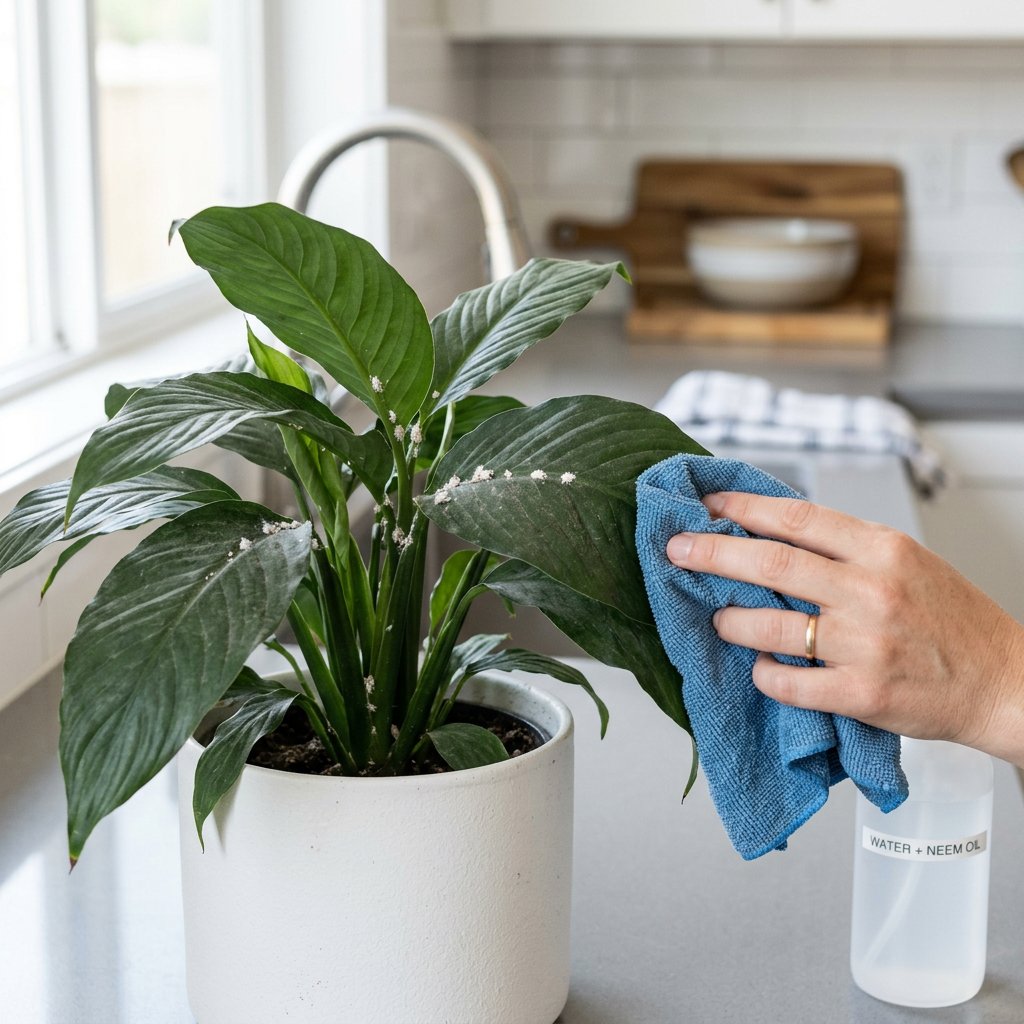
- Fungus Gnats: These tiny black bugs love to lay their eggs in overly wet, dense, and decaying soil.
- A Musty Odor: A swampy smell coming from the pot is a classic indicator of root rot, a fungal disease caused by waterlogged soil.
The Causes: Why Standard Potting Soil Fails Peace Lilies
You might be wondering, "Why can't I just use a regular bag of indoor potting soil?" The truth is, standard potting soils are often formulated to hold onto a lot of water.
In their natural habitat, Peace Lilies grow on the floor of tropical rainforests. They are used to a rich, chunky layer of decaying leaves and bark that stays consistently moist but drains incredibly fast. When we place them in dense, heavy peat-based commercial soils, the roots are deprived of oxygen. This lack of airflow can lead to edema—a condition where roots take up water faster than the leaves can process it, causing cell damage—or worse, total root suffocation and rot.
To keep your Peace Lily thriving, we need to recreate that airy, well-draining rainforest floor right in your living room.
The Solutions: Crafting the Perfect Peace Lily Soil Mix
The golden rule for Peace Lily soil is a balance between moisture retention and excellent drainage. You want a mix that acts like a sponge: absorbing what it needs and letting the excess flow away immediately.
The Ultimate Soil Recipe
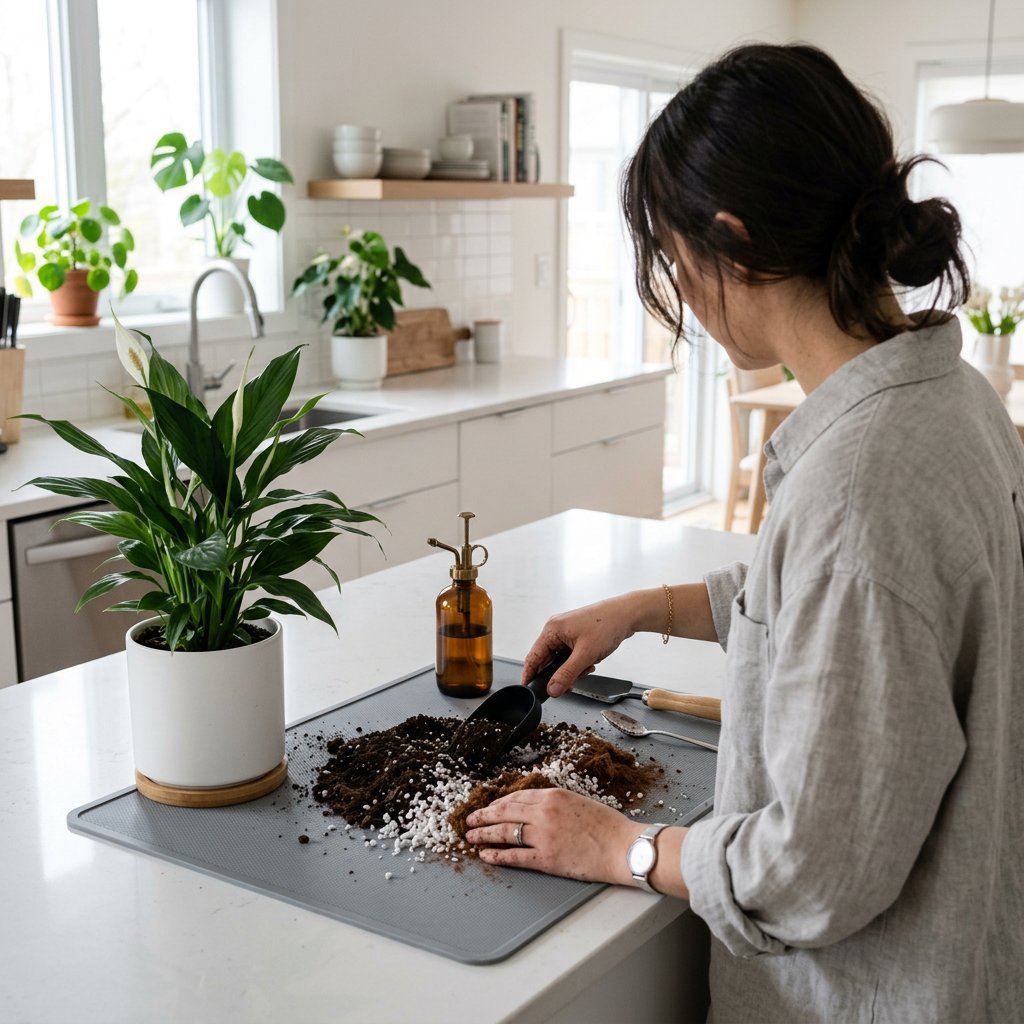
Mix these scientifically proven ingredients together in a large container:
- 40% Coco Coir or Peat Moss: This forms the moisture-retaining base of your mix.
- 30% Perlite or Pumice: These are lightweight volcanic rocks that create essential air pockets in the soil, ensuring oxygen reaches the roots.
- 20% Orchid Bark: Chunky bark pieces break up the soil, mimicking the forest floor and preventing the mix from compacting over time.
- 10% Worm Castings: A gentle, organic fertilizer that provides a slow release of essential nutrients without burning the sensitive roots.
Step-by-Step Repotting Guide
Ready to give your plant a fresh start? Follow these simple steps:
- Prep and Unpot: Gently squeeze the sides of your current pot to loosen the old soil. Carefully slide the Peace Lily out, supporting the base of the stems.
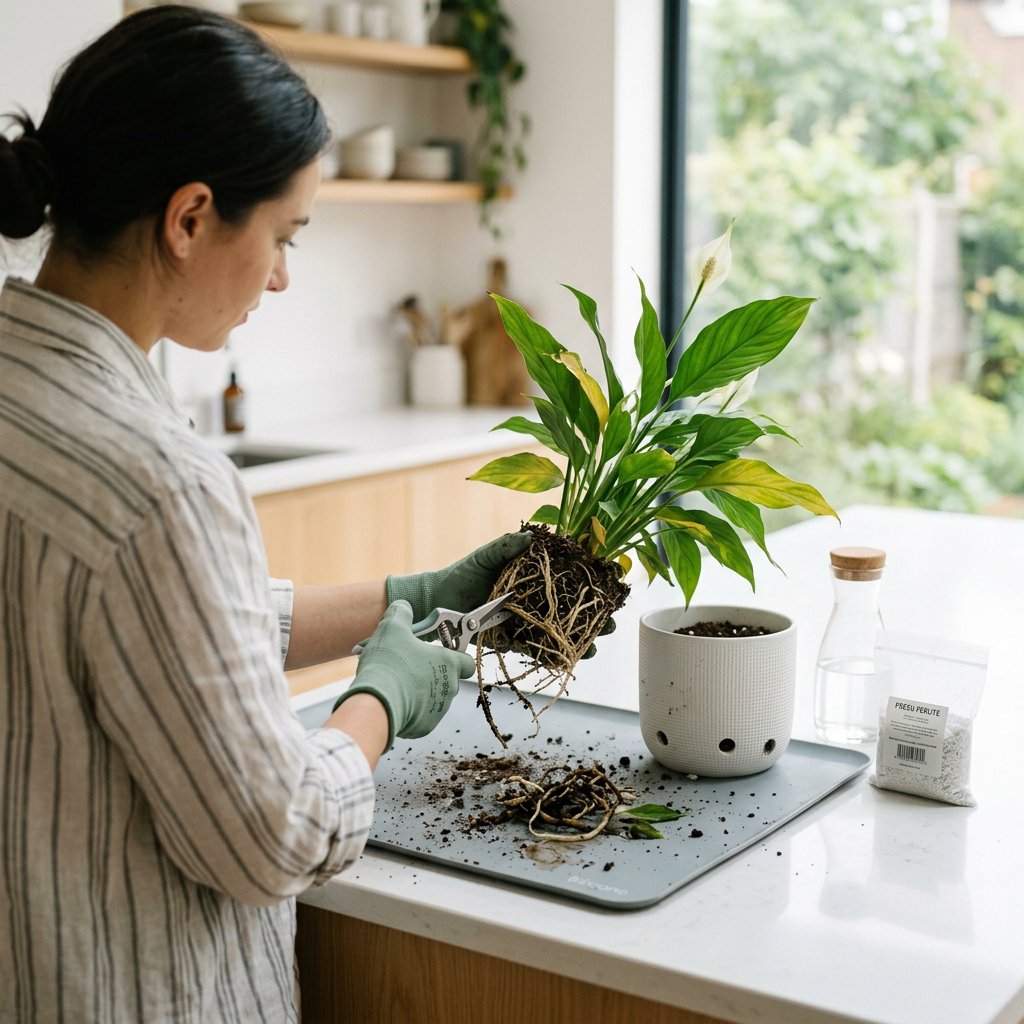
- Inspect the Roots: Massage the old soil away from the root ball. Healthy roots should be firm and light-colored. If you spot mushy, dark brown, or slimy roots, you might be dealing with root rot. If you are unsure what is wrong with your plant's roots or leaves, you can use the AI-powered plant disease scanner in the Plantiary app to get a diagnosis and treatment plan in seconds.
- Prune: Using sterilized scissors, carefully snip away any dead or rotting roots to prevent disease from spreading into your fresh soil.
- Pot with the New Mix: Fill the bottom third of a pot (ensure it has drainage holes!) with your new, chunky soil mix. Place the plant in the center and gently backfill the remaining space. Do not pack the soil down too tightly; keep it light and airy.
- Water and Monitor: Give your newly potted Peace Lily a thorough watering until excess water flows out of the drainage holes.
Repotting can be a little stressful for plants, so if your Peace Lily droops for a few days afterward, give it some grace while it acclimates. To make sure you never miss a watering day in its new, fast-draining soil, don't forget to set up a customized care schedule in your Plantiary app. You've got this, and your plant will soon be pushing out gorgeous, glossy green leaves to thank you!