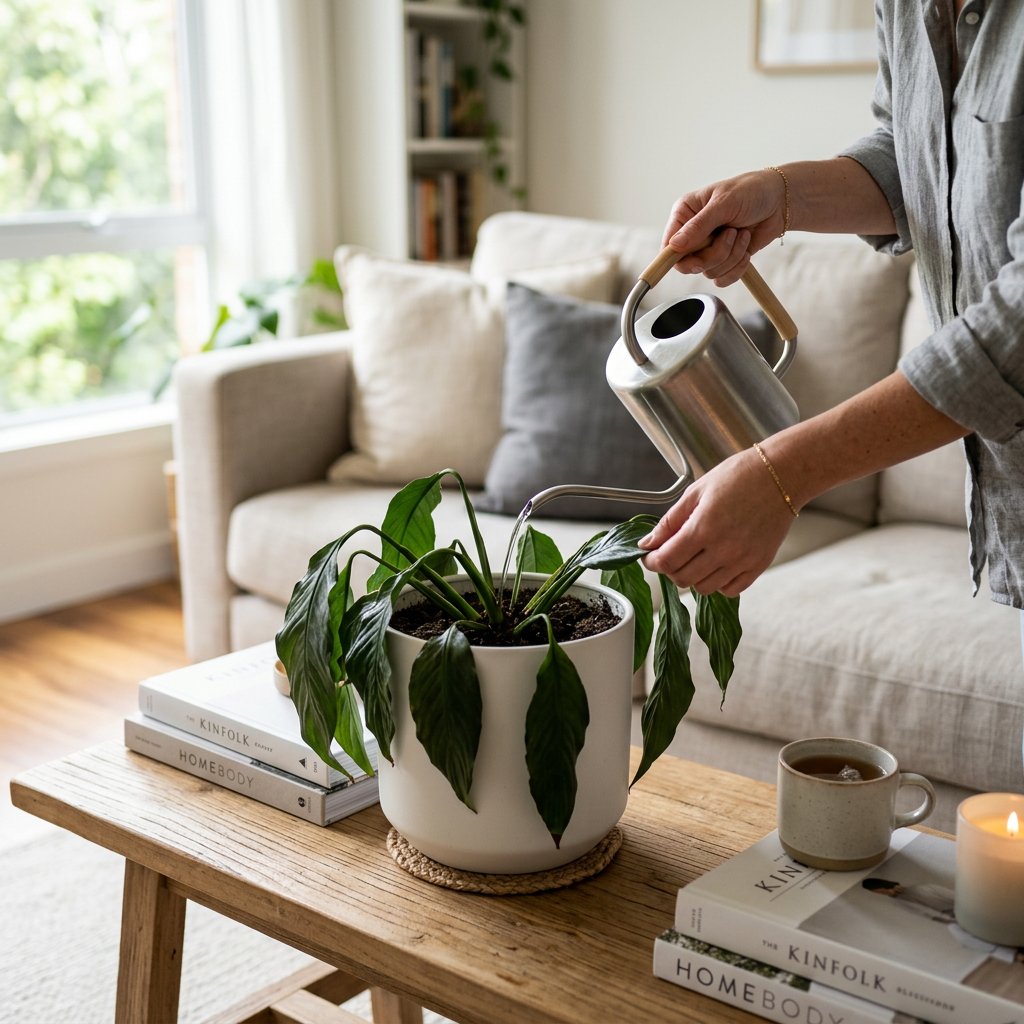
If you have ever walked into your living room to find your once-perky Peace Lily flattened against the sides of its pot, looking completely lifeless, take a deep breath. You are not a bad plant parent! Peace Lilies (Spathiphyllum) are notoriously dramatic. They are the absolute queens of throwing tantrums when their needs are not met, but the good news is that they are incredibly resilient. With a little bit of detective work and some TLC, you can have your leafy friend standing tall again in no time.
If you frequently struggle to figure out exactly what your plants are trying to tell you, the Plantiary app is your best companion. From setting smart watering reminders to tracking your plant's growth, it takes the guesswork out of being a plant parent.
Let’s dive into why your Peace Lily is throwing a fit and exactly how you can nurse it back to health.
The Problem: Recognizing the Symptoms
When a Peace Lily wilts, it rarely does so subtly. You will notice a few distinct signs:
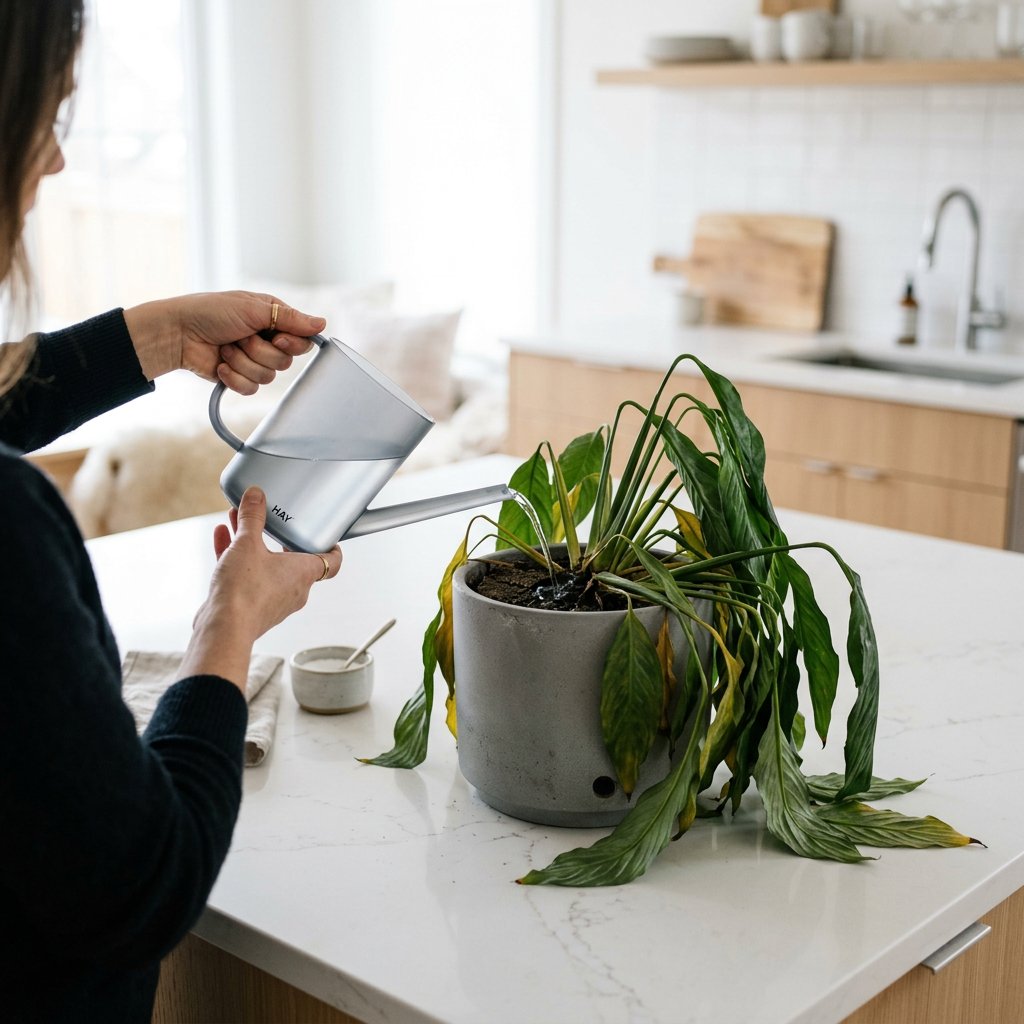
- Severe drooping: The leaves will look soft, limp, and may completely fold over the edge of the planter.
- Loss of stiffness: The stems will lack their usual strength. This happens due to a loss of turgor pressure—the internal water pressure that keeps plant cells rigid and upright.
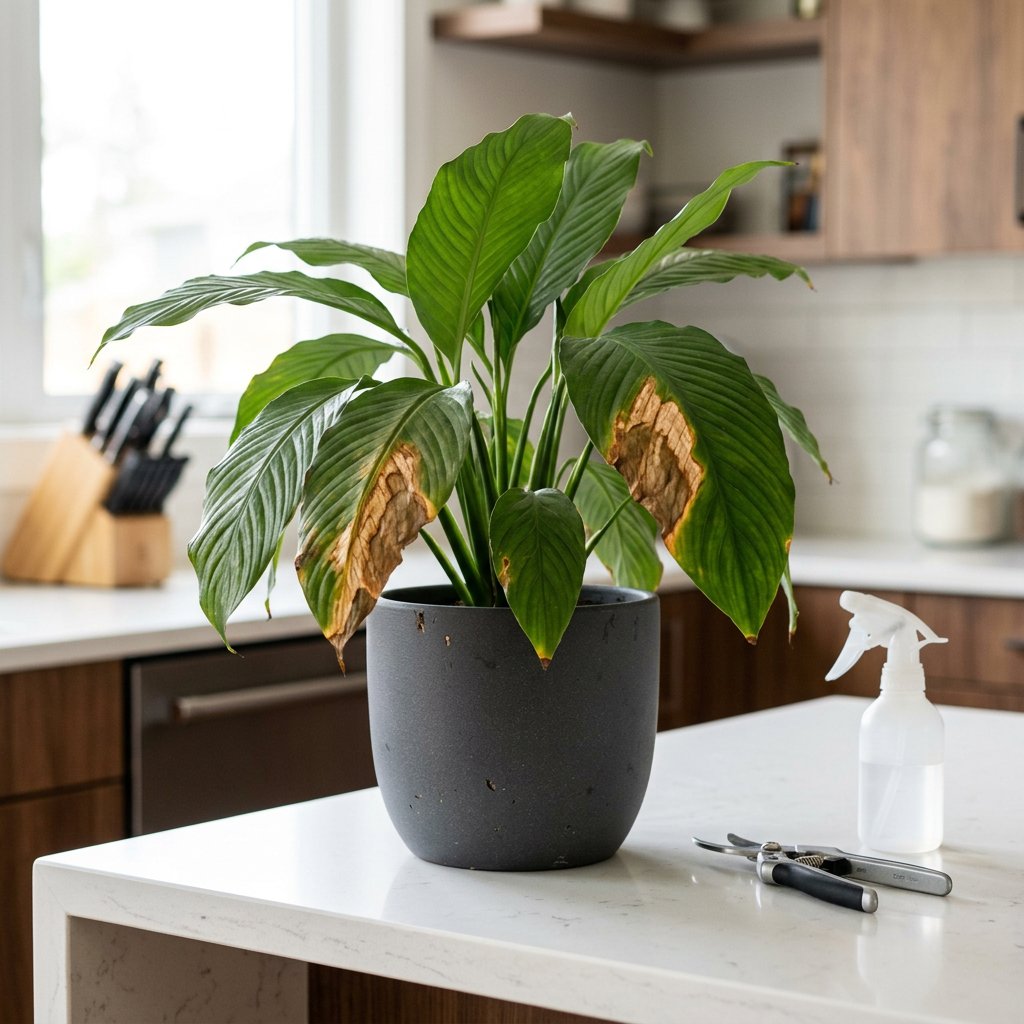
- Crispy or yellowing tips: Occasionally, the dramatic wilt is accompanied by brown, dry edges or a sudden yellowing of the lower foliage.
The Causes: Why is Your Peace Lily Drooping?
To fix the problem, we first need to understand what triggered the wilt. Here are the most common culprits:
- Underwatering: This is by far the most common reason. Peace Lilies are moisture lovers, and when they run out of water, their turgor pressure drops rapidly, resulting in the famous "faint."
- Overwatering and Root Rot: Ironically, too much water causes the exact same drooping symptom. If the soil stays soggy, the roots suffocate and succumb to root rot—a fungal condition that destroys the root system, preventing the plant from drinking up water.
- Temperature Stress: Peace Lilies are tropical plants. A sudden draft from an AC unit, a cold window, or a nearby heater can shock the plant into wilting.
- Rootbound: If your plant has been in the same pot for years, it may have more roots than soil. This means water runs straight through the pot without actually absorbing, leaving the plant perpetually thirsty.
The Solutions: Step-by-Step Treatment
Ready to play plant doctor? Follow these actionable steps to revive your wilting Peace Lily.
Step 1: Check the Soil
Before you do anything, stick your finger about two inches into the soil. Is it bone dry and pulling away from the sides of the pot? Your plant is severely underwatered. Is it heavy, muddy, and smelling slightly sour? You are likely dealing with overwatering. Pro Tip: If you are still unsure what is wrong with your plant, you can use the AI-powered plant disease scanner in the Plantiary app to get a fast, accurate diagnosis in seconds.
Step 2: The "Bottom Watering" Rescue (For Dry Soil)
If underwatering is the culprit, pouring water over the top of excessively dry soil won't work, as the water will just slide down the sides. Instead, we need to rehydrate the soil from the bottom up.
- Fill a sink or basin with a few inches of room-temperature water.
- Place the nursery pot (make sure it has drainage holes!) directly into the water.
- Let it sit for 30 to 45 minutes to soak up moisture like a sponge.
- Remove the pot and let the excess water drain completely before putting it back in its decorative planter. You should see the leaves perk up within just a few hours!
Step 3: The Root Inspection (For Soggy Soil)
If the soil is wet but the plant is wilting, you must act quickly to save it from root rot.
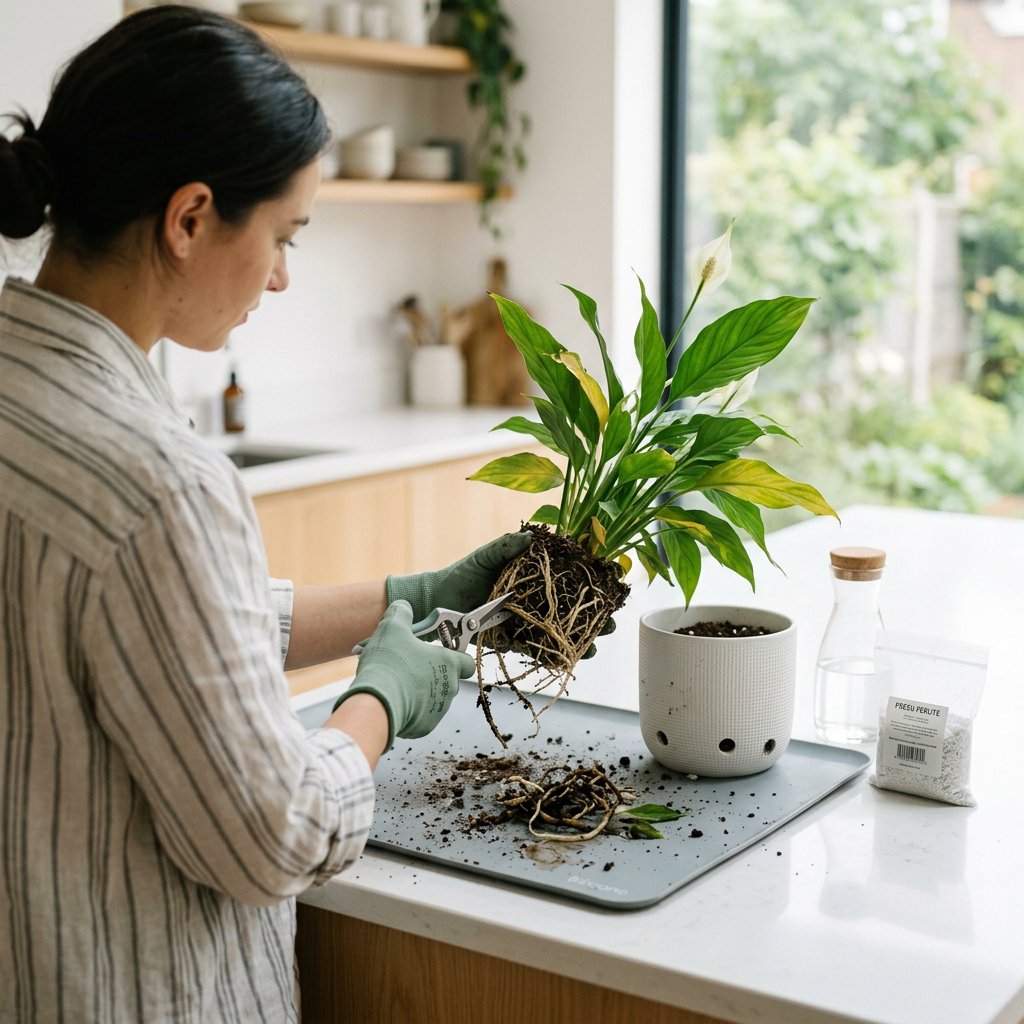
- Gently slide the plant out of its pot and inspect the roots. Healthy roots are firm and light-colored; rotting roots are dark, mushy, and smell bad.
- Using sterile scissors, snip away any mushy, rotten roots.
- Repot the Peace Lily in a fresh, well-draining potting mix (a standard houseplant mix amended with a handful of perlite works beautifully).
- Hold off on watering for a few days to let the roots heal.
Step 4: Adjust the Environment
If the soil feels perfectly moist but the plant is still unhappy, evaluate its location. Move your Peace Lily away from drafty doors, frosty windows, or direct blasts from heating and cooling vents. They thrive in bright, indirect light and stable, warm temperatures.
Step 5: Prune the Casualties
Once your plant has recovered and is standing tall again, you might notice a few leaves that turned completely yellow or crispy during the ordeal. Simply take a clean pair of shears and snip these dead leaves off at the base of the stem. This redirects the plant's energy away from dying foliage and toward pushing out fresh, healthy new growth.
Seeing your favorite plant wilt can be stressful, but remember that nature is highly adaptable. By listening to what your Peace Lily is telling you and adjusting your care routine, you will have a thriving, lush, and beautiful indoor jungle in no time!