Seeing brown, crispy patches or faded spots on your normally lush, dark green Peace Lily can be alarming. It is easy to panic and wonder if you have somehow failed as a plant parent, but take a deep breath! Plant issues happen to absolutely everyone, from beginners to seasoned botanists. A very common culprit for these sudden unsightly marks is simply too much sunlight.
If you suspect your leafy friend has caught too many rays, you are in the right place. However, if you are unsure what is wrong with your plant, you can always use the AI-powered plant disease scanner in the Plantiary app to get an accurate diagnosis in seconds.
Let’s dive into how to identify, understand, and treat sunburn on your Peace Lily so it can get back to thriving.
The Problem: Spotting Sunburn Symptoms
Unlike underwatering or pests, sunburn usually happens quite suddenly, often appearing within just a few days of exposure to intense light. Here is what you should look out for:
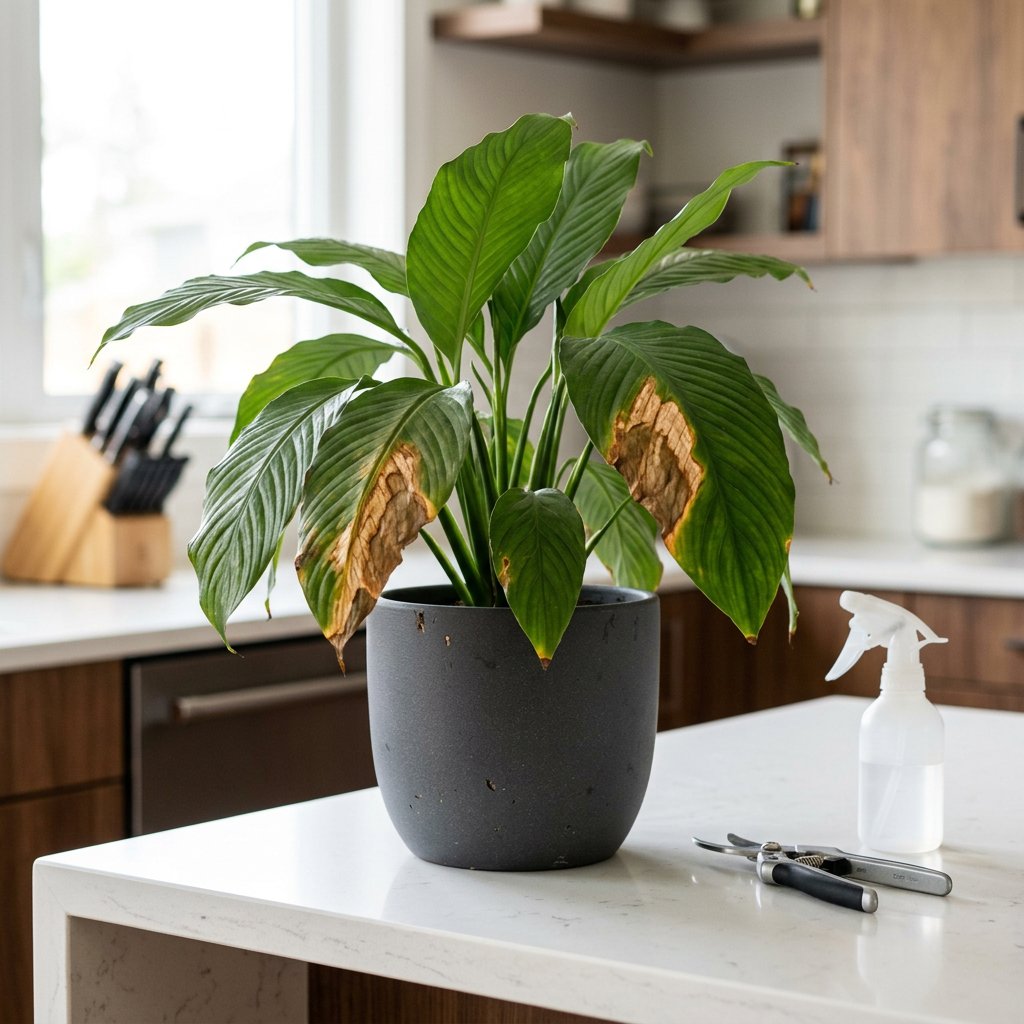
- Bleached or Washed-Out Leaves: You might notice chlorosis, which is a botanical term for the loss of green pigment. The leaves will look pale, yellow, or almost white, particularly on the top leaves directly facing the light source.
- Crispy, Brown Patches: Severe sunburn causes necrosis, which simply means localized dead plant tissue. These brown spots will be dry, brittle, and papery to the touch.
- Curling Edges: The plant may try to protect itself from the heat and light by curling its leaves inward to reduce its exposed surface area.
- Directional Damage: Sunburn almost always occurs strictly on the side of the plant that is facing the window or light source.
The Causes: Why Did Your Peace Lily Burn?
To understand why your plant burned, we have to look at how it grows in the wild. Peace Lilies (Spathiphyllum) are native to tropical rainforests across the Americas. In their natural habitat, they are "understory" plants, meaning they grow down on the forest floor, completely shaded by the dense canopy of tall trees above them.
Because their leaves are biologically designed to soak up dappled, filtered light, they lack the protective waxy coatings that sun-loving plants have. When you place a Peace Lily in a south-facing window or move it outside during the summer, the direct ultraviolet (UV) rays literally scorch their delicate cellular structure.
The Solutions: Step-by-Step Treatment
While we cannot magically heal a leaf once it has been sunburned, we can absolutely save the plant and encourage fresh, beautiful new growth. Here is your actionable recovery plan:
Step 1: Relocate Your Plant Immediately
The very first thing you need to do is get your Peace Lily out of the danger zone. Move it away from the direct light source. The ideal spot for a Peace Lily provides bright, indirect sunlight. A few feet away from an east-facing or north-facing window is usually perfect. If you only have a highly sunny room, try hanging a sheer curtain over the window to diffuse the light.
Step 2: Safely Prune the Damaged Leaves
Once a leaf has turned brown and crispy from sunburn, it will not turn green again. Leaving heavily damaged leaves on the plant drains energy that could be used for new growth.
- Take a pair of clean, sterilized pruning shears or sharp scissors (wiping them with rubbing alcohol works perfectly).
- Follow the stem of the badly burned leaf all the way down to the base of the plant.
- Make a clean cut near the soil line.
- Note: If a leaf only has a tiny brown tip but is mostly green, you can leave it! The green parts are still photosynthesizing and helping the plant gather energy.
Step 3: Maintain Consistent Watering (Don't Panic-Water!)
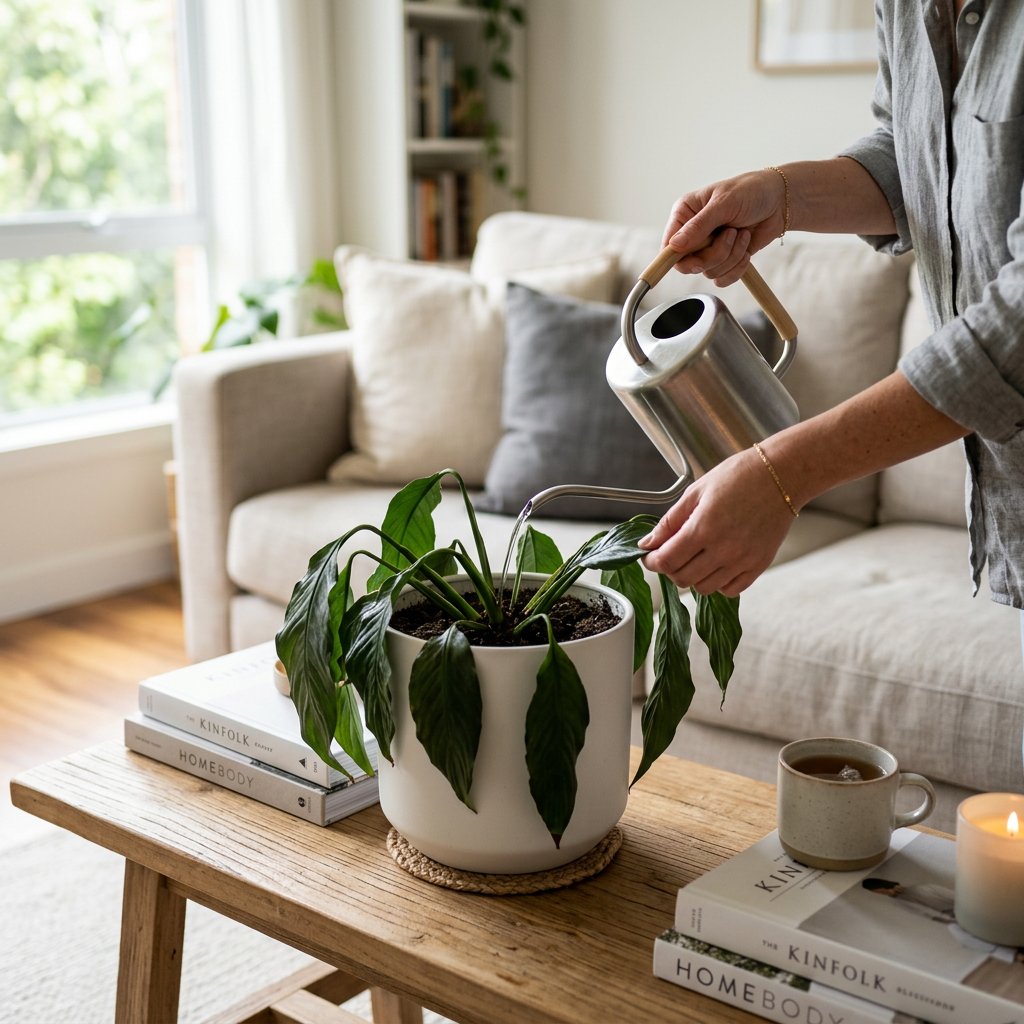
A common mistake plant parents make when they see dry, brown leaves is assuming the plant is desperately thirsty and flooding it with water. While sunburned plants are stressed, overwatering them will lead to root rot, compounding the problem. Check the soil with your finger; only water when the top two inches of the soil feel dry. You can also use the watering reminder feature in the Plantiary app to keep your schedule perfectly on track without the guesswork.
Step 4: Pause the Fertilizer
When a plant is recovering from an environmental shock like sunburn, its system is stressed. Adding fertilizer right now can actually burn the roots. Hold off on any plant food until you see new, healthy green leaves beginning to unfurl from the center of the plant.
With a little patience, a better location, and some gentle care, your Peace Lily will bounce back. Don't beat yourself up over a few scorched leaves—adjusting light levels is just another part of your growing journey as a plant parent!