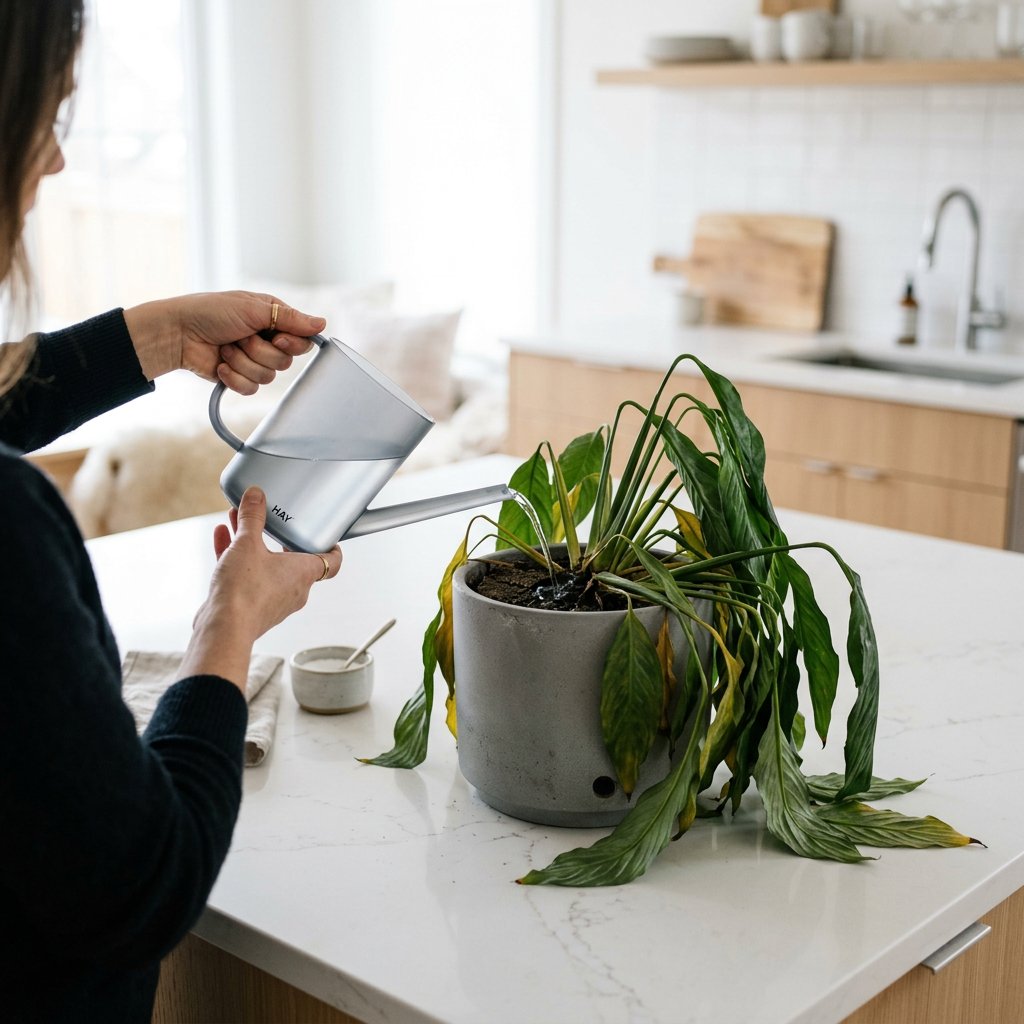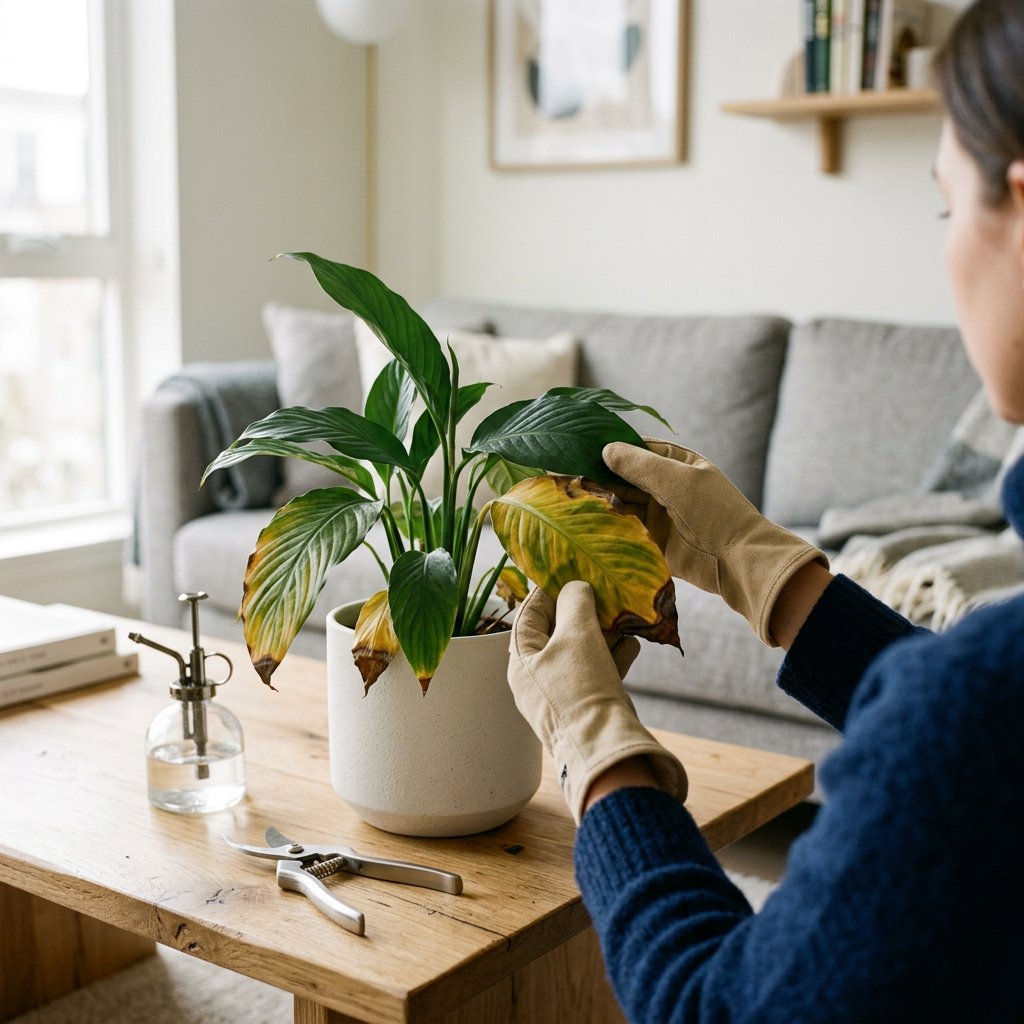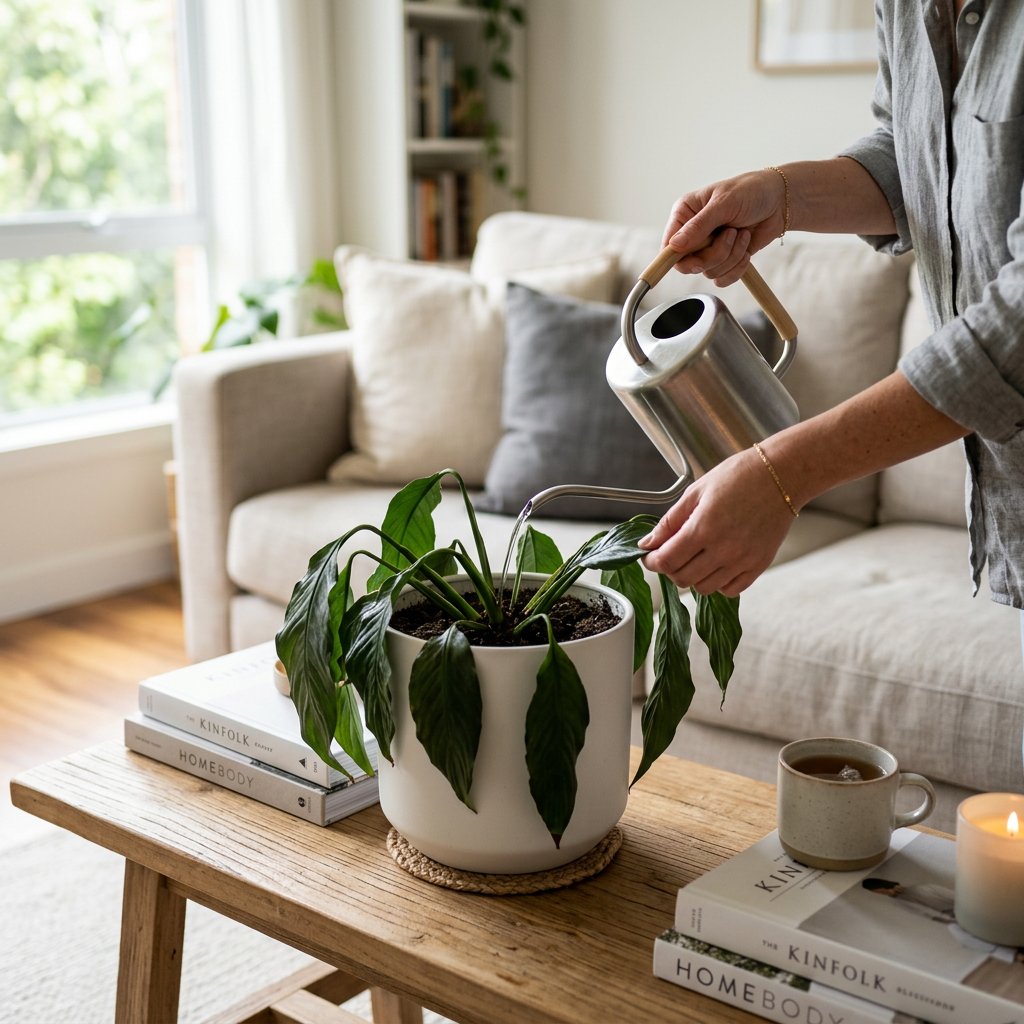
You walk into your living room and gasp—your once-perky Peace Lily (Spathiphyllum) looks like it has completely given up on life. Its lush, dark green leaves are slumped over the edge of the pot in a dramatic display of despair. First of all, take a deep breath! Plant parenthood comes with a few bumps in the road, and the Peace Lily is famous for being the ultimate "drama queen" of the houseplant world.
Please do not feel guilty. This dramatic wilt is actually a fantastic communication tool. In most cases, your plant is simply asking for a little help and will bounce back beautifully once you pinpoint the issue.
The Problem: Decoding the Dramatic Droop
When a Peace Lily droops, it is usually experiencing a sudden drop in turgor pressure. Turgor pressure is simply the water pressure inside the plant’s cells that keeps the stems and leaves firm and upright. When those cells lack water, they deflate like tiny balloons, causing the whole plant to collapse.
While the sudden fainting spell looks terrifying, the leaves will usually feel soft and limp rather than crispy. However, if the drooping is accompanied by yellowing leaves or a foul smell from the soil, the plant might be dealing with a more complex underlying issue.
The Causes: Why is Your Peace Lily Wilting?
To fix the drooping, we first need to play a little bit of botanical detective. Here are the most common reasons your Peace Lily is throwing a fit:
- Underwatering: This is by far the most common culprit. Peace Lilies are tropical plants that love consistent moisture. If the soil dries out completely, the plant will instantly lose its turgor pressure and collapse.
- Overwatering and Root Rot: Ironically, too much water causes the exact same drooping symptom. When soil stays soggy for too long, the roots suffocate and die. This leads to root rot, a fungal condition where the dead roots can no longer absorb water, leaving the plant dehydrated despite sitting in a puddle.
- Temperature Shock: Peace Lilies despise cold drafts, air conditioning vents, and sudden blasts of heat from radiators. Extreme temperature fluctuations can cause the foliage to quickly wilt.
- Rootbound Stress: If your plant has been in the same pot for years, its roots may have taken up all the space, leaving no room for soil to hold onto moisture.
The Solutions: How to Revive Your Peace Lily
Ready to play plant doctor? Follow these steps to get those gorgeous leaves standing tall again.
Step 1: Check the soil moisture Before you do anything, stick your finger about two inches deep into the soil. Is it bone dry, or is it wet and muddy? Getting this right is crucial for the next step. Tip: If you are unsure what is wrong with your plant or spot strange spots on the wilting leaves, you can use the AI-powered plant disease scanner in the Plantiary app to get a reliable diagnosis in seconds.
Step 2: Rehydrate thirsty plants (Bottom Watering) If the soil is completely dry, your plant is just thirsty! The best way to rehydrate severely dry soil is through "bottom watering." Place the plastic nursery pot in a bowl or sink filled with a few inches of room-temperature water. Let it soak up moisture from the bottom drainage holes for about 30 to 45 minutes. You will be amazed to see the leaves slowly lift themselves back up within a few hours!
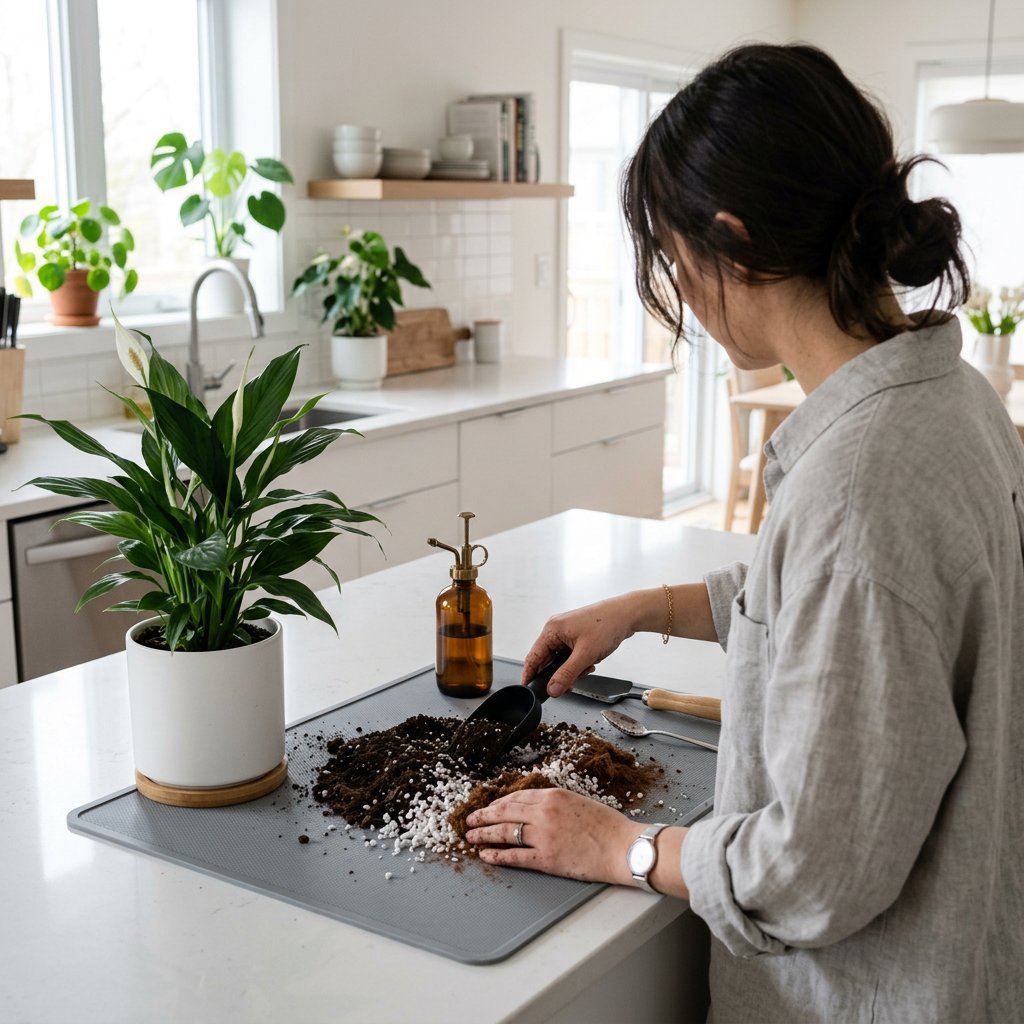
Step 3: Treat overwatered plants immediately If the soil is soaking wet but the plant is drooping, do not add more water. Carefully pull the plant out of its pot and inspect the roots. Healthy roots are firm and light-colored; rotting roots are mushy, brown, and smell swampy. Use sterilized scissors to trim away any mushy roots, and repot the plant in fresh, well-draining soil mixed with a handful of perlite to improve oxygen flow.
Step 4: Optimize the environment Keep your recovering Peace Lily in bright, indirect sunlight. Direct afternoon sun will scorch their delicate leaves and cause further dehydration. Move the plant away from drafty windows, exterior doors, or heating and cooling vents. They thrive best in stable temperatures between 65°F and 80°F (18°C - 27°C).
You've Got This!
Seeing your favorite houseplant struggle can be incredibly stressful, but remember that growing plants is a continuous learning journey. Your Peace Lily is resilient, and by paying close attention to its soil moisture and environment, you are already well on your way to becoming an even better plant parent. Keep an eye on its progress, trust your instincts, and enjoy the rewarding feeling when those leaves perk right back up!