You wait patiently for your gorgeous Peace Lily (Spathiphyllum) to produce those iconic, elegant white blooms. But one morning, you notice something unexpected: the flowers are turning green! If you are staring at your plant right now, wondering what you did wrong, take a deep breath. You are not a bad plant parent, and your plant is not dying. In fact, this is one of the most common quirks of growing a Peace Lily, and it happens to almost every indoor gardener at some point.
Let’s dive into the fascinating science behind your color-changing plant, uncover why this happens, and learn how to encourage those brilliant white blooms to return.
The Symptoms: Why Are My Peace Lily "Flowers" Green?
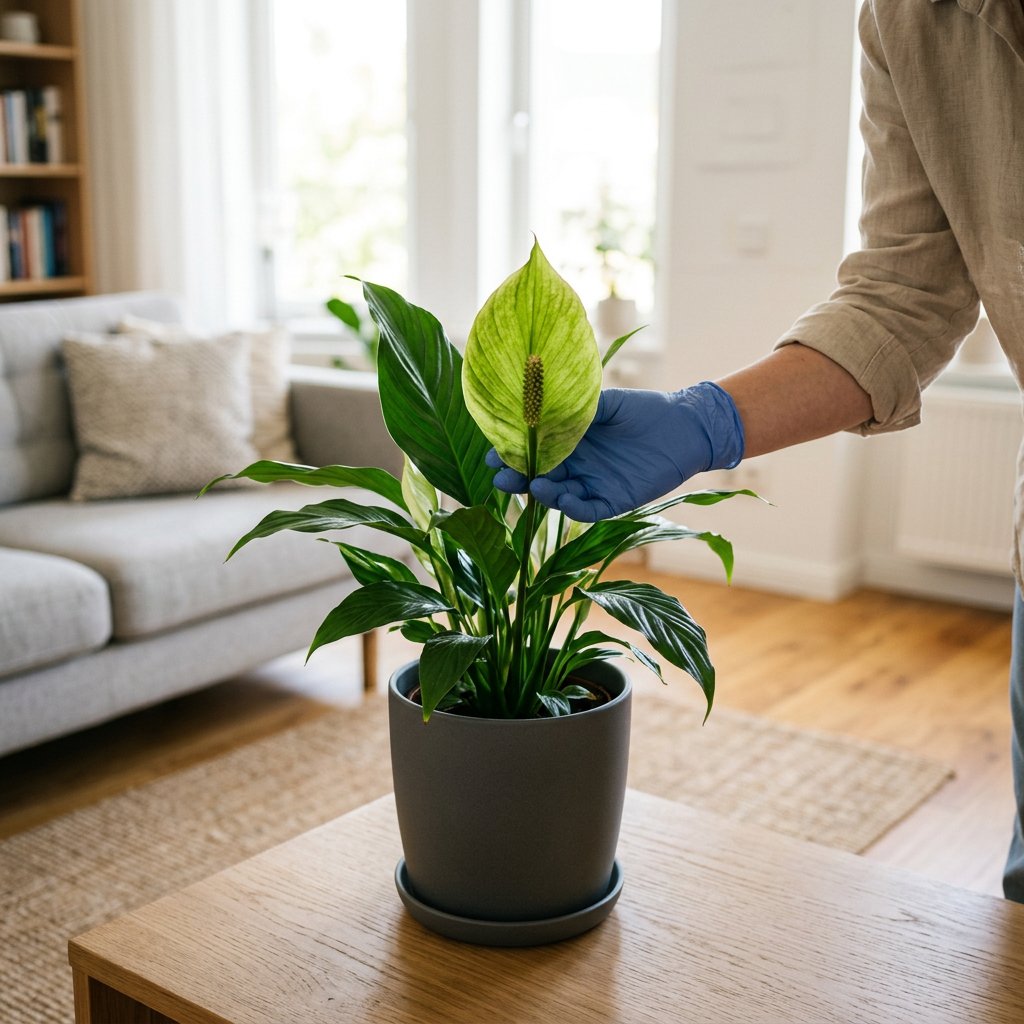
To understand the problem, we first need to look at a little plant anatomy. The white, petal-like shield you think of as the flower isn't actually a flower at all! In the botanical world, this is called a spathe—a modified leaf designed to protect the true flowers, which are tiny bumps located on the spiky stalk in the center (the spadix).
Because the spathe is technically a leaf, it contains the genetic coding to produce chlorophyll, the green pigment plants use to make food from sunlight. Under certain conditions, your Peace Lily simply activates this pigment, turning its white "petals" a pale or vibrant green.
The Causes of Green Peace Lily Flowers
If your blooms are emerging green or slowly shifting from white to green over time, one of these four common culprits is usually behind it:
- Natural Aging: Just like us, flowers age! As a Peace Lily bloom reaches the end of its life cycle (usually after a few weeks), the spathe will naturally turn green. The plant is cleverly trying to squeeze a little extra photosynthesis out of that modified leaf before it eventually dies off.
- Too Much Light: Peace Lilies thrive in the dappled shade of the rainforest floor. If your plant is sitting in a spot with harsh, direct sunlight, it may overproduce chlorophyll to protect itself or simply because the high light levels trigger it to behave more like a standard leaf.
- Over-fertilizing: Giving your plant too much love in the form of heavy fertilizer can backfire. Fertilizers high in nitrogen are formulated to push dense, leafy, green growth. If your Peace Lily gets too much nitrogen, it will prioritize greening up over producing stark white blooms.
- Greenhouse Acclimation: Did you just bring your plant home from the nursery? Commercial growers use heavily controlled environments and specialized hormones to force Peace Lilies to bloom abundantly for sale. Once in the normal conditions of your home, those existing blooms often turn green as the plant acclimates to a less intense environment.
If you are unsure whether your plant's lighting or feeding schedule is causing stress, you can use the AI-powered plant disease scanner and light meter in the Plantiary app to get an instant diagnosis and optimize your care routine!
The Solutions: How to Bring Back the White Blooms
While you cannot turn an already-green spathe back to white, you can absolutely adjust your care routine so that all future blooms emerge snowy and bright.
Step 1: Prune the aging flowers. If your blooms have simply run their natural course, grab a pair of clean, sterilized pruning shears. Follow the green flower's stem all the way down to the base of the plant and snip it off. This redirects the plant's energy away from maintaining old growth and toward pushing out fresh, new white flowers.
Step 2: Adjust your lighting. Move your Peace Lily to a spot that receives bright, indirect light. A few feet away from an east-facing or north-facing window is usually the sweet spot. If the light casts a harsh, sharp shadow on the wall, it is too bright; if the shadow is soft and blurry, it's perfect.
Step 3: Flush the soil and tweak your fertilizer. If you suspect fertilizer burn, take your plant to the sink and run room-temperature water through the soil for a few minutes to flush out excess nitrogen salts. Going forward, only feed your Peace Lily during the active growing season (spring and summer) using a balanced liquid houseplant fertilizer diluted to half-strength.
Step 4: Practice patience. Houseplants operate on their own timelines. Once you adjust the light and nutrients, give your Peace Lily a few weeks or even months to bounce back. As long as the main foliage looks perky and healthy, your plant is doing just fine.
Embrace the Green
Remember, a green Peace Lily flower is rarely a sign of poor health—it’s just your plant responding to its environment or simply aging gracefully. By making a few minor tweaks to your care routine, you will be rewarded with those classic white sails in no time.
Don't forget to add your Peace Lily to your Plantiary app to receive customized watering and fertilizing reminders, ensuring your leafy companion stays perfectly balanced year-round!