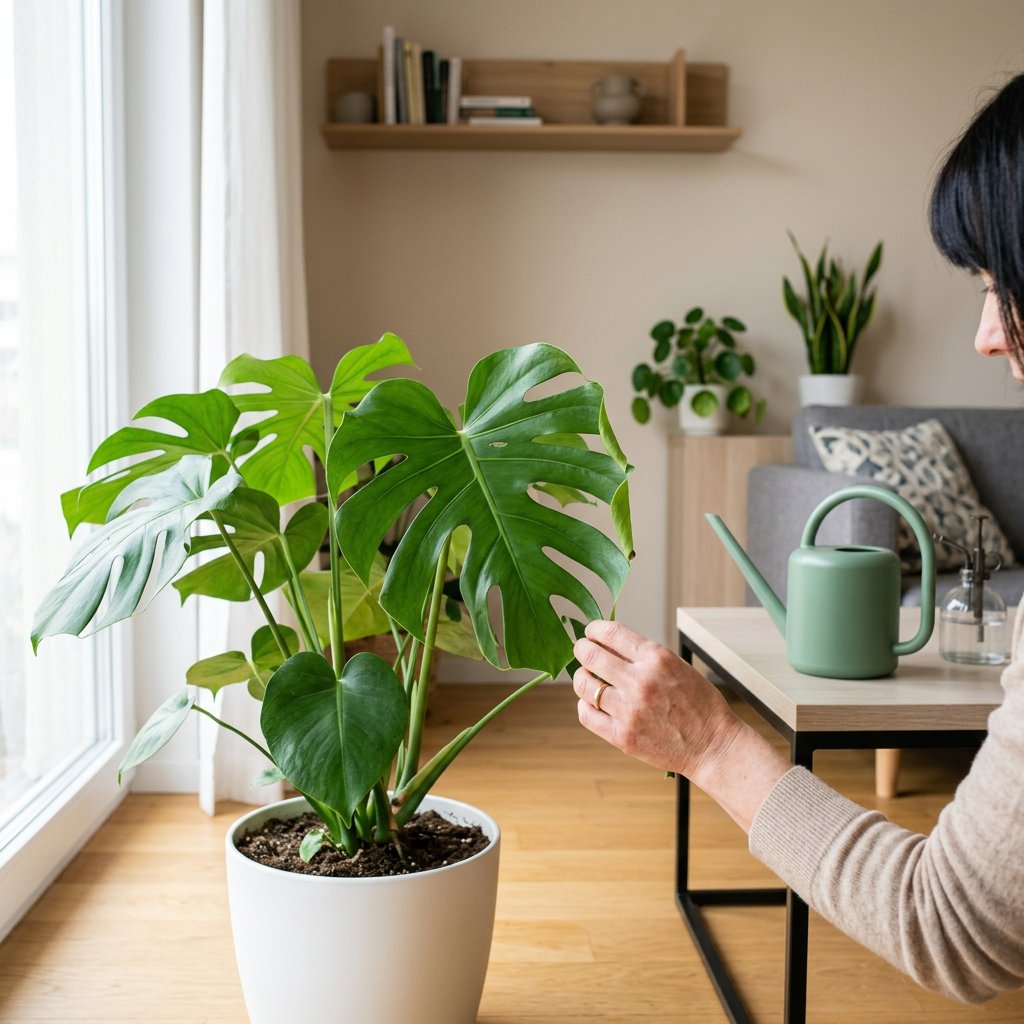
There is nothing quite like the pride of watching your Monstera unfurl a massive, beautifully fenestrated (split) new leaf. Because these tropical beauties are often the crown jewels of our indoor jungles, it can be incredibly stressful when those big, glossy leaves suddenly start curling inward.
First, take a deep breath and don't be too hard on yourself! Plant hiccups happen to every single plant parent, no matter how experienced they are. Curling leaves are simply your plant’s way of communicating that something in its environment needs a little adjusting. If you are ever unsure what is wrong with your plant, you can use the AI-powered plant disease scanner in the Plantiary app to get a diagnosis in seconds.
Let’s translate what your Monstera is trying to tell you and get it back to its happy, vibrant self.
The Problem: Reading the Symptoms
Before we fix the issue, we need to look closely at the plant. Leaf curling usually presents itself in a few distinct ways, and noticing these subtle clues will help you pinpoint the exact problem:
- Inward curling: The leaves fold inward like a taco, trying to close themselves off.
- Crispy, brown edges: The curled tips feel dry and brittle to the touch.
- Drooping and yellowing: The stems feel limp, and the curled leaves are slowly losing their deep green color.
The Causes: Why Is Your Monstera Curling?
When a Monstera curls its leaves, it is usually a defense mechanism against moisture loss or stress. Here are the most common culprits:
- Underwatering: This is the most frequent cause. Plants lose water through tiny pores on their leaves called stomata. If the soil is bone-dry, your Monstera will literally curl its leaves to reduce its surface area, minimizing further moisture loss.
- Low Humidity: Monsteras are native to the humid rainforests of Central America. If the air in your home is too dry, the edges of the leaves will curl and crisp up in protest.
- Overwatering and Root Rot: It sounds contradictory, but giving your plant too much water can also cause dehydration. When soil stays soggy, the roots suffocate and rot. Once the roots are damaged, they can no longer absorb water, causing the leaves to curl and droop even though they are sitting in wet soil.
- Temperature Stress: Drafty windows, air conditioning units, or nearby heating vents can shock your plant, causing the foliage to curl protectively.
- Pest Infestations: Sap-sucking insects, such as thrips or spider mites, drain the moisture directly from the plant’s tissues, leading to deformed and curling leaves.
The Solutions: Step-by-Step Treatment
Now that we understand the "why," let’s move on to the "how." Follow these actionable steps to nurse your Monstera back to health.
Step 1: Check the soil moisture Stick your finger about two inches into the soil. If it feels completely dry and dusty, your plant is extremely thirsty. Give it a thorough, deep watering until water drains out of the bottom of the pot. If the soil feels dense, wet, and smells a bit sour, you might be dealing with overwatering.
Step 2: Inspect and treat the roots (if overwatered) If you suspect overwatering, gently slide the Monstera out of its pot. Healthy roots are firm and pale. If you see dark, mushy, or slimy roots, your plant has root rot. Trim away the decaying roots with sterilized scissors and repot the plant in fresh, chunky, well-draining soil.
Step 3: Hunt for pests Take a close look at the undersides of the curling leaves and along the stems. Look for tiny moving dots, fine webbing, or sticky residue. If you spot unwanted guests, wipe the leaves down with a damp cloth and treat the plant thoroughly with a safe, horticultural neem oil spray or insecticidal soap. Tip: You can log your pest treatment schedule right in the Plantiary app so you never miss a follow-up spray!
Step 4: Boost the humidity If your soil is fine and there are no pests, dry air is likely the culprit. Increase the ambient humidity around your Monstera by adding a humidifier nearby, grouping it with other houseplants, or placing its pot on a pebble tray filled with water (making sure the bottom of the pot isn't touching the water directly).
Step 5: Relocate to a safe zone Assess your plant's location. Move it away from drafty doors, frosty windows, or blowing AC vents. Your Monstera will thrive best in a stable, warm environment with bright, indirect sunlight.
Plant care is a continuous learning journey. By paying attention to these signs and making a few simple adjustments, your Monstera will uncurl, perk up, and get back to pushing out those stunning new leaves in no time. You've got this!