There is nothing quite like the sudden panic of walking over to admire your stunning Monstera and spotting a bright yellow leaf glaring back at you. Take a deep breath! Plant parenthood is a wonderful journey full of learning curves, and yellowing leaves happen to absolutely everyone. Your plant isn't doomed; it is simply trying to communicate with you.
In the botanical world, this yellowing is known as chlorosis—a condition where the plant tissue loses chlorophyll, the magical green pigment that helps your plant convert sunlight into energy. While a fully yellow leaf won't turn green again, figuring out the root cause can help you stop the spread, fix the underlying issue, and save the rest of your beautiful foliage.
The Problem: Reading the Symptoms
Before we jump into fixing the issue, we need to play plant detective. The specific way your Monstera is yellowing will give you massive clues about what is going wrong:
- Lower, older leaves turning completely yellow: This is often a sign of overwatering, natural aging, or a lack of sunlight.
- Yellowing with crispy brown edges: This usually points to underwatering, a lack of humidity, or harsh tap water.
- Patchy yellow spots or pale new growth: Typically indicates a nutrient deficiency or a sneaky pest issue.
The Causes: Why is My Monstera Yellowing?
Understanding the "why" is the fastest way to get your tropical beauty back on track. Here are the most common culprits:
1. Overwatering and Root Rot
This is the number one cause of yellowing Monstera leaves. When sitting in soggy, dense soil, your plant’s roots suffocate because they cannot absorb oxygen. This quickly leads to root rot, a fungal condition that destroys the root system and prevents the plant from taking up the water and nutrients it needs to stay green.
2. Underwatering
While Monsteras prefer to dry out slightly between waterings, leaving them bone-dry for too long will cause them to stress. In an effort to survive, the plant will sacrifice its older, lower leaves to conserve moisture for new growth.
3. Inadequate Lighting
Monsteras are tropical understory plants that naturally climb trees toward the sun. They thrive in bright, indirect light. If your plant is tucked away in a dark, shadowy corner, it cannot photosynthesize efficiently, leading to slow growth and pale, yellowing leaves.
4. Nutrient Deficiencies
If your Monstera has been sitting in the same potting soil for a few years without fresh fertilizer, it might just be hungry! A lack of essential macronutrients, particularly nitrogen, is a very common cause of overall fading and yellowing.
The Solutions: How to Fix Yellow Monstera Leaves Fast
Ready to nurse your plant back to health? Follow these actionable steps to stop the yellowing in its tracks.
Step 1: Diagnose the issue instantly If you are unsure what is wrong with your plant, you can use the AI-powered plant disease scanner in the Plantiary mobile app to get a diagnosis in seconds. Just snap a photo of the yellowing leaf, and the app will guide you toward the exact cause and provide a personalized treatment plan!
Step 2: Check the soil moisture Stick your finger about two to three inches deep into the soil. If it feels soaking wet, muddy, and heavy, you are likely overwatering. If the soil is pulling away from the sides of the pot and feels like dry dust, it is severely underwatered.
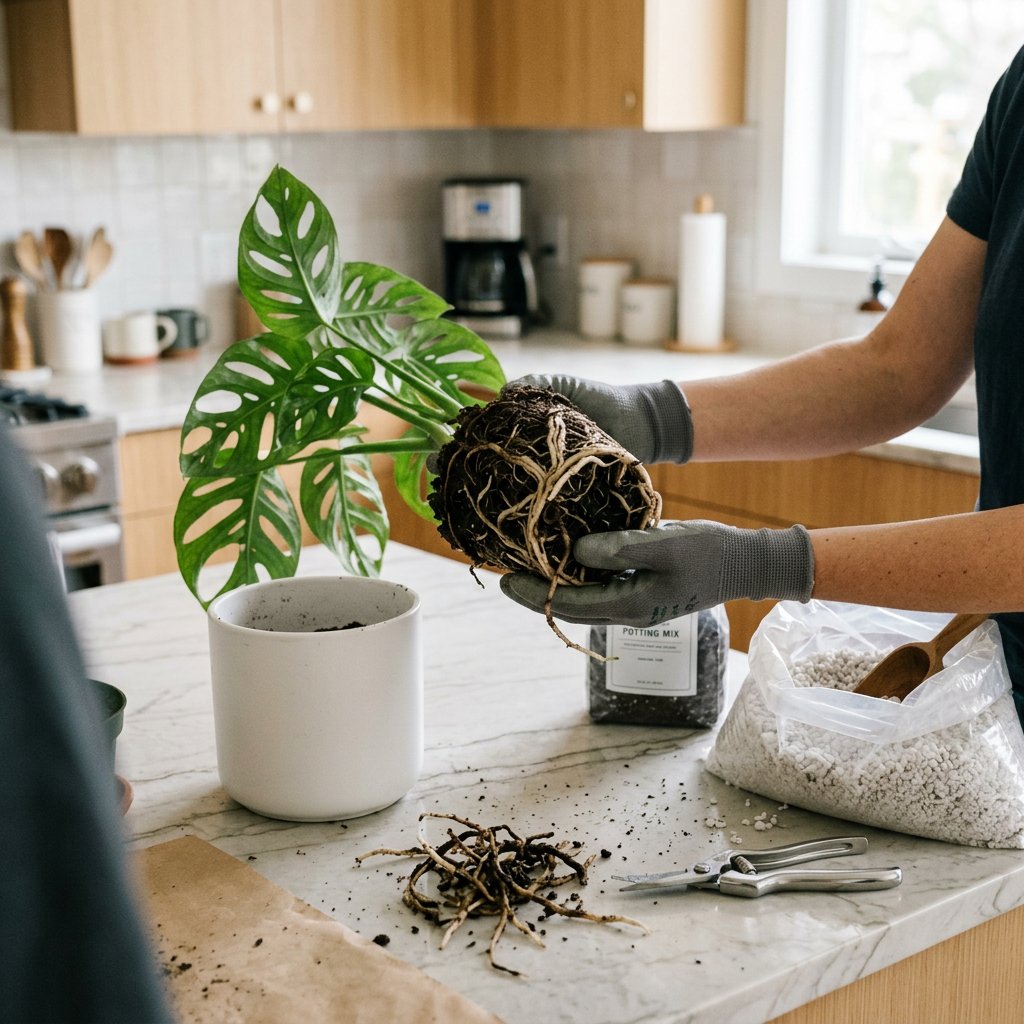
Step 3: Inspect the roots (If overwatered) If the soil is drenched, gently pull the Monstera out of its pot. Healthy roots should be firm and pale. If you see dark, mushy, or foul-smelling roots, you are dealing with root rot. Carefully trim away the rotting roots with sterilized scissors and repot your plant in fresh, well-draining soil (a chunky mix of standard potting soil, perlite, and orchid bark is perfect).
Step 4: Adjust your watering routine Moving forward, only water your Monstera when the top two to three inches of the soil are completely dry. When you do water, soak it thoroughly until water flows out of the drainage holes at the bottom. Never let your plant sit in a saucer of standing water.
Step 5: Relocate for better light Move your Monstera closer to a window where it can receive plenty of bright, indirect light. A spot near an east-facing or bright north-facing window is usually ideal. Just be sure to avoid harsh, direct afternoon sun, which can scorch the leaves.
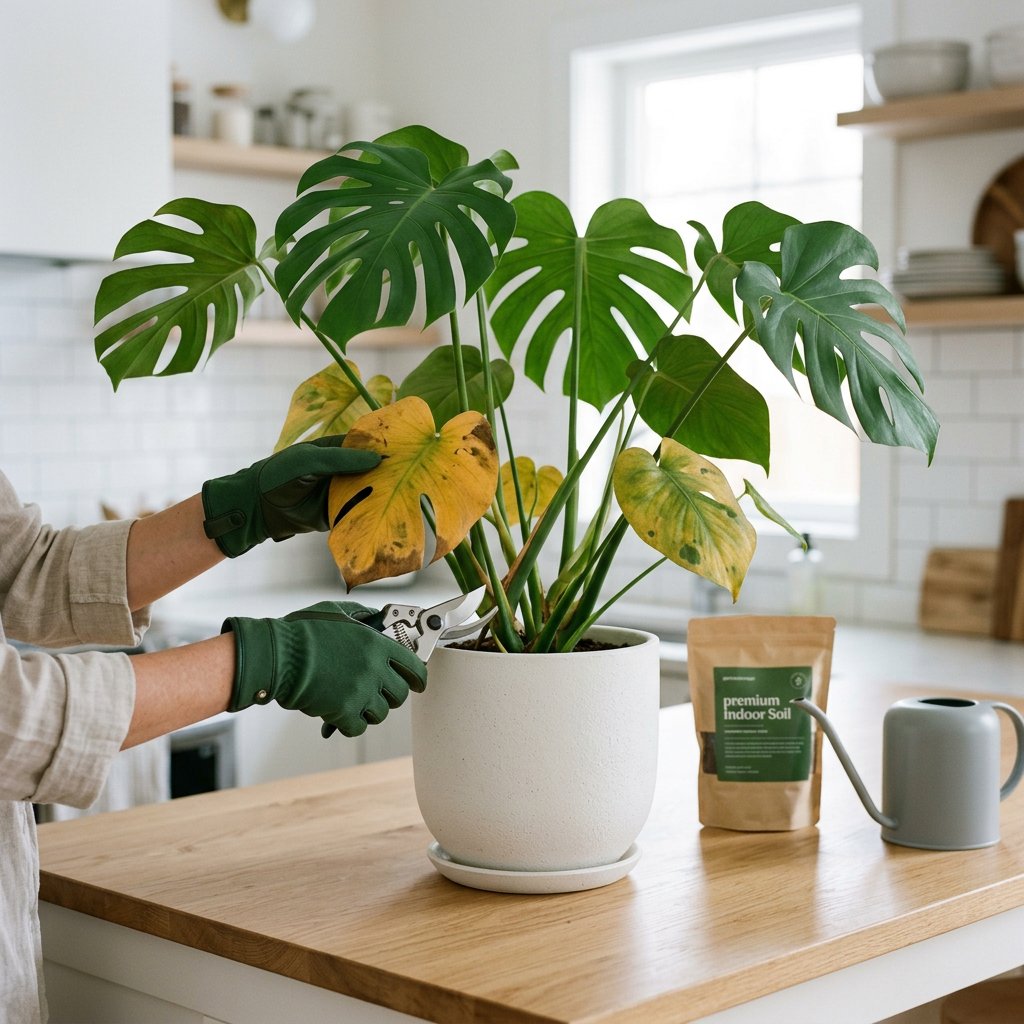
Step 6: Prune the yellow leaves Once a leaf turns completely yellow, it will not recover. In fact, it is actually draining energy from the rest of the plant. Use clean, sharp pruning shears to cut the yellow leaf off near the base of the stem. This redirects your plant's energy back into pushing out healthy, green growth!
Remember, a yellow leaf is not a failure; it is just a gentle nudge from your Monstera asking for a little tweak in its routine. Stay patient, trust the process, and lean on your Plantiary app whenever you need a helping hand. You've got this!