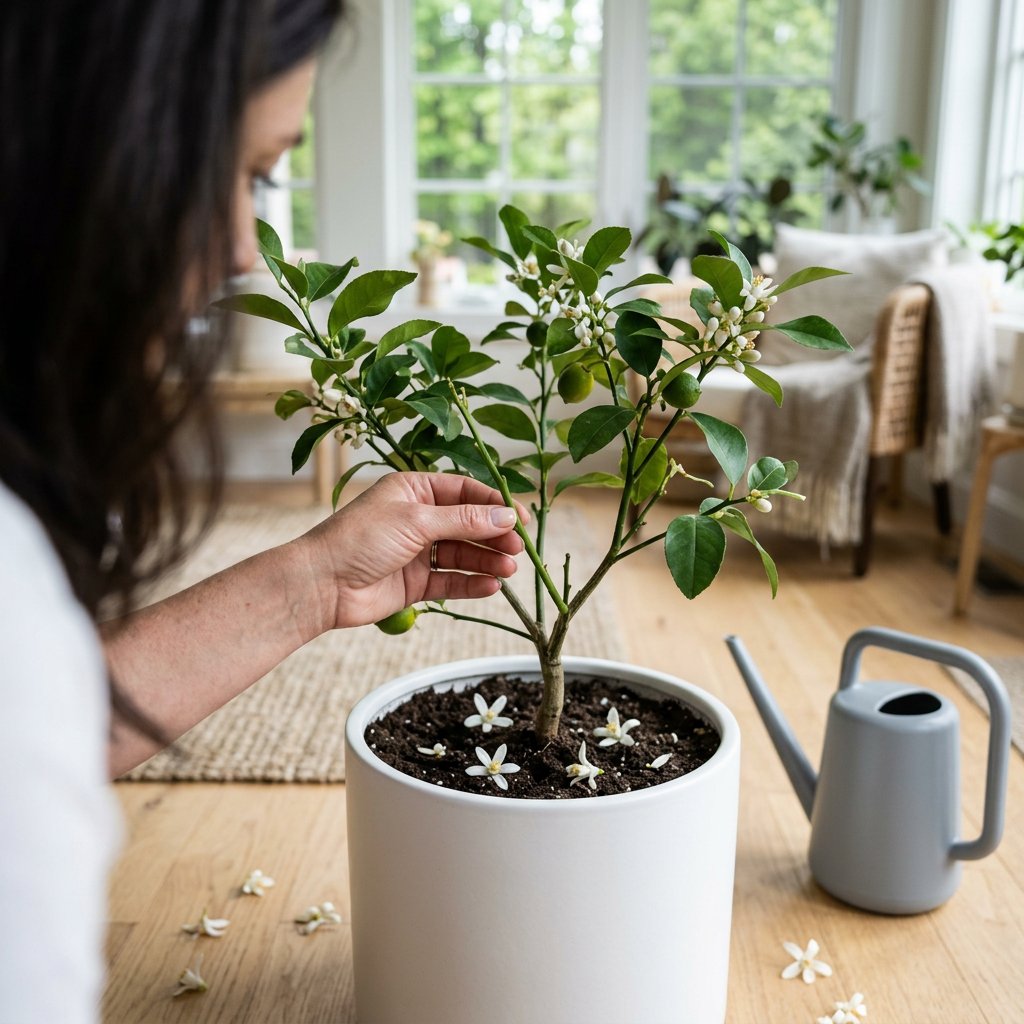
There’s nothing quite like the sweet, intoxicating fragrance of citrus blossoms filling your home or garden. Whether you're growing a Meyer lemon, a Calamondin orange, or a Key lime, seeing those delicate white buds emerge feels like a massive victory. But if you’ve recently walked past your plant only to find a shower of fallen blossoms scattered across the soil, you might be feeling a sudden wave of panic.
Take a deep breath! Blossom drop is an incredibly common hurdle, and it happens to almost every plant parent at some point. Your plant isn't necessarily doomed; it is simply trying to communicate its current needs. Let's figure out why your citrus tree is shedding its flowers and how to help it thrive. And remember, whenever you feel stuck, the Plantiary app is always in your pocket to help you decode your plant's signals!
The Problem: Understanding Citrus Blossom Drop
Seeing flowers fall can be alarming, but it's important to know what you are looking at. You might notice newly opened flowers, unopened buds, or even tiny, pea-sized fruit dropping prematurely.
First, a quick botanical reality check: if your tree drops about 80% of its flowers, this is actually part of its natural lifecycle! Citrus trees naturally produce far more blossoms than they can physically support. The tree thins out the excess to focus its energy on a few strong, healthy fruits. However, if your tree is shedding all of its flowers, leaving you with absolutely no developing fruit, that is a sign your green friend is experiencing environmental stress.
The Causes: Why Is My Citrus Tree Shedding?
To fix the issue, we first need to play botanical detective. Here are the most scientifically common reasons behind excessive citrus blossom drop:
- Watering Imbalances: Both overwatering and underwatering cause massive stress. Overwatering leads to root rot (a fungal issue that suffocates the roots), preventing the plant from absorbing oxygen. Underwatering, on the other hand, forces the plant to drop flowers to conserve its limited moisture.
- Temperature Fluctuations: Citrus trees love warmth. Sudden cold drafts or blasts of dry, hot air from a heating vent can shock the plant, causing an immediate flower drop.
- Nutrient Imbalances: Giving your plant too much nitrogen right before or during its blooming phase will cause it to focus entirely on growing new green leaves rather than supporting its flowers.
- Lack of Pollination: If your citrus tree is kept indoors, it doesn't have the help of bees, butterflies, or the wind to move pollen. Unpollinated flowers cannot turn into fruit and will simply fall off.
- Low Humidity: Indoor environments are often too dry for citrus. Dry air can cause the sticky part of the flower (the stigma) to dry out prematurely, making pollination impossible.
The Solutions: Step-by-Step Treatment
Now that we know the potential culprits, let’s get your citrus tree back on track. Follow these actionable steps to secure those blossoms and encourage a healthy harvest:
- Step 1: Perfect your watering routine. Check the top two inches of soil using your finger. If it feels completely dry, it's time to water thoroughly. If it feels soggy, hold off. Always ensure your pot has excellent drainage holes so excess water can freely escape.
- Step 2: Become the pollinator. If your tree lives indoors, you need to play the role of the bee! Take a small, soft paintbrush or a cotton swab and gently swirl it inside the center of each flower, moving from bloom to bloom. This spreads the pollen and tells the plant it's time to set fruit.
- Step 3: Stabilize the environment. Relocate your citrus tree away from drafty windows, frequently opened exterior doors, radiators, and air conditioning vents. Aim for a consistent, warm temperature between 65°F and 85°F (18°C - 29°C).
- Step 4: Boost the local humidity. Place a humidifier near your tree, or set the plant's pot on a pebble tray filled with water. Ensure the bottom of the pot is resting on the pebbles, not sitting directly in the water, to prevent root rot.
- Step 5: Switch your fertilizer. During the blooming season, use a fertilizer specifically formulated for citrus trees. These blends are richer in phosphorus and potassium, which actively support flower retention and fruit development.
Plant care is a continuous journey of trial and error, so please don't be hard on yourself if your citrus tree is currently struggling. With a few simple adjustments to its environment, you'll be squeezing fresh, homegrown citrus juice in no time!
If you are ever unsure what is wrong with your plant, you can use the AI-powered plant disease scanner in the Plantiary app to get a diagnosis in seconds. You can also use the app to set up customized watering and fertilizing reminders so your citrus tree gets exactly what it needs, right when it needs it. Happy growing!