Snake plants are famous for being the ultimate "unkillable" houseplant. With their striking, sword-like foliage and low-maintenance personality, they are a favorite for beginners and seasoned collectors alike. Because of this tough reputation, seeing your once-upright snake plant suddenly flopping over can feel incredibly discouraging. But take a deep breath—please don't feel guilty! Even the hardiest plants experience bumps in the road, and drooping leaves are something almost every plant parent will deal with at some point.
The good news is that your snake plant is highly resilient. By understanding what is going wrong and making a few easy adjustments, you can get those beautiful leaves standing tall again. Let’s dive into what is happening and how to fix it.
The Problem: Recognizing the Symptoms
Before we can treat the issue, we need to look closely at how the plant is falling over. Snake plants (Sansevieria) communicate their distress through their leaves. Depending on the root cause, you might notice:
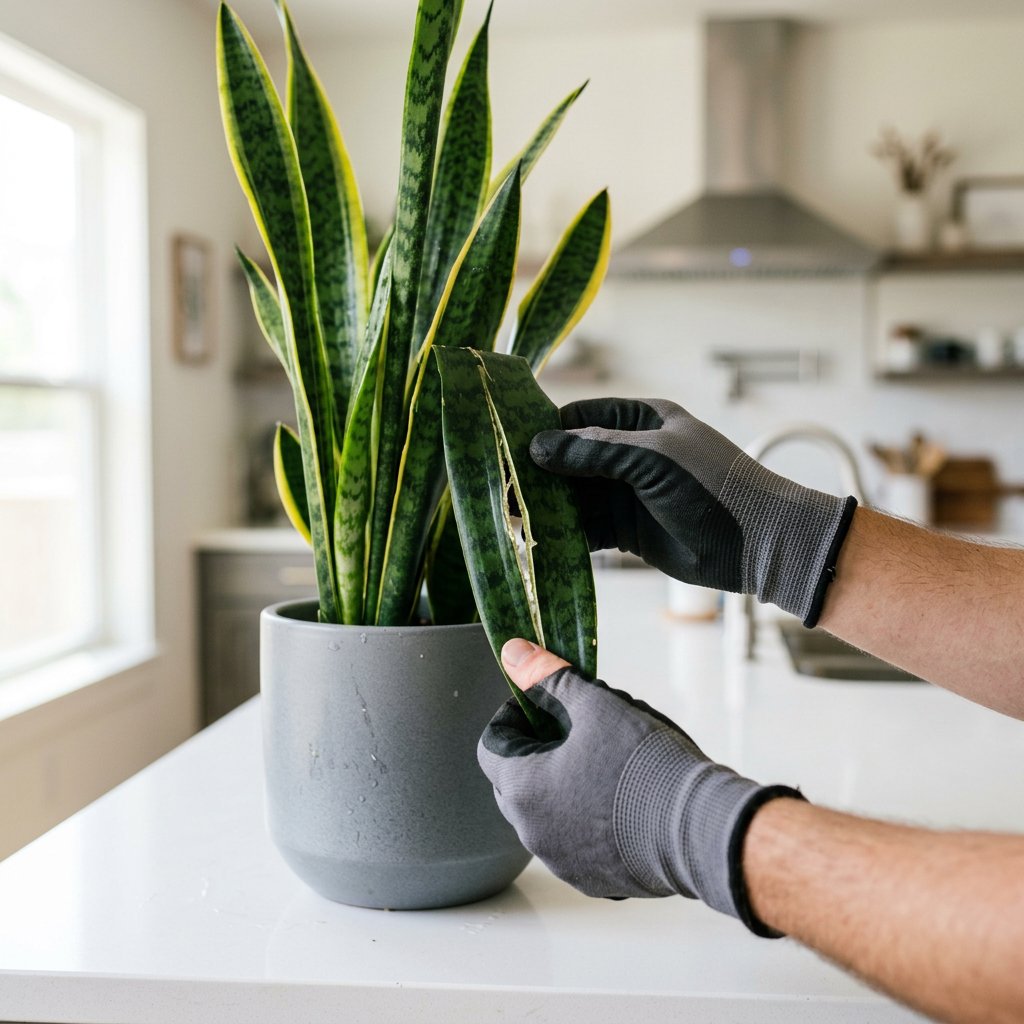
- Mushy, soft bases: The bottom of the leaves feels squishy to the touch, and they are bending or snapping right at the soil line.
- Wrinkled or folding leaves: The leaves look deflated, crispy, or have deep vertical creases before bending sideways.
- Thin, weak growth: The new leaves look significantly narrower and paler than the older ones, gently arching downward rather than standing straight up.
If you are unsure what is wrong with your plant, you can use the AI-powered plant disease scanner in the Plantiary app to get an accurate diagnosis in seconds. Just snap a photo, and the app will guide you!
The Causes: Why is Your Snake Plant Drooping?
To nurse your plant back to health, we first need to identify the environmental stressor that is making it weak. Here are the most common culprits:
1. Overwatering and Root Rot
This is the number one reason snake plants fall over. Snake plants are technically succulents, meaning they store water in their fleshy leaves. When they are watered too frequently, the soil stays soggy, depriving the roots of oxygen. This leads to root rot—a fungal condition where the roots decay, turn black, and die. Without healthy roots, the base of the leaves becomes mushy and simply collapses under its own weight.
2. Poor Drainage
Even if you aren't watering often, planting your snake plant in a pot without drainage holes or using heavy, moisture-retaining potting soil will trap water around the roots, leading to the exact same rot issues mentioned above.
3. Inadequate Light (Etiolation)
While snake plants are heavily marketed as "low-light" plants, they actually thrive in bright light! When placed in a dark, windowless corner, they experience etiolation—a botanical term for when a plant stretches unnaturally to seek out sunlight. This stretched growth is thin, weak, and unable to support its own height, causing it to lean or flop over entirely.
4. Severe Underwatering
Though rare, if you completely forget to water your snake plant for several months, it will use up all its stored water reserves. The leaves will become severely wrinkled, lose their structural integrity, and eventually bend over.
The Solutions: Step-by-Step Treatment
Ready to save your plant? Here is a simple, actionable recovery plan to get your snake plant back on its feet.
Step 1: Inspect the Roots
Gently pull your snake plant out of its pot and examine the root system. Healthy roots should be firm and pale. If they are dark brown, stringy, or smell slightly sour, you are dealing with root rot.
Step 2: Trim the Damage
Using a pair of sterilized scissors or pruning shears, carefully cut away any mushy, rotten roots and any leaves that have turned completely soft at the base. Do not worry about cutting too much; it is better to remove all the rot to stop it from spreading.
Step 3: Repot with the Right Soil
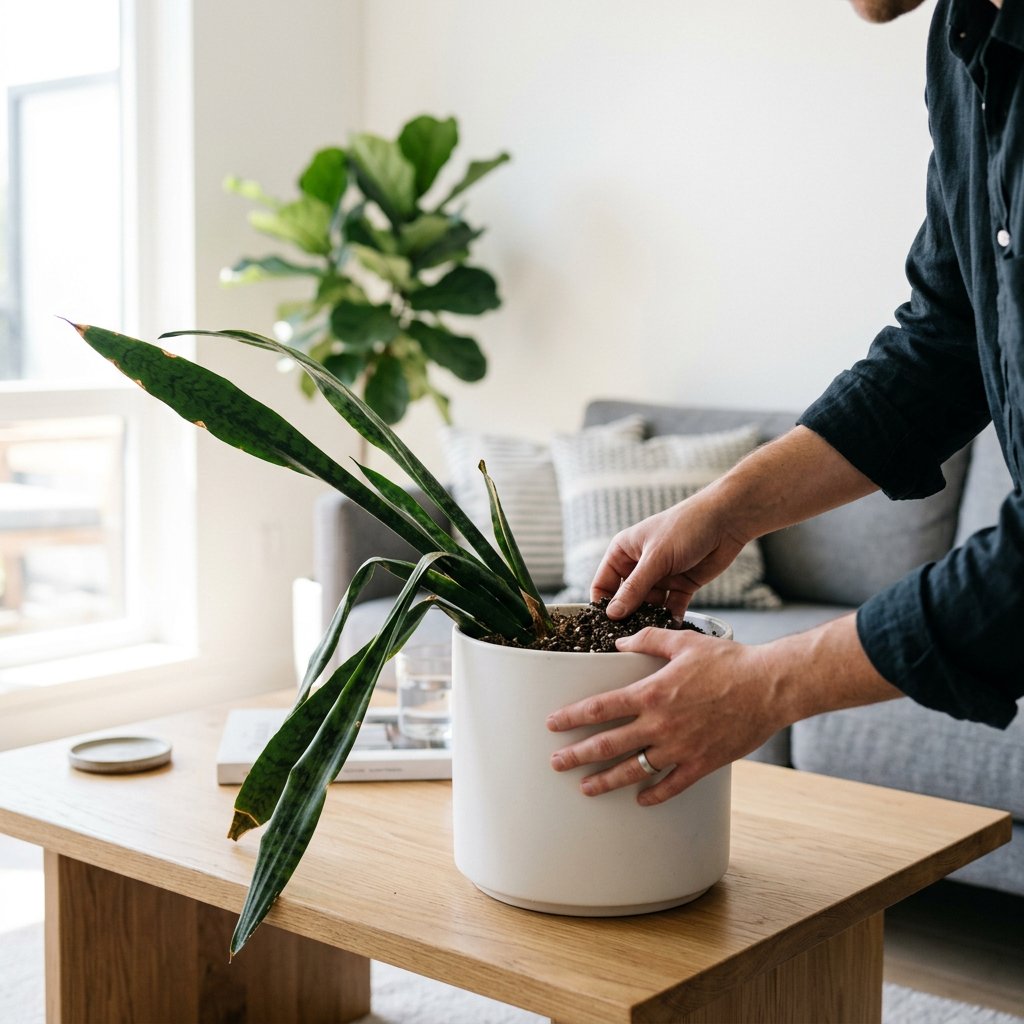
Choose a pot that has at least one large drainage hole at the bottom. Replant your snake plant using a well-draining soil mix. A standard cactus or succulent mix mixed with a handful of perlite is perfect. This ensures excess water flows right out of the pot, keeping the roots breathable and healthy.
Step 4: Adjust Your Watering Habits
Moving forward, adopt the "soak and dry" method. Water the plant thoroughly until water runs out the bottom of the pot, and then do not water it again until the soil is completely dry from top to bottom. To take the guesswork out of your routine, you can log your plant in the Plantiary app and set up smart watering reminders tailored to your plant's specific needs.
Step 5: Relocate for Better Light
If your plant is suffering from etiolation (weak, stretched growth), slowly move it closer to a window. Bright, indirect sunlight is ideal. Just be sure to introduce it to brighter light gradually over a week or two so the leaves don't get a sunburn.
Remember, rescuing a sick plant is a learning experience, not a test of your plant-parenting skills. With a little bit of patience, proper drainage, and the right light, your snake plant will bounce back and continue growing strong for years to come!