Snake plants are famous for being almost indestructible, earning them the reputation of the ultimate beginner houseplant. But even the toughest botanical companions can throw us a curveball. If you’ve recently noticed unsightly vertical splits or cracks appearing down the center of your beloved snake plant's leaves, take a deep breath. You haven't failed as a plant parent! Leaf splitting is a surprisingly common issue that happens to the best of us, and it is rarely a death sentence for your plant. Let's explore exactly what is going on and how you can get your green friend back on track.
If you are ever unsure what is wrong with your plant, you can use the AI-powered plant disease scanner in the Plantiary app to get an instant diagnosis and personalized care plan in seconds!
The Problem: Identifying the Symptoms
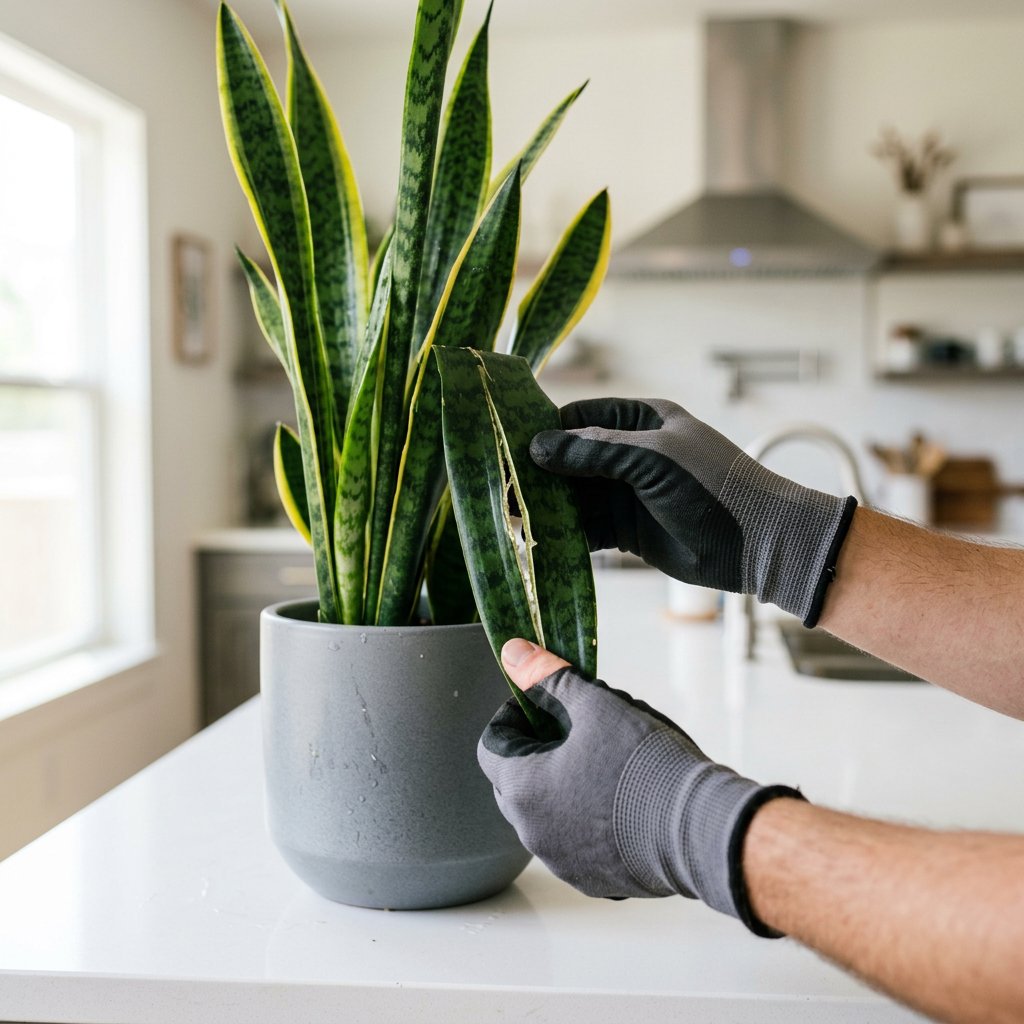
Before we dive into the fixes, let's look at what is actually happening. Snake plant leaf splitting typically presents as vertical fissures running parallel to the natural grain of the leaf. You might notice:
- Deep vertical cracks starting from the tip or the middle of the leaf.
- Crispy, brown, or calloused edges immediately surrounding the split.
- Curling or folding of the foliage along with the cracking.
While a cracked leaf will not heal itself back together, understanding the root cause will prevent new growth from suffering the same fate.
The Causes: Why Are My Snake Plant Leaves Cracking?
Snake plants (Dracaena trifasciata, formerly Sansevieria) have thick, succulent-like leaves designed to store water. When that delicate internal balance is disrupted, structural damage occurs. Here are the most common culprits:
- Inconsistent Watering and Edema: This is the leading cause of splitting. If you let the soil stay bone-dry for a long period and then heavily drench it, the plant's roots absorb water much faster than the leaves can process it. This rapid water uptake causes a condition called edema—where the internal plant cells swell, burst, and physically tear the leaf tissue apart from the inside out.
- Physical Trauma: Snake plants are often placed in hallways or on the floor where they are easily brushed against. Frequent bumping by humans, curious pets batting at the leaves, or dropping the pot can cause micro-tears that eventually split open.
- Low Humidity and Extreme Heat: While snake plants tolerate dry air well, being positioned directly next to a roaring heater or a hot air vent can severely dehydrate the foliage, causing it to become brittle and crack under its own tension.
- Nutrient Imbalances: Though less common, a lack of essential micronutrients, particularly boron or calcium (which are responsible for cell wall strength), can lead to weak, easily fractured leaves.
The Solutions: Step-by-Step Treatment
If your snake plant is showing signs of splitting, do not panic. Follow these actionable steps to halt the damage and encourage healthy new growth.
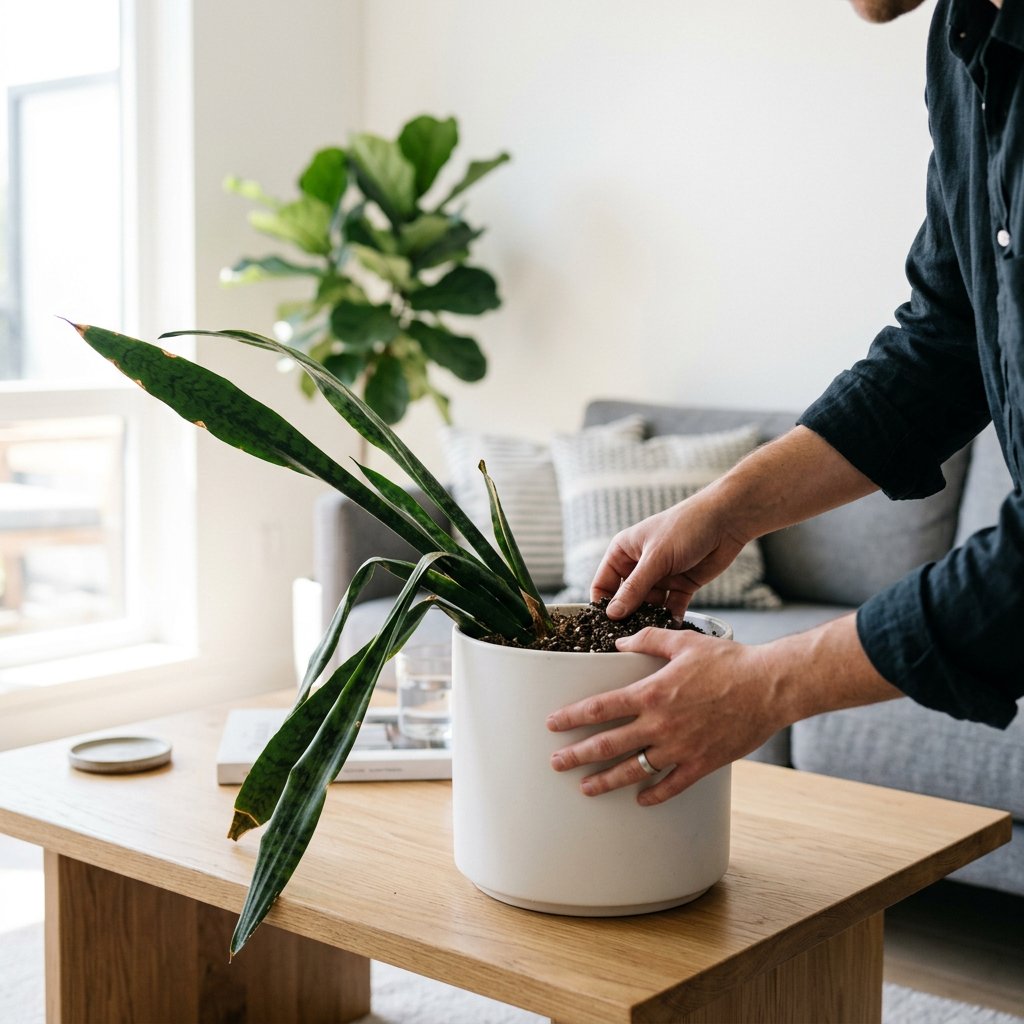
Step 1: Regulate Your Watering Routine To prevent edema, you need to provide a steady, predictable watering schedule. Allow the top 2-3 inches of soil to dry out completely before watering again. When you do water, soak the soil thoroughly until water runs out of the drainage holes, but never let the pot sit in a saucer of stagnant water.
Step 2: Relocate to a Safe Zone Assess where your plant is currently living. Is it in a high-traffic area? If it is constantly getting bumped by bags, doors, or pets, move it to a quieter, safer corner. Indirect, bright sunlight is ideal for keeping the leaves strong and robust.
Step 3: Adjust the Microclimate Keep your snake plant away from harsh drafts, radiators, and AC units. If your home is exceptionally dry during the winter months, try grouping your snake plant with other houseplants. This naturally raises the ambient humidity around them without the need for heavy misting (which can lead to fungal issues).
Step 4: Care for the Damaged Leaves It is important to know that a split leaf will never fuse back together. However, you have two safe choices on how to handle it:
- Leave it be: If the split is small and the leaf is otherwise green and healthy, leave it alone! It will scar over and continue to photosynthesize, providing energy for the plant.
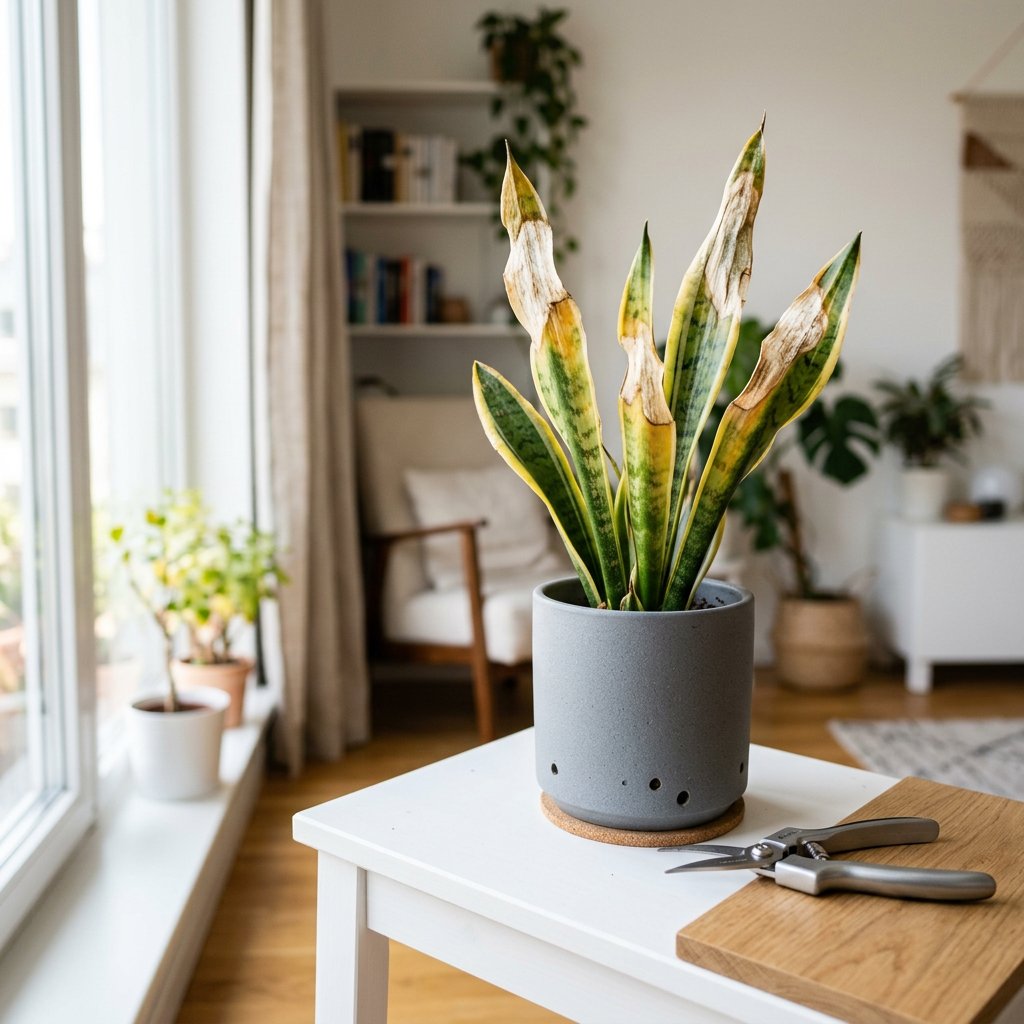
- Prune it out: If the leaf is severely damaged, flopping over, or aesthetically bothering you, you can remove it. Use a pair of clean, sterilized pruning shears to cut the damaged leaf off at the soil line.
Embrace the Imperfections
Houseplants are living things, and just like us, they pick up a few scars along the way. A split leaf is just a part of your plant's unique story. By adjusting your watering habits and protecting it from physical stress, you are setting up your snake plant for years of beautiful, upright growth. Don't forget to check in on your plant's progress and log your watering routine in the Plantiary app to keep your care schedule perfectly balanced!