Snake plants (Sansevieria) are famous for being the tough, nearly indestructible superheroes of the houseplant world. Because they are so incredibly resilient, it is easy to assume they can handle just about anything—including baking in a hot, sunny window. But just like us, our green companions have their limits, and too much intense sunlight can leave them looking a little scorched.
If you have recently noticed strange spots or a washed-out appearance on your snake plant’s normally vibrant leaves, please take a deep breath! Plant parenthood is a constant learning journey, and even the most experienced indoor gardeners deal with plant hiccups. Let's walk through exactly how to identify, understand, and fix snake plant sunburn so your resilient friend can thrive once again.
The Problem: Identifying Signs of Snake Plant Sunburn
Because snake plants have thick, succulent-like leaves, sunburn might look a bit different on them than it does on thinner-leafed tropicals. Here are the most common symptoms to look out for:
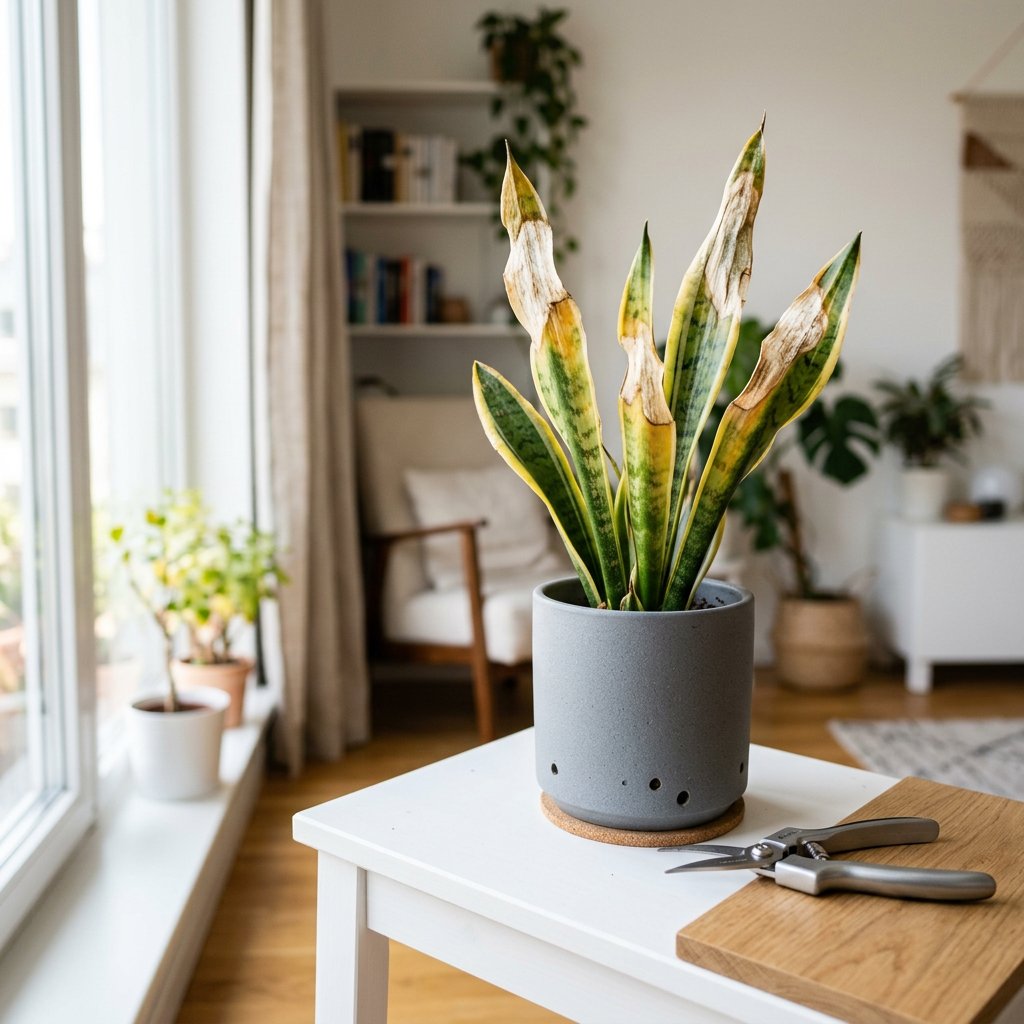
- Bleached or white patches: The most obvious sign of sunburn is a washed-out, pale, or completely white patch on the leaf. This happens because intense UV rays break down the plant's chlorophyll (the pigment that gives leaves their green color).
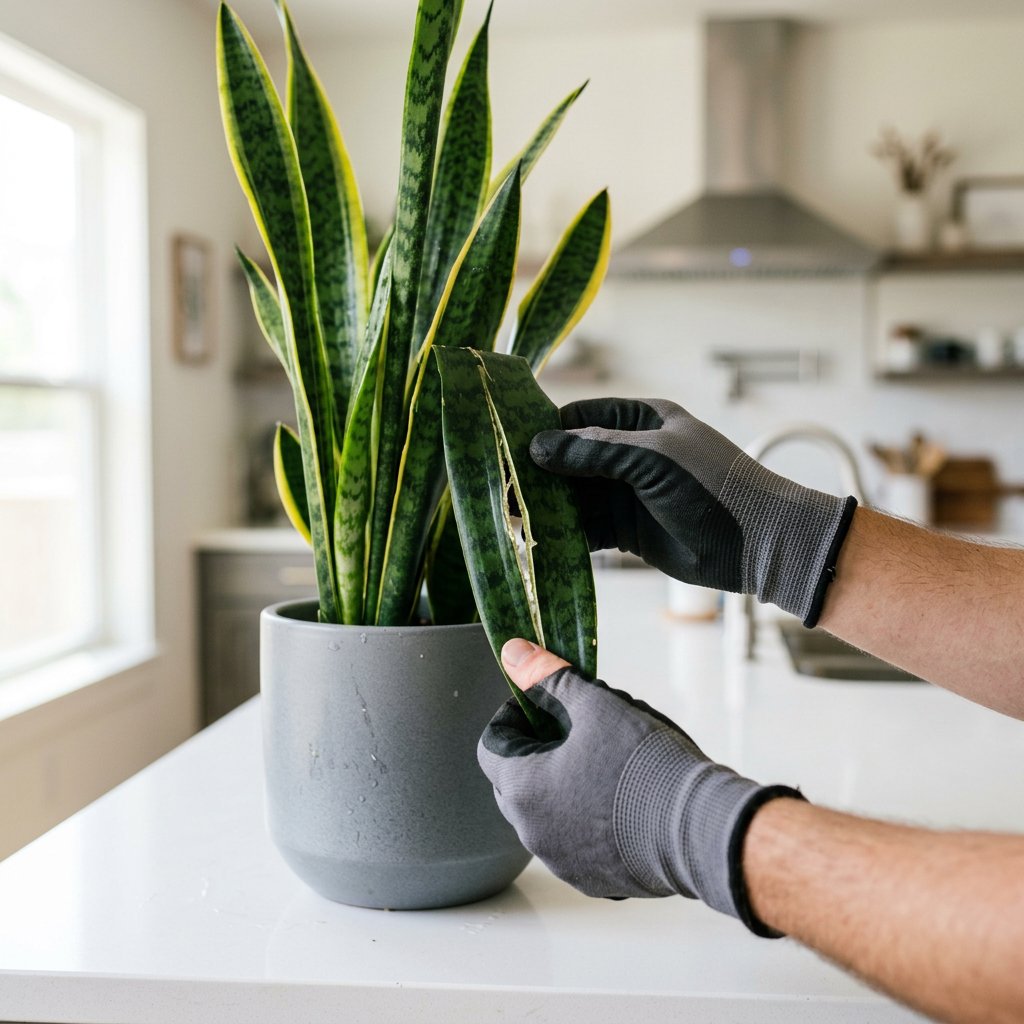
- Crispy, brown spots: As the burn progresses, those bleached areas can dry out, turn brown, and become paper-thin and crispy to the touch.
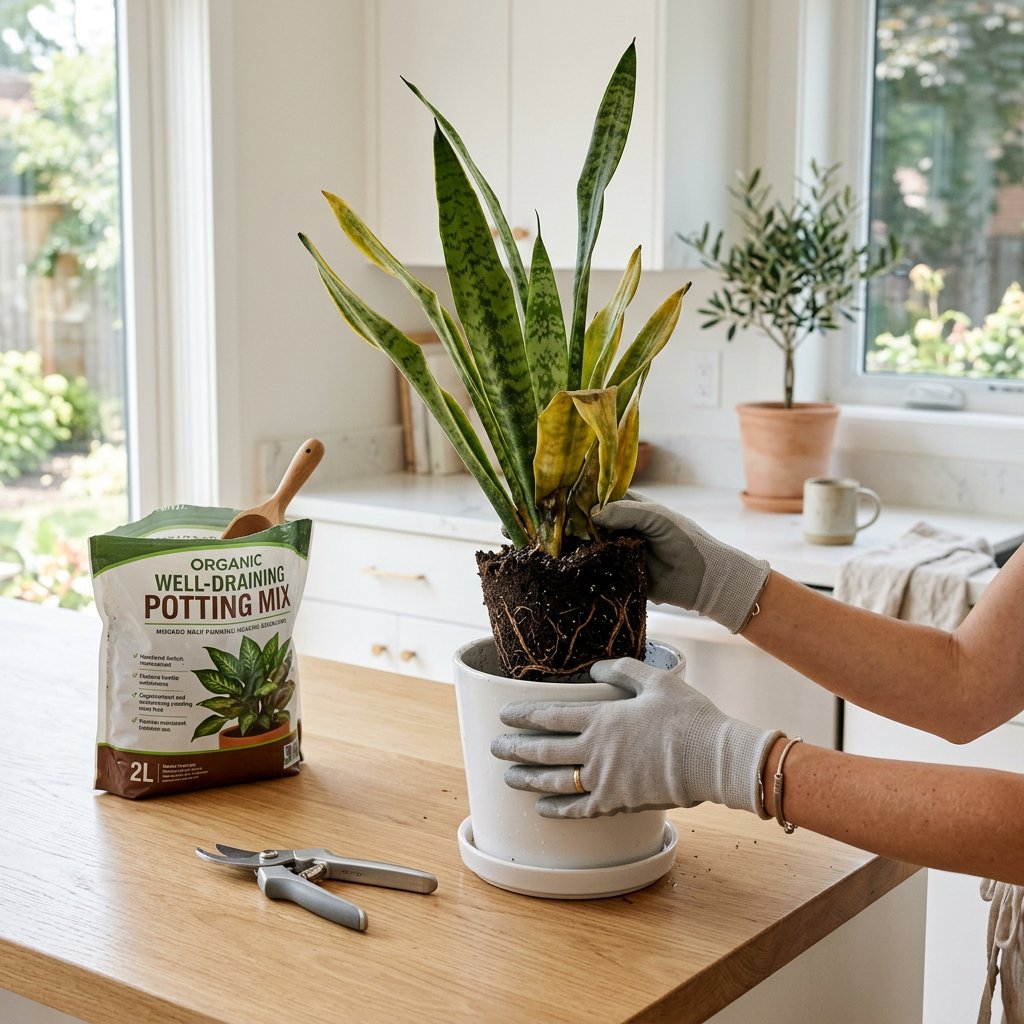
- Widespread yellowing: You might notice your plant developing chlorosis—a botanical term that simply means the plant is losing its green pigment due to stress, resulting in a sickly yellow color across the leaves facing the light source.
Pro Tip: If you are unsure what is wrong with your plant and want to rule out pests or root rot, you can use the AI-powered plant disease scanner in the Plantiary app to get an accurate diagnosis in seconds!
The Causes: How Does Sunburn Happen?
It might surprise you to learn that snake plants actually love bright light! In their natural habitat, they grow under the warm African sun. So, why did yours get burned?
- Sudden environmental changes: The number one cause of sunburn is a sudden shift in lighting. If your snake plant spent the winter in a low-light bedroom and you suddenly moved it to a baking hot, south-facing patio for the summer, the plant experiences light shock.
- Harsh afternoon sun: Even a well-adjusted snake plant can suffer if it is pressed directly against a hot windowpane during the peak heat of a summer afternoon. The glass can amplify the sun's rays, scorching the plant tissue.
The Solutions: Step-by-Step Treatment for Sunburned Snake Plants
The hard truth about sunburn on any houseplant is that the damaged tissue cannot heal. Once a leaf is scorched and bleached, it will not turn green again. But don't let this discourage you! Your plant's root system is likely perfectly healthy, and with a little TLC, it will push out gorgeous new growth in no time.
Here is how to nurse your plant back to health:
Step 1: Relocate your plant safely
Immediately move your snake plant a few feet away from the harsh light source, or diffuse the light by drawing a sheer curtain across the window. If you want to move your plant to a brighter spot in the future, practice acclimation. This simply means gradually introducing the plant to higher light levels over a period of two to three weeks, letting it slowly build up a tolerance to the sun.
Step 2: Prune away the damage
Since sunburned leaves will not recover, leaving them on the plant only forces it to waste energy trying to keep damaged tissue alive. Using a pair of sharp, sterile pruning shears or scissors, cut away the heavily damaged leaves near the soil line. If there is only a tiny brown spot on the tip of a leaf, you can just trim the crispy tip off, following the natural shape of the plant.
Step 3: Keep up with proper watering
A common mistake plant parents make is panic-watering a sunburned plant, thinking it needs extra hydration to "cool down." Unfortunately, overwatering a stressed snake plant can quickly lead to root rot. Stick to your regular watering schedule, allowing the soil to dry out completely between waterings.
Remember, seeing damage on your plant is never a failure—it is simply your plant communicating its needs to you! By making a few simple adjustments to its environment, your snake plant will be back to its architectural, vibrant self. Don't forget to log your watering and pruning routine in your Plantiary app to keep your care schedule perfectly on track as your plant recovers!