Snake plants are famously known as the indestructible darlings of the houseplant world. But if you’ve accidentally loved yours a little too much with the watering can, take a deep breath—you are not alone, and you certainly shouldn't feel guilty! Overwatering is the number one issue plant parents face with these drought-tolerant desert natives. Because they are so incredibly resilient, there is an excellent chance your plant can make a full recovery.
If you’re ever unsure whether your plant is under-watered, overwatered, or fighting a pest, you can always use the AI-powered plant disease scanner in the Plantiary app to get a professional diagnosis in seconds. For now, let’s roll up our sleeves, get to the root of the issue, and bring your snake plant back to life.
The Problem: Symptoms of an Overwatered Snake Plant
Because snake plants store water in their thick, fleshy leaves, they don't need much extra moisture in their soil. When they take up too much water, their cells swell and eventually burst, leading to a cascade of physical symptoms. Keep an eye out for these tell-tale signs:
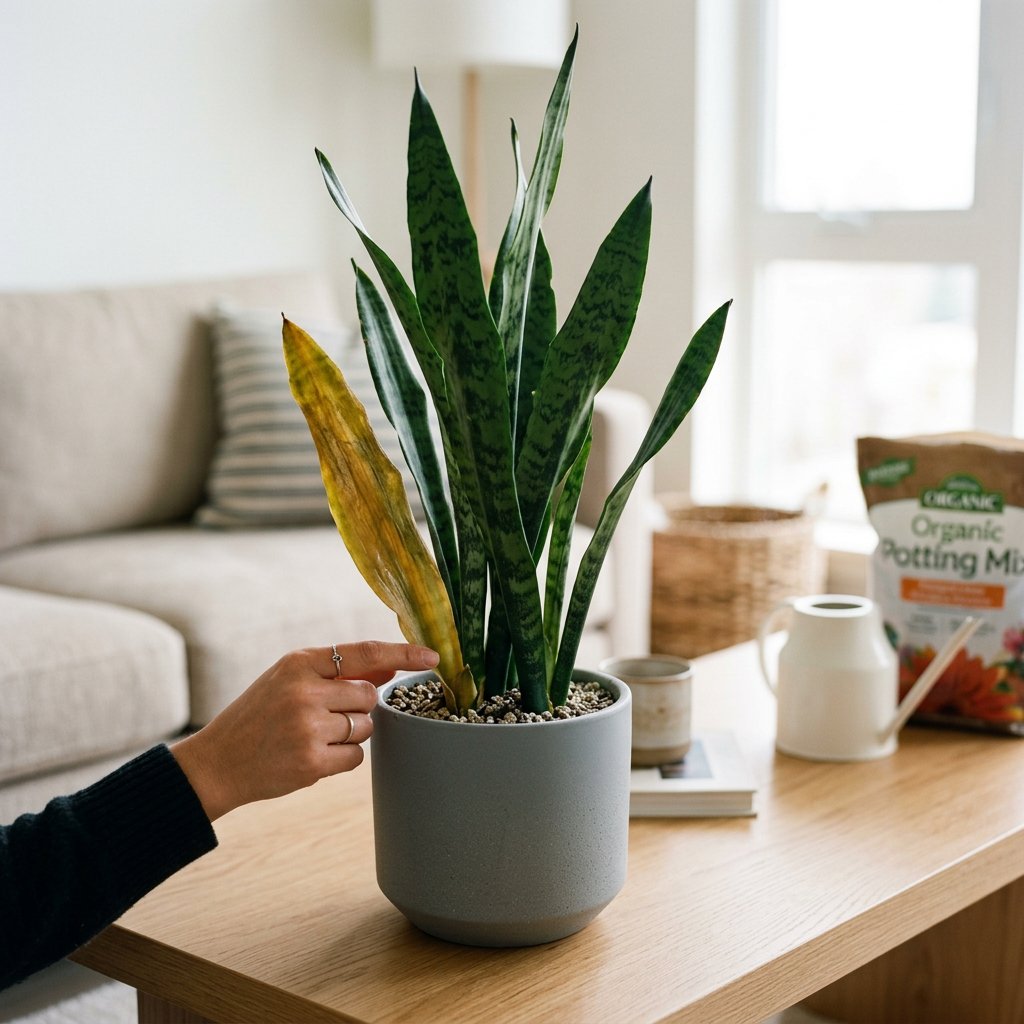
- Mushy, droopy leaves: Healthy snake plant leaves are firm and stand upright. Overwatered leaves will feel soft, wrinkled, or squishy to the touch and may flop over.
- Yellowing from the base up: This is known as chlorosis, a condition where the leaf loses its green chlorophyll pigment due to stress or lack of oxygen at the root level.
- Dark brown or black spots: Waterlogged tissue eventually dies, leading to dark, mushy patches on the leaves.
- A foul odor: If you sniff the soil and it smells like a swamp, your plant is likely suffering from root rot, a fungal disease that destroys the plant's root system when it sits in stagnant water.
The Causes: How Did We Get Here?
It’s easy to assume the only cause of an overwatered plant is watering it too often, but other environmental factors play a massive role:
- Poor Drainage: If your pot doesn't have drainage holes at the bottom, excess water has nowhere to escape, turning the bottom of the pot into a muddy pool.
- Heavy Soil: Standard potting soil often retains too much moisture for succulents.
- Low Light: While snake plants tolerate low light, they don't thrive in it. Less light means the plant photosynthesizes slower and uses up water at a snail's pace.
The Solutions: Step-by-Step Rescue Mission
If you suspect your snake plant is overwatered, simply withholding water usually isn't enough to stop the rot. We need to intervene directly. Follow these scientifically proven steps to save your plant:
Step 1: Unpot and Inspect the Roots
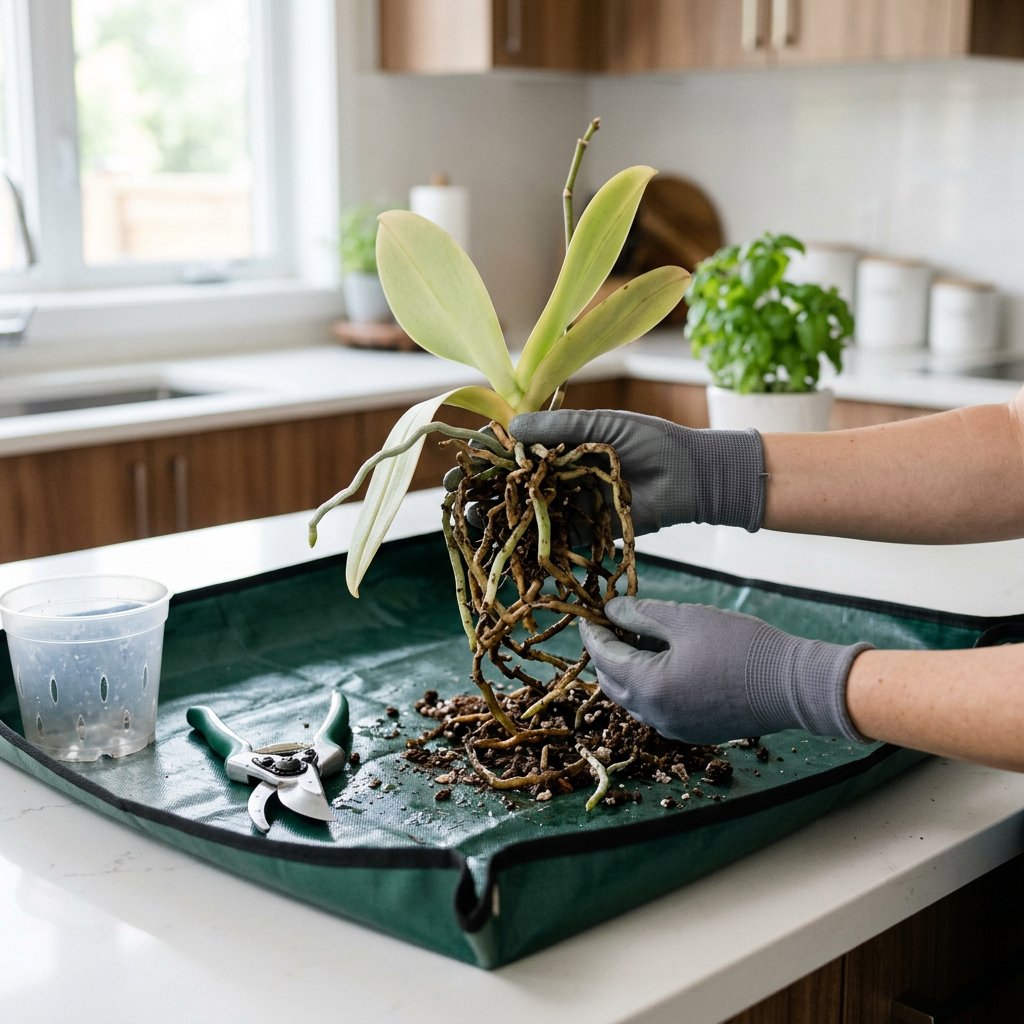
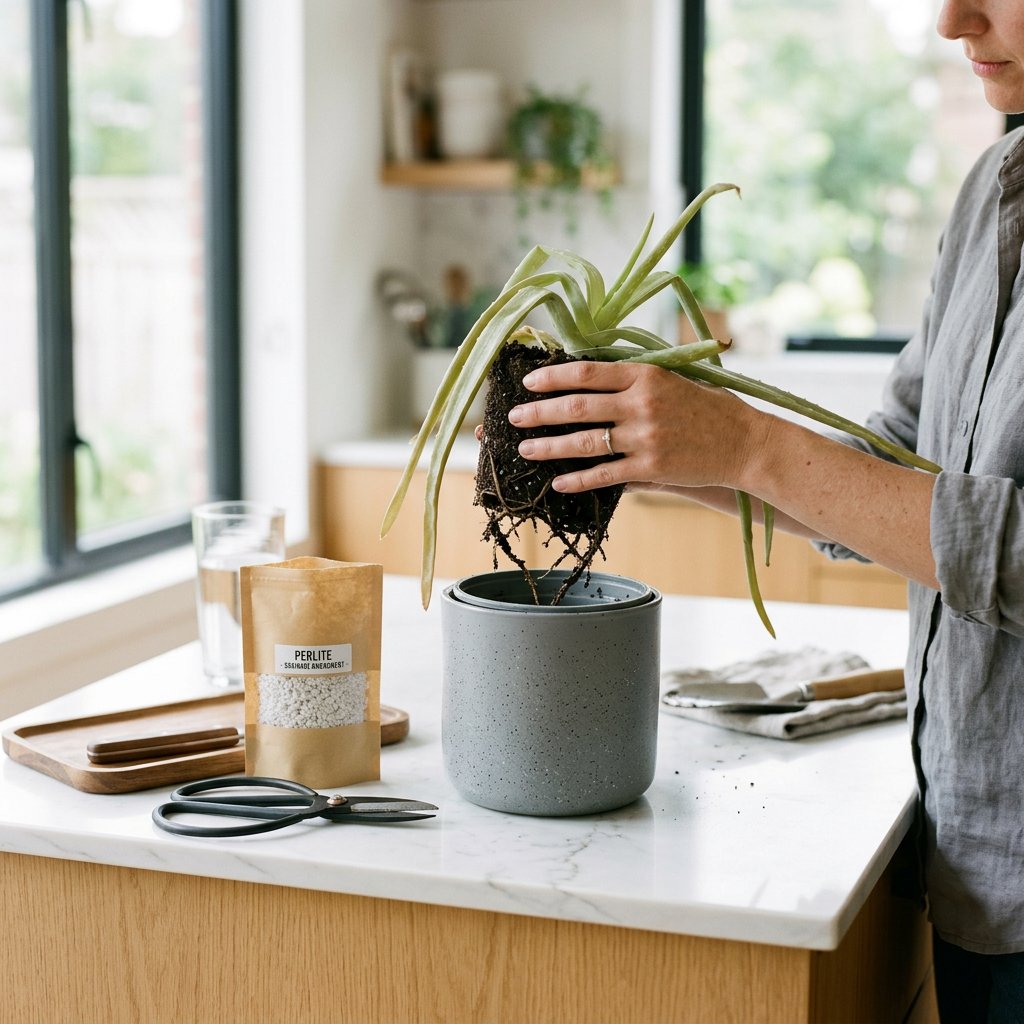
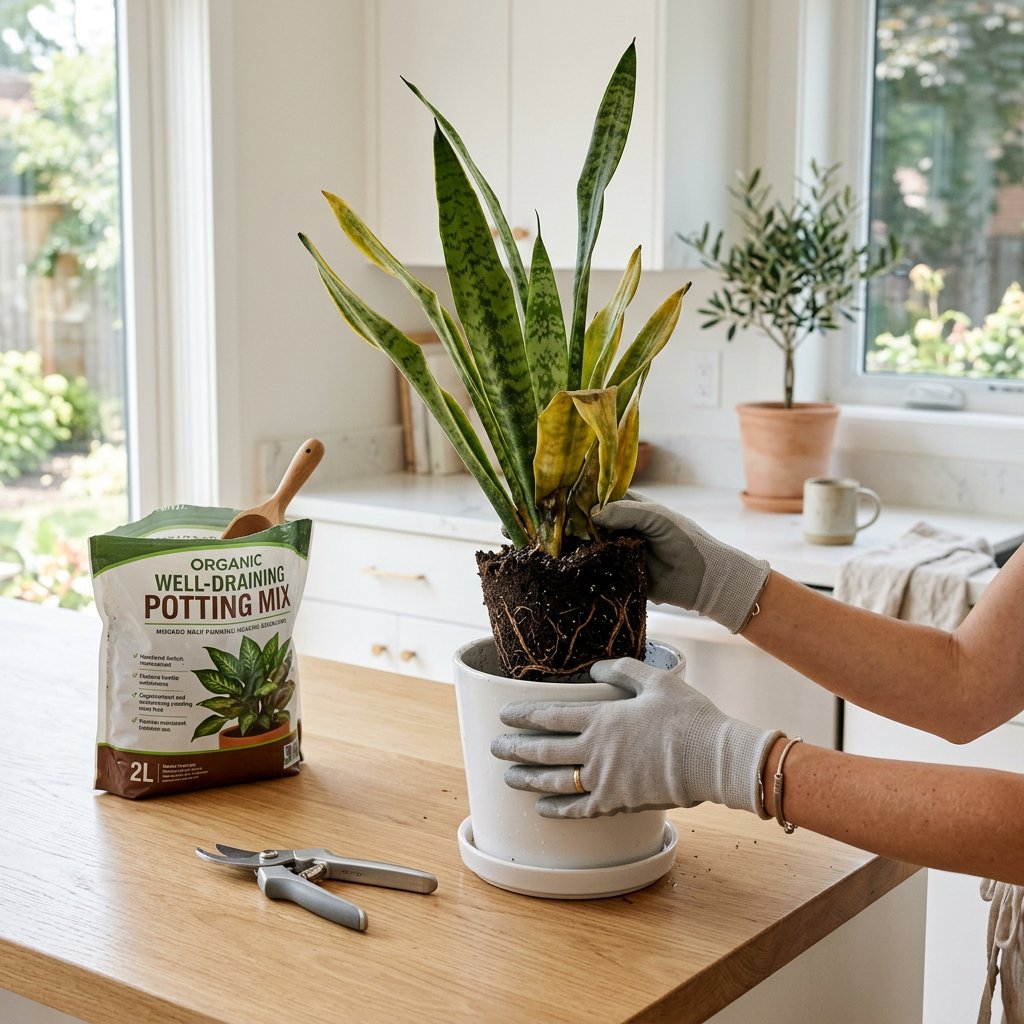
Gently pull your snake plant out of its pot and massage the wet soil away from the roots. Healthy snake plant roots are firm and typically white or light orange. If the roots are dark brown, black, stringy, and slimy, you are dealing with root rot.
Step 2: Trim the Rot Away
Take a pair of sharp, sterilized scissors or pruning shears (wipe them with rubbing alcohol first to avoid spreading bacteria). Carefully snip away all the mushy, dark, and rotting roots. You must also cut off any leaves that are completely yellow or turned to mush, as they will not recover and will only drain the plant's energy.
Step 3: Let it Callus
Once you have removed the damaged parts, lay the healthy remnants of your snake plant on a dry paper towel in a shady, well-ventilated room for 24 to 48 hours. This allows the freshly cut root tips to callus—meaning they will dry out and form a protective seal over the wound, preventing soil-borne fungi from entering when repotted.
Step 4: Repot with the Right Mix
Choose a pot that is only slightly larger than the remaining root system. Crucial rule: the pot must have drainage holes! Terracotta pots are excellent choices for snake plants because the porous clay allows excess moisture to evaporate. Fill the pot with a well-draining succulent or cactus mix, or blend standard potting soil with plenty of perlite and coarse sand to ensure water flows through rapidly.
Step 5: Adjust Your Watering Routine
Do not water your newly repotted snake plant immediately. Give it a few days to settle into its new dry environment. Moving forward, only water your snake plant when the soil is 100% dry from top to bottom.
Moving Forward with Confidence
Reviving an overwatered plant takes a little patience, but seeing those new, healthy, firm green shoots emerge is incredibly rewarding! Remember, plant care is a continuous learning journey. To take the guesswork out of your watering schedule, you can log your newly rescued plant into the Plantiary app. Set up customized watering reminders based on your plant's specific needs, and never worry about accidental overwatering again!