It is incredibly disheartening to walk up to your beloved Money Tree (Pachira aquatica) only to find its once-vibrant green leaves turning a sad, sickly yellow, and its sturdy braided trunk feeling soft to the touch. But before you panic or feel guilty, take a deep breath! Plant parenthood is a learning journey, and encountering a few bumps along the road happens to absolutely every plant owner. You haven't failed; your plant is simply communicating its needs.
Whenever you feel unsure about what your plant is trying to tell you, remember that you can use the AI-powered plant disease scanner in the Plantiary app to get an accurate diagnosis in seconds. Today, we are going to dive deep into exactly why your Money Tree is struggling and how you can nurse it back to health.
The Problem: Spotting the Symptoms
To fix the issue, we first need to understand what the plant is experiencing. When a Money Tree is in distress, it typically shows two major signs:
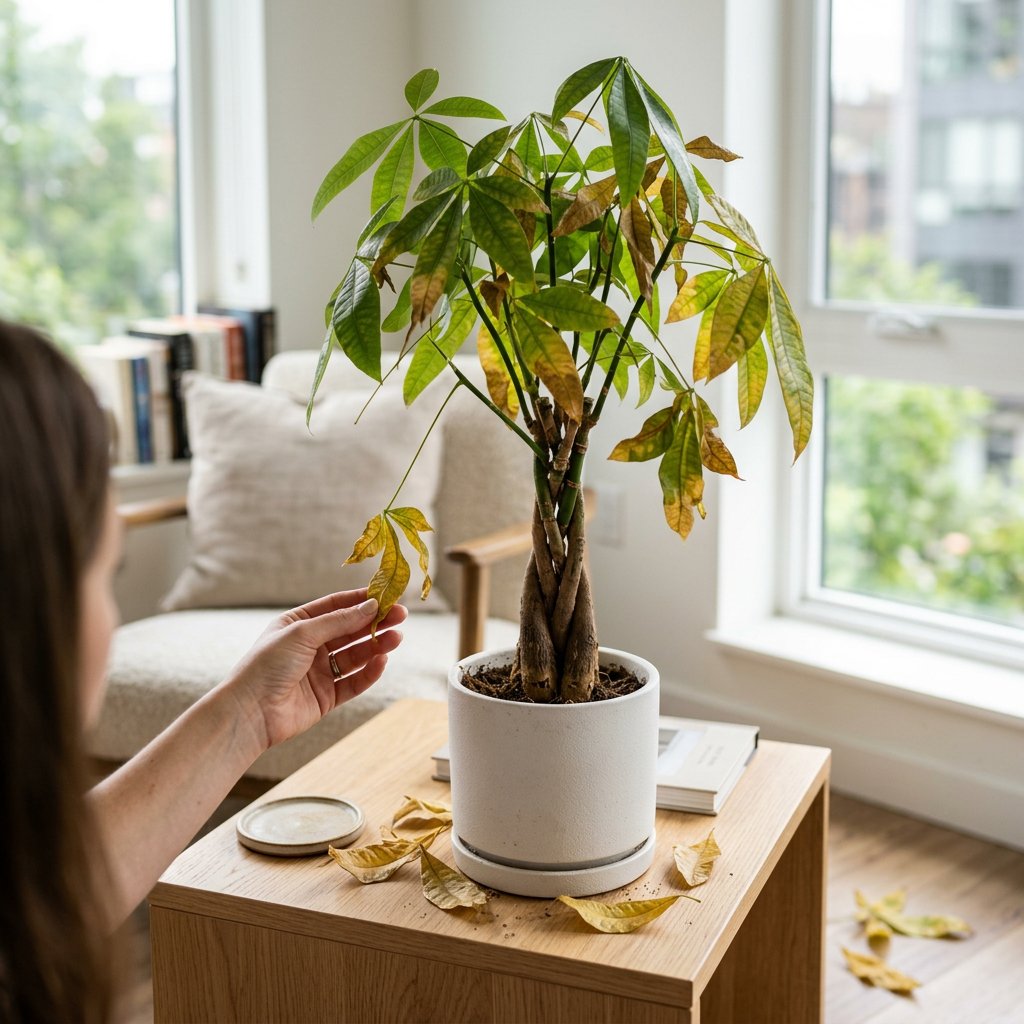
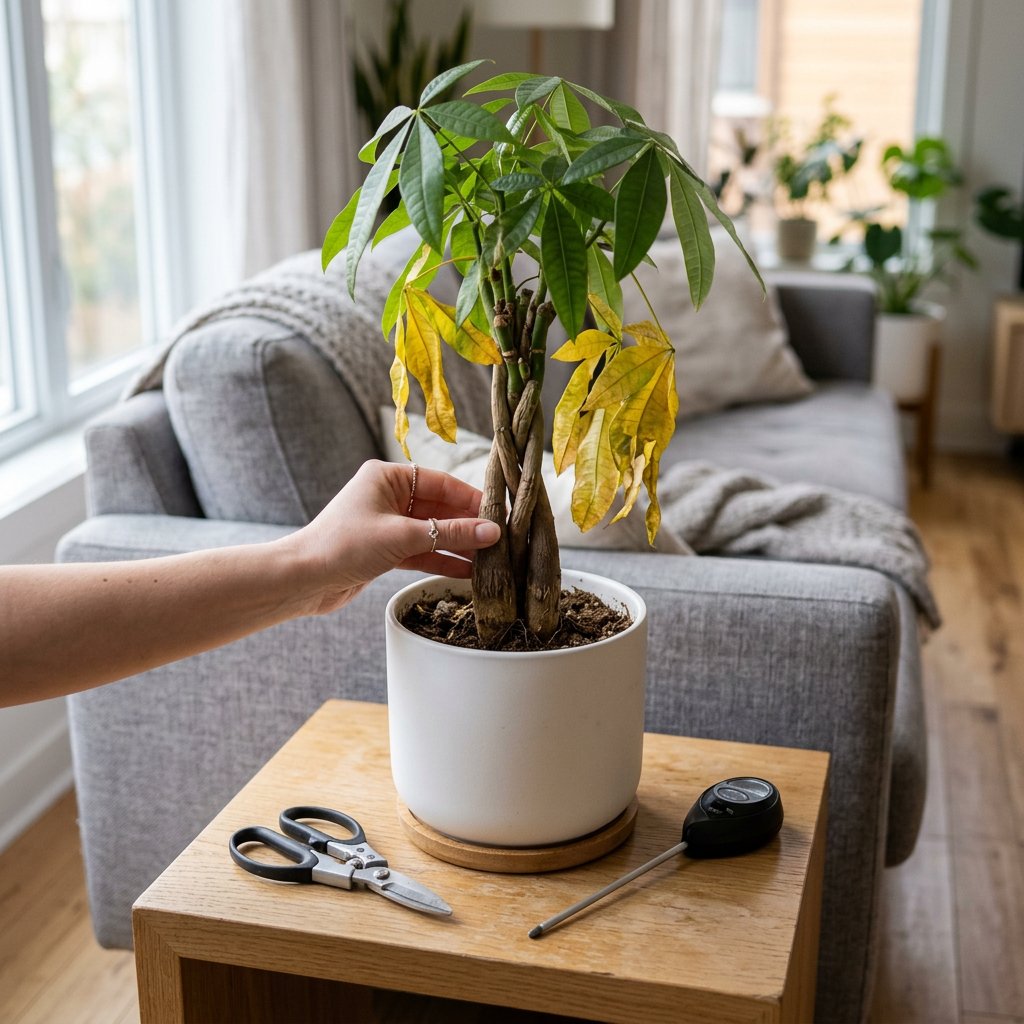
- Yellowing Leaves: In the botanical world, this is known as chlorosis—a condition where the plant stops producing chlorophyll (the pigment that makes leaves green). Without chlorophyll, the underlying yellow pigments show through.
- Soft, Squishy Trunks: A healthy Money Tree trunk should feel firm and woody. If one or more of the braided stems feel wrinkled, mushy, or hollow, the plant is dealing with severe structural distress.
The Causes: Why is Your Money Tree Unhappy?
While Money Trees are native to Central and South American swamps, the ones we keep in our living rooms do not tolerate sitting in stagnant water. The combination of yellow leaves and a soft trunk almost always points to one main culprit: Root and Stem Rot caused by overwatering.
Here is how this happens:
- Too Much Water: When the soil is constantly soaking wet, the roots suffocate. Without oxygen, roots begin to die and decay, leading to fungal infections.
- Poor Drainage: Even if you aren't watering frequently, a pot without drainage holes or a heavy, dense potting soil will trap moisture around the roots.
- Low Light Conditions: Plants in low light process water much slower. If your Money Tree is kept in a dark corner but watered like it’s sitting in a sunny window, the soil will stay wet for far too long.
The Solutions: Step-by-Step Treatment
Don't give up on your Money Tree just yet! Follow these actionable steps to halt the rot and encourage fresh, healthy growth.
Step 1: Unpot and Inspect the Roots
Gently remove your Money Tree from its pot and brush away the excess soil so you can clearly see the root system. Healthy roots should be firm and pale. If you see roots that are dark brown, black, slimy, or smell foul, you have found the root rot.
Step 2: Prune the Damage
Using a pair of sterilized pruning shears (wiped down with rubbing alcohol), carefully snip away all the mushy, rotting roots.
Dealing with a soft trunk: Money Trees are often sold with several trunks braided together. If only one of the trunks is soft and rotting, you must remove it to save the others. Unbraid it gently or cut the rotting stem all the way down to the base. If you leave a rotting stem entangled with healthy ones, the fungal infection will easily spread.
Step 3: Repot with Proper Drainage
Never reuse the old, soggy soil, as it harbors the fungi that caused the rot in the first place.
- Choose a clean pot that has visible drainage holes at the bottom.
- Use a well-aerated, fast-draining potting mix. A great blend is 50% standard indoor potting soil, 30% perlite (little white volcanic rocks that improve aeration), and 20% orchid bark.
Step 4: Adjust Your Watering Routine
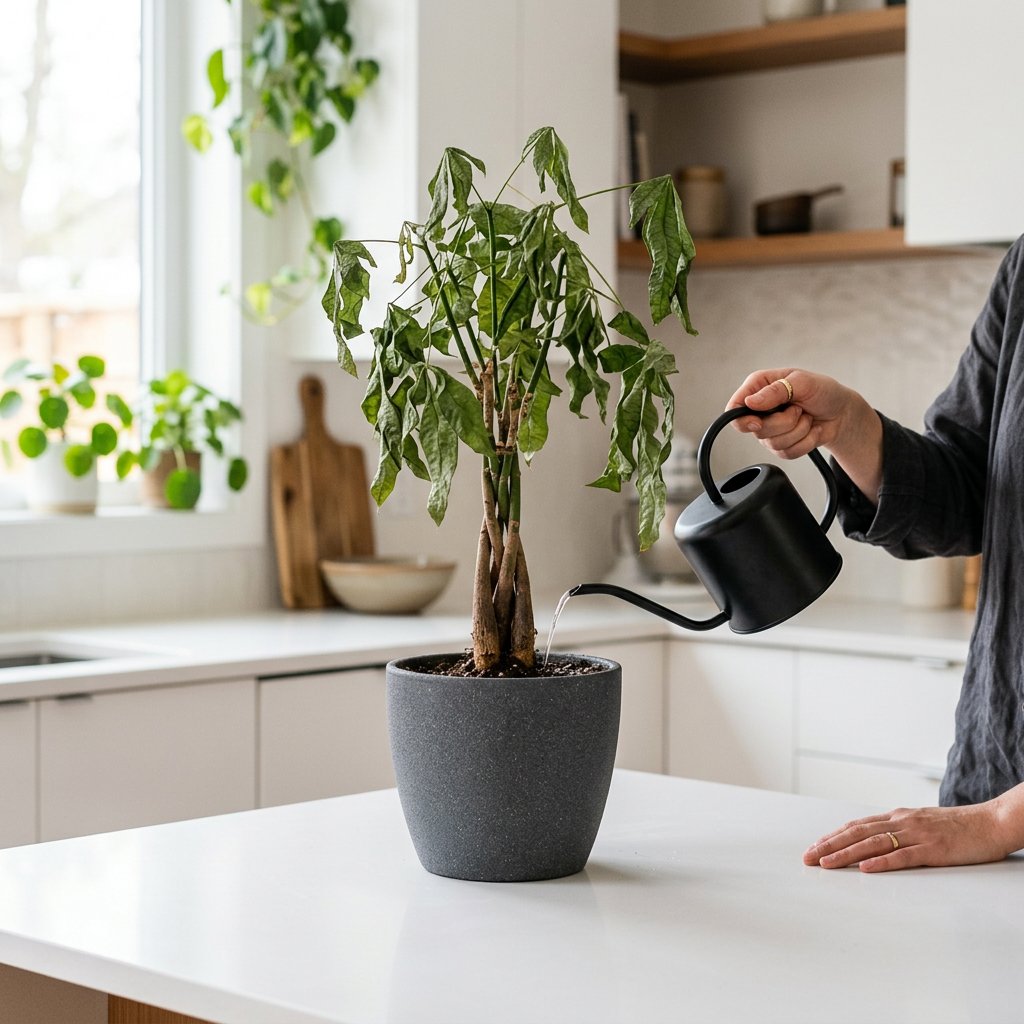
Going forward, allow the top 2 to 3 inches of the soil to dry out completely before you water again. When you do water, soak the soil thoroughly until water runs out of the bottom drainage holes, and then empty the saucer so the plant never sits in a puddle.
Step 5: Optimize Lighting
Move your freshly repotted Money Tree to a spot that receives plenty of bright, indirect sunlight. A few feet away from an east or west-facing window is usually perfect. The better the light, the more efficiently your plant will use the water in its soil.
Growing Forward
Reviving a sick plant takes a little bit of time and patience, but watching those first tiny, bright green leaves unfurl after a successful rescue is one of the most rewarding feelings in the world. Be patient with your Money Tree as it recovers from the stress of pruning and repotting.
To help you stay on track with your newly adjusted care routine, don't forget to set up customized watering and fertilizing reminders in the Plantiary app. We are always here to help you grow your green thumb, one leaf at a time!