Have you ever brought home a stunning collection of houseplants, only to group them together and feel like your living room looks more like a cluttered garden center than a chic indoor oasis? If your plant corner is feeling a little messy—or worse, if some of your green friends are struggling to thrive in their new spots—take a deep breath. Designing a beautiful, healthy plant display is a balancing act, and every plant parent has dealt with a few awkward arrangements or unhappy leaves along the way! Creating a stunning plant display isn't just about aesthetics; it's about blending interior design with healthy botanical practices. Let's explore how to create an indoor jungle that is as happy as it is gorgeous.
The Problem: When Plant Displays Go Wrong
Sometimes, we focus so much on how a group of plants looks that we forget about what they actually need. The main issue with unsuccessful plant displays usually comes down to competing environments and visual clutter. When we place plants with vastly different care requirements right next to each other, some will inevitably suffer. Aesthetically, you might also notice your arrangement feels flat or chaotic. This happens when plants of the exact same height and texture are crowded together without room to breathe, or when their decorative pots heavily clash.
The Causes: Why Your Plant Corner Might Be Struggling
Before we build the perfect display, it helps to understand why certain setups don't work out botanically or visually.
- Mismatched Lighting: Placing a sun-loving succulent next to a shade-tolerant fern means one of them will suffer. The succulent might experience etiolation (a condition where a plant stretches out weakly to find more sunlight, resulting in leggy, pale stems), while the fern's delicate leaves could scorch in the bright rays.
- Conflicting Microclimates: A microclimate is a small, localized area with its own unique temperature and humidity levels. Grouping moisture-loving tropicals with dry-arid cacti disrupts the microclimate each plant needs to thrive.
- Lack of Visual Flow: Using pots of the exact same size and shape can make your display look rigid and uninspired. Conversely, using too many bold, clashing patterns without a unifying theme can feel overwhelming to the eye.
The Solutions: Step-by-Step to a Stunning Plant Display
Ready to redesign your space? Here is your actionable, step-by-step guide to curating a plant display that looks incredible and keeps your foliage flourishing.
Step 1: Group by Environmental Needs
Your first priority is always plant health. Group plants together that share similar light, watering, and humidity requirements. For example, create a "tropical zone" for your Calatheas, Monsteras, and Pothos. Grouping these moisture-loving plants together will naturally boost the ambient humidity around them through transpiration. Keep your cacti and succulents in their own sunny, dry zone. If you are unsure about your plant's specific needs, you can use the AI-powered plant disease scanner and care guide in the Plantiary app to check their ideal light and watering schedules before grouping them together.
Step 2: Play with Heights, Shapes, and Textures
To make your display visually appealing, you need contrast and depth.
- Add height: Use plant stands, stacked vintage books, or small wooden stools to elevate plants in the back of your arrangement.
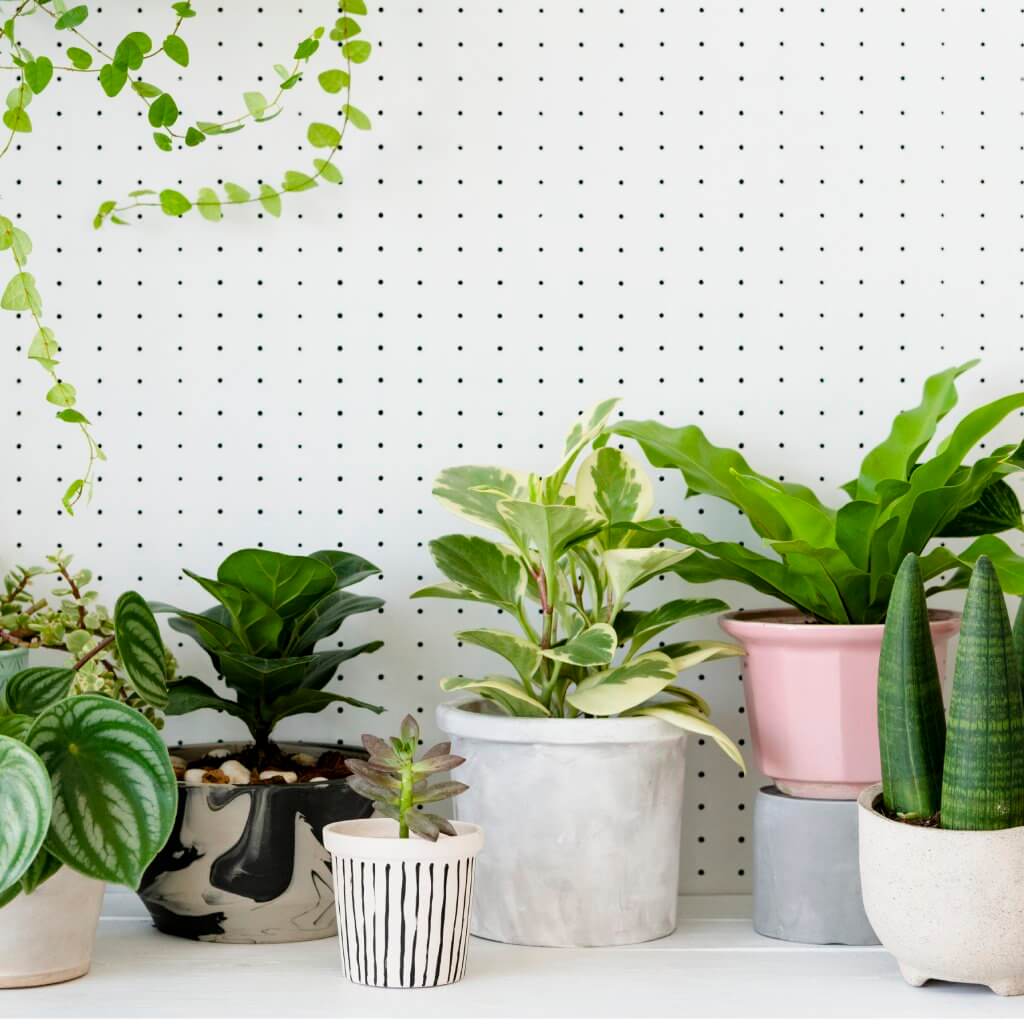
- Mix growth habits: Combine trailing plants (like Philodendrons) cascading down from shelves with upright growers (like Snake Plants) and bushy, full plants (like ZZ Plants).
- Contrast textures: Place broad, glossy leaves next to feathery, delicate fronds. This creates immediate visual interest.
Step 3: Harmonize Your Planters
You don't need all your pots to match perfectly, but establishing a cohesive color palette will instantly elevate the look of your display. Choose a theme—like rustic terracotta, minimalist white, or earthy ceramics—and stick to two or three complementary colors. Always ensure your decorative pots (cachepots) have a nursery pot inside with proper drainage holes to easily remove excess water and prevent root rot!
Step 4: Rotate for Even Growth
Plants naturally exhibit phototropism, a botanical term meaning they will grow and bend toward their primary light source. To keep your display looking full, lush, and even, give your pots a quarter-turn every time you water them. This ensures all sides of the plant receive adequate sunlight and prevents them from looking lopsided or leaning heavily in one direction.
Building the perfect plant display takes a little trial and error, so please don't be discouraged if you need to rearrange your pots a few times to get it right. Listen to your plants, give them the environment they crave, and don't be afraid to get creative with your styling. With the right care and a touch of design magic, your home will quickly transform into a breathtaking botanical haven!